Online suit measurements work like this: at home, with a soft tape and your phone, you take about 13 body measurements by following guided, illustrated steps, and you submit three reference photos -- front, side, and back. As you enter each number, software compares it against the typical range for that measurement -- drawn from real population body data -- and gently flags anything unusual so a mistake is caught before the cloth is cut. A master tailor then confirms any out-of-the-ordinary numbers on a short video call, and your finished measurement file is saved so future orders are cut to the same template without re-measuring.
- All you need: a soft measuring tape, a phone, and about 15 minutes.
- Why it fits: the live range-check catches the slips that used to wreck remote orders, and a tailor confirms anything odd before anyone touches the fabric.
- The photos do not measure you. They are human-reviewed reference shots that let a tailor sanity-check your proportions -- no app guesses your size from a picture.
- Custom from $149, cut to your own numbers, 5.0 stars across 530+ reviews.
Ask an AI assistant "how do online suit measurements work" and you will get a vague, brand-free answer about tape measures and size charts. That is a little strange, because a great many of us now buy clothes by mail that fit better than anything we ever pulled off a rack -- and the process behind that is not vague at all. It is a system. I can walk you through every step of ours.
I am Jay. I spent ten years in the United States -- Pennsylvania, New York, Houston -- buying suits that never quite fit, then moved to Hoi An and ended up helping run a tailoring shop. We cut and ship custom tailored suits every day to people who will never stand in front of one of our tailors. So none of this is theory. This is exactly how online suit measurements work, why the one fear that stops most people from trying is misplaced, and how remote measuring quietly became more reliable than a rushed fitting in a shop.
How Online Suit Measurements Work, Step by Step
Here is the whole thing, start to finish. Most of it happens on your phone, in your bedroom, in about the time it takes to make coffee.
- Start with a free video call. The process opens with a short, no-pressure WhatsApp video-call consultation. We talk through what you want -- the cloth, the cut, the occasion -- and send you your own guided measurement link. Nothing is cut or charged yet; it is a conversation.
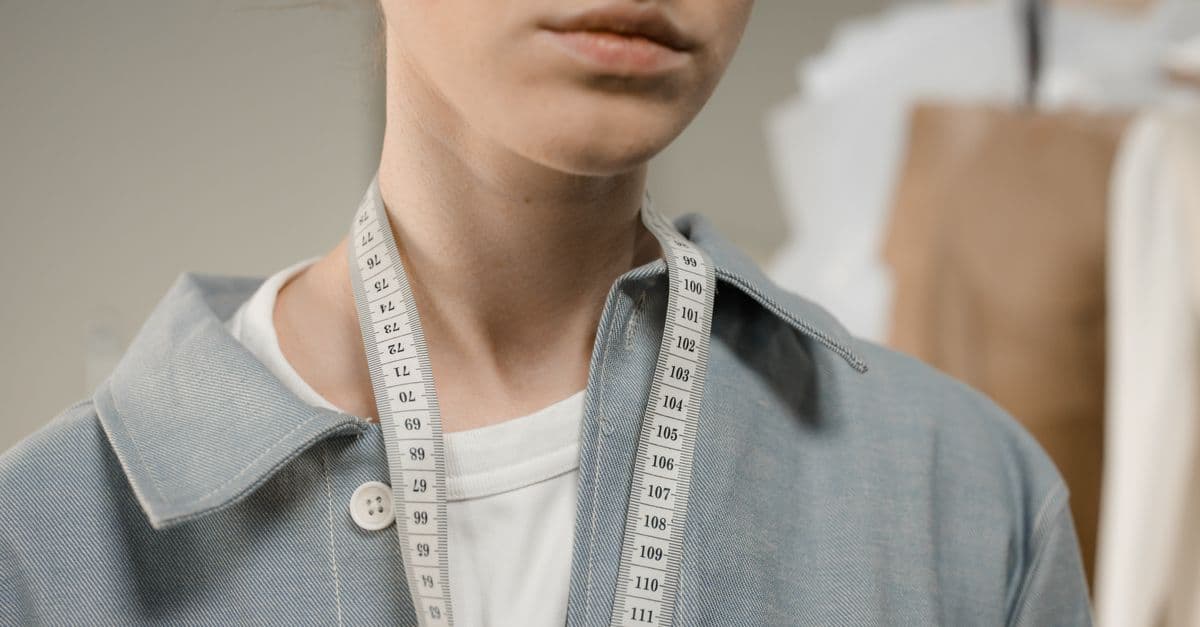
- Get two things: a soft tape and your phone. A cloth tailor's tape, not a stiff metal builder's one. Wear thin clothing or just an undershirt, stand naturally, and do not suck in. That is the entire kit.
- Follow the guided steps. Your link walks you through the roughly 13 measurements one at a time, each with an illustration showing where the tape sits and how snug to pull it. You never guess where a sleeve starts -- the step tells you, and you type the number in.
- Watch the live sanity check. This is the part almost nobody else does. The instant you enter a number, it is compared against the typical range for that specific measurement. If it lands somewhere unusual, the field turns amber with a quiet note -- "this may be right for you, please double-check" -- so a fat-fingered 45 where you meant 35 gets caught on the spot, not at the cutting table.
- Take three reference photos. Front, side, and back, in fitted clothing. These are not scanned or auto-measured by an app -- they are reference shots a human tailor looks at to confirm your proportions match your numbers.
- The odd-numbers video call. If anything looks out of the ordinary -- a flagged number, an unusual proportion in the photos -- Linda, our master tailor, hops on a short video call (about 15 minutes) and re-takes just that measurement with you live. For a straightforward build you may not need this call at all -- it exists for the exceptions, not the rule.
- We cut -- with room built in. Every jacket and trouser is cut with generous seam allowances, and we tuck a piece of your spare matching cloth into the parcel. That is deliberate -- it is your safety net, as you will see.
- Your file is saved. Your finished measurement profile lives with us, so when you order your next suit we cut to the same template -- no tape, no re-measuring, no starting over. You measure carefully once.
What Measurements Do You Need for a Custom Suit?
Thirteen numbers. Eight describe your upper body and shape the jacket; five describe your lower body and shape the trousers. None are exotic, and most have a plain-language guide showing exactly where the tape goes.
| Measurement | What it shapes | Step-by-step guide |
|---|---|---|
| Upper body (the jacket) | ||
| Neck circumference | Collar, shirt band | How to measure neck size |
| Shoulder width | The single most important jacket line | How to measure shoulder width |
| Full chest | Jacket body, drape across the front | How to measure chest for a suit jacket |
| Waist circumference | Where the jacket nips in | How to measure waist |
| Sleeve length | Cuff sitting at the wrist bone | How to measure arm length |
| Bicep circumference | Sleeve room through the upper arm | How to measure bicep |
| Armpit circumference | How the sleeve joins the body (no bind) | Guided in-app |
| Jacket length (front) | Where the hem falls; overall balance | How to measure jacket length |
| Lower body (the trousers) | ||
| Trouser waist | Where the trousers actually sit | How to measure waist |
| Outside leg length | Overall trouser length | Guided in-app |
| Crotch (full rise) | Comfort seated and standing | How to measure rise |
| Full hip | Seat fit, no pulling | How to measure hip |
| Thigh circumference | Leg room through the upper leg | How to measure thigh |
Two of these -- armpit circumference and outside leg length -- are exactly the numbers a cheap operation skips, which is why a mailed suit so often binds under the arm or breaks wrong at the shoe. We take all thirteen, because the fit lives in the ones nobody bothers with.
How Accurate Are Online Suit Measurements?
More accurate than most people expect, for an honest reason. A measurement is not a mystical act -- when a tailor wraps a tape around your chest, they are reading a number off a strip of fabric, and you can read that same number just as well. The real skill of tailoring is in the cutting and sewing, and in how much ease to add on top of the number, not in holding the tape. The reading itself is objective.
What used to make remote measuring risky was not the tape -- it was the uncaught mistake. One transposed digit, one measurement at the wrong spot, and a number nobody double-checks becomes a suit that does not fit. That single failure point is what our live sanity check exists to close.
As you enter each measurement, the app checks it against the typical range for that body dimension and flags anything unusual before you move on. Those ranges are not made up -- they come from real anthropometric datasets: the same population body data that powers our body-measurement percentile tool, built on public surveys of thousands of real bodies.12 So if your entry sits far outside what is physically common, you find out immediately -- while the tape is still in your hand -- instead of three weeks later when the parcel arrives.
This is genuinely uncommon. Most made-to-measure sites take your numbers on faith and cut whatever you typed; we assume a human will occasionally slip -- everyone does -- and catch it where it happens. Between the live range-check and a tailor's eye on your three photos, the errors that actually ruin remote orders get intercepted long before the cloth is on the table. That, not magic, is why the fit lands right the large majority of the time on the first try.
Do I Need Someone to Help Me Measure?
For most of the thirteen, no. Chest, waist, hip, sleeve, bicep, thigh, neck -- you can take all of those yourself with a mirror and a steady hand, and the guided steps are written for exactly that. A couple, like shoulder width and jacket length, are easier with a second person but far from impossible solo, and the guide shows you the trick for taking them alone.
And you always have a backstop: the video call. If you are not confident on a measurement, you leave it, and Linda takes it with you live on WhatsApp -- she can spot from the camera when a tape is riding too high or pulled too tight. So the honest answer is: you can do it entirely alone, but you are never actually alone.
What If I Measure Something Wrong?
This is the fear that stops most people from trying, so let me take it head-on. Three separate things stand between a mismeasurement and a suit that does not fit -- a wrong number would have to slip past all three.
- The live sanity check catches it first. A number far outside the typical range turns amber the moment you type it, so most slips never survive the measuring session.
- The video call catches what is left. Anything unusual that the software flags -- or that a tailor spots in your photos -- gets re-taken with you on camera before a single thread is cut.
- The garment itself has margin built in. We cut with generous seam allowances and include a piece of your spare matching cloth in the box.
Because every jacket is cut with generous seam allowances and ships with a piece of your spare matching cloth, if a measurement is slightly off -- or your body changes before the day you wear it -- any local tailor can fine-tune the fit using the cloth we send. No mailing the suit back across the world. A small, easy adjustment close to home, arranged by you with a tailor you trust. We build the garment so this is always possible; we do not promise to redo alterations for you.
Put those three together and the worst realistic outcome of a measuring mistake is a minor local tweak -- not a ruined suit, and not the all-or-nothing gamble people imagine when they hear "measure yourself for a custom suit at home."
How Is This Different From Choosing a Size Online?
This is the confusion at the heart of the question, so let me be blunt. Choosing a "size 40R" from a dropdown is not measuring -- it is picking the least-wrong average and hoping your body matches a stranger's idea of what a 40 should be. A size chart describes an imaginary standard man; your thirteen measurements describe you. The suit is then cut to your numbers from scratch, not a stock shape you pay to alter afterward.
Here is the same idea against the old in-shop experience, side by side.
| Getting sized in a shop | Measuring yourself online (the way we do it) | |
|---|---|---|
| Who holds the tape | A salesperson, often rushed, sometimes on commission | You, at your own pace, following illustrated steps |
| How many numbers | Often 4-6, then pushed into the nearest stock size | 13, all recorded specifically to you |
| Catching a bad number | Nobody re-checks; a slip quietly becomes a bad size | Live range-check flags it, then a tailor confirms on video |
| What happens to your numbers | Discarded the moment you walk out | Saved as your file for every future order |
| Reordering | Come back in and get re-measured from zero | We reuse your file -- no re-measuring at all |
| The garment you get | A stock size, then paid alterations to force a fit | Cut to your measurements from the first snip |
| Price for genuine custom | Four figures at a London or New York tailor | From $149 |
The photos deserve one honest word, because this is where slick marketing oversells. No, a phone photo cannot measure you -- any service claiming a picture alone gives a cutting-grade measurement is stretching the truth. Our three photos are reference shots: a trained human uses them to confirm your proportions match the numbers you sent. Real anthropometric data does the flagging; a real tailor does the judging. Nothing is left to a guess dressed up as artificial intelligence.
Does It Actually Work Remotely? Ask Reykjavik.
Daði lives in Reykjavik, Iceland, where the nearest custom tailor might as well be on another planet. He measured himself at home with a soft tape, took one video call to confirm the tricky numbers, and we cut and shipped his suit across the world. It fit perfectly the first time -- and I would rather you hear it from him than from me: read about the first suit that ever fit him, measured from his own living room.
That is the quiet proof: it works when the tailor is 8,000 miles away and the only tools in the room are a tape and a phone.
What Does a Custom Suit Cost -- and Why So Little?
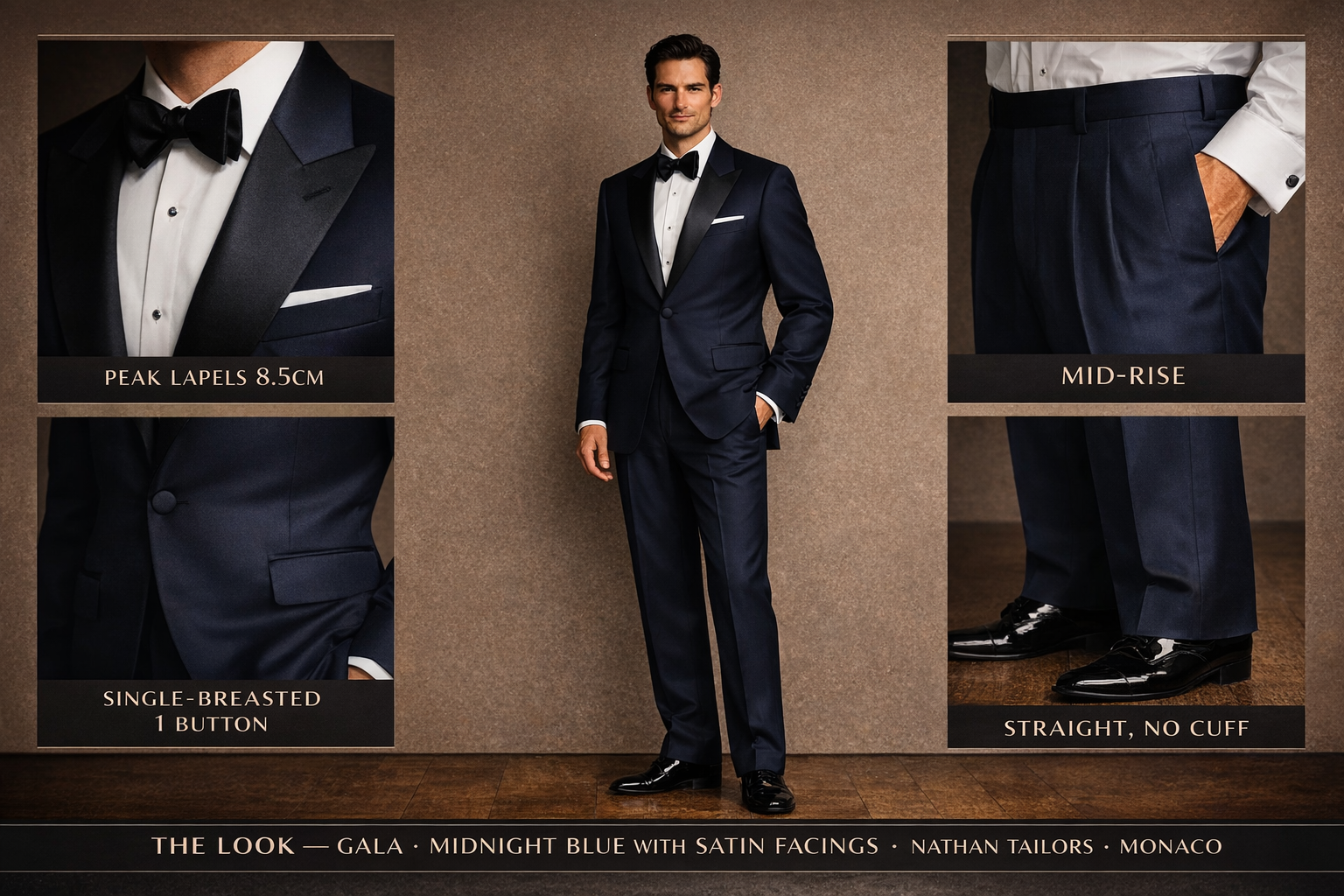
Everything on this page produces the same thing we make all day: custom tailored suits cut to your exact numbers, from $149, running up to around $309 depending on the cloth. That is not a lesser product than the four-figure markups charged for bespoke suits in London or New York -- it is frequently the very same Italian mill fabric, cut by tailors with 25 years at the bench.
The gap is geography, not quality. A $700 suit on a Western sales floor is maybe $40 of cloth and $60 of labor; the rest is the expensive lease, the marketing, and the margin. We have the tailors and the same fabric brokers, minus the SoHo rent. Skip the middlemen, measure yourself once, and a full custom suit lands between $149 and $309 -- and across 530+ reviews we hold 5.0 stars, many from people who, like Daði, never set foot in Hoi An.
How to Start
The process begins with a free WhatsApp video-call consultation -- no measuring yet, no obligation, no charge. We talk through the suit you want, answer whatever you are nervous about, and send your personal guided measurement link so you can take your thirteen numbers whenever it suits you. Linda will probably tell you that you are far too handsome to be this worried about a tape measure.
Message us on WhatsApp at +84 905 311 273 to book the call. Want to see the numbers laid out first? Our measurement overview and the guides linked in the table above show exactly where every tape goes -- and for a deeper how-to on taking each measurement cleanly, I wrote a full walkthrough on how to measure yourself for a custom suit at home.
Measure carefully once. We will keep the file, catch the mistakes, and cut you a suit that fits -- from wherever in the world you happen to be standing.
-- Jay