What Is the Average Size of a Man? A Global Reference (2026)
The short answer: the average American man is 5'9" (175 cm), about 199 lb (90 kg), with a 40–41" (102–104 cm) chest and a 40" (102 cm) waist. The long answer — every measurement, by country and build — is below. Compiled from CDC NHANES, NHS Digital, the NCD Risk Factor Collaboration, and the Japanese Ministry of Health. Last reviewed June 2026.
Before we get into the tables: these are averages, not standards. Averages are not goals. Your body is fine. The only reason we publish this page is because off-the-rack clothing is designed around a fit model, and understanding where your body sits relative to that fit model is the fastest way to explain why shirts pull, jeans tear at the quad, or jacket shoulders dig even when the chest label says the right number.
If you've ever bought two sizes up to get a shirt across your chest and ended up with a tent at the waist, or replaced three pairs of jeans in a year because the seat blew out, the math on this page will probably explain it in about ninety seconds. To see exactly where your own measurement lands on the curve — what percent of men you measure bigger than — use our body measurement percentile tool. And if you want to skip the reading and get your numbers recorded properly, our Guided Measurement App walks through all thirteen measurements we take for a custom suit or pair of trousers.
Global Averages — Adult Male, by Country
Figures are from the NCD Risk Factor Collaboration 2019 pooled analysis, CDC NHANES 2015–2018 for the US, and NHS Digital Health Survey for England 2021. Labelled as pooled public-health data. Chest and waist figures are approximated from the same surveys and national sizing studies where available.
| Country / Region | Height | Weight | Chest (cm) | Waist (cm) | Year |
|---|---|---|---|---|---|
| Netherlands | 183.8 cm / 6'0.3" | 87 kg / 192 lb | 103 | 94 | 2019 |
| Montenegro | 183.2 cm / 6'0.1" | 85 kg / 187 lb | 102 | 93 | 2019 |
| Denmark | 181.9 cm / 5'11.6" | 86 kg / 190 lb | 103 | 93 | 2019 |
| Germany | 180.3 cm / 5'11.0" | 85 kg / 187 lb | 103 | 94 | 2019 |
| United Kingdom | 177.5 cm / 5'9.9" | 85 kg / 187 lb | 104 | 94 | 2021 |
| United States | 175.4 cm / 5'9.1" | 90 kg / 199 lb | 104 | 102 | 2018 |
| Brazil | 173.1 cm / 5'8.2" | 78 kg / 172 lb | 99 | 91 | 2019 |
| China | 171.8 cm / 5'7.6" | 70 kg / 154 lb | 94 | 85 | 2019 |
| Japan | 170.7 cm / 5'7.2" | 67 kg / 148 lb | 92 | 84 | 2019 |
| Mexico | 169.7 cm / 5'6.8" | 78 kg / 172 lb | 98 | 94 | 2019 |
| Vietnam | 168.1 cm / 5'6.2" | 62 kg / 137 lb | 89 | 79 | 2019 |
| Nigeria | 165.9 cm / 5'5.3" | 65 kg / 143 lb | 92 | 82 | 2019 |
| India | 165.2 cm / 5'5.0" | 65 kg / 143 lb | 91 | 84 | 2019 |
| Philippines | 165.2 cm / 5'5.0" | 63 kg / 139 lb | 90 | 82 | 2019 |
Sources: CDC NHANES, NHS Digital Health Survey for England, NCD Risk Factor Collaboration, Japanese Ministry of Health, Labour and Welfare national nutrition surveys.
Want to see how you measure up?
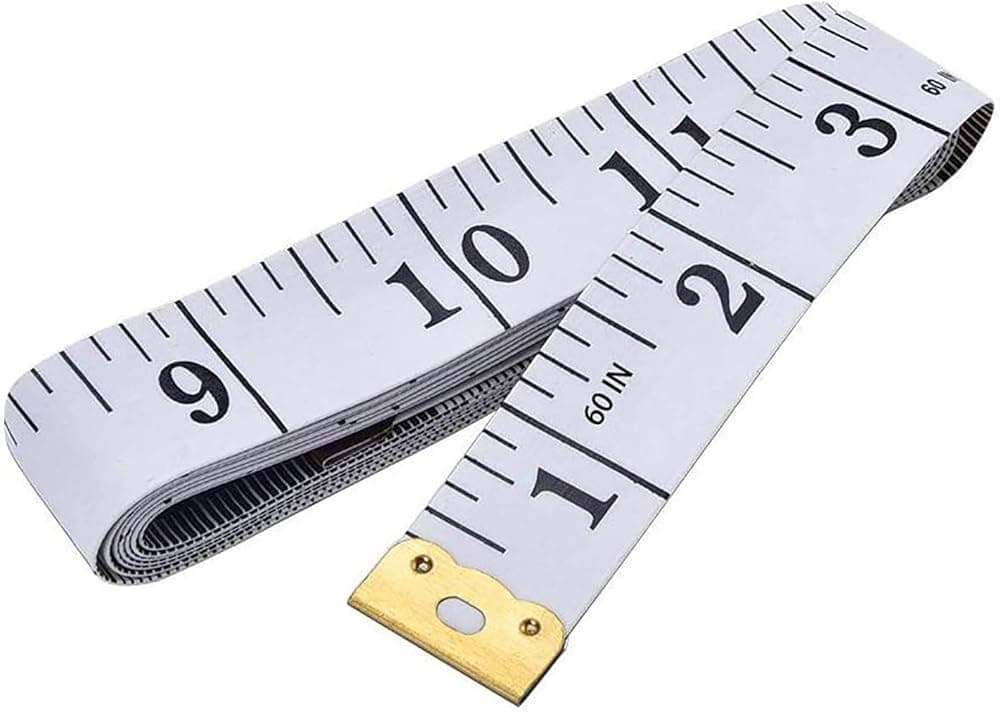
Soft Tailor’s Tape Measure — 60 in / 150 cm, dual scale
A flexible cloth body tape with both inches and centimetres — the exact kind we use in the workshop. Sixty inches covers any chest, waist, or hip. Grab two so you can hold one taut while you read the other.
As an Amazon Associate, Nathan Tailors earns from qualifying purchases — at no extra cost to you. Price is approximate; see Amazon for the current price.
Measurement by Measurement
1. Height
Adult US male height averages 175.4 cm (5'9.1") per CDC NHANES 2015–2018, essentially unchanged for 25 years. The Netherlands leads the world at 183.8 cm (6'0.3") — up roughly 20 cm in a century, a nutritional gain, not a genetic one. Japanese men average 170.7 cm; Vietnamese men 168.1 cm; Indian men 165.2 cm. Height is ~80% heritable within a well-nourished population but population-level differences are overwhelmingly driven by childhood nutrition, disease load, and prenatal health.
Reader question: How tall is the average man? Globally, about 171 cm (5'7.3"). In the US, 175.4 cm. In the Netherlands, 183.8 cm.
2. Weight
CDC lists the average US adult male weight at 90.0 kg (199 lb) as of NHANES 2021, up from about 81 kg (178 lb) in 1988. UK and German averages sit around 85 kg, Japanese at 67 kg, Vietnamese at 62 kg. BMI framing around these numbers is contested — weight is a scalar that hides body composition. A 95 kg powerlifter at 12% body fat and a 95 kg sedentary office worker do not have the same clothing needs, even if the scale and BMI chart cannot tell them apart.
3. Chest / Bust
US and UK adult male averages both sit near 104 cm (41 in). Japanese men average 92 cm (36 in); Vietnamese 89 cm (35 in). The typical off-the-rack range sold in Western suit retailers runs 38 to 46 inches, with the bulk of stock concentrated at 40, 42 and 44. Trained lifters frequently exceed 48 inches while keeping a waist under 34 — this is the classic "V-taper" fit problem described below.
Reader question: Is a 40-inch chest big? No — it is the US adult average. A 48-inch chest is genuinely large.
4. Waist
The average US adult male waist circumference is 102.1 cm (40.2 in) per CDC NHANES 2015–2018, up roughly 3 cm in 20 years. Japanese male averages sit near 84 cm; UK near 94 cm. Worth flagging: the "waist" on a trouser label almost never matches anatomical waist — Levi's, Bonobos and most mass-market brands measure 2–5 cm below the navel, which is closer to hip. A 34-inch labelled jean frequently measures 35–36 inches at the top of the waistband.
5. Hip / Seat
Male hip/seat averages run 100–106 cm across Western populations. Lifters who squat heavy routinely measure 110–120 cm in the seat while keeping a 32-inch anatomical waist — this is the drop that destroys off-the-rack trousers at the back yoke seam.
6. Shoulder Width (Acromion to Acromion)
Bony shoulder width (bi-acromial breadth) averages 40–42 cm in adult men. Measured across the deltoids — which is what a jacket shoulder actually sits on — the average is closer to 45 cm. Trained lifters frequently hit 50–55 cm across the deltoids, at which point off-the-rack jacket shoulders are physically too narrow regardless of chest size. A tailor can shift shoulder width by 1–2 cm through alteration; beyond that, the jacket has to be cut new.
7. Neck
Average adult male neck circumference is ~40 cm (15.75 in). Dress-shirt collars cluster between 15.5 and 16.5 inches in the US, with 16 the modal size. Lifters with trained traps routinely measure 17–18 inches and find that standard collars can fit the neck only if the shirt is oversized everywhere else.
8. Bicep
US adult male relaxed bicep averages 31–33 cm (12.2–13 in). Flexed, add roughly 1–2 cm. Recreational lifters commonly reach 38–42 cm flexed; trained natural bodybuilders 43–46 cm; elite pros 48 cm+. Off-the-rack sleeve circumference is graded to ~36 cm on a size-40 jacket and ~38 cm on a size-44 — which is why 17-inch arms strain most jacket sleeves even when the chest is correct.
9. Forearm
Adult male average forearm circumference is ~28 cm. Trained lifters and manual workers commonly reach 32–36 cm. Shirt-cuff circumference is graded to 22–24 cm on most ready-to-wear shirts — which is why a button-cuff shirt can fit the chest perfectly and still not close around the wrist after a year of training.
10. Thigh Circumference
The US adult male average thigh is ~57 cm (22.4 in) at the largest point. This is the single measurement that most often determines whether off-the-rack trousers will fit at all. Recreational lifters reach 60–68 cm; powerlifters 70–85 cm; elite pros 85+. A Levi's 501 in size 32 has a thigh circumference of roughly 63–65 cm. A 70 cm thigh cannot enter that leg opening without the trouser splitting on first squat. This is the "quad problem," and it has its own section below.
Reader question: What is a big thigh for a man? Above 65 cm, most off-the-rack fails. Above 75 cm, you are squarely in custom-only territory.
11. Calf
Adult male average calf circumference is ~37 cm. Trained calves commonly reach 42–46 cm. Slim and skinny chino cuts often taper to a 34–36 cm ankle opening — which is why a tapered dress pant can strangle a trained calf even when the waist and thigh are correct.
12. Inseam
Typical adult male inseams run 30–34 inches (76–86 cm) for heights between 5'9" and 6'2". Leg-to-torso ratio varies substantially: two men of the same height can differ by 3–5 cm of inseam. East Asian populations average shorter legs relative to height; sub-Saharan African populations average longer. Neither affects health — but both affect whether an "off-the-rack 32L" actually breaks correctly on your shoe.
Body-Type Framing — Useful, But Outdated
You will still read about ectomorphs, mesomorphs and endomorphs in fitness magazines. The system comes from William Sheldon in the 1940s, was originally tied to now-discredited personality theories, and does not map cleanly onto real bodies. It remains useful as rough shorthand: ectomorphic bodies tend toward narrow frames and long limbs; mesomorphic toward broader shoulders and medium limbs; endomorphic toward thicker waists and shorter limbs. Most adults are mixtures, and frame shape changes with age, training, and diet.
What actually matters for clothing is three ratios: leg-to-torso (affects trouser rise and jacket length), shoulder-to-waist (affects jacket drop and shirt taper), and frame width (affects bi-acromial breadth, which off-the-rack cannot accommodate beyond a narrow band). A 175 cm man with a 10-inch shoulder-to-waist drop and a 175 cm man with a 6-inch drop are both perfectly normal and both need clothes cut from different patterns. That is not a flaw in either body — it is a flaw in mass-market grading.
There is no ideal body. There is only average, and a huge amount of healthy variation around it.
Why Clothes Don't Fit Lifters, Powerlifters and Athletes
This is the section most readers come here for. If you lift, the rest of this guide might be interesting but this is the part that actually explains your closet.
The V-Taper Problem
Classic off-the-rack suit grading assumes a 6–7 inch drop between chest and waist. A trained lifter with a 48-inch chest and a 34-inch waist has a 14-inch drop. Buying up to a 48R gets the chest across but leaves 4+ inches of extra fabric flapping at the waist. Buying a 44R fits the waist and pulls so hard at the chest that the lapels bow outward.
Brands that partly solve this off-the-rack: Proper Cloth Natural Stretch athletic, Spier & Mackay athletic cut, Indochino's "athletic build" option, Suitsupply Havana in some sizes. All work up to roughly an 8–10 inch drop. Above that, only made-to-measure or fully custom produces a clean line. A Hoi An tailor drafting from separate chest, waist, hip and shoulder measurements removes the problem at the pattern stage.
The Quad Problem
Standard Levi's 501 in a 32 waist has a thigh circumference of about 63–65 cm. Standard Bonobos slim in a 32 waist is closer to 58 cm. A powerlifter with a 75 cm thigh cannot physically enter either leg opening. Honest numbers from the main athletic-fit brands:
- Barbell Apparel — fits up to ~71 cm (28") thigh before stretch becomes the limiting factor.
- Meridian Muscle Fit — fits up to ~68 cm (27") thigh.
- Bonobos Athletic Fit — fits up to ~63 cm (25") thigh.
- Mott & Bow Athletic — similar to Bonobos, ~63 cm.
- Kirrin Finch — athletic-tailored cuts, ~63 cm thigh.
Above roughly 72 cm, you are in custom territory. Nathan Tailors can cut a trouser to any thigh measurement because the pattern is drafted from your numbers — not graded from a fit model.
The Glute Problem
Squatters with oversized glutes break trousers at the back yoke seam. The classic report is "three months and the seat blew out." Two reasons: the back-yoke seam sits directly over the point of maximum stress every time you sit or squat, and most denim and suiting fabric is 97%+ cotton with little stretch, so the stress has nowhere to go except the thread. Solutions: reinforced back-yoke stitching, athletic-cut trousers with a higher back-rise and extra seat allowance, and — for heavy squatters — a custom trouser with a 1.5–2 cm deeper seat seam.
The Calf Problem
Trained calves of 42 cm+ will not pass through a tapered dress pant with a 34 cm ankle opening. This one has a cleaner fix: ask for a straight-leg or slightly tapered cut with a 38–42 cm ankle opening, and keep the calf circumference at measured+2 cm. Custom solves it in one draft. Off-the-rack, look for "athletic straight" or request a cuff alteration that widens the hem.
The Shoulder Problem
Deltoid widths of 50–55 cm exceed the graded shoulder of most off-the-rack jackets, even at size 48+. Off-the-rack shoulders sit high, dig, and force the armhole up so that raising your arm pulls the whole jacket. A tailor can shift shoulder width by 1–2 cm maximum through alteration — anything more requires re-cutting the shoulder, which is essentially rebuilding the jacket. The only reliable fix above 50 cm deltoid width is a jacket drafted from scratch.
Ranges by Training Style
- Powerlifter — thick everywhere. Big thighs, big glutes, big back, often a bigger belly. Hardest body to dress off-the-rack.
- Bodybuilder — extreme V-taper. Wide shoulders, narrow waist. Shirts and jackets are the problem; trousers less so.
- Strongman — powerlifter proportions plus a larger belly. Neck, chest, waist, thigh all scale together. Custom-only above a certain size.
- CrossFit — broader than average but proportional. Athletic fit brands usually work up to national-level competitors.
- Runner — narrow thighs, narrow shoulders. Off-the-rack skinny cuts fit well; classic and athletic cuts often swim.
If you've tried three or four athletic-fit brands and they still don't quite work, you are probably past their grading limit. Our Guided Measurement App captures the seventeen numbers we need to draft a trouser, jacket or shirt around your body — including thigh, upper arm, shoulder, and back curve, which off-the-rack never asks for.
How Measurements Change With Age
The honest picture, non-judgementally: most men's waists grow 2–5 cm per decade after age 40, largely through visceral fat accumulation and muscle mass loss (sarcopenia). Chest circumference typically rises 1–2 cm per decade in the same window from combined fat and postural changes. Height slowly falls after 60 — usually 1–2 cm over 20 years, from spinal disc compression and slight vertebral height loss. Shoulder slope tends to steepen as posture rounds forward.
None of this is a verdict on anyone. It is why a well-fitted suit at 30 may not fit at 45 even if the number on the scale is unchanged. It is also why we strongly recommend re-measuring every 3–5 years, or after any significant training, injury or health change. A pattern drafted from 2018 numbers cannot produce a 2026 fit.
For men over 50, the most common single alteration request at our shop is "a bit more room in the seat and waist, same jacket length and shoulder." That's the shape of normal ageing. It is not a flaw.
Regional and Population Variation
Average body proportions vary meaningfully across populations — not because any group is "better built" than any other, but because human populations have different long-run nutritional histories and slightly different skeletal proportions. A few genuine patterns from the NCD-RisC pooled data and national sizing studies:
- Dutch men average 183.8 cm, tallest in the world. Roughly 20 cm of that came in the last century from improved nutrition and paediatric healthcare.
- East Asian populations (Japanese, Korean, northern Chinese) average shorter legs relative to torso. A 175 cm Japanese man and a 175 cm Dutch man often need a 1–2 cm shorter inseam and 1–2 cm shorter jacket length respectively.
- South Asian populations average narrower bi-acromial breadth (shoulder width). A 175 cm Indian man often fits a jacket chest one size smaller than a 175 cm American man.
- Sub-Saharan African populations average longer legs relative to torso, which shifts ideal trouser rise and inseam.
- Within every population, individual variation swamps the group average. These are tendencies, not rules.
A 175 cm Vietnamese man and a 175 cm Dutch man will often need different proportions of the same suit. This is exactly why custom tailoring exists — and why a Hoi An tailor who measures thirteen points on your actual body will produce a better fit than any size chart, no matter how sophisticated.
What this data can’t tell you
- ANSUR II measures U.S. Army personnel — a fitter, younger population than the general public — and NHANES self-selects differently; treat percentiles as directional, not diagnostic.
- Averages describe populations, not garments: a 'typical' chest paired with a typical waist still isn't a stock size, because bodies don't vary one measurement at a time.
- A 2 cm tape-position error moves you several percentiles on most measurements — comparing your number to this table only works if you measured the way the source studies did.
- None of this is health guidance — these are tailoring references, not clinical ranges.
Frequently Asked Questions
What is the average size of a man?
The average adult American man is 5'9" (175.4 cm) tall, weighs about 199 lb (90 kg), and has a 40-41 inch (102-104 cm) chest, a 40-inch (102 cm) waist, and a 16-inch (40.5 cm) neck, per CDC NHANES data. Global averages differ: European men trend slightly taller with smaller waists, and East and Southeast Asian men average 165-172 cm with waists around 88-94 cm.
What is the average waist size for men in cm?
The average US adult male waist is 102.1 cm (40.2 in), per CDC NHANES. In Europe the male average is roughly 94-98 cm, and in Japan and South Korea about 88-94 cm. Measured at the navel level, snug but not compressing.
What is the average male body measurement for a 5'10" man?
A 5'10" (178 cm) man in the US averages roughly 90 kg (199 lb) by CDC NHANES 2021 data, with a chest of about 104 cm (41 in), a waist of 102 cm (40 in), a neck of 40 cm (15.75 in), a shoulder width of 45 cm (17.7 in), and a thigh of about 57 cm (22.4 in). Individual variation is enormous — these are pooled averages, not targets.
Is a 40-inch chest big for a man?
No. A 40-inch (102 cm) chest is close to the adult US male average and sits squarely in the middle of off-the-rack sizing (roughly a US 40 Regular jacket). In the UK and Europe, averages are similar. A 40-inch chest is mainstream, not large.
What is a big thigh size for a man?
The US male average thigh circumference is around 57 cm (22.4 in) at the largest point. Recreational lifters often reach 60–68 cm (24–27 in). Powerlifters commonly carry 70–85 cm (28–33 in) thighs. Elite pro bodybuilders and world-class powerlifters exceed 85 cm (33 in). Off-the-rack pants start failing around 65 cm.
Are 18-inch arms big?
Yes. The US male average relaxed bicep is about 32 cm (12.6 in). An 18-inch (45 cm) flexed arm is in elite-bodybuilder territory for a natural lifter and puts you well outside standard shirt-sleeve and jacket-armhole cuts.
What size waist is average for men?
The CDC NHANES 2015–2018 cycle lists the average US adult male waist circumference at 102.1 cm (40.2 in). That average has grown roughly 3 cm over 20 years. European and East Asian averages are smaller — around 88–94 cm for men in Japan and South Korea.
Why don't my clothes fit if I lift weights?
Because off-the-rack clothing is graded to a fit model whose chest-to-waist drop is 6–7 inches. Trained lifters often have drops of 10–14 inches. Shoulders, thighs and glutes grow faster than the grading curve accommodates, so shirts pull at the chest and balloon at the waist, and jeans split at the thigh and seat.
What jeans fit powerlifters?
Barbell Apparel (up to ~28" thigh), Meridian Muscle Fit (up to ~27"), Bonobos Athletic Fit (up to ~25"), Mott & Bow Athletic, and Kirrin Finch work for most trained lifters. Above ~28" thigh, custom or MTM jeans are the only reliable solution.
Is my waist bigger than average?
If you are an adult American man with a waist under 40 inches (102 cm), you are at or below the national average. European and Asian averages are smaller. Average does not equal healthy or unhealthy — waist is a data point, not a verdict.
How tall is the average American man?
The CDC lists the average adult US male height at roughly 175.4 cm (5'9") as of the 2015–2018 NHANES cycle. This has been essentially flat for 25 years, while Dutch and some Nordic averages continued rising.
What is the average Vietnamese or Asian male height?
NCD Risk Factor Collaboration data puts the adult Vietnamese male average at about 168.1 cm (5'6.2"). Japanese men average 170.7 cm, Chinese men 171.8 cm, Filipino men 165.2 cm, Indian men 165.2 cm. These are pooled public-health figures — urban populations typically trend taller.
What is a good neck size for shirts?
Most adult US men wear a 15.5–16.5 inch (39–42 cm) dress-shirt collar. The average is around 16 inches (40.5 cm). Lifters with trained traps and thick necks often sit at 17–18 inches and struggle with standard collars even when the chest fits.
Why do my dress shirts pull at the chest?
Two reasons. Either your chest is larger than the brand's graded chest circumference for your collar size, or your chest-to-waist drop is bigger than the brand's fit model (classic fit assumes ~6" drop; athletic fit assumes ~8–10"). Going up a size fixes the chest but creates extra fabric at the waist.
Can a custom tailor fix the V-taper problem?
Yes — this is exactly what custom tailoring exists for. A tailor takes separate chest, waist, hip, shoulder and armhole measurements and drafts a pattern from them, so a 48" chest paired with a 34" waist becomes a clean draft rather than two conflicting sizes.
How do I measure my thigh correctly?
Stand upright with feet hip-width apart. Wrap a soft measuring tape horizontally around the largest part of the thigh — usually 2–3 cm below the gluteal fold. Do not flex. Keep the tape level and snug but not compressing soft tissue. Record to the nearest 0.5 cm.
What is the average bicep size for a non-lifter?
The average relaxed bicep circumference for an adult US male non-lifter is around 31–33 cm (12.2–13 in). Flexed, it rises to roughly 33–35 cm. Trained recreational lifters typically reach 38–42 cm flexed; elite natural bodybuilders 43–46 cm.
Does shoulder width really change with lifting?
Bony shoulder width (bi-acromial breadth) is fixed in adulthood — about 40–42 cm on average. What changes is the soft-tissue width across the deltoids, which can add 5–10 cm of total shoulder circumference. That is what makes off-the-rack jackets dig at the deltoid even when the bones haven't moved.
Your Measurements, Not Averages
Averages are useful for context. They are useless for making a jacket. The only numbers that matter when we cut a suit are the seventeen we take from your body.
Our Guided Measurement App walks you through all seventeen — including thigh circumference, upper arm, shoulder slope, and back curve, which off-the-rack brands never ask for. It takes about fifteen minutes and produces a pattern we can cut from anywhere in the world.
Browse our fabric catalogue for the cloth — worsted wool and wool blends for suiting, fine cotton for shirting, linen for warm-weather — or see the Nathan Tailors homepage for how custom tailoring in Hoi An actually works. If you've been two sizes up and still not right, this is what we exist for.
More guides: All measurement guides