Most articles about what the groom should wear list fifty styles. They are not wrong, exactly — but they are not useful, because by style number twenty, you have stopped reading and you are no closer to a decision. What you actually need is a framework: three inputs, six outputs, decided in fifteen minutes.
This is that framework. It runs on three axes — venue type, season, and party size plus formality — and it returns six decisions: lapel shape, fabric, two-piece versus three-piece, tie or bow or open collar, boutonniere, and how visibly the groom should differ from the groomsmen.
Read it once. Apply it. Take the answers to your tailor — or to The Atelier suit generator if you want to render the full look on a model first.
The Three Input Axes
Axis 1: Venue Type
Reduce your venue to one of five categories. Hybrids exist (a vineyard with a chapel for ceremony, a barn for reception) — pick whichever space holds the ceremony and the first photographs.
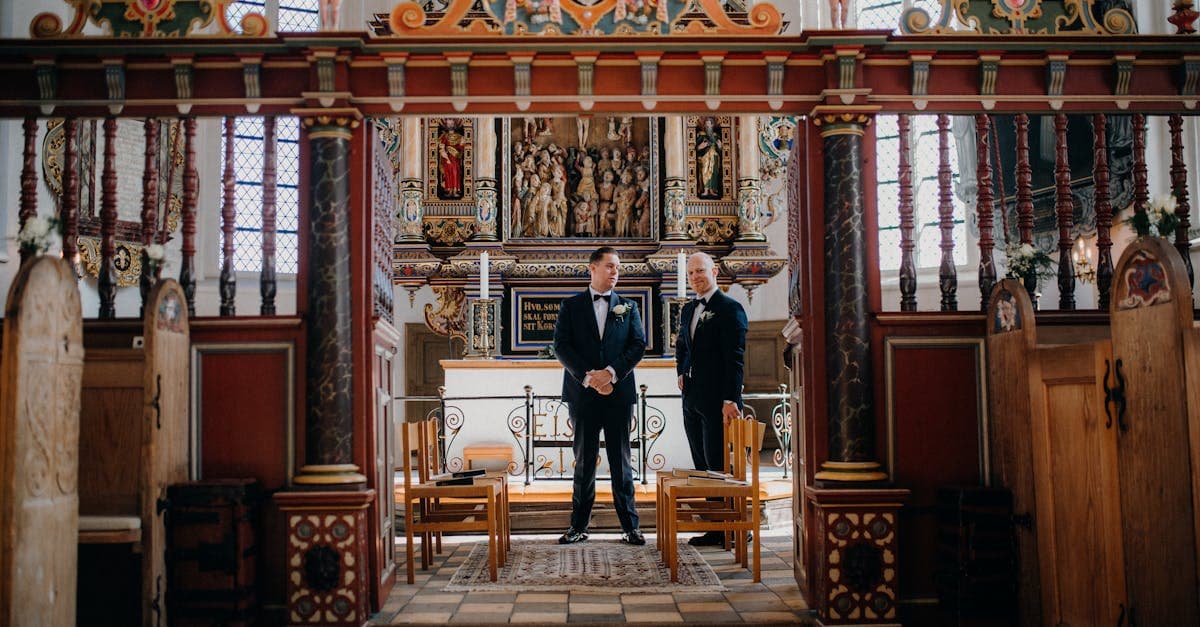
- Cathedral / chapel / ballroom. Formal architecture. Tall ceilings. Mixed light. Defaults pull toward black-tie.
- Garden / courtyard / country house. Daylight, soft shadows, controlled but informal. Defaults pull toward two-piece, mid-formality.
- Vineyard / barn. Warm wood, golden-hour-friendly. Defaults pull toward earth-tone three-piece.
- Beach / coastal / desert. Hot, bright, breezy. Defaults pull toward linen, light colours, no waistcoat.
- Hotel / urban / loft. Mixed indoor light. Defaults pull toward charcoal, midnight, or jewel-tone tailoring.
Axis 2: Season
Not the date — the season at the venue's latitude. A May wedding in Sydney is autumn; a May wedding in Atlanta is full summer. Use the temperature you'll actually have at 4pm on the day.
- Cool (under 18°C / 65°F). Wool flannel, tweed, velvet. Three-piece works. Layered fabrics flatter.
- Mild (18–24°C / 65–75°F). The widest range. Most worsted wools. Either two- or three-piece.
- Warm (24–30°C / 75–86°F). Lightweight wool, wool-linen, cotton. Skip the waistcoat unless it is unlined.
- Hot (above 30°C / 86°F). Linen, cotton-linen, hopsack. Two-piece. Open collar negotiable.
Axis 3: Party Size + Formality
This combines two often-related variables. A 4-person party at the registrar reads informal; a 16-person party at a cathedral reads black-tie. Roughly:
- Intimate informal (under 30 guests, 0–3 attendants). Single suit, no waistcoat, optional tie. The groom can almost dress as a wedding guest with extra polish.
- Mid-formal (30–120 guests, 4–7 attendants). The widest middle. Two-piece or three-piece, tie standard, boutonniere. The groom reads distinctly above the groomsmen.
- Formal (120+ guests, 8+ attendants). Three-piece, tie or bowtie, boutonniere, often a subtle shade differential. The groom is clearly the groom in every photograph.
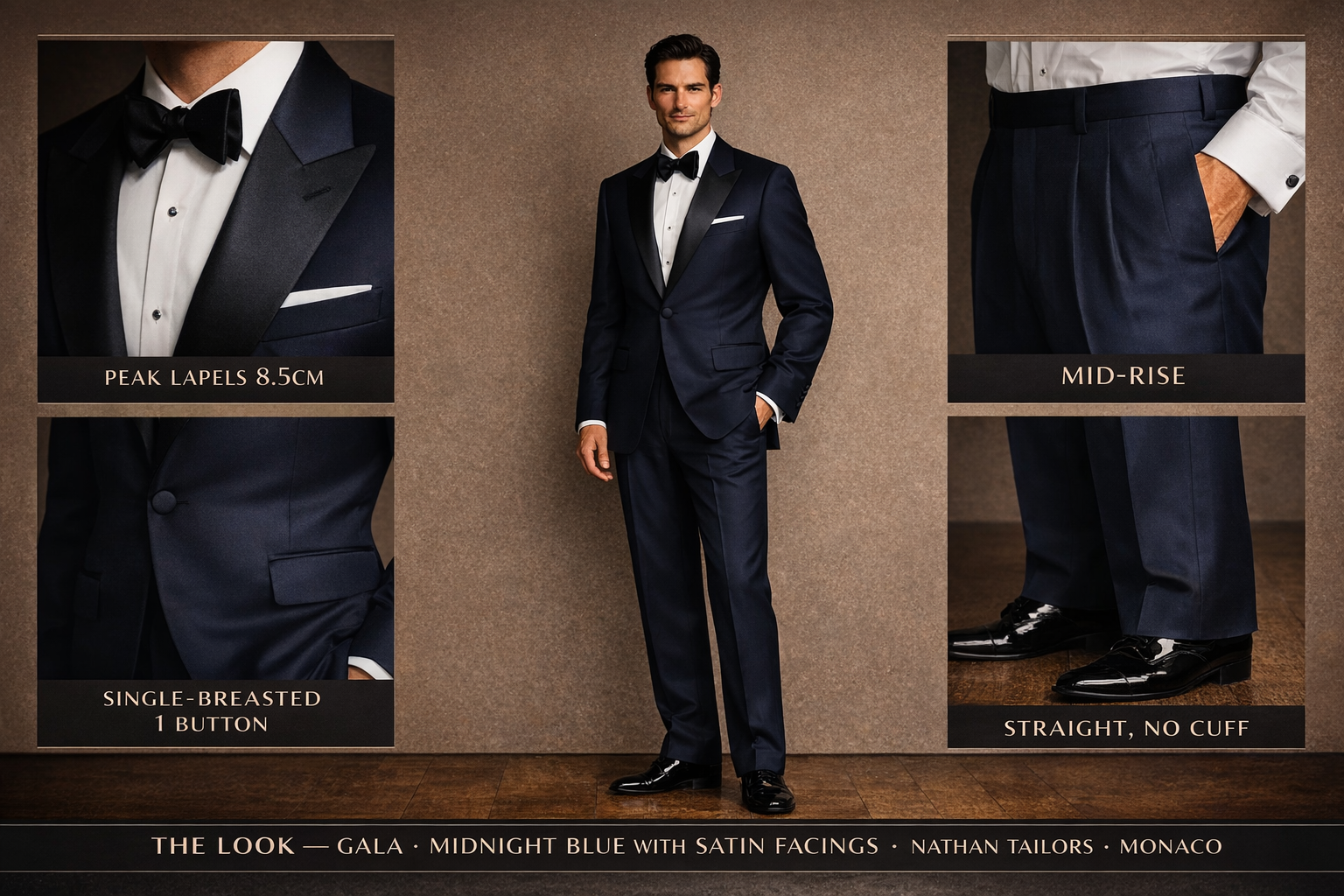
- Black-tie (any size, dress code states "black-tie"). Tuxedo, bow tie, no question. The groom may differ via lapel facing, waistcoat colour, or pocket square.
The Six Output Decisions
Once your three inputs are set, decide the following — in this order. The order matters, because earlier decisions constrain later ones.
Decision 1: Fabric
Fabric follows season first, venue second.
- Cool season: Worsted wool 280-320g, wool flannel, tweed, velvet (jacket only).
- Mild season: Worsted wool 240-280g, fresco wool, wool-silk blends.
- Warm season: Tropical wool, wool-linen, fresco, cotton-wool.
- Hot season: Linen, cotton, cotton-linen, hopsack.
Cathedral or formal venue can push you up half a weight class for drape. Beach or vineyard can push you down. Never wear linen at a black-tie event; never wear heavy wool flannel at a beach ceremony.
Decision 2: Lapel
- Notch lapel: the all-purpose default. Works at every venue except formal black-tie. Best for two-piece suits.
- Peak lapel: dressier, more architectural. Works for three-piece suits, formal venues, mid-to-large parties. The strongest "I am the groom" silhouette without going to a tuxedo.
- Shawl lapel: traditionally tuxedo-only. Reads softer than peak. Best for ballroom and cathedral black-tie.
If you are unsure, peak lapel is the move that most often pays off in groom photos. It distinguishes the groom from notch-lapel groomsmen without changing the suit colour.
Decision 3: Two-Piece or Three-Piece
- Two-piece: beach, garden, mid-formal, hot weather. Cleaner under the jacket. Photographs well at golden hour.
- Three-piece: cathedral, ballroom, vineyard, barn, autumn or winter. The waistcoat reads visibly between the lapels and adds the second layer that photographs as "more dressed."
The waistcoat also lets you carry a pocket watch, which is a small visual differentiator that photographs beautifully in detail shots.
Decision 4: Tie, Bow, or Open Collar
- Tie (silk, knit, or linen). The default. Works at 80% of weddings. Knit ties dial casual; silk dials formal.
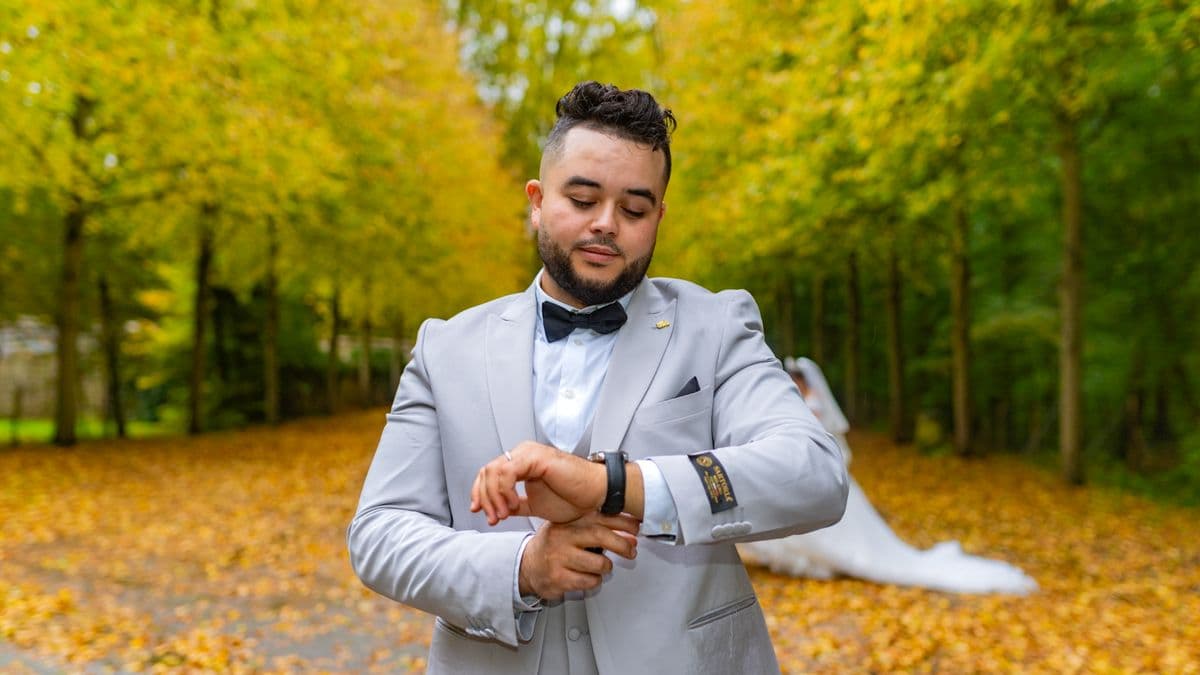
- Bow tie. Black-tie events and theatrically-formal weddings. Also strong for vintage-themed parties.
- Open collar / no neckwear. Beach weddings, hot-weather ceremonies, very intimate informal. The groom should still wear a pocket square or boutonniere — something that signals he is the groom, not a guest.
Decision 5: Boutonniere
The boutonniere is non-negotiable for the groom. Even at the most informal beach wedding, the groom should wear something on his left lapel — typically a single bloom, not a bouquet, and matched to the bride's bouquet. The boutonniere is the cheapest, most visible "I am the groom" signal you have.
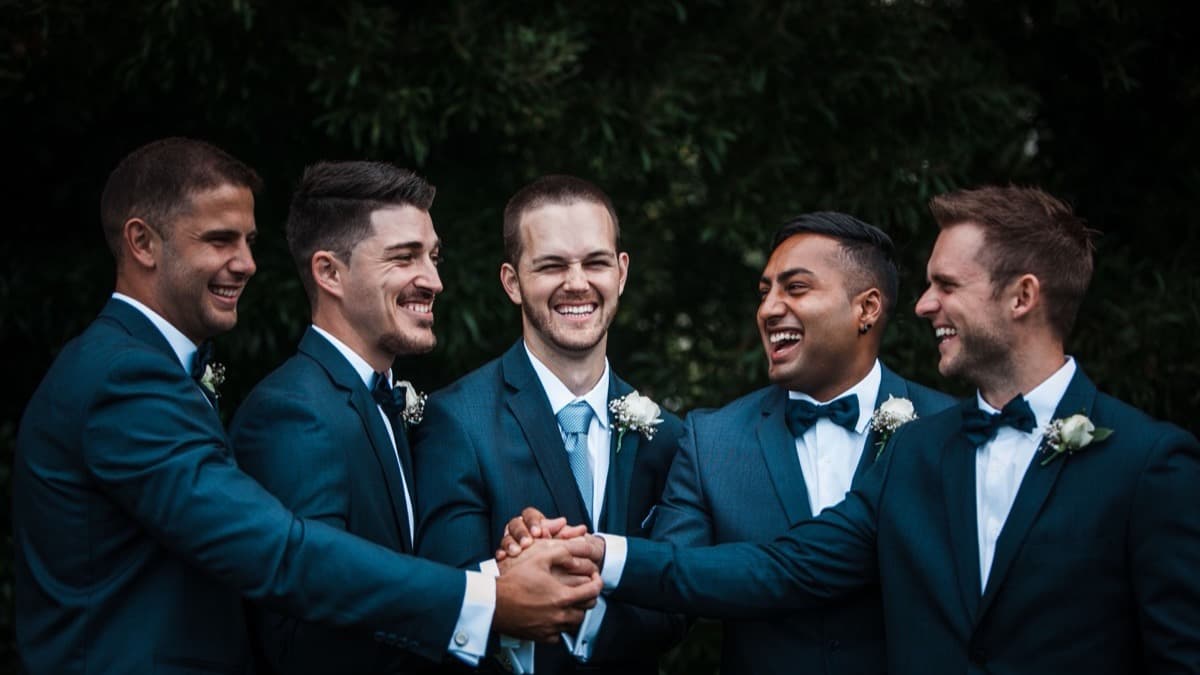
Groomsmen may wear a smaller version, often in a different bloom or simpler arrangement. The visual differential between the groom's boutonniere and the groomsmen's is one of the easiest ways to make the role read in photographs.
Decision 6: Shading vs. Groomsmen
This is the decision most grooms get wrong, and it is also the most important one. The groom must read distinct from the groomsmen — but not so distinct that he looks like he is at a different wedding. Three approaches:
- Same suit, different details. Same fabric, same colour, same workshop. The groom differs by tie (silk vs. matte), pocket square, lapel facing, or boutonniere. This works well for mid-formal weddings.
- Subtle shade differential. Groomsmen in mid-grey; groom in charcoal. Or groomsmen in navy; groom in midnight blue. Or groomsmen in beige; groom in tan. The shade is one step deeper, never lighter.
- Different jacket entirely. Groomsmen in two-piece; groom in three-piece. Groomsmen in notch lapel; groom in peak. Groomsmen in matte wool; groom in subtle texture or velvet jacket. This is the most visible differential and works for formal and black-tie weddings.
What you do not do is put the groom in a wildly different colour. Charcoal groomsmen and a sky-blue groom does not read "the groom is the groom" — it reads "we changed our minds." Stay inside the same colour family. Differentiate by depth, lapel, fabric, or detail.
How the Framework Decides — Two Worked Examples
Example 1: October vineyard wedding, 80 guests, 6 groomsmen
- Inputs: Vineyard / barn venue. Cool-mild season. Mid-formal party.
- Fabric: Worsted wool 280g or wool-silk blend in a deep tone — earthy palette suits the venue.
- Lapel: Peak lapel for the groom; notch lapel for the groomsmen.
- Construction: Three-piece for the groom. Two-piece for the groomsmen.
- Neckwear: Silk tie, dusty rose or rust to lift the palette.
- Boutonniere: Single bloom matching the bride's bouquet (eucalyptus and a small rose).
- Differential: Three-piece + peak lapel + brighter tie. The colour stays the same as the groomsmen; the structure tells the story.
Example 2: July beach wedding, 35 guests, 3 groomsmen
- Inputs: Beach / coastal venue. Hot season. Intimate informal party.
- Fabric: Linen or cotton-linen in stone, sand, or off-white.
- Lapel: Notch lapel — peak lapel reads overdressed at the beach.
- Construction: Two-piece, no waistcoat.
- Neckwear: Knit tie or open collar. Open collar is acceptable; if open, add a pocket square.
- Boutonniere: Single bloom, low-fuss — a sprig of greenery and a single small flower.
- Differential: Groomsmen in tan linen; groom in stone linen. Or groomsmen in stone; groom in cream. Half a shade lighter or darker, plus the boutonniere.
The Mistakes Grooms Make
Buying the Suit Six Weeks Before
A custom three-piece typically lands door-to-door in about three weeks — but ordering six weeks out leaves little buffer for the trial photograph, palette checks, and pre-ship adjustments. Lock the suit at least two months before the wedding for comfort.
Wearing the Same Suit as the Groomsmen
If you choose to put everyone in the exact same suit, you must use a different tie, a different pocket square, and a different boutonniere. Otherwise, in a group photo, the only way to identify the groom is by who is standing next to the bride.
Picking a Suit You'll "Never Wear Again"
The wedding suit you only wear once is the wedding suit you regret. The suit you can wear to galas, formal dinners, and other people's weddings is the suit you keep. Charcoal three-piece, midnight blue with peak lapel, deep emerald — all of these double as suits you actually use.
Going Off-Palette
The bride sets the palette. The groom dresses inside it. If the bride has chosen sage and terracotta, the groom is sage, terracotta, charcoal, or stone — not navy and burgundy because he prefers them. The photo album reads as one story or it does not.
Skipping the Trial
Photograph yourself in the full final outfit at home, in the same hour as your ceremony, in similar light if possible. Most grooms do not. A 90-second self-photograph reveals every fit issue, every tonal misjudgement, every accessory that pulls focus the wrong way.
Render Before You Order
For couples planning a full party — bride, groom, groomsmen, mother of the groom, ring bearer — the cleanest sanity check is to design the groom's full look on a mood board with the rest of the party. You see the differential play out in seconds: how distinct the peak lapel reads, whether the three-piece is doing its job, whether the boutonniere holds up against the bridesmaids' bouquets.
The same render is what we send to your photographer for first-look planning. They tell us if anything will photograph wrong in the venue's light. By the time the cloth is cut, all of it is settled.
Pricing the Decision
The framework above does not change the cost dramatically. A three-piece is roughly 20% more cloth than a two-piece. Linen is comparable to wool. The tie, the boutonniere, the pocket square are accessories. What changes pricing is whether the suit is one-size-up off-the-rack with alterations, or built to your measurements from the start.
For grooms ordering as part of a wedding party, our wedding party tailoring page has the full collection. Couples coordinating a remote fit can read about how the destination workflow runs, or about the multiple-wedding-season groom problem and how the same wedding suit doubles as a black-tie investment piece.
FAQ
Does the groom have to wear something different from the groomsmen?
Yes. Even if the suits are identical, the groom should differ by tie, pocket square, boutonniere, or lapel facing. The single most important rule is that anyone glancing at a group photograph should be able to identify the groom in under a second. If they cannot, your differential is too subtle.
Should the groom match the bride's dress?
Match the palette and the formality, not the dress itself. If the bride is in ivory silk, the groom is not in ivory linen — he is in a colour from the agreed wedding palette, at the same formality level as the dress. The bride's dress sets the formality; the groom dresses inside it.
Three-piece or two-piece for the groom?
Three-piece for cathedral, ballroom, barn, vineyard, and any wedding above 100 guests in cooler weather. Two-piece for beach, garden, hot weather, and intimate informal weddings. The waistcoat is what most strongly distinguishes the groom from the groomsmen if everyone else is in two-piece.
Tie or bow tie for the groom?
Bow tie if the dress code is black-tie or if the wedding is theatrically formal. Tie for everything else — silk for formal, knit for relaxed. Open collar is acceptable only at intimate informal weddings, beach, or hot-weather ceremonies, and the groom should still wear a boutonniere or pocket square to mark the role.
What colour should the groom wear?
Inside the wedding palette, one shade deeper than the groomsmen. Charcoal if they are in mid-grey. Midnight if they are in navy. Tan if they are in stone. Going lighter or wildly different reads as a mistake; going one step deeper reads as intentional.
How early should the groom order the suit?
For custom or made-to-measure: at least four months before the wedding. For off-the-rack with alterations: at least six weeks. Rush production exists but eliminates the buffer for pre-ship adjustments and local tailoring tweaks if the first fitting shows something off, which is the whole point of having time built into the schedule.