The Invitation Avalanche
It starts in January. A save-the-date from your analyst class buddy who proposed in Aspen over New Year's. Cute card. You stick it on the fridge and forget about it.
By March there are three more. Your college roommate is doing a June wedding in Connecticut. Your girlfriend's sorority sister booked a venue in the Hamptons for August. A guy from your desk is getting married in Tribeca in September. Then your MD's assistant drops a calendar invite for the firm's spring gala at Cipriani. Then a charity auction at the Pierre that your managing director "strongly suggests" you attend, which in investment banking means you are attending.
Then a rehearsal dinner invitation that says "cocktail attire," which as far as you can tell means literally nothing.
You walk to your closet. You stare at it. Here is what you own:
- One navy suit from SuitSupply, purchased in 2023 for a wedding you were a groomsman in
- One pair of brown cap-toe shoes from Allen Edmonds that you got on sale
- One white dress shirt that is starting to yellow at the collar
- A black knit tie your mom gave you for Christmas
- No tuxedo
You are 26 years old. You earn a quarter of a million dollars. And you are about to wear the same outfit to 8 events over the next 10 months and hope that nobody from wedding number two is also at wedding number four.
You are not alone. I traded IG bonds at a Japanese bank on Park Avenue for over a decade. I have been the groomsman doing math in his head. I have been the guy at the firm gala pretending his one suit is fine while the lining separates at the vent. I have safety-pinned a suit lining before a wedding in Napa and prayed nobody noticed. This is my story, and if you work in finance in New York, it is probably yours too.
The Event Calendar From Hell
Let me map out what a realistic year looks like for a 26-to-30-year-old associate at a bank, PE fund, or hedge fund in Manhattan. This is not an exaggeration. I lived this calendar for years, and I have heard it described back to me by hundreds of guys who walked into our shop in Hoi An looking slightly haunted.
Your Formal Event Calendar (Actual)
| Event Type | How Many Per Year | Dress Code | What You Actually Need |
|---|---|---|---|
| Weddings | 3 - 5 | Semi-formal to black tie | Dark suit or tuxedo |
| Firm galas / charity events | 1 - 2 | Black tie or black tie optional | Tuxedo or dark suit |
| Rehearsal dinners / engagement parties | 2 - 3 | Cocktail attire | Suit without tie or blazer |
| Black-tie NYE or holiday party | 1 | Black tie or creative black tie | Tuxedo |
| Nice dinners (birthdays, promotions) | 2 - 4 | Smart casual to cocktail | Suit or blazer + trousers |
| Total events requiring a real outfit | 8 - 15 | Various | You own: 1 suit. Maybe 1.5. |
That last row is the problem. You have 8 to 15 events per year that require you to look like a person who takes clothes seriously, and you own one suit that you bought three years ago because you had to. Not because you wanted to. Not because you cared about fit or fabric or construction. Because a wedding was happening and you needed to not be naked.
The "1.5 suits" joke is real, by the way. That half-suit is the one you wore to your cousin's wedding in 2022 that is now too tight in the shoulders because you started going to Equinox. It hangs in your closet as a monument to optimism. You keep thinking you will lose ten pounds and it will fit again. It will not.
The Summer That Broke Me
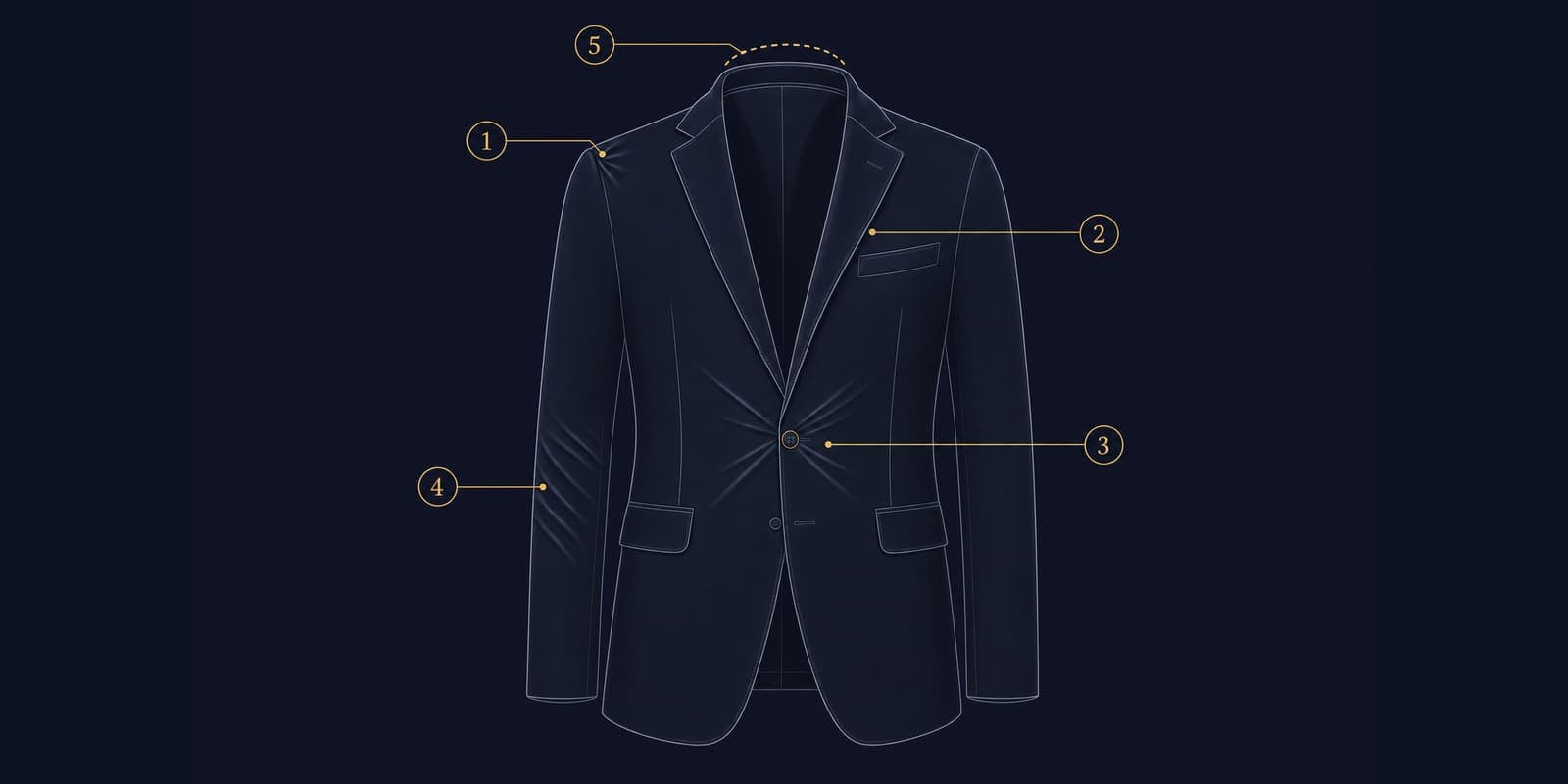
Summer of 2019 I had four weddings in three months. Connecticut, the Hamptons, Tribeca, and a destination in Napa. I wore the same navy SuitSupply to all of them and prayed nobody compared Instagram photos. By the fourth wedding, the lining was separating at the vent and I had to safety-pin it. That was the summer I realized I needed to take clothes more seriously, and also the summer I realized how insane it is that a guy earning $200K+ was safety-pinning his suit lining.
Here is what happened that summer, broken down event by event:
Wedding 1, Connecticut: The suit was fine. Crisp. Nobody noticed anything because nobody was looking. Standard summer wedding, outdoor ceremony, reception in a barn. I felt good.
Wedding 2, the Hamptons: Same suit. Same shirt. Same shoes. A girl I was talking to at the bar said "nice suit" and I said thanks as if it was a different suit than the one I wore two weeks ago that several of the same people saw. It was not.
Wedding 3, Tribeca: The fabric was starting to pill at the thighs from dry cleaning. The buttonhole on the left sleeve was fraying. I wore it anyway because what was I going to do -- buy a new suit? I had just paid $3,200 rent and $200 in dry cleaning that month. I was irritable the whole reception because I kept pulling at the jacket trying to make it hang right.
Wedding 4, Napa: The lining separated at the center vent. I discovered this while getting dressed in a hotel room 2,800 miles from my apartment. I safety-pinned it with a pin from the hotel sewing kit. I spent the entire reception slightly turned to one side so nobody would see the pin. During the couple's first dance, I was not thinking about my friend's happiness. I was thinking about the safety pin in my suit.
That is not a clothing problem. That is a financial decision problem disguised as a clothing problem. I earned enough money to own proper clothes. I just never made it a priority because no one in finance talks about this stuff. We talk about watches. We talk about cars. We talk about restaurants. We do not talk about the fact that half the associates on the floor own one suit and are slowly destroying it through overuse.
The Cost of NOT Owning the Right Clothes
Here is what that summer actually cost me, financially and otherwise. And this is what I mean when I say that the "savings" of owning one suit are an illusion.
The One-Suit Death Spiral
When you own one suit and wear it to 8+ events per year, here is what happens:
- Dry cleaning: $25-$35 per clean, 8-12 times per year = $200-$420/year. Each dry cleaning degrades the fabric. Professional dry cleaning uses perchloroethylene, a solvent that strips natural oils from wool fibers over time. Your suit gets a little stiffer, a little more lifeless, a little more prone to pilling with every clean.
- Accelerated wear: A suit worn to 8-12 formal events per year -- plus work days, plus dates, plus "I have nothing else" occasions -- is getting worn 30-50+ times before its next birthday. That is a suit doing the work of three suits. It ages accordingly.
- Emergency purchases at full retail: When the one suit finally dies -- or when you get invited to a black-tie event and realize you own zero tuxedos -- you panic-buy. You walk into Brooks Brothers or SuitSupply two days before the event and pay full retail for something that does not fit perfectly because there is no time for alterations. I have done this. You have done this. We have all done this. That emergency SuitSupply purchase costs $600-$900.
- Tuxedo rentals: $200-$300 per rental. You rent because you do not own one. The rental tux does not fit. The lapels are weird. The pants are too long. You look like a 17-year-old at prom. You know this. Everyone knows this. But what are you going to do?
- The anxiety tax: This one is free but it costs everything. You are Googling "can I wear navy to a black-tie gala" at 11pm the night before. You are checking Instagram to see if people from wedding number two will be at wedding number four. You are standing in front of your closet at 6pm on a Saturday feeling a knot in your stomach because you are about to walk into a room full of well-dressed people and you know -- you know -- that your outfit is not quite right.
Add it up. Over the course of one year, the "I own one suit" strategy costs you:
| Expense | Low | High |
|---|---|---|
| Dry cleaning (8-12x per year) | $200 | $420 |
| One tuxedo rental | $200 | $300 |
| Emergency full-retail suit purchase | $500 | $900 |
| Replacement dress shirts (yellowed collars) | $80 | $160 |
| Total annual cost of the "one suit" strategy | $980 | $1,780 |
Read that bottom row again. You are spending $980 to $1,780 per year to look mediocre. You are spending nearly two thousand dollars annually on a strategy that leaves you feeling underdressed at every event, wearing a suit that is visibly deteriorating, and renting tuxedos that make you look like you lost a bet.
Now let me show you what it costs to actually solve this problem.
The 3-Piece Event Wardrobe: Everything You Need and Nothing You Do Not
I am not going to give you a 15-piece capsule wardrobe guide with linen pocket squares and suede loafers and a "statement belt." That is content for fashion bloggers who have never worked 80 hours a week and then had to put on a suit on Saturday for a wedding they forgot about until Wednesday.
You need three things. That is it. Three pieces that cover every single event on your calendar, from a Saturday afternoon garden wedding to a black-tie gala at the Waldorf. Here they are.
Piece 1: The Navy Suit (Your 80% Solution)
This is your workhorse. The suit you wear to 80% of everything. Weddings, rehearsal dinners, firm events, client dinners, dates at nice restaurants, your friend's birthday at Carbone. Navy works everywhere. It is formal enough for a wedding and relaxed enough for cocktail attire when you lose the tie.
But it needs to be a good navy suit. Not the SuitSupply that is starting to pill. A suit in super 110s or super 120s wool that drapes correctly, that is constructed with a proper canvas interlining, that fits your shoulders and chest like it was made for your body. Because it was.
This is your number one investment. If you buy one thing after reading this, make it this.
What it covers: Weddings (non-black-tie), rehearsal dinners, engagement parties, firm events, charity auctions, client dinners, nice restaurant dinners, dates
Nathan Tailors price: $149 (wool blend) to $309 (merino wool). Most Wall Street guys go with the premium wool blend at $249 or the wool-silk blend at $189 for the subtle sheen.
SuitSupply equivalent: $499-$799
Brooks Brothers equivalent: $700-$1,200
Piece 2: The Charcoal Suit (Your Insurance Policy)
Having two suits is not about vanity. It is about logistics. When you own two suits, you never wear the same one to consecutive events. You never have to speed-dry-clean a suit because you wore it Saturday and need it again Wednesday. And critically, you never have to be the guy in "that same blue suit" when three of the same people are at both events.
Charcoal is the move for the second suit because it reads slightly more formal than navy, works for winter weddings where navy can feel too summery, and pairs differently with every shirt and shoe combination. Navy suit with a white shirt looks corporate. Charcoal suit with a white shirt looks sophisticated. Different energy. Same shirt.
What it covers: Everything the navy suit covers, plus: winter weddings, more formal firm events, occasions where you already wore the navy suit recently
Nathan Tailors price: $149-$309 depending on fabric. Same range as the navy. Because the fabric costs the same. Because the labor costs the same. Because that is how economics works when you remove middlemen.
Piece 3: The Tuxedo (Your Financial Inevitability)
Let me make the math argument because I know that is what will convince you. You work in finance. Numbers are your love language.
A tuxedo rental in Manhattan costs $200-$300 per event. At your income level and social calendar, you will need a tuxedo 2-3 times per year. That is $400-$900 per year in rentals.
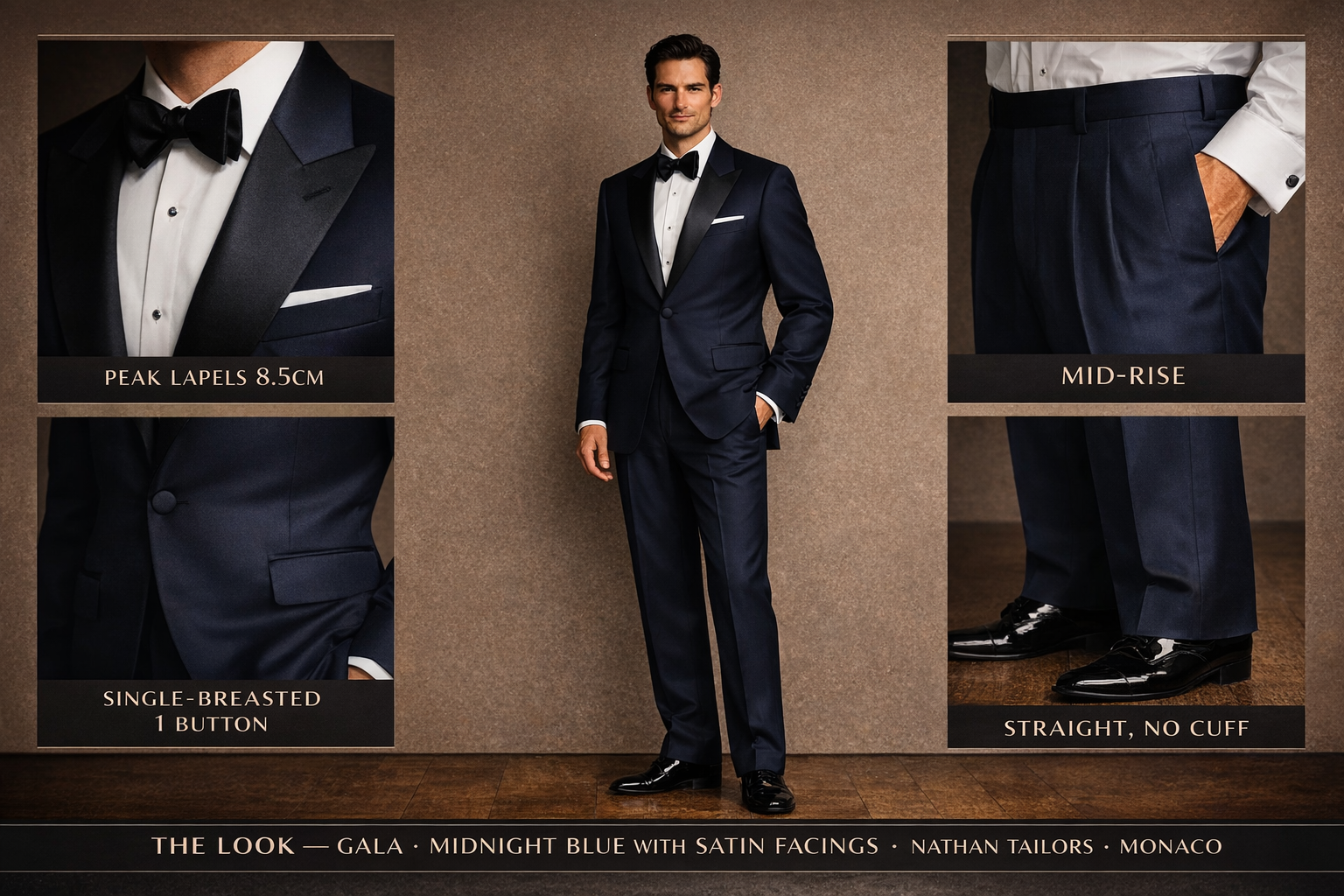
A custom tuxedo from Nathan Tailors costs $249-$309 depending on fabric. Let us call it $260 for a gorgeous wool-silk blend with satin peak lapels.
The rental pays for itself in exactly one and a half events. By the second time you wear it, you are in the green. By the third time, you have saved $340-$640 compared to renting. And you have not even gotten to the most important part: a rented tux never fits right.
The lapels on a rental tuxedo are always slightly too wide or slightly too narrow for your frame. The shoulders do not hit at your shoulder point. The trousers are either too long or hemmed to a generic length that works for no one. The jacket bunches at the back because it was not built for your posture. You spend the entire night tugging at it, adjusting it, feeling like a kid at prom. And everyone can see it. Everyone. The guys with their own tuxedos can spot a rental from across a ballroom. The satin sheen is wrong. The proportions are off. It is the clothing equivalent of driving a rental car -- technically functional, obviously not yours.
Tuxedo: Rent vs. Buy vs. Custom
| Option | Upfront Cost | Year 1 Cost (3 events) | Year 3 Cost (9 events) | Fit Quality |
|---|---|---|---|---|
| Rental (Men's Wearhouse / The Black Tux) | $0 | $600 - $900 | $1,800 - $2,700 | Poor. Generic sizing. |
| Buy off-the-rack (SuitSupply) | $699 - $999 | $699 - $999 | $699 - $999 | Decent. Standard sizes. |
| Buy off-the-rack (Brooks Brothers) | $1,200 - $1,800 | $1,200 - $1,800 | $1,200 - $1,800 | Decent. Limited customization. |
| Custom (Nathan Tailors) | $189 - $309 | $189 - $309 | $189 - $309 | Excellent. Built for your body. |
Look at that Year 3 column. By the time you have attended 9 black-tie events -- which takes about three years at a Wall Street pace -- the rental guy has spent $1,800-$2,700 and never once looked good. The SuitSupply guy spent $700-$1,000 and looks fine. The Nathan Tailors guy spent $189-$309 and looks better than both of them because his tuxedo was literally built around his measurements.
Decoding Every Dress Code You Will Encounter This Year
Here is the part of this post you are going to screenshot and save to your phone. Because at some point this year -- probably at 10:30pm the night before an event -- you are going to stare at an invitation that says something vague and panic.
The Definitive Dress Code Translation Guide
"Black tie" -- Tuxedo. Period. Not a dark suit. Not a navy suit with a black tie. A tuxedo. With a bow tie. If the invitation says black tie and you show up in a suit, you are underdressed and everyone will know it. This is the one dress code that actually means what it says.
"Black tie optional" -- You can wear a tuxedo or a dark suit. A dark suit is genuinely fine. Nobody will judge you. But if you own a tuxedo, wear it. You will feel more comfortable, not less, because you will match the 60% of guys who chose the tux option.
"Cocktail attire" -- A suit. Tie optional. This is the most common dress code for rehearsal dinners, engagement parties, and the events that are formal but not formal formal. Your navy suit with a good shirt and no tie is perfect. Your charcoal suit with a tie is also perfect. You cannot mess this up as long as you are wearing a suit that fits.
"Semi-formal" -- Same as cocktail. Yes, this is confusing. Yes, "semi-formal" sounds like it should be less formal than "cocktail." It is not. They are the same thing. The wedding industrial complex runs on ambiguity.
"Festive attire" -- Your suit plus something fun. A textured tie. A pocket square in a color that is not white. A midnight blue suit instead of standard navy. The word "festive" means the couple wants you to have personality, not that they want you to show up in a Hawaiian shirt. Keep the suit. Add one element of interest.
"Garden party" -- Lighter fabrics. No tie. A cotton-linen blend suit, or a blazer with linen trousers. This is where your navy or charcoal suit in a wool-silk blend works beautifully because the silk gives it enough sheen to look intentional without looking heavy. If it is a summer garden wedding, skip the vest and unbutton the top shirt button.
"Creative black tie" -- Tuxedo, but with personality. A velvet dinner jacket. A colored bow tie instead of black. A midnight blue tuxedo instead of traditional black. This is the dress code that secretly means "we want Instagram-worthy outfits." Your custom tuxedo in a wool-silk blend with peak lapels and a burgundy pocket square handles this perfectly.
The Groomsman Coordination Problem
At least one of those 3-5 weddings, you are not just attending. You are in the wedding party. Your buddy texts the groomsman group chat: "Hey guys, just get a charcoal suit." As if that is a simple instruction. As if "charcoal" is one color and not a spectrum that ranges from medium grey to almost-black depending on the brand, the fabric, and the lighting in the store.
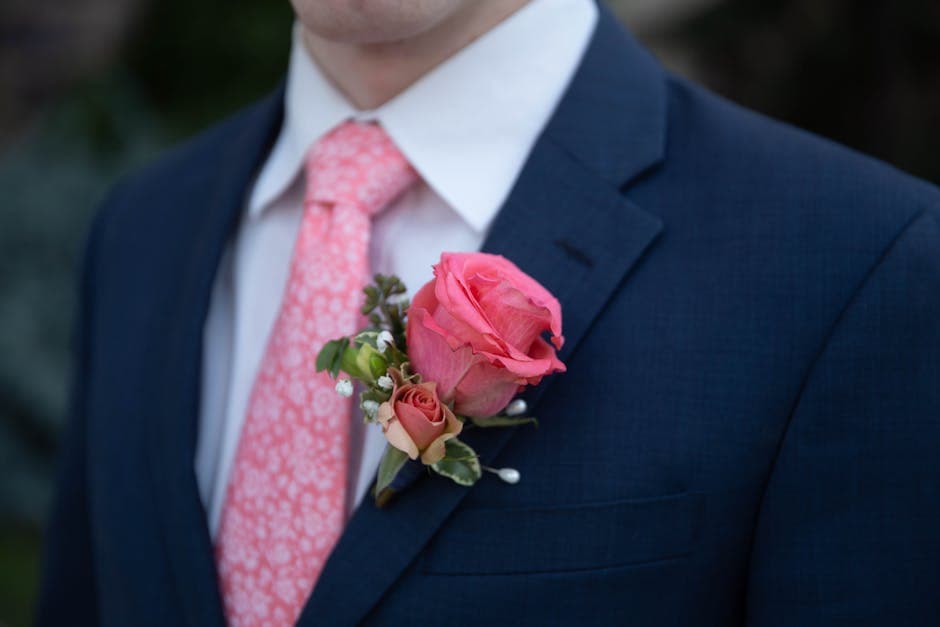
Here is what actually happens when five groomsmen each independently buy "a charcoal suit":
- Groomsman 1 buys from SuitSupply. His charcoal has a slight blue undertone.
- Groomsman 2 buys from J.Crew. His charcoal is lighter and has a brownish cast.
- Groomsman 3 already owns a "charcoal" suit from a wedding two years ago. It is actually dark grey.
- Groomsman 4 buys from Macy's because he is on a budget. His fabric has a visible sheen that nobody else's does.
- Groomsman 5 is you. You are reading this blog post.
You all stand together at the altar and look like five guys who met in a parking lot and agreed to wear approximately the same color. The wedding photos will immortalize this forever. The bride will notice. She will be gracious about it. But she will notice.
This is actually where custom tailoring solves a problem that off-the-rack physically cannot solve. When all five groomsmen order from Nathan Tailors, every suit comes from the exact same bolt of fabric. Same dye lot. Same weave. Same weight. Same color under every lighting condition. And every suit fits the person wearing it -- because each one was cut to individual measurements. To get everyone on the same page before the first message is sent, the groom can spin up a wedding mood board for the full party — one image showing the exact charcoal, the exact lapel, and the rest of the wedding palette.
I wrote an entire post about the financial and logistical reality of being a groomsman in 2026. If you are staring at that "bro will you be my groomsman" text right now, read this next. It will save you money and stress.
The Full Wardrobe: What It Actually Costs
Let me build this out with real numbers from our pricing menu. No "starting at" games. No hidden fees for customization. These are the prices. They include the fabric, the tailoring, and the custom fit. Shipping is quoted at cost by weight and destination before you pay.
| Piece | Recommended Fabric | Nathan Tailors | SuitSupply Equivalent | Brooks Brothers Equivalent |
|---|---|---|---|---|
| Navy suit (fine worsted wool) | Worsted wool | $249 | $599 | $898 |
| Charcoal suit (wool-silk blend) | Wool-silk blend | $189 | $649 | $998 |
| Tuxedo (wool-silk blend, satin lapels) | Wool-silk blend | $189 | $799 | $1,498 |
| 3 dress shirts (premium cotton) | Premium cotton | $147 (3 x $49) | $357 (3 x $119) | $474 (3 x $158) |
| Total | $774 | $2,404 | $3,868 |
$774 for a complete event wardrobe that covers every dress code from cocktail to black tie. Custom fit. Real worsted wool with a half-canvas chest. Built to your measurements.
If you want to go with the premium premium wool blend or merino options across the board, the total climbs to roughly $960-$1,160. Still less than a single off-the-rack suit from Brooks Brothers. Still less than what you spent last year on dry cleaning, rentals, and that emergency SuitSupply purchase combined.
At your income level, the question is not whether you can afford to build this wardrobe. The question is how long you are going to keep spending more money to look worse.
Why Is It This Cheap? (The Part Where I Explain Supply Chains)
Every time I share our prices, someone asks this. Usually with suspicion. "How is a custom suit $249? What is wrong with it?" Nothing is wrong with it. What is wrong is your understanding of where the money goes when you buy a suit in Manhattan.
Here is a simplified cost breakdown for a $799 SuitSupply suit versus a $249 Nathan Tailors suit. Same fabric tier. Same construction method. Same thread count.
- Fabric cost: $40-$60 for both. Premium worsted wool from established fabric brokers. The fabric market is global. A meter of fine wool costs the same whether it ships to Amsterdam or Hoi An.
- Labor cost: This is where everything diverges. A tailor in Hoi An earns a good living at $500-$800/month. A tailor in Amsterdam or New York earns $3,000-$6,000/month. Same skill. Same hands. Same thread. Different cost of living. Our tailors are not underpaid -- they earn well above the local median. They just live in a country where $600/month puts you solidly in the middle class.
- Overhead: SuitSupply operates 150+ retail stores in the most expensive commercial real estate markets on earth. Manhattan rent. Amsterdam rent. London rent. We operate from a workshop on Tran Hung Dao Street in Hoi An, Vietnam, where our rent is a rounding error compared to a SuitSupply storefront on Madison Avenue.
- Volume and training: Our tailors process 30-50 orders per day. A bespoke tailor in Manhattan might do 5-10 per week. This is not sweatshop volume -- it is the natural result of being in a tailoring town that has been producing custom garments for decades. Our tailors are not less skilled because they work faster. They are more skilled because they have more repetitions. Same reason a surgeon at Mount Sinai who does 300 procedures a year is usually better than one who does 30.
- Middlemen: Zero. When you order from us, you are talking to us. There is no distributor. There is no wholesale markup. There is no franchise fee. There is no retail partner taking a 40% cut. You pay for fabric + labor + shipping + a reasonable margin. That is it.
The suit is not cheap. The suit is correctly priced. Everyone else is overcharging you for Manhattan rent and marketing budgets.
Building This Wardrobe Over Time (The Smart Sequence)
You do not need all three pieces tomorrow. Here is the order I would build this in, based on what covers the most events first.
Month 1: The navy suit. Order this now. It covers 80% of your events. Weddings, rehearsal dinners, firm events, charity auctions, dates. This is your foundation. Production takes 3-4 working days. From the day you submit your measurements to the day DHL rings your doorbell, you are looking at about three weeks. Order in March, have it by April, wear it to every spring and summer event with confidence.
Month 4-5: The charcoal suit. Now you have two suits. You can rotate. The charcoal handles fall and winter weddings where navy can feel too light. It also means you never wear the same suit to consecutive events. Your Instagram feed now shows variety. Nobody is comparing photos.
Month 6-8: The tuxedo. Before your first black-tie event of the season. Most firm galas and charity events happen in the fall and around the holidays. Order the tuxedo in August or September, have it by October, and walk into Cipriani looking like you belong there. Because you do.
Over 6-8 months, you go from "one suit and a prayer" to "I have the right thing for everything." The total investment: $774-$1,160 depending on fabric choices. That is less than two tuxedo rentals plus one emergency SuitSupply purchase. That is less than you spent on Ubers last month. That is 0.3% of your annual income.
You do not have a money problem. You have an allocation problem. And now you have the information to fix it.
How the Remote Process Works
I know what you are thinking. "This is great, but the tailor shop is in Vietnam. I live in Murray Hill." Correct. Here is how this actually works, step by step.
- You measure yourself with our free Guided Measurement App. It walks you through every measurement step-by-step with photos and tutorials for each one. All you need is any soft tape measure (pick one up cheaply on Amazon if you do not have one). Takes about 15 minutes with a friend or partner helping you. Our measurement guide is also available online with visual instructions for each body part.
- You message us on WhatsApp. One of our team members reviews your measurements live, confirms everything, and discusses your preferences -- lapel width, button stance, vent style, trouser break. This call takes 20-30 minutes. Start in the Guided Measurement App and we will follow up on WhatsApp.
- We build your suit. Our tailors cut and sew your suit to your measurements. Production takes 3-4 working days.
- We ship it via DHL or FedEx. Door-to-door tracking. Typical express delivery to NYC is 6-8 days from Hoi An.
- If something is off, we fix it. We build 1-2 inches of seam allowance into every garment. If the fit needs adjustment, a local tailor can let out or take in the seams with room to work, using the spare piece of matching fabric we ship in every box. Send us photos and we will help you find the right fix. Our first-time fit record on remote orders is excellent. We have shipped to over 50 countries and outfitted over 5,000 clients this way.
You can also WhatsApp us at any point in the process. Questions about fabric, lapel styles, what color lining to choose, whether you should go notch or peak lapel on your tuxedo -- send it over. We respond within hours, usually faster. Our team lives on WhatsApp the way your desk lives on Bloomberg.
The Safety Pin Moment
I think every guy in finance has a version of the safety pin moment. The moment you realize that you have been underinvesting in the one category of spending that directly affects how people perceive you in professional and social settings. You will drop $200 on a dinner at Peter Luger without thinking. You will spend $500 on a weekend in Montauk. You will pay $250/month for Equinox. But a suit? A tuxedo? Something you will wear dozens of times over years? That somehow feels like an extravagance.
It is not. It is infrastructure. Same way a Bloomberg terminal is infrastructure for your job. Same way Equinox is infrastructure for your health. Your event wardrobe is infrastructure for every room you walk into from ages 26 to 36 and beyond.
You can build that infrastructure for $774. Or you can keep safety-pinning your suit lining and praying nobody checks the Instagram tags.
I know which one I would choose. I know because I made the wrong choice for years before I made the right one.
Frequently Asked Questions
How many suits does a Wall Street associate actually need?
For events specifically -- not daily work wear -- you need three pieces: a navy suit, a charcoal suit, and a tuxedo. These three cover every dress code from cocktail to black tie. If you also need daily office suits, that is a separate conversation, but many finance firms have gone business casual for non-client days. The three event pieces we describe here are for your social and formal calendar.
Is it worth buying a tuxedo if I only wear it twice a year?
Absolutely, and here is the math. Two rentals per year at $200-$300 each = $400-$600/year. A custom tuxedo from Nathan Tailors costs $189-$309. It literally pays for itself in one year. Over five years, you save $1,700-$2,700 compared to renting. And you look dramatically better because the tux was made for your body, not for a mannequin at a rental warehouse.
What if I gain or lose weight after ordering?
We build 1-2 inches of seam allowance into every garment. If your weight fluctuates within that range, any local tailor can adjust the suit in 20 minutes for $20-$40. If you have a major body composition change -- you start powerlifting, or you run a marathon -- reach out and we will work with you on the best way to adjust it -- and the seam allowances plus spare matching cloth give a local tailor room to work.
Can I really get measured remotely and have it turn out well?
The overwhelming majority of our remote orders fit correctly on the first delivery. That is based on 5,000+ clients across 50+ countries. The measurement process takes 15 minutes with our video guides, and we offer a free WhatsApp fitting call where a team member confirms everything live. The technology is not magic -- it is a tape measure and an experienced eye. We have been doing this for 25+ years.
How long does it take from ordering to receiving the suit?
Total turnaround is typically about three weeks door-to-door. Production takes 3-4 working days, plus international shipping via DHL or FedEx. If you have a specific event date, tell us when you order and we will plan accordingly. We have hit tighter deadlines for clients with urgent events, but we recommend ordering at least 5-6 weeks before you need it for maximum comfort.
What about black tie optional? Can I really just wear a suit?
Yes. "Black tie optional" genuinely means optional. A dark, well-fitted suit -- navy or charcoal -- is completely acceptable. That said, if you own a tuxedo, wear it. You will feel more at ease because you will match the majority of the room. The guys who stress about "black tie optional" are always the guys who do not own a tuxedo. Once you own one, the stress disappears because you have both options.
Is a wool-silk blend tuxedo appropriate for summer events?
Yes. Wool-silk blends are actually ideal for year-round wear because the silk adds breathability and a subtle luster. For summer black-tie events, you might also consider unlined or half-lined construction to keep things cooler. Just mention "summer tuxedo" when you order and we will adjust the construction accordingly. Same price.
What if my whole groomsman group wants to order together?
This is one of the things we do best. We have outfitted 500+ wedding parties. Each groomsman submits individual measurements, everyone gets suits cut from the same bolt of fabric for a perfect color match, and each suit fits the person wearing it. We coordinate the whole process through a group WhatsApp chat. It is genuinely easier than trying to get five guys to independently buy "a charcoal suit" and hoping it matches. More on groomsman coordination here.
Tell Us What Is on Your Calendar
Here is what I want you to do right now. Pull up your phone. Look at the next 12 months. Count the weddings. Count the firm events. Count the "I need to wear something decent" occasions. Then send us that list.
WhatsApp us your event calendar -- the dates, the dress codes, the venues if you know them. We will map out exactly what you need, in what order, and what it will cost. No surprises. No pressure. Just a clear plan from someone who has been in your shoes (and safety-pinned his suit lining in a hotel room in Napa).
You can also book a free consultation if you want to talk through fabrics, styles, and timing on a WhatsApp video call. We have helped hundreds of Wall Street guys build event wardrobes that cost less than their monthly Equinox membership. Let us help you too.
Nathan Tailors. 127 Tran Hung Dao Street, Hoi An, Vietnam. 25+ years, 530+ five-star Google reviews, 5,000+ clients worldwide. Your suit should not need a safety pin. It should need a compliment.