The Audience Nobody Plans For
Wedding planning has a hierarchy of attention. The bride. The groom. The bridesmaids. The groomsmen. The mothers, eventually. And then somewhere on the day-of timeline, two men in suits arrive to walk down aisles, give toasts, and dance with their daughters and daughters-in-law — and nobody has actually planned what they will wear.
I see this every wedding season. Two well-meaning fathers, each shopping independently in different cities, each pulling something out of his closet from his own wedding fifteen years ago, each arriving at the rehearsal dinner in a slightly different shade of navy that cannot decide whether it is dressier than the groom or less dressy than the bride's father. Photographs come back, and one looks like he is at a different wedding from the other.
This piece is the playbook. How to coordinate two fathers so they read as part of the same wedding — without either of them upstaging the groom or fading into the centrepieces. We have outfitted hundreds of pairs of fathers from our atelier in Hoi An, and the pattern is consistent enough to write down.
The Two Fathers Are Not Doing the Same Job
This is the conceptual move that fixes most coordination problems. The father of the bride and the father of the groom have different relationships to the day, and dressing them identically is not necessarily the answer.
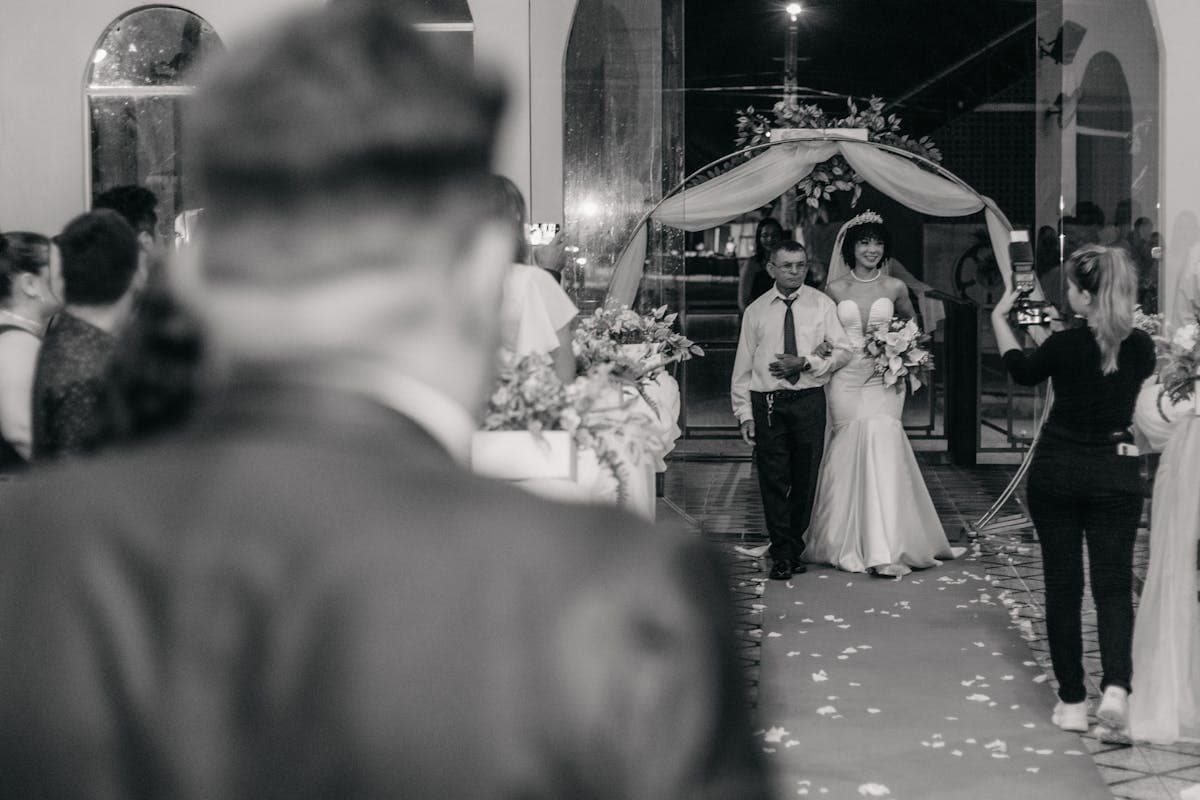
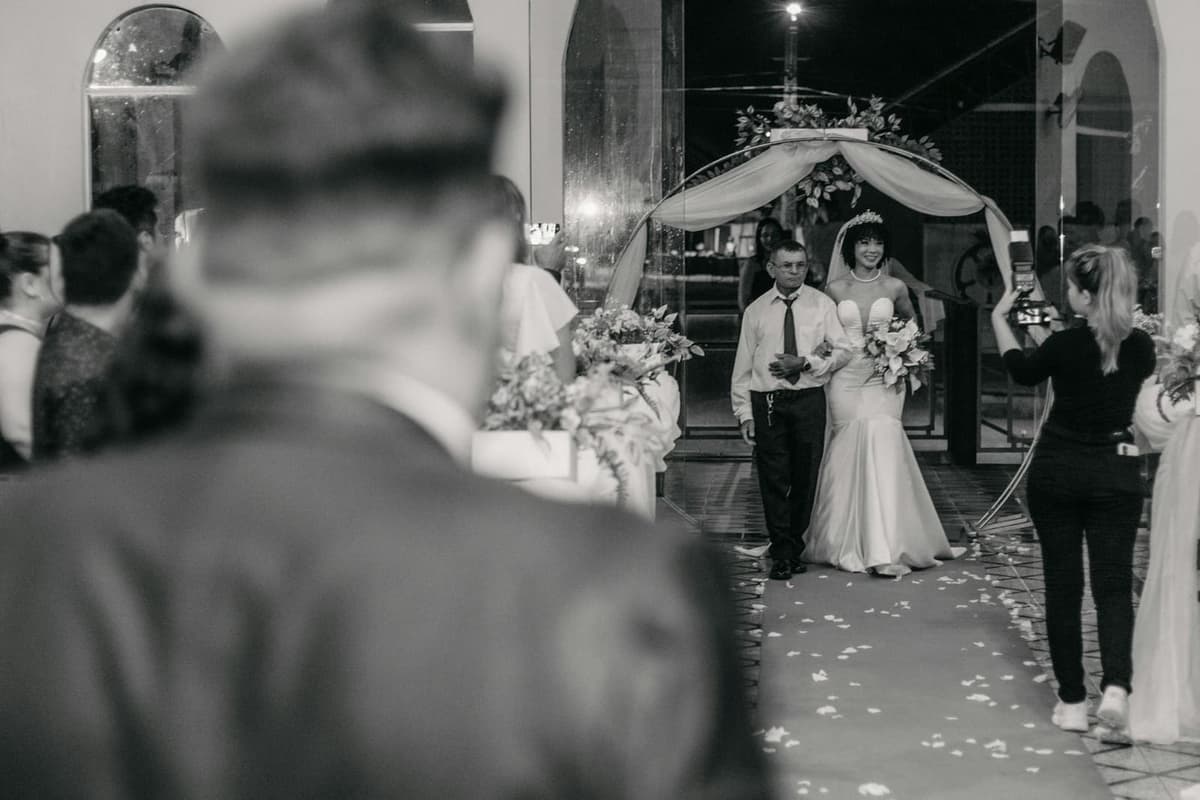
The father of the bride walks his daughter down the aisle, frequently gives a speech, and is photographed in close proximity to the bride. His suit needs to coordinate with the bride's dress and the bride's side of the wedding party. He is the visual anchor of the bride's family.
The father of the groom typically stands closer to the groom, walks in alongside the groom's mother, and is photographed against the groom's side of the party. His suit should mirror the tone of the groom's suit while staying a notch quieter.
So the question is not "should they match?" The question is "should they match each other, or should each one mirror their own side?" Both are valid. The wedding decides.
Three Approaches That Actually Work
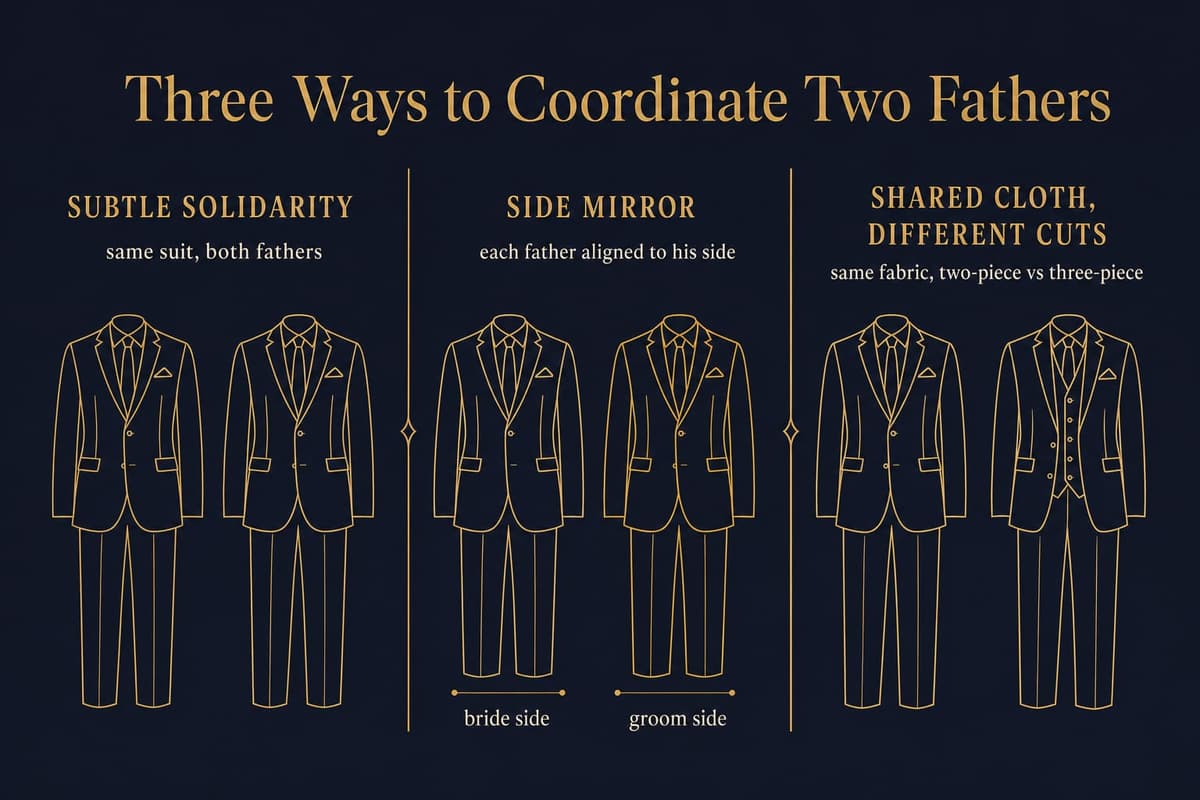
Approach 1: Subtle Solidarity (Both Fathers in the Same Suit)
Both fathers wear the same suit colour, same fabric tier, same level of formality. The differentiation comes from ties, pocket squares, and the natural variation in body. This reads as unified — "the parents are a team" — and photographs cleanly.
Best for: weddings where both families know each other well, smaller and more intimate ceremonies, any wedding where the bride wants the parents to read as a single visual unit.
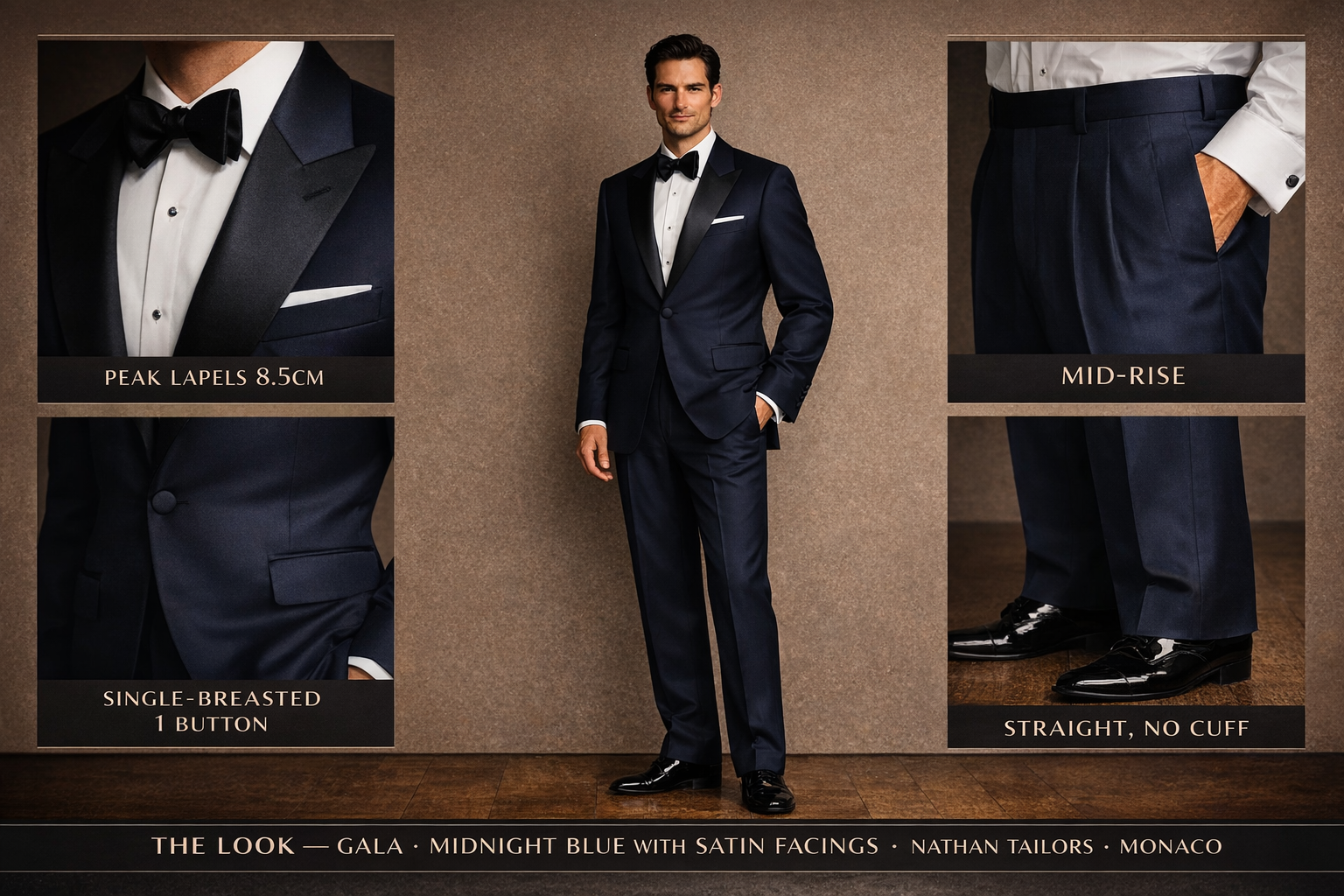
How to execute: pick a colour that sits comfortably below the groom's suit in formality. If the groom is in midnight navy, the fathers wear charcoal or mid-grey. If the groom is in charcoal, the fathers wear medium navy. The fathers never out-dress the groom.
Approach 2: Side Mirror (Each Father Aligned to Their Side)
The father of the bride wears a suit that picks up a tone from the bride's palette — perhaps a warm grey if the bride's flowers are blush, or a stone-coloured suit for a beach wedding with a champagne dress. The father of the groom wears a suit that mirrors the groom's, in a slightly less formal register.
Best for: weddings with strong colour stories on each side, larger weddings where the parents are photographed mostly with their own families, formal evening weddings where the groom is in a tuxedo.
How to execute: match the bride's father to the bride and bridesmaids' palette; match the groom's father to the groom and groomsmen's palette. Tie colour and pocket square become the throughline that unites both fathers visually when they appear together.
Approach 3: Shared Cloth, Different Cuts
Both fathers wear the same fabric — same colour, same mill, same weight — but the cuts differ. Father of the bride in a three-piece with waistcoat. Father of the groom in a two-piece. Or the same cloth in slightly different tones (charcoal for one, dark grey for the other).
Best for: fathers who differ significantly in body type. A taller, slimmer father in a fitted two-piece next to a shorter, broader father in a three-piece reads coordinated rather than mismatched, because the cloth holds them together while the cut respects each one.
Where Most Father-of Suits Go Wrong
The same handful of mistakes appear at almost every wedding I see photographs from. They are quick to fix once you know to look for them.
- One father too dressy, the other too casual. One in a three-piece tuxedo, the other in a sport coat with chinos. The eye reads them as different events.
- Both fathers in the same shade as the groom. Three navy suits in a row, indistinguishable in photographs. The groom should be the most formal-reading; the fathers should sit a level below.
- Mismatched ties. One father in a deep burgundy silk, the other in a stripe with three competing colours. Pick a tie family — solid silks in coordinating shades — and stick to it.
- Off-the-rack with no alterations. A 64-year-old man in a sample-size jacket photographs poorly almost without exception. The fathers benefit from custom or made-to-measure more than almost anyone in the wedding party.
- Wrong fabric weight for the season. A father in a 13-ounce flannel at a July beach wedding. A father in a 7-ounce tropical wool at a Vermont November ceremony. The discomfort shows in every photo.
- Brown shoes with everything. Some fathers default to their everyday brown brogues regardless of suit colour. Black or burgundy shoes work better with charcoal, navy, and black; brown stays for tan, stone, and mid-grey.
Coordinating the Fathers With the Rest of the Wedding
The fathers do not exist in isolation. They are coordinating with five or six other people in photographs.
- With the groom: always one notch quieter. If the groom's suit has a peak lapel, the fathers' should have a notch lapel. If the groom has a contrast lapel, the fathers do not.
- With the bride: the father of the bride's tie or pocket square should pull a colour from the bride's bouquet, not from her dress. Matching her dress reads costumed.
- With the mothers: if the mother of the bride is wearing rose, blush, or champagne, the father of the bride's pocket square should sit in that family. The colour link is the throughline of the parents-photo lineup.
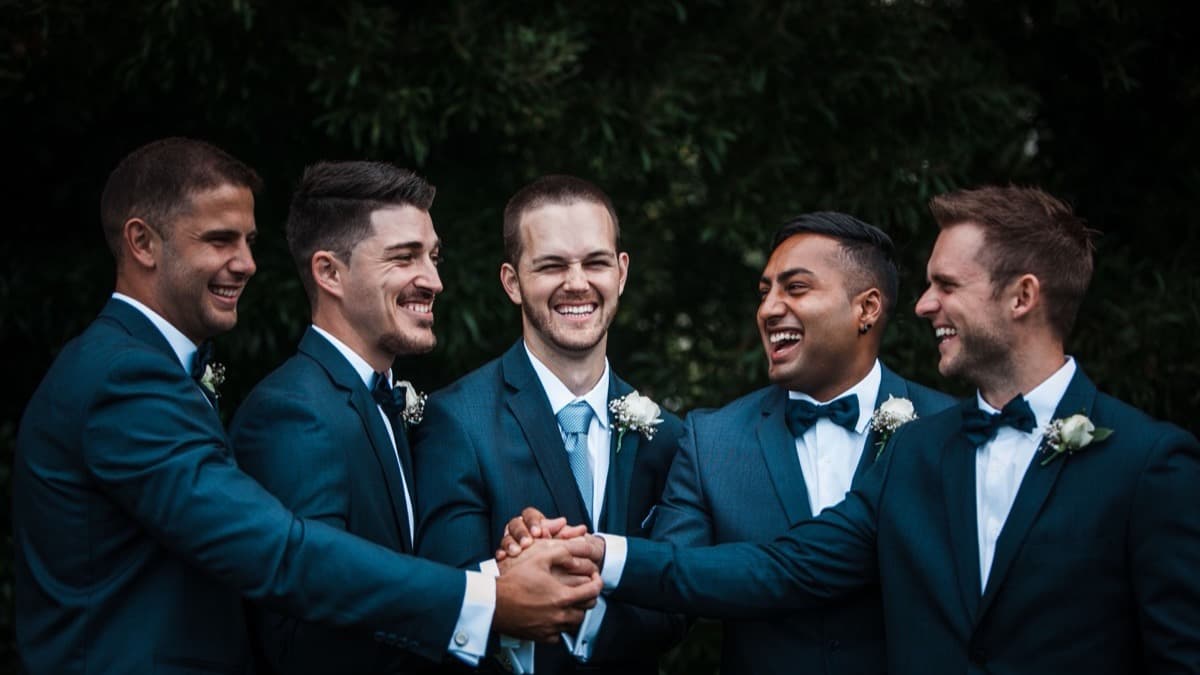
- With the groomsmen: the father of the groom should not match the groomsmen exactly. Same cloth family, slightly different cut or colour shade. He is a notch above them in the family hierarchy.
- With each other: if the fathers are not in the same suit, their ties should still relate. Same silk family, same metal weight in cufflinks, same shoe colour.
The Tie Question
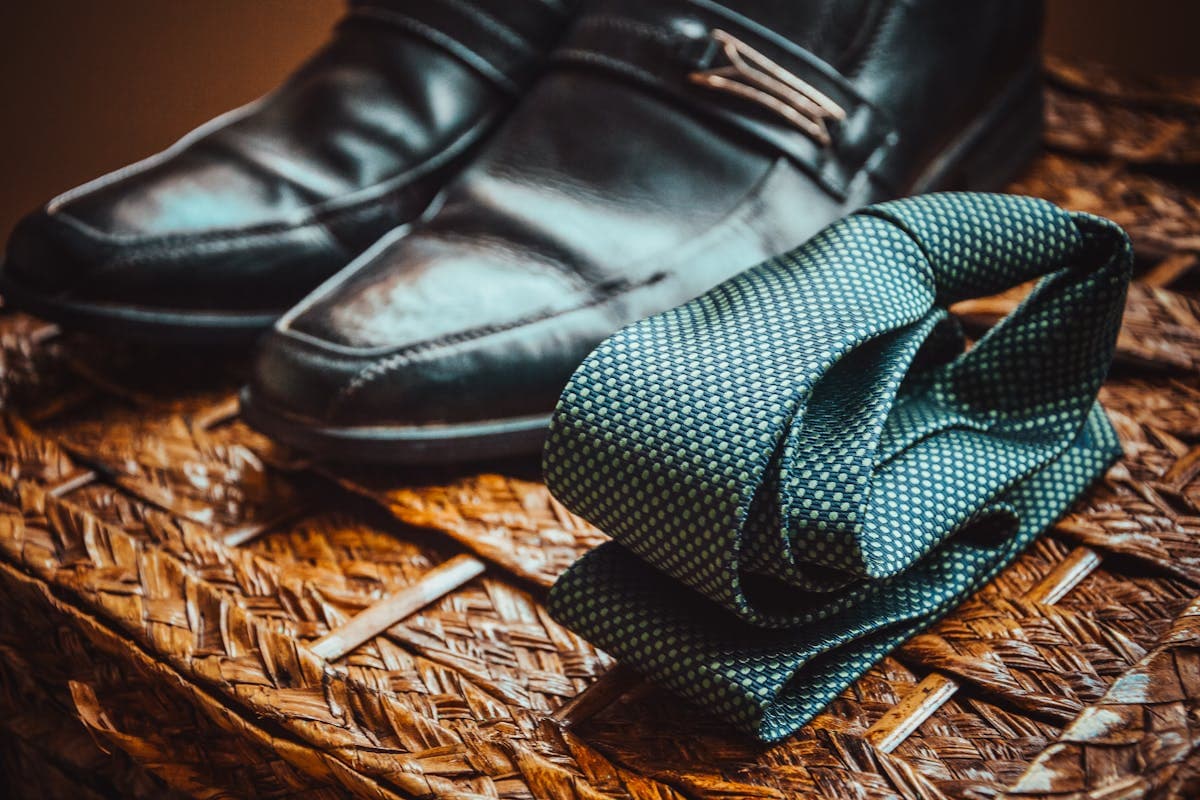
This is where most father-of outfits live or die. A tie is a small piece of cloth doing a lot of structural work.
Three rules that keep ties under control:
- Pick a silk family — solid silks, knit silks, or subtle textured silks. Avoid loud patterns.
- The tie should pull a colour from the bridal palette, not introduce a new one.
- Both fathers' ties should sit in the same colour temperature. Two warm-toned ties, or two cool-toned ties — never one of each.
A burgundy knit silk on the father of the bride and a navy knit silk on the father of the groom is a workable, photogenic pair. A blue paisley on one and a grey-and-orange stripe on the other is not.
Visualise It Before You Commit
Coordinating six or seven people from three different cities is the part of wedding planning where verbal descriptions stop being useful. You can describe "soft sage" and "warm tan" all day and still end up with two fathers in shades that fight in photographs.
Before you order any cloth, take ten minutes with our mood-board tool. You can render both fathers alongside the wedding party, drag in the bride and groom, swap colours, and see the lineup as it will read on the day. It is the one piece of pre-planning that saves the most coordination headaches.
If You Have Two Weeks Before the Wedding
This happens more often than I would like to admit. Often a father has been "going to handle it" and at the eleventh hour realises his wedding suit from twenty years ago no longer buttons.
- Day 1: Make a decision on coordination approach (solidarity, side mirror, or shared cloth). Match the groom's colour formality.
- Day 2-3: Choose a fabric. At this timeline you are looking at off-the-rack with rapid alterations, or made-to-measure with rush turnaround. Rapid MTM is possible at our atelier with delivery in 10-12 days for orders placed by remote consultation.
- Day 4-7: Order the suit, or buy off-the-rack and book alterations same week. Alterations on a department-store suit take 5-10 days at most local tailors.
- Day 8-10: First fitting. Adjust waist, hem, sleeve length, and shoulder if possible.
- Day 11-12: Pick up. Try on with shirt and tie. Photograph against window light to see how the colour reads.
- Day 13: Final adjustments only — minor hem or sleeve.
- Day 14: Hang the suit. Steam, do not iron. Pack the pocket square.
If You Have Eight Weeks Before the Wedding
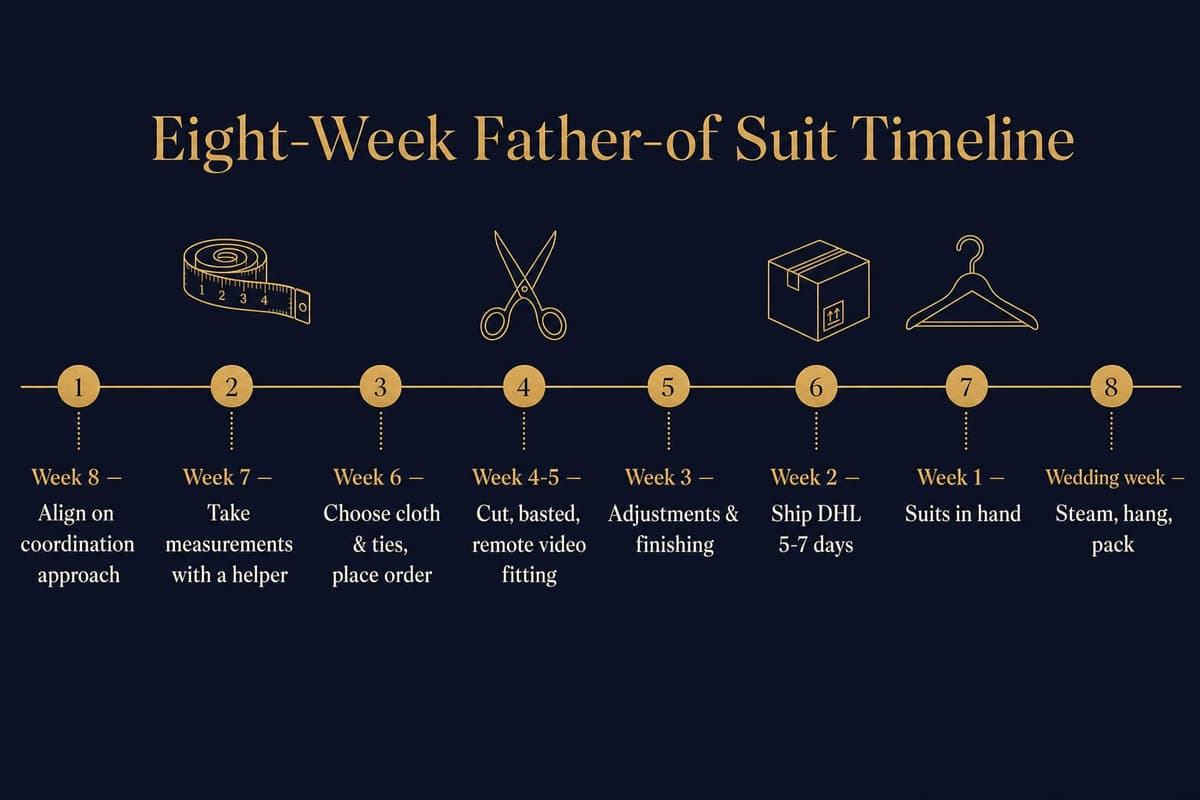
This is the comfortable timeline. Most father-of suits ordered remotely from us land here.
- Week 8: Both fathers and the couple meet (or call) to align on coordination approach. Decide solidarity / side mirror / shared cloth. Block the ceremony palette.
- Week 7: Each father takes measurements. We provide a measurement guide that another person reads through with the father in front of a mirror — easier and more reliable than self-measuring.
- Week 6: Cloth chosen, ties chosen, monogram (if any) confirmed. Order placed.
- Week 4-5: Suits cut, basted, sent out for first remote fitting via video.
- Week 3: Adjustments returned to atelier, suits finished.
- Week 2: Suits shipped (DHL, 5-7 days).
- Week 1: Both fathers have suits in hand. Final local alterations only if needed (rare).
- Wedding week: Steam, hang, photograph against window light, pack pocket squares.
What Tailor-Direct Buys the Fathers
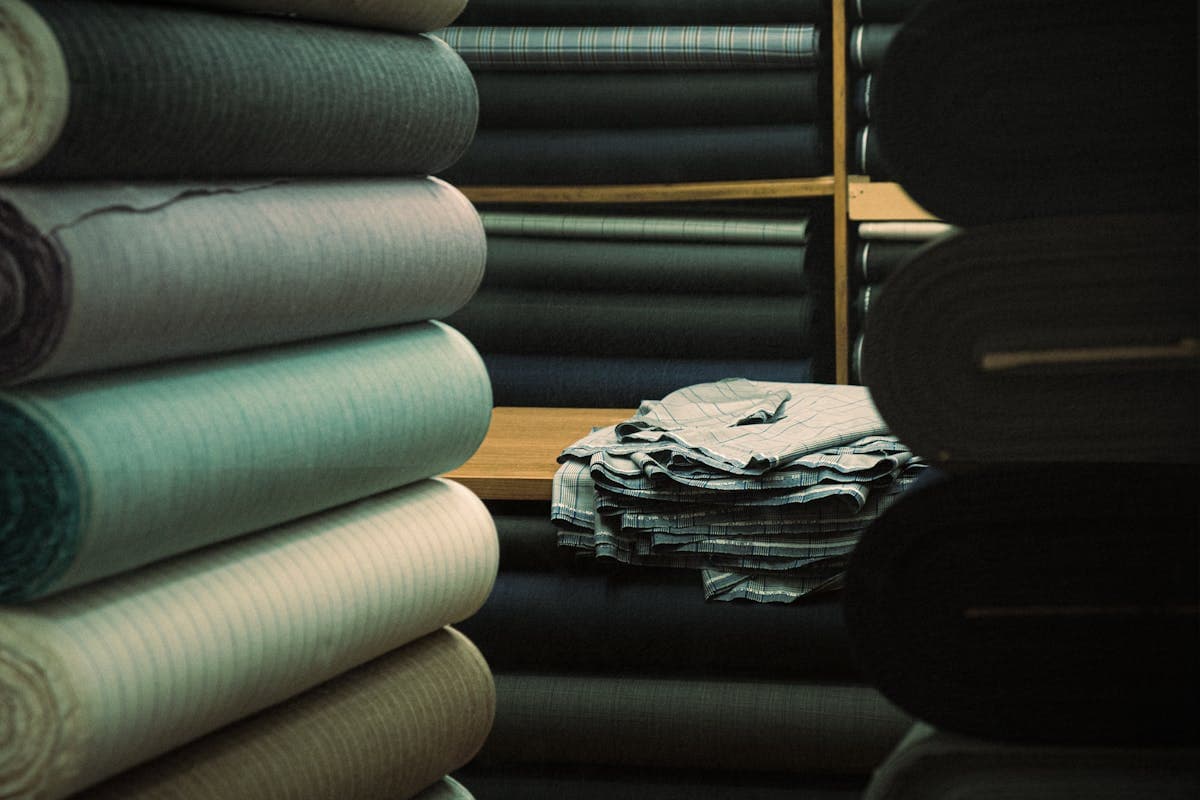
The fathers benefit from custom tailoring more than almost anyone else in the wedding party. Bodies in their fifties, sixties, and seventies do not match sample sizes well. Off-the-rack jackets in the West typically need $150 to $250 in alterations to look acceptable, and the result is still a graded pattern that has been pulled toward a body, rather than a pattern made for a body.
At Nathan Tailors, the all-in price for a father's two-piece in premium wool blend is $269. That is comparable to the alterations bill alone on an off-the-rack suit at most US retailers. The cloth is from named Italian or English mills. The cut is made to the father's measurements, not pulled toward them.
If you are pricing the whole wedding party at once — bride, groom, fathers, mothers, attendants — our wedding page walks through the maths. The fathers are usually the line that surprises couples most: the cost difference is large, and the fit difference is even larger.
The One Photograph You Are Solving For
Most wedding albums have a parents-with-couple photograph somewhere near the middle. Bride, groom, four parents, lined up. That is the photograph this article exists to help you win.
If both fathers' suits sit in the same colour temperature, if their ties relate, if their shoes match in colour, if their cuts respect their bodies — that photograph reads as a family. If any one of those breaks down, the photograph reads as four people who happened to be at the same event.
Get those four right, and the fathers do their job for the rest of the day. They walk down aisles, they give toasts, they dance, and they look like the men who made the bride and groom possible.
That is the only thing the suit is actually for.