Every summer I get the same message from a dad in Britain, usually about ten days before the ceremony, usually written late at night. It goes something like: "My daughter graduates from Kent in a fortnight. The university has sent her a page about academic dress and sent me absolutely nothing. What am I supposed to wear?"
He is not being neurotic. He has read the emails properly. Most UK universities publish a strict dress code for the graduand and no dress code at all for the guests. That vacuum is exactly why you are reading this.
I am Jay. I spent ten years on Wall Street before moving to Hoi An, Vietnam, where I now run Nathan Tailors. I have dressed a lot of fathers for a lot of milestones, and I have learned that the American advice you find first — stadium, four hours, sunburn, shed the jacket — is almost useless for a British ceremony. A UK graduation is a completely different event, held in a completely different building, in completely different weather. So here is the British version.
If you are outside the UK, we also have our general parents' guide to graduation dressing, and a separate guide for the graduate.
A UK Graduation Is Not an American Commencement
Start here, because almost every mistake flows from getting this wrong.
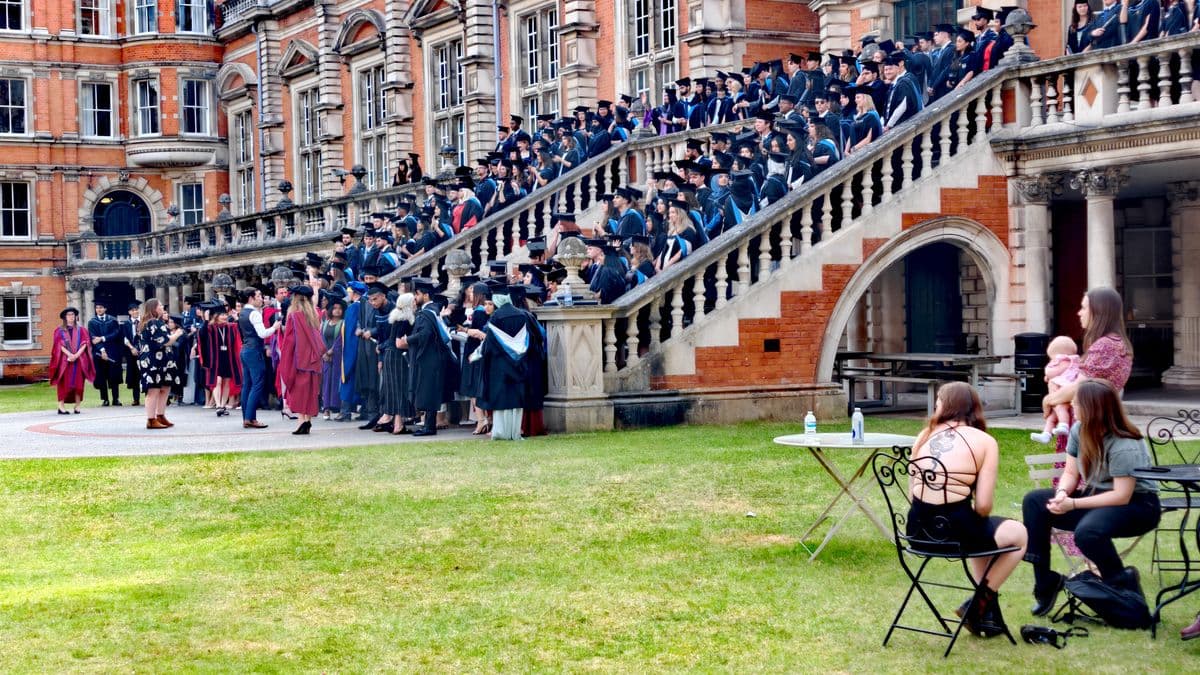
Until the degree is actually conferred, your child is not a graduate — they are a graduand. The degree is conferred at a congregation (or "degree congregation"), which is a formal legal-ish act, not a pep rally. And it happens indoors, in a very old building.
Kent holds its ceremonies in Canterbury Cathedral. Surrey uses Guildford Cathedral. Edinburgh uses the McEwan Hall. Manchester uses Whitworth Hall. Oxford uses the Sheldonian Theatre, which Christopher Wren finished in 1669 and which was not designed with your lumbar spine in mind.
The practical consequences stack up fast:
Unallocated seating means you arrive early and you sit where you land. Kent also asks guests not to leave during the final fifteen minutes. You are, in other words, committed to that seat and that outfit for an hour and a half with no escape hatch. Manchester then moves everyone into a graduation marquee for a 90-minute celebration with refreshments afterwards.3 Edinburgh's ceremonies run at 11am and 3pm with check-in closing 45 minutes before.2
Two tickets is the other quiet fact. There is no overflow lawn, no watch-from-the-grass. If you got a ticket, you are one of the two people your child chose. You are going to be in the photographs. All of them.
The Dress Code Vacuum — and How to Fill It
Here is the honest answer to "what is the parents' dress code for a UK graduation": there usually isn't one. Kent puts it plainly on its guest page: "There is no dress code for guests at the ceremony, but we advise that it is a formal occasion."1 Most other universities say something similarly soft, or nothing at all.
But there is a published standard sitting right next to you, and it is the one the university wrote for your child. Warwick tells graduands that "all graduands must be dressed smartly and wear full academic dress," and then spells out what smart means: "a lounge suit with a shirt and tie, a formal dress or a skirt/trousers and blouse." It also lists what is banned: "Jeans, t-shirts, casual shirts without ties and trainers/sneakers."4
There is no dress code for you. There is a dress code for your child. Wear that. It has never once been wrong.
That is the whole trick. The university has already told you the formality of the room. Mirror it. A parent in a lounge suit at a cathedral congregation has never been the overdressed one, and has never been the story.
Note one asymmetry, because people get it backwards: at Oxford, graduands wear sub fusc under the gown — that specific dark-suit-white-shirt-white-bow-tie kit set out in the university's academic dress rules.5 Guests do not wear sub fusc. Do not turn up in a white bow tie. You will look like you are trying to graduate.
The Dad Formula
Ask a hundred British parents and you get a very consistent answer, with one honest minority position inside it.
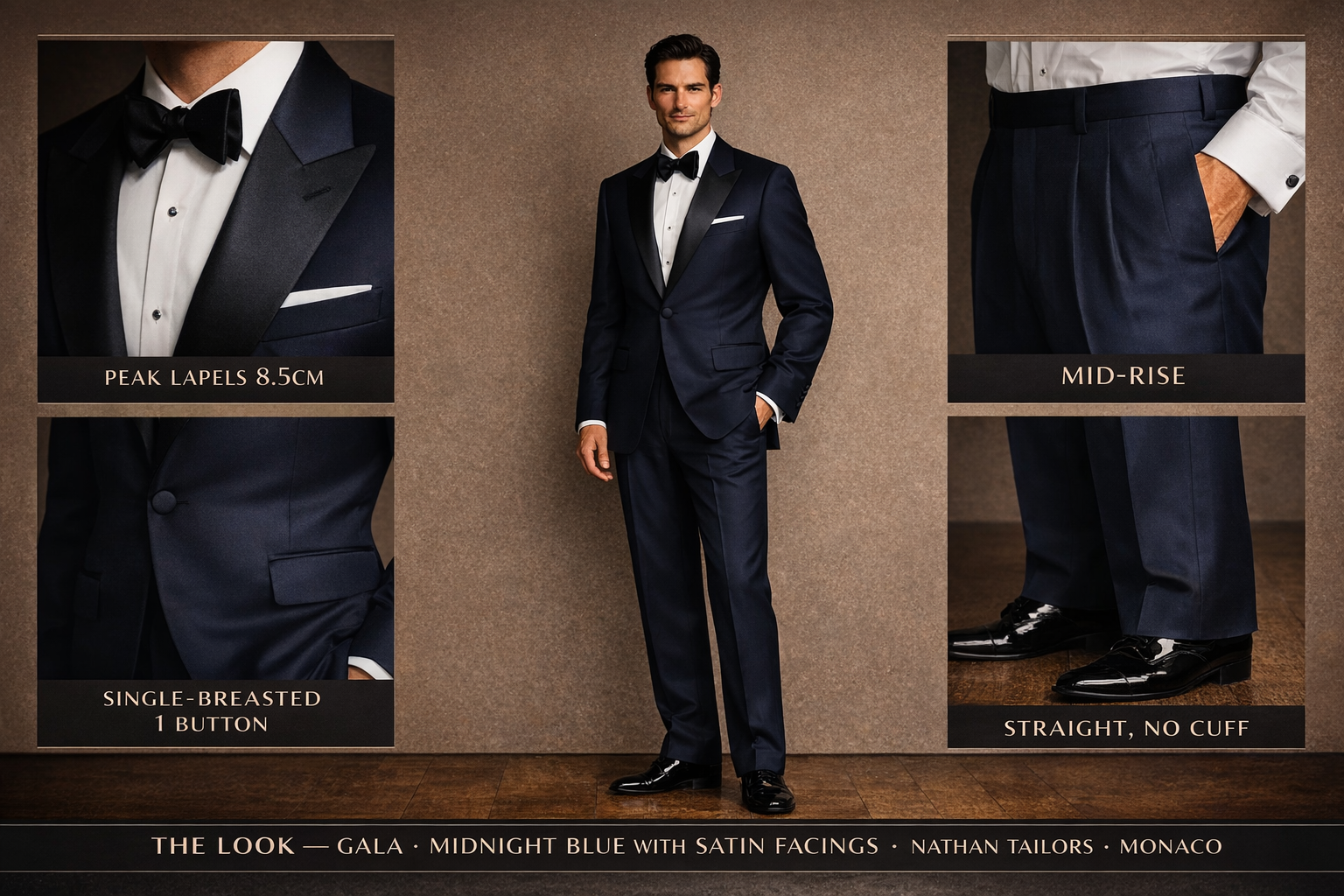
The default: a two-piece lounge suit, a plain shirt, a tie, and proper leather shoes. Navy or charcoal. That is what most dads wear and nobody has ever regretted it.
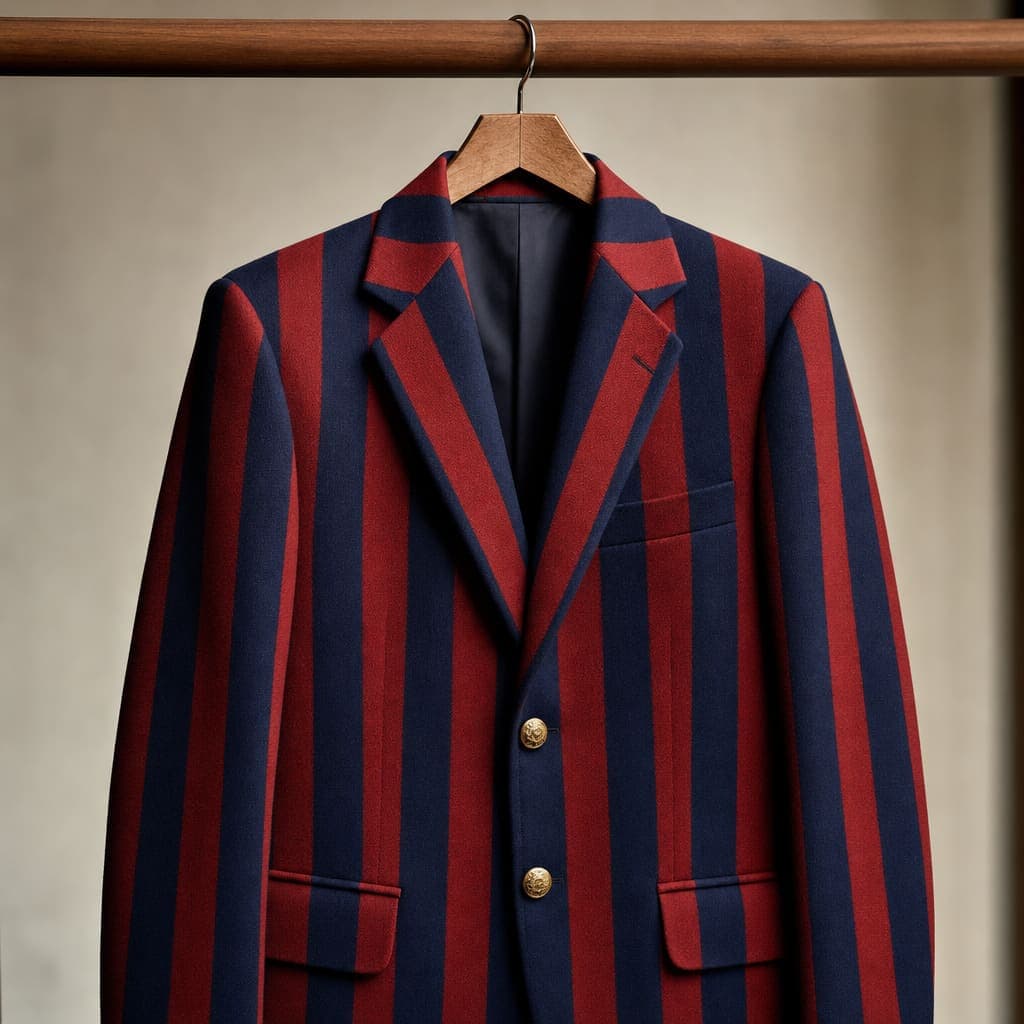
The minority position: a blazer or sports jacket with chinos, cords or moleskins, and no tie. This is a real and respectable choice — plenty of dads do it, particularly at smaller ceremonies and at the marquee afterwards. It reads as relaxed rather than sloppy, provided the jacket is good and it actually fits.
What resolves the argument between those two camps is this: the jacket is the load-bearing item, and the tie is the adjustable dial.
The jacket is non-negotiable. It is what separates "guest at a formal occasion" from "man who wandered in." Without it you are noticeably below the room, and no amount of nice shirt fixes that. With it, you are fine — everywhere, every time.
The tie you can decide on the day. Put it in your pocket. If you walk into the cathedral and four out of five men are wearing one, take thirty seconds and put it on. If almost nobody is, leave it in your pocket and open your collar. You have adjusted to the room at zero cost. Nobody has ever been caught out doing this.
The British calibration phrase you will hear over and over is "weddings minus hats." It is a very good rule. Same level of effort as a wedding, none of the millinery, none of the buttonhole theatre. Formal, but a notch quieter.
The specifics
- Colour: navy first, charcoal second. Mid-grey works well for July. Black is for funerals, not congregations.
- Shirt: plain white or plain pale blue. Cathedral lighting and long lenses are unkind to busy patterns.
- Tie: a plain or discreetly textured silk or wool tie in a colour that is not shouting. Nothing novelty. Nothing with the school's crest unless it is genuinely yours.
- Shoes: polished leather, oxford or derby. Loafers are fine in July. Trainers are on Warwick's own banned list — do not test it.
- Trousers: hemmed properly. If the suit trousers puddle over the shoe, that is the single most visible thing in a standing family photograph.
If you want the fit rules laid out properly — shoulder seam, sleeve length, how much cuff to show — we wrote a full guide on how a suit should fit.
What Mums Wear
Shorter section, because the consensus is tighter and mums generally need less talking down off the ledge.
The three reliable routes: a smart dress with a jacket, a trouser suit, or well-cut trousers with a silk blouse. Any of them, in any grown-up colour, is correct.
The thing British mums consistently and explicitly reject is mother-of-the-bride styling — the matching hat, the fascinator, the coordinated coat-dress in a colour chosen from a swatch card. It is the right instinct. A congregation is a formal occasion, but it is a formal occasion about someone else's academic achievement, and full wedding costume reads as a bid for attention. Weddings minus hats applies to you too.
Two practical notes. First, heels and cathedral flagstones are a genuinely bad combination, and you may be walking a fair way from the car park and then across grass to the marquee — a block heel earns its keep. Second, cathedrals are cold. Bring the jacket even if the forecast says otherwise; see below.
July vs December: The Cloth Question
This is where American advice actively misleads British parents.
US guides assume heat. They tell you to go unlined, go light, plan to take the jacket off. But the UK mean temperature in July 2025 was 16.8°C — and that was the fifth warmest July since records began in 1884. A "warm" British July is a mild afternoon by American standards. And you are spending it inside a stone building that has been quietly refrigerating itself since the fourteenth century.
The brief is not "a jacket you can take off." It is "a jacket you can happily keep on for two hours in a cold stone building."
Summer congregations (July, the big cluster): mid-weight wool, unlined or half-lined. A wool-linen blend is excellent — it breathes if the sun does show up, but it has enough body to be comfortable in the cold. Pure linen alone is usually a step too casual for a cathedral and it will be creased into a road map by the time you stand for photos. If you want the argument for and against linen in detail, see our summer linen suit guide.
Winter and postgraduate congregations (December and January): darker cloth, heavier wool, and — this is the bit people forget — outerwear that photographs well. The outdoor photos and the walk to the marquee happen regardless of the weather. A good navy or charcoal overcoat and a plain scarf will be in more pictures than your suit will. A puffer jacket over a suit is the most common December mistake in Britain, and it is entirely avoidable.
Rain: plan for it. Not umbrella-and-hope — an actual coat. Every UK graduation involves at least one unplanned five-minute stand outside on wet stone while a photographer arranges people.
What Not to Wear
You do not have to take my word for the banned list. Warwick published it: "Jeans, t-shirts, casual shirts without ties and trainers/sneakers."4 That is the university's own standard for the person receiving the degree, and it is a perfectly good floor for the person clapping.
To which I would add, from having seen the photographs afterwards:
- No shorts. Even in July. Especially in July.
- No polo shirt under a blazer. It is the single most ageing combination in menswear.
- No fleece or gilet over the suit. If you are cold, that is what the overcoat is for.
- No novelty "proud parent" anything. Not a badge, not a t-shirt, not a sign.
- No sunglasses on the head in the photos. Trivial, but it is in every single one.
FRCR and Royal College Admission Ceremonies
A meaningful share of the people searching this are not parents of an undergraduate at all. They are attending an FRCR ceremony — the Fellowship of the Royal College of Radiologists — and the situation is different enough to deserve its own section.
New Fellows are admitted at the Admission of New Fellows Ceremony at Central Hall Westminster in London. The published dress code is exactly one word: the RCR states that "the dress code for the Admission Ceremony is smart."7 Ceremonies typically last between 75 and 90 minutes, with a reception afterwards at the venue, and professional photography running roughly 12:15 to 14:15 before the ceremony itself. The first adult guest is complimentary, additional adult guests are chargeable, and under-16s are free. Gowns are ordered in advance from Ede & Ravenscroft.7 The Royal College of Physicians runs a structurally similar New Fellows ceremony.
Now, the part the one-word dress code does not tell you. The person being admitted is typically a consultant in their thirties or forties. The guests are a spouse and, very often, parents. The room is full of senior clinicians in London on a formal afternoon. "Smart" in that room means a proper dark two-piece with a tie. That is the floor, not the ceiling. A three-piece is entirely at home. A blazer and chinos is under-dressed here in a way it would not be at a provincial undergraduate congregation.
On gowns generally: in Britain you hire, you do not buy. Ede & Ravenscroft, established 1689, is the oldest continuously trading tailors in the world and has been robemaker to the University of London since 1906.8 Your child's gown is handled through the university's own booking system, and it is almost always already included or already arranged. You do not need to do anything about it.
Two Tickets, Ninety Minutes, and a Camera
Let me put the whole thing in one paragraph, because this is the real argument.
Two guest tickets. Your child had to choose. They chose you. You will sit for ninety minutes in a building older than most countries, walk out into whatever the sky is doing, and stand in a photograph next to a person in a hired gown who is, at that exact moment, the proudest they have ever been. That photograph goes on a wall. It stays there.
You do not need an expensive suit for that. You need a suit that fits you — which is a completely different thing, and the reason most men look wrong in photographs is never the price of the cloth.
What This Costs, Honestly
A decent off-the-peg suit on a British high street runs roughly £250–£500, and then most men spend another £60–£120 getting the sleeves and trousers altered, which is the only reason it fits at all. A proper Savile Row commission is a different universe and a different budget.
We sit in a third place. Nathan Tailors makes custom tailored suits to your measurements in Hoi An and ships worldwide by DHL or FedEx in 2–3 weeks. Suits run $149–$309 and blazers start at $149. Real wool cloths from established mill suppliers, without the four intermediaries between the mill and your shoulders — that is genuinely the entire explanation for the price difference, and it is why our bespoke suits and made-to-measure work land where they do.
If your ceremony is in July, order in June. If it is a December congregation, order in November. Three to four weeks of lead time turns this from a scramble into a non-event.
Frequently Asked Questions
What do dads wear to graduation in the UK?
A two-piece lounge suit in navy or charcoal with a plain shirt, a tie and leather shoes. That is the default British answer and it is right at essentially every university. A blazer or sports jacket with chinos, cords or moleskins and no tie is an acceptable and reasonably common alternative, particularly at smaller ceremonies. The jacket is the part that matters; the tie you can decide when you see the room.
Is there a dress code for parents at UK graduations?
Officially, almost never. Kent states outright that "there is no dress code for guests at the ceremony, but we advise that it is a formal occasion."1 Most universities publish a strict code for graduands and nothing for guests. The reliable workaround is to wear the standard the university set for your child — Warwick's is "a lounge suit with a shirt and tie, a formal dress or a skirt/trousers and blouse."4
What do dads wear to a daughter's graduation?
Exactly the same as to a son's: a lounge suit, shirt, tie, leather shoes. There is no gendered difference in what the guest wears in Britain. The only thing worth adjusting is that you may want to check with her beforehand whether she has a colour in mind for the family photographs — that is a two-minute conversation that saves a mismatch.
What should I wear to an FRCR admission ceremony?
The RCR's published dress code is "smart."7 Read that, in practice, as a dark two-piece suit with a tie as the minimum, at Central Hall Westminster, among senior clinicians. A three-piece is entirely appropriate. Guests should not go below a jacket and tie. The ceremony runs 75–90 minutes with a reception afterwards, and professional photography happens before it starts, so dress for the camera, not just the room.
What do parents wear to a winter graduation?
The same suit, in darker and heavier cloth, plus outerwear you are willing to be photographed in. December and January congregations still include outdoor photographs and a walk to the marquee. A navy or charcoal overcoat and a plain scarf are the two items that will actually appear in the pictures. Avoid a technical jacket over a suit — it is the most common British December mistake.
Do parents wear academic dress or gowns?
No. Gowns and hoods are for the graduand only, hired through the university from a robemaker such as Ede & Ravenscroft.8 At Oxford, graduands additionally wear sub fusc under the gown5 — guests do not, and should not.
How long will I be sitting down?
Plan for 90 minutes in a fixed seat. Kent's ceremonies run about that; Edinburgh's are one to two hours; Manchester's ceremony is 45–60 minutes followed by 90 minutes in the graduation marquee.123 Seating is usually unallocated and first-come, doors open about an hour ahead, and you will generally be asked not to leave in the final fifteen minutes. Dress for a building you cannot escape.
The Only Thing That Actually Matters
Buy nothing if you have a suit that fits. Wear it. Press the trousers, polish the shoes, put a clean plain shirt on and turn up an hour early so you get a decent seat.
If you do not have one that fits — and most men over forty do not, because the suit in the wardrobe was bought for a wedding in 2016 for a body that no longer exists — then this is a genuinely good reason to fix that. Not because graduation demands an expensive suit. Because you are going to be in a photograph on somebody's wall for the next thirty years, standing next to the proudest person you know, and you may as well look like you meant it.
Congratulations. They did the hard part. You only have to sit still for ninety minutes.