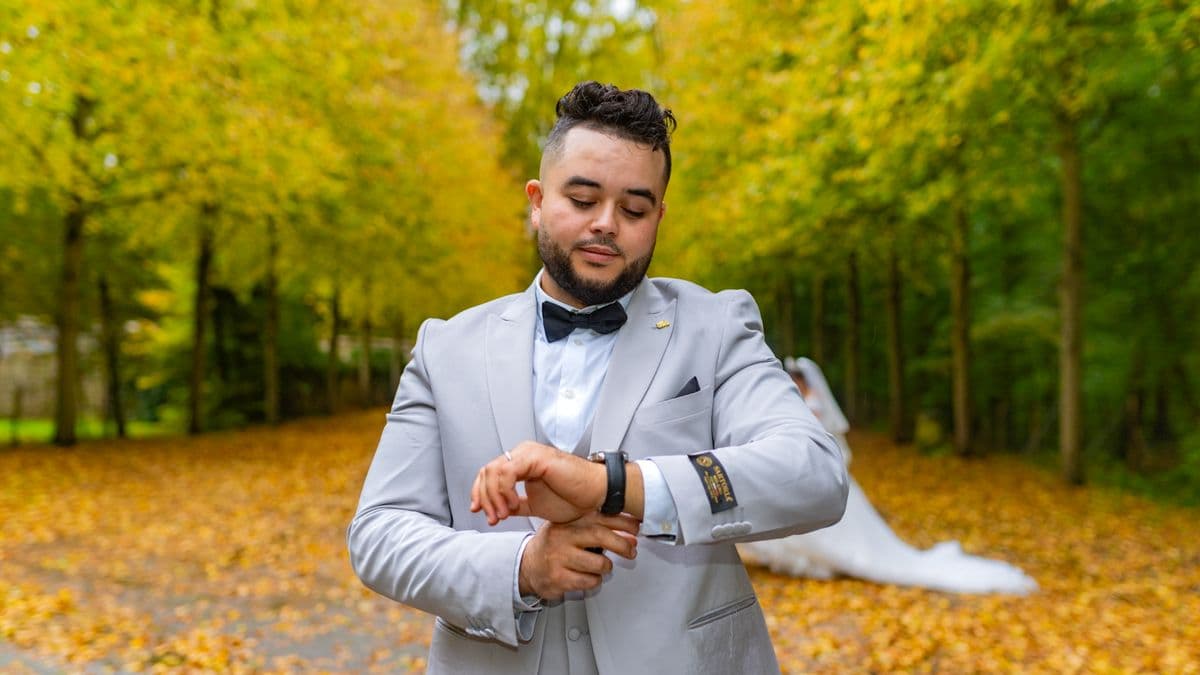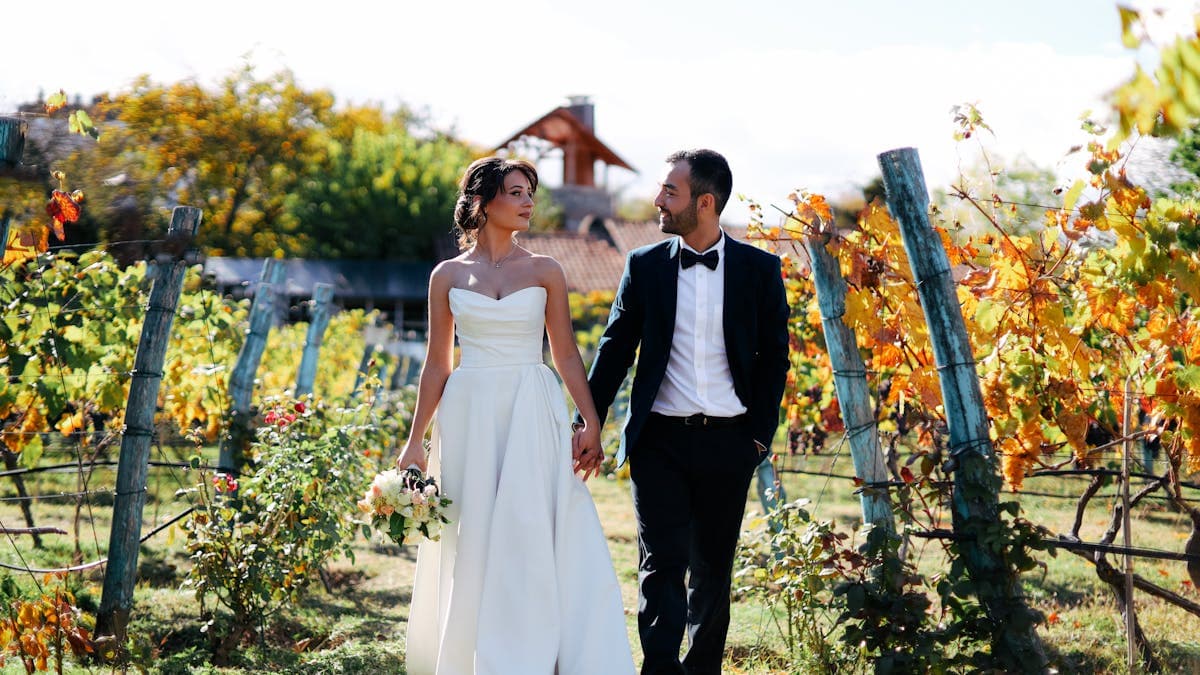
A vineyard at the end of May and the same vineyard at the end of September are not the same place. The vines in spring are a lurid acid green, almost yellow at the tips, with a sky behind them that photographs cool blue. By harvest, the leaves have turned the colour of unsweetened tea, the fruit is dusty purple, and the light at five in the afternoon is the warm gold that wedding photographers chase from continent to continent. A grey suit reads cool against the spring vines and warm against the autumn ones. A cream suit reads bright in May and yellow in October. The same jacket, in two seasons, becomes two different garments.
We dress vineyard grooms in Tuscany, Napa, Bordeaux, the Douro, the Cape Winelands, and Mendoza. The brief that arrives in our inbox almost always says vineyard wedding, want to look effortless. The brief that should arrive says vineyard wedding, May, mid-afternoon ceremony, ground is uneven, bride is in ivory crepe. Those four extra facts decide everything.
The spring vineyard: cool greens, cool sky, cool light
Spring in a wine region is the season of acid green. The leaves are unfurling but not yet broad. The grass between the rows is electric. The sky, especially in northern vineyards — Bordeaux, Burgundy, Sonoma above the fog line — is a cool, mineral blue. A photographer's white balance shifts cool to handle it.
A warm-toned suit on a spring groom — rust, brick, mustard — fights this palette. The jacket pulls the eye one way, the vines pull it another, and the photograph reads as two competing colour stories. The suits that hold their own against spring vines tend to share one quality: they are quiet enough that the venue keeps its starring role.
- Stone or bone linen-wool. Reads as honest off-white in cool light. Photographs as a real suit, not a cream beach jacket.
- Soft sage or olive in a brushed cotton or fresco. Echoes the vines without copying them. Particularly strong against young Bordeaux varietals where the leaves are almost yellow.
- Pale dusty blue. Picks up the cool spring sky. The most reliable colour for a Tuscan late-spring ceremony in our experience.
- Light grey with a faint blue cast. The default that does not embarrass anyone. A 280-gsm wool fresco holds shape across an outdoor afternoon.
- Ivory linen with a green silk pocket square. Quiet, with a single pulled accent that connects the groom to the venue without dressing him as a wine bottle.
The classic Tuscany spring colour combination, the one that has been photographed at half the villas in Chianti, is emerald green and ivory — a rich emerald tie or vest against a soft ivory suit, with the green pulled from the spring vines themselves. It works because the green sits as an accent, not a base. The base is quiet.
The summer vineyard: dust, gold grass, hot sky
By July most vineyards are no longer green. The grass between the rows has been mowed and dried, the leaves have darkened to a deeper olive, and the soil reads as warm beige to ochre. The light is harsher, especially in midday Napa or the Roussillon. A suit that read clean in May reads heavy in August.
Two priorities for a summer vineyard groom: the fabric has to breathe, and the colour has to have enough warmth in it that the dust does not flatten the photograph.
- Sand or oat linen. Reads slightly warmer than the dried grass, so the silhouette stays separate from the ground. Avoid the lightest cream — it looks anaemic in summer light.
- Light olive or sage cotton-linen. Works because the leaves themselves have darkened toward this colour. The groom and the vines have a quiet conversation.
- Stone grey with a warm cast. A grey with a touch of brown in it photographs as natural in dust-coloured light. Cooler greys read as steel.
- Soft tobacco or biscuit. Underused. Reads beautifully against a Cape Winelands or Mendoza summer venue where the soil is reddish.
For a Napa or Sonoma summer wedding the most photographed combination of the last decade is oat suit, white shirt, no tie, brown leather belt and loafer. The look is so strong because every element echoes the venue: the suit is the colour of the dirt road, the shirt is the colour of the bleached vine posts, the leather is the colour of the barrel staves stacked behind the cellar.
The autumn harvest vineyard: rust, gold, deep purple
This is the season the wedding magazines use for their vineyard editorials, and for good reason. Harvest light is gold, the leaves are turning, and the fruit on the vines reads as a deep dusty purple. The colour palette of the venue is doing half your work for you. Lean into it.
- Rust or burnt sienna in a flannel or wool-linen. The signature autumn vineyard groom colour. Warm, photographs richly, holds against the leaves rather than fighting them.
- Copper or terracotta in a textured wool. Slightly more saturated than rust, slightly more risk, more reward. Pairs with cream or ivory shirting.
- Forest green or deep moss in a heavier flannel. The complement to the autumn red — the colour that pulls the eye at a long table.
- Bordeaux or oxblood, used at the suit level not just the tie. A real risk. Works at a more formal harvest wedding, especially indoors at a barrel room reception.
- Charcoal with a brown or tobacco knit tie. The traditional answer. Less interesting than rust but bulletproof.
The Napa harvest classic — and the colour combination that photographs better than almost any other vineyard look in our archive — is rust, copper, and cream. A rust three-piece, cream shirt, copper silk tie or pocket square. The trio repeats the colours of the late-October vine itself. The wine in the glass at the reception adds a fourth tone in the same family. The photograph composes itself.
If you want to test how a colour will read in autumn light before you commit, we built a tool that lets you see the vineyard rendered in your palette with the season selected, the venue type set, and the fabric weight applied. It catches the cases where a colour that works on a swatch fails in real golden-hour light.
Heat, terrain, and the rest of the body
Most vineyard weddings are afternoon outdoor ceremonies. The fabric weight has to take that seriously. We send roughly three categories of cloth for vineyard grooms.
- Lightweight summer wools, 220 to 250 gsm. Wool fresco, high-twist tropicals. Breathe well, hold a lapel shape, photograph as a real suit. The default for Mediterranean summer venues.
- Cotton-linen and linen-silk blends. 240 to 290 gsm. The linen breathability with extra structure from the second fibre. Pairs well with autumn light because the silk catches gold tones.
- Wool-flannel and wool-cashmere, 290 to 340 gsm. Reserved for late autumn or for early-spring weddings where the morning is still cold. Not for July.
The ground at a vineyard is gravel, decomposed granite, packed dirt, sometimes mowed turf. None of these are kind to a stiletto, and none of them are kind to a hard-leather oxford with a thin sole. The shoes that work for a vineyard groom share two qualities: a sole with grip, and a colour that reads warm rather than starkly black.
- A suede chukka in tobacco or sand. The most reliable shoe in our archive. Walks across gravel, photographs warm, dresses up under a suit and dresses down under chinos at the rehearsal dinner.
- A leather penny loafer in espresso or whisky. Slightly more formal. Pairs cleanly with linen and with wool-fresco trousers. Avoid the high-shine cordovan in dust — it picks up every fingerprint.
- A double-monk in a brown leather. If the wedding leans formal, this is the most upright option that still belongs at a vineyard.
- A clean white sneaker for the after-party. Honest. Pack it in the bag and switch at the reception if the dance floor calls for it.
Letting the wine itself dictate the accents
This is the trick most grooms miss. The wine in the glass at the reception is part of the visual palette of the day. A red varietal in a Burgundy glass photographs as deep purple-red. A white in a stem photographs as straw gold. Rosé reads as dusty pink.
If you pull your accent colours — the tie, the pocket square, the boutonniere — from the colour family of the wine being served, the photographs hold together in a way that feels intentional rather than coordinated. A pinot noir wedding takes burgundy and oxblood accents naturally. A chardonnay wedding takes butter yellow and cream. A sparkling-rosé wedding takes blush and copper. The vineyard has chosen the palette before you arrived.
This is also a quiet way to coordinate with the bride. If she has chosen a champagne gown, your champagne pocket square shares its language. If her bouquet leans deep red, your boutonniere can echo a colour that already runs through the day at the glass level.
Coordinating the groomsmen without dressing them as a soccer team
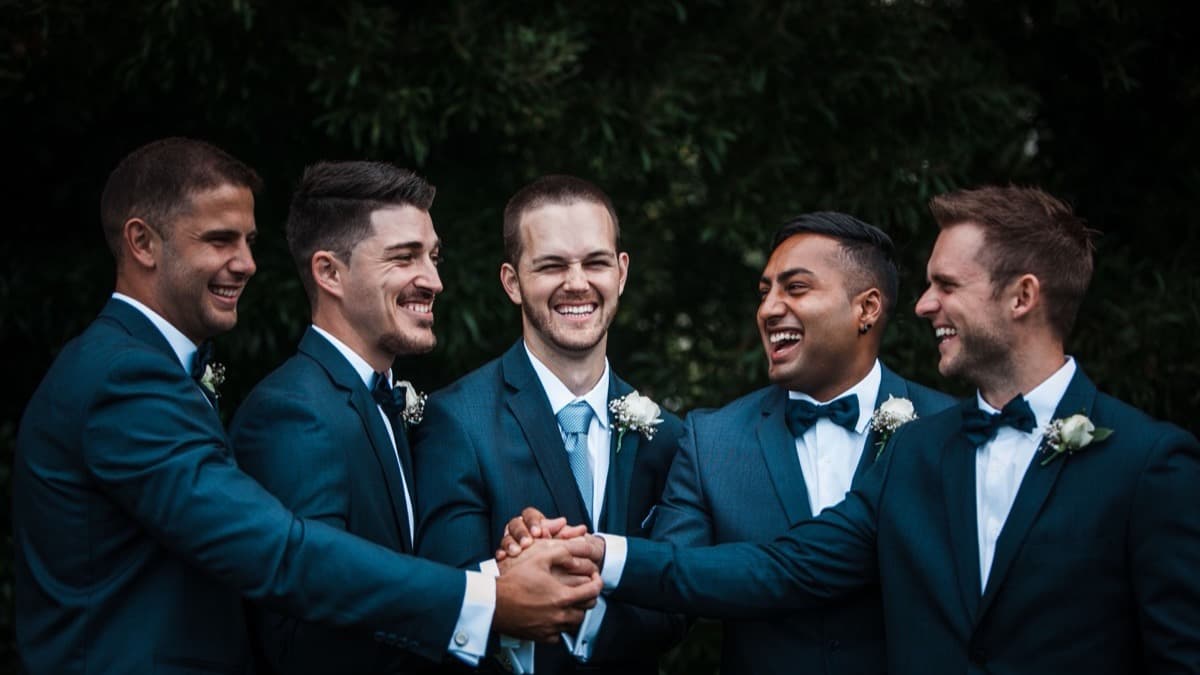
Vineyards photograph wide. The wedding party will end up in long horizontal portraits along a row of vines or stretched across a barrel-room hallway. If every groomsman is in identical colours, the line reads as a uniform. If everyone is in different colours, the line reads as accidental.
The two approaches that work for vineyard parties:
- Tonal — same family, slightly different shades. The groom in a darker rust, the groomsmen in a softer terracotta, all in the same fabric. The photograph reads as a deliberate gradient. This works especially well at autumn vineyards where the leaves themselves are doing this.
- Same suit, different shirt-and-tie. Everyone in oat linen, but the groom in a cream shirt with a green knit tie and the groomsmen in pale-blue shirts with brown knit ties. The line is unified at the suit level and varied at the accent level.
For a fuller breakdown of group coordination, we have written a companion piece on how to build a wedding-wardrobe rotation that touches on the same logic from a different angle — multiple weddings rather than one party.
Region by region, in three sentences each
Tuscany. Spring leans emerald and ivory; summer leans oat and white shirt; autumn leans rust and copper. The villa walls are usually warm stone, which means cold-cast suits like steel grey can photograph as out of place.
Napa and Sonoma. Summer dusty oats and stone; harvest rust and forest. The light is more golden than European vineyards, especially in the Carneros band, so warm-toned suits flatter the venue.
Bordeaux and Burgundy. Cooler light overall. Spring weddings benefit from soft grey or pale blue. Autumn weddings can lean darker — a deep moss or charcoal flannel reads as right rather than heavy.
The Douro and the Cape Winelands. Harder, dustier light. Sand, oat, and tobacco out-perform anything cool. Bring sunglasses to the rehearsal so you understand the brightness before the day.
Mendoza and the Andes wineries. High-altitude light, which photographs sharper than sea-level light. Saturated colours hold their depth. Forest green and deep oxblood read beautifully under Andean afternoon.
If you want to start the conversation with a venue and a date, the destination process begins on our wedding page. Bring the season, the venue light, and the bride's gown fabric, and we will route you to the right cloth from the right mill. Linda will tell you that you are handsome — she tells everyone, but in your case, she will mean it.