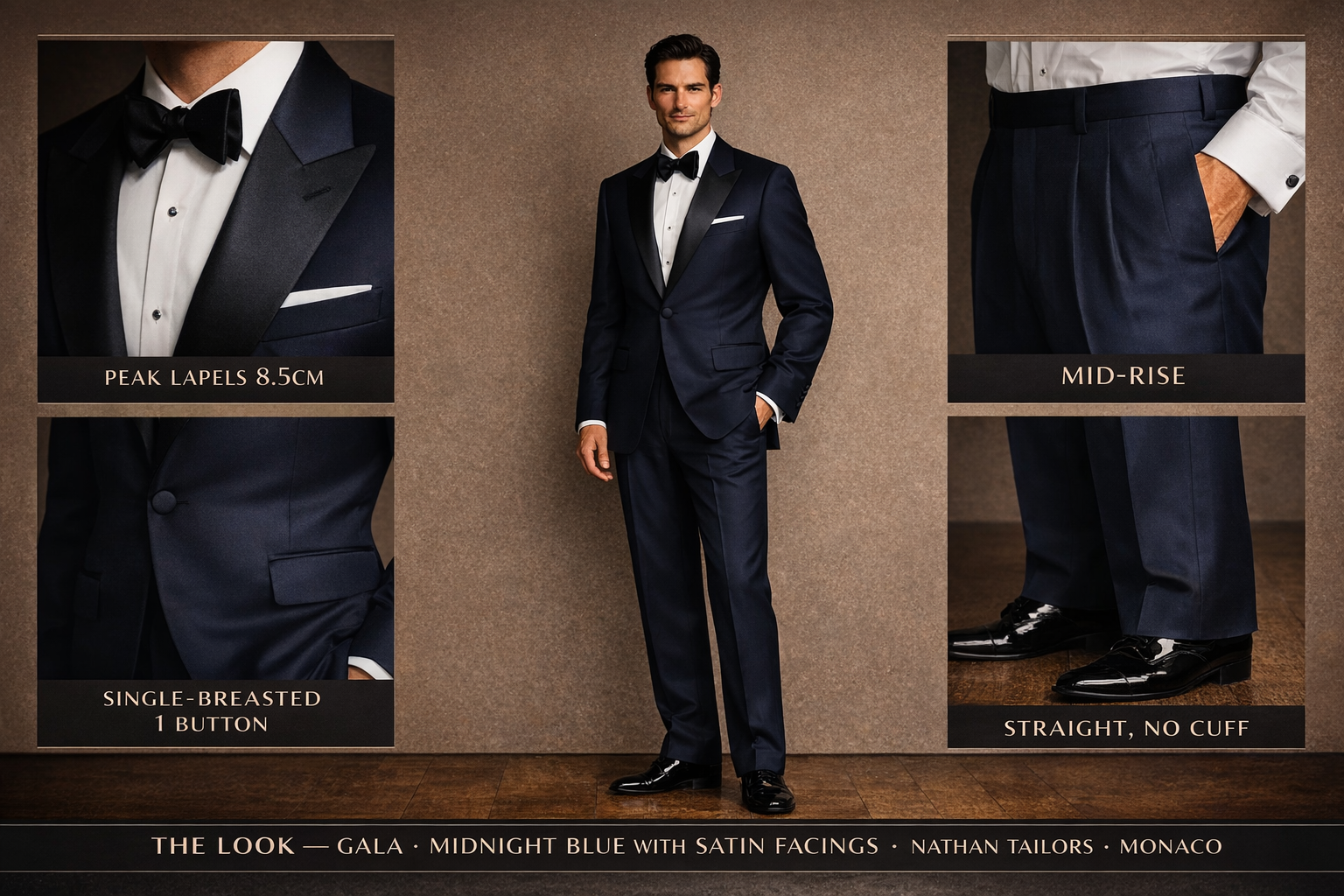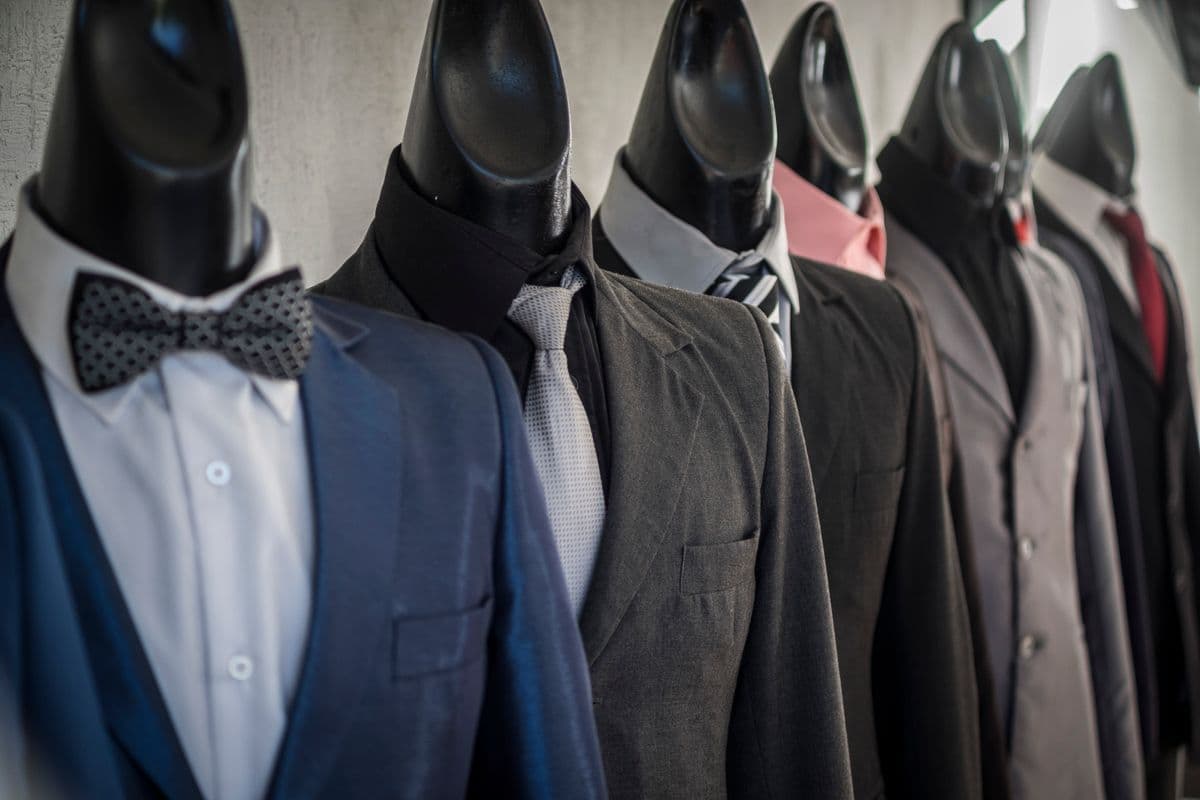
An expensive suit and an overpriced suit are not the same thing, and the difference is not the number on the tag. Expensive means the money went into the garment -- better cloth, a stitched canvas chest instead of a glued one, more hours of skilled hands, a pattern cut for your body. Overpriced means the money went into everything around it -- the label, the licence, the Madison Avenue lease, the markdown cycle that needs a high list price to discount from. A $298 suit can be honestly priced. A $2,000 suit can be a rip-off. A $5,000 suit can be worth every cent to the man who wears it four days a week for a decade.
I am Jay. I spent ten years in the US buying suits from exactly the shops in this article and never once knew what I was paying for. Then I came to Hoi An as a customer, and now I am a partner at Nathan Tailors alongside Linda, who was born here and has been at the cutting table for 25 years. Watching suits get cut every day teaches you the thing a retail floor never tells you: which parts of the price are the suit, and which parts are not. A commenter under a menswear buying guide with 67,000 views put it better than I can, in the most-liked comment on the video: "Love the overpriced vs. expensive distinction. People use these interchangeably all the time...drives me nuts."1
What is the difference between an overpriced suit and an expensive suit?
Here is the test I use, and you can run it in four minutes on any brand's own website.
An expensive suit publishes what you are buying -- the construction, the mill, the fibre content, often the country of sewing. Brooks Brothers does this and almost nobody else does: the 1818 page says "half-canvas construction", 100% wool, Origin: Made in Italy, $1,498, and the Golden Fleece page says "full canvas construction" with hand-sewn armholes at a $1,698 list.1011 You may still decide that is more than you want to spend. But you cannot say you did not know what the money bought.
An overpriced suit goes quiet exactly where the money is. Canali publishes a canvas grade for precisely one product, the KEI jacket, "a full canvas jacket with a full canvas inside";14 for its ready-to-wear suits at $2,695 to $3,595, construction is not stated anywhere on its own site.12 Hugo Boss is the same shape: one limited camel-hair edition carries a canvas claim, nothing in the $599 to $2,199 mainline does.15 Suitsupply is the middle case -- a whole page explaining half canvas and full canvas, and no word on which ready-to-wear line gets which.9
That silence is the tell. A brand that spent real money on a canvas chest will say so, because saying so is the cheapest marketing it will ever buy. Silence at $2,500 usually means the money went somewhere you are not wearing.
What are you actually paying for at each price band?
Five things move the price of a suit, and only three of them are the suit: cloth, construction, labour location, the brand and retail layer, and alterations. Here is roughly how they stack up in the real market as of September 2026.
| Band | Cloth | Construction | Where it is sewn | What else you are buying |
|---|---|---|---|---|
| Under $300 | Often polyester. Jos. A. Bank's 1905 line is $249.99, mostly polyester19 | Usually fused, usually not stated | Asia, unnamed | Store overhead and a discount cycle |
| $300-$600 | 100% wool becomes normal3 | Half-canvas available, sometimes stated3 | Mostly China and India; pages say "Imported"56 | Marketing, small retail footprint |
| $600-$1,500 | Named mills appear -- Marling & Evans, VBC5 | Half-canvas typical, full canvas an upgrade4 | Still mostly Asia. Suitsupply: 72.76% China7 | Showrooms, fitting staff, brand equity |
| $1,500-$3,000 | Genuinely good, often Italian-woven | Half or full canvas -- many brands stop stating it15 | Europe plausible; Canali runs five Italian plants13 | Designer positioning, markdown headroom |
| $3,000+ | Top-of-book, sometimes rare fibres | Full canvas, substantial hand-finishing | Italy, England, Japan | Your own pattern, fittings, a name |
Notice the awkward part: the two columns that decide how a jacket feels -- cloth and construction -- stop improving reliably around $600 to $1,000. Above that you are mostly buying the fifth column. Sometimes the fifth column is worth it; a fitting room where a trained person pins you twice is a real service. But it is a different purchase from a better jacket, and the industry works hard to keep you from noticing the seam between them. It also looks more competitive than it is: several labels you would file under "different companies" share an owner or a licensee, which I mapped out in who owns which suit brand.
The one thing nobody puts on the tag: alterations
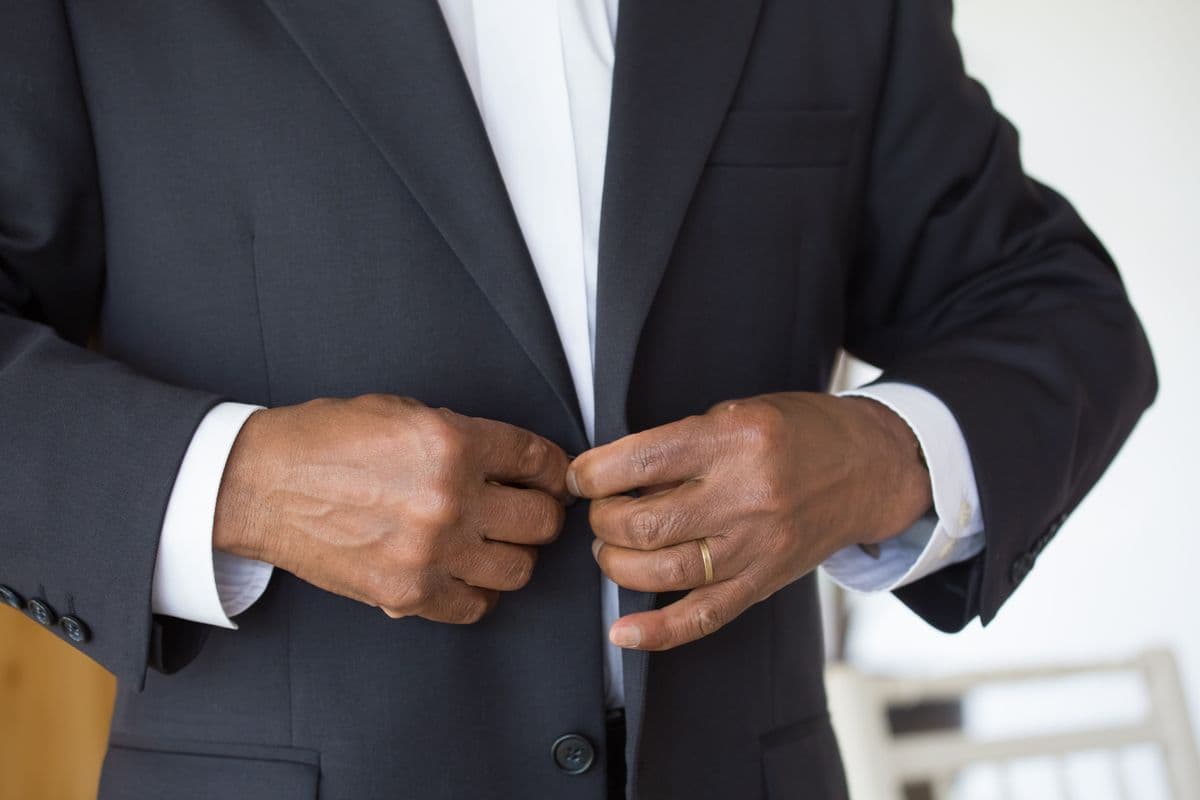
Every off-the-rack suit is priced as if it fits you, and none of them do. Sleeves, waist, trouser hem and seat are routine, commonly $75 to $200 on top -- real money that belongs in the comparison, which is why I keep a running note on what suit alterations really cost. Add it to every price in this article before you compare anything.
How much should you spend on a suit based on your income?
The rule that circulates online is simple: "take your annual income, and divide by 100, for how much you should spend on your suits." It is the second most-liked comment under that same buying guide, and the commenter goes on to sketch the bands almost exactly as I did above -- under $300 mostly fused, $300 to $550 fused or half-canvas from brands like Suitsupply and Spier & Mackay, $550 to $1,200 mostly half-canvas with, in his words, "lots of overpriced stuff in this bracket".1
Run it: $40,000 gives you $400, $70,000 gives you $700, $120,000 gives you $1,200. As a sanity check it is decent -- it lands most people in the band where cloth and construction are still improving and the brand layer has not taken over.
As a rule it is also wrong, and the pushback in the same thread says why. Income tells you what you can spend. It says nothing about what you should, because it ignores frequency. A teacher who wears a suit twice a year and an account manager on the same salary who wears one four days a week should not buy the same suit. Which brings us to the arithmetic that actually decides it.
How do you work out the cost per wear of a suit?
The formula is not complicated: (purchase price + alterations + lifetime cleaning) divided by total wears. The buying guide's own example is a $3,000 bespoke suit worn three days a week for five years, which works out to about $4 a wear -- and the same video argues an $80 department-store suit worn to one wedding and one funeral is $40 a wear, so the cheap suit is the expensive one.1 Half of that is right. Here is the honest version, with the assumptions written down where you can argue with them.
| Buyer | Suit + alterations | Wears over 5 years | Cleaning at ~$20 | Cost per wear |
|---|---|---|---|---|
| Suit 3 days a week | $3,000 (bespoke) | ~750 | ~$500 | ~$4.70 |
| Office 2 days a week | $600 + $150 | ~250 | ~$300 | ~$4.20 |
| Weddings and funerals | $250 + $120 | ~6 | ~$120 | ~$82 |
| Same buyer, "investment" suit | $1,200 + $150 | ~6 | ~$120 | ~$245 |
The bottom two rows are the point, and a commenter under that video made it before I did: "If someone only wears a suit twice in 5 years, they should only spend the minimum amount on the suit. If they buy a 1k suit, it's $500 per wear."1 Cost per wear is not a licence to spend more. It is a test that spending more has to pass, and for an occasional wearer it fails badly.
Three assumptions there deserve challenging, so let me do it myself. One: I assumed a ten-year garment life -- a classic charcoal or navy in a normal lapel width outlasts that, a fashion-cut suit does not. Two: I assumed your body stays the same. It often does not, and a jacket can be let out at the waist far more easily than it can be widened at the shoulder. Three: I ignored resale, because for suits it is close to zero. If any of those break, the expensive suit's cost per wear gets worse, never better.
Is a $500 suit considered cheap?
No -- that is the middle of the market. At $500 you are above Spier & Mackay's half-canvas 100% wool entry suit at $2983 and Jos. A. Bank's 1905 line at $249.99,19 level with Jos. A. Bank's Reserve half-canvas at $499.99 on promotion from a $600 list20 and Indochino's entry made-to-measure tier at $499,18 and just under Suitsupply's ready-to-wear floor of $549.8
The comment I keep coming back to here got 43 likes and is the most useful sentence in the thread: "They achieve that sub 330 dollar price point but have the fundamental qualities of more expensive suits like 100% wool fabric, bemberg lining, horn buttons, horsehair construction etc."1 That is expensive-but-not-overpriced from the buyer's side, and the brand's own pages back it: half-canvas standard across off-the-rack, genuine horsehair canvas sourced from Italy, 100% wool without synthetics.34 Full receipts on our Spier & Mackay construction page and where Spier & Mackay suits are made -- the honest gap being that the sewing country is never stated, with the best third-party report putting almost all of it in China.6
Now the top of the market. Canali runs five plants, all in Italy13 -- expensive with something behind it, even if its canvas grade goes unpublished. Hugo Boss at $2,199 with no canvas grade and 83% of volume from external suppliers16 is a harder case. Indochino is the opposite: it says plainly that its suits are made in Dalian, China by Dayang Group, at $499 to $999.1718
Why does a $5,000 suit not pull when you raise your arms?
Because of where the armhole sits, not because of what it cost. Under that same Gentleman's Gazette comparison, one commenter with 67 likes asked to see the expensive suit's arms raised too, another noticed the buttons were undone on one jacket and not the other, and a third asked the obvious question: "Does $5,000 fabric magically increase in length from under your armpits?"2
It does not. A jacket that lets you lift your arms without the whole body following has a high, small armhole and a sleeve set to match. Cheap patterns cut the armhole low and wide because that fits more body types badly-but-acceptably, which is what mass sizing needs. Canvas helps the chest hold shape while you move, but the armhole does the work -- and that is a pattern decision, cheap to make and expensive to change, which is why a $300 made-to-measure suit can beat a $2,000 rack suit at this one thing. Full mechanism in why your suit pulls when you raise your arms.
Where we sit, and why
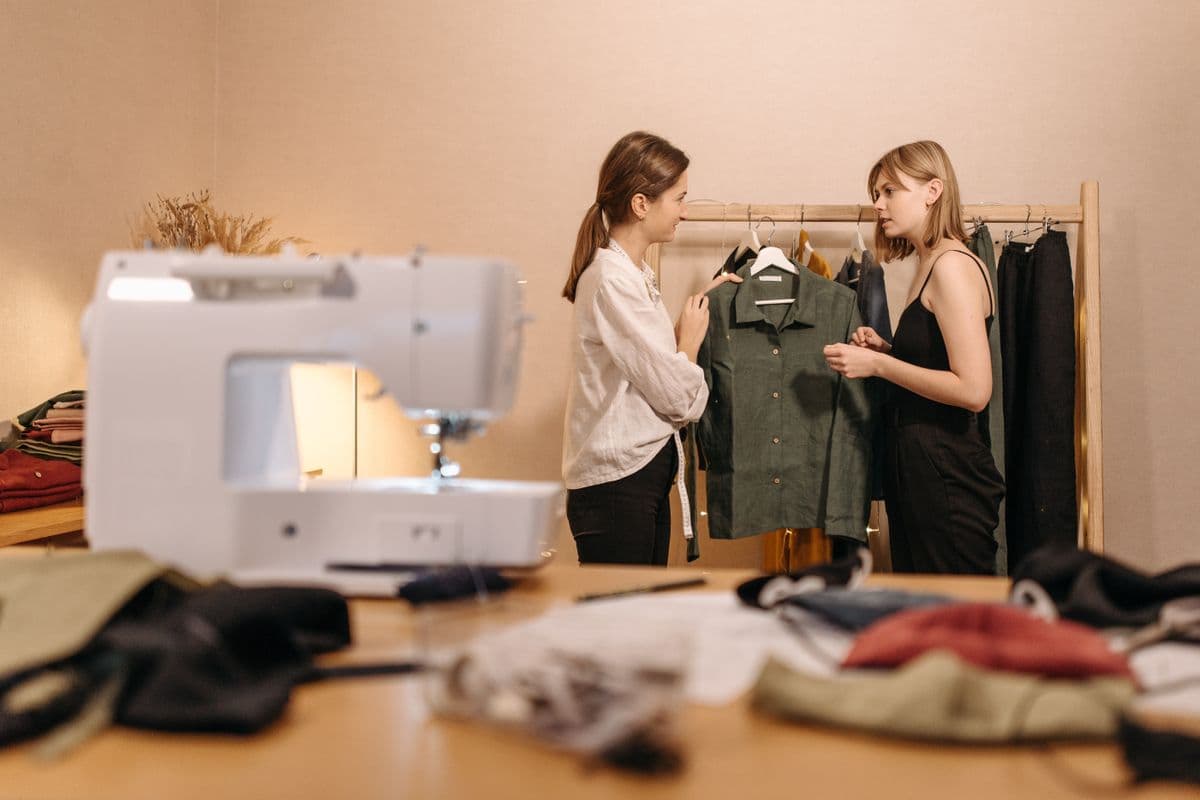
For a complete picture: at Nathan Tailors a two-piece suit is $169 to $459, garment-only, shipping quoted separately, and half-canvas is what we build. We are a workshop in Hoi An selling direct -- no importer, no wholesale margin, no mall lease, no markdown cycle to price against. We cut only from our own cloth library, which you choose from before anything is cut, and every suit ships with seam allowances and spare matching cloth so a tailor where you live can adjust it at your cost. Make is 3 to 4 working days; shipped worldwide it is 2 to 3 weeks; in person in Hoi An it is 2 days. You can measure yourself with our guided measurement studio.
That does not make us the right answer. It makes us a legible one, which is the only claim I think a shop is entitled to make. If Spier & Mackay at $298 half-canvas suits your life better, buy that. If you need a jacket by Friday, walk into a store. The argument here is not "buy from Vietnam" -- it is make the brand tell you what the money bought, and if it will not, that silence is the answer.
Frequently asked questions
Is $1,000 a lot to spend on a suit?
It is above the point where construction and cloth reliably keep improving. At $1,000 you should be getting at minimum a stated half-canvas in 100% wool from a named mill; if the brand will not state construction at that price, you are into the overpriced side of the line. For reference, Brooks Brothers states half-canvas at $1,498 and full canvas at $1,698.1011
Is $2,000 a lot for a suit?
Yes, unless you wear suits most days or you are buying a specific maker's hand-work. At $2,000 the honest question is not "is this good" but "what does this have that a $700 half-canvas does not", and the brand should answer it in writing. Hugo Boss's mainline reaches $2,199 without publishing a canvas grade.15
What is the difference between a $500 suit and a $5,000 suit?
Mostly hours of hand-work, cloth grade, and whether the pattern was drafted for your body or picked off a size chart. The gap is real but not ten times real, and it narrows sharply once the $500 suit is made to measure with a canvassed chest.2
What is a reasonable amount to spend on a suit?
For occasional wearers: $250 to $500 all-in including alterations. For someone who wears one weekly: $600 to $1,200, insisting on stated half-canvas. Above that you are buying service, hand-work or a name, and you should know which of the three. If your honest answer is fewer than about 20 wears, buy less suit and spend the difference on alterations.
Does a more expensive suit last longer?
A canvassed one does, because a glued chest can eventually bubble and cannot be repaired, while a stitched canvas moulds to you instead. But that is a construction difference, not a price difference -- and it is available at $298.3
The bottom line
Expensive is a fact about your wallet. Overpriced is a fact about the garment. The way to keep them apart is to ask a brand four questions -- what is the fibre, who wove it, is the chest canvassed, where was it sewn -- and to treat every unanswered question as money that did not reach the suit. Most of the market fails at least one. A few, at every price level, answer all four.
Our custom tailored suits page puts the cloth, the construction and the price on one screen so you can run those four questions on us. And if you would rather just argue about the cost-per-wear table, message us. Linda will interrupt to tell you how handsome you are before I get to the maths.