A note from Jay: Yes, I run a tailor shop in Hoi An. Yes, I am about to tell you not to order certain things. We will survive. This guide exists because I spent ten years in the US -- Pennsylvania, New York City, Houston -- watching people overpay for mediocre clothes, and now I live in a town with 500+ tailor shops watching tourists order things they probably should not. The truth builds more trust than a sales pitch. So here is what I genuinely think is worth getting made in Hoi An, what depends on the situation, and what you should probably skip entirely.
The Cheat Sheet
If you are short on time, here is the whole post in one table. Price ranges are typical for Hoi An tailor shops in general, not our own menu -- see our pricing page for Nathan Tailors prices. If you want the reasoning behind each one, keep reading.
| Item | Verdict | Price Range (USD) | Time Needed |
|---|---|---|---|
| Dress shirts (cotton/linen) | Worth it | $25 -- $50 | 1-2 days |
| Men's suits (2-piece / 3-piece, wool) | Worth it | $100 -- $350 | 2-3 days |
| Cashmere-blend suits | Worth it (luxury tier) | $200 -- $600 | 3 days |
| Women's dresses | Worth it | $40 -- $200 | 2-3 days |
| Ao dai (Vietnamese traditional) | Worth it | $40 -- $100 | 1-2 days |
| Silk pajama sets | Worth it | $60 -- $120 | 2-3 days |
| Winter coats / overcoats | Worth it | $100 -- $250 | 3 days |
| Blazers / sport coats | Worth it | $80 -- $200 | 2-3 days |
| Leather jackets | It depends | $100 -- $300 | 3-4 days |
| Leather shoes / boots | It depends | $50 -- $150 | 3-5 days |
| Wedding dresses | It depends | $199 -- $600 | 4-5 days |
| Custom sneakers | Skip | -- | -- |
| Technical / down jackets | Skip | -- | -- |
| "Someday" clothes (no occasion) | Skip | -- | -- |
The "Worth It" Tier: What Hoi An Does Brilliantly
These are the items where Hoi An tailoring genuinely shines. The quality is high, the value compared to back home is enormous, and 300 years of tailoring tradition have made the local craftspeople seriously good at these specific things.
1. Dress Shirts -- The Perfect Starter Order
If you only get one thing made in Hoi An, make it a shirt. This is the single best introduction to custom tailoring on the planet.
Why shirts? Because they are fast (ready for fitting in 24-48 hours), low-risk (you are not committing $200+ on your first order), and the difference between a custom shirt and an off-the-rack one is immediately obvious. The collar sits right. The sleeves are your actual sleeve length. The body follows your torso instead of billowing out like a parachute or pinching across the chest. Once you wear a custom-fit shirt, you will look at every department store shirt with mild disgust for the rest of your life.
What to order: Cotton for everyday wear, linen for summer and vacation. Get 3-5 in different colors -- white, light blue, and one fun pattern is a great starting trio. Budget $25-$45 per shirt in cotton, $30-$50 in linen.
Pro tip: A shirt is also the best quality test. Check the stitching, the buttonhole consistency, how the collar lays. If a shop nails a shirt, they can nail a suit.
2. Men's Suits (2-Piece and 3-Piece)
This is the flagship. This is what puts Hoi An on the map. And the value proposition is genuinely staggering.
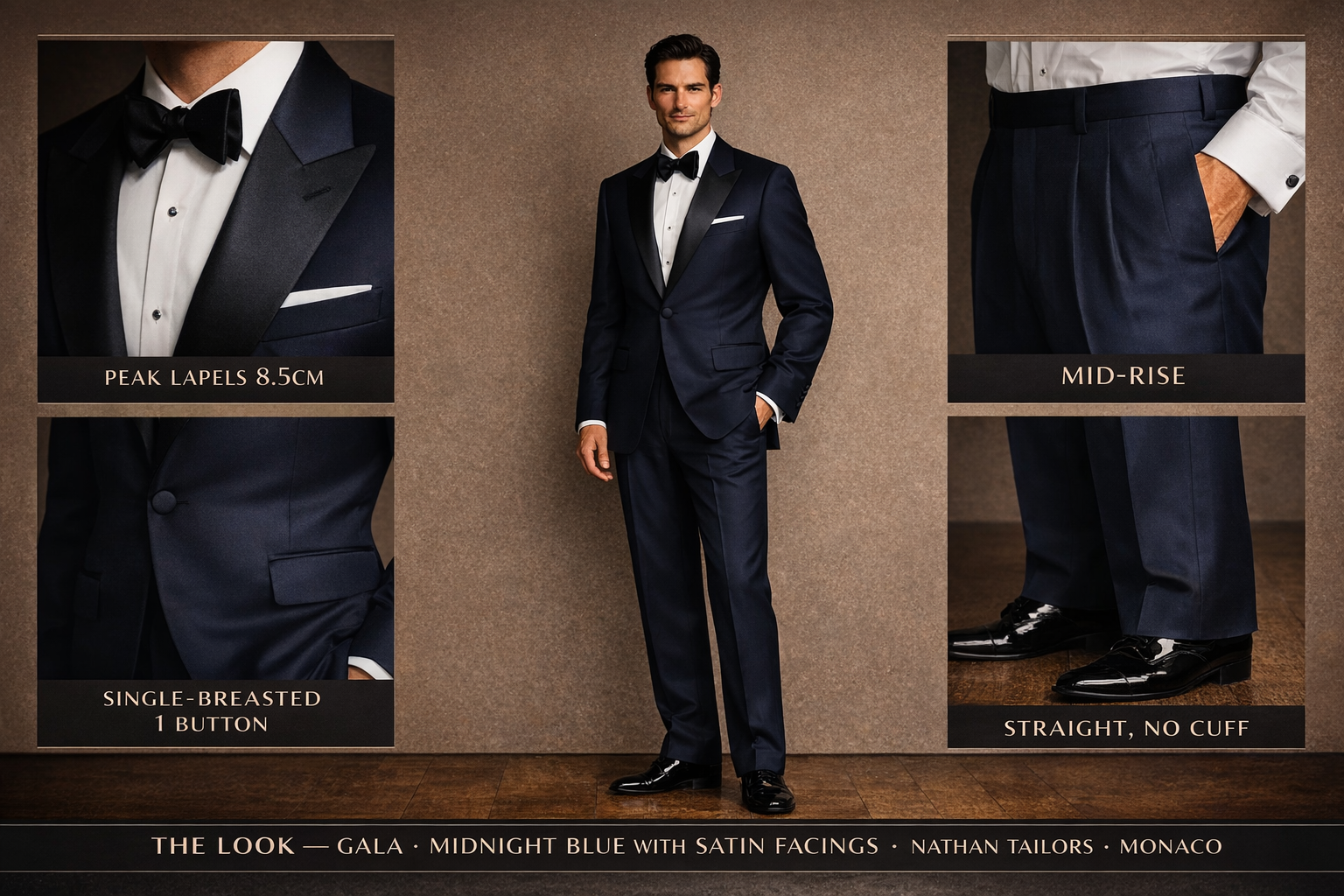
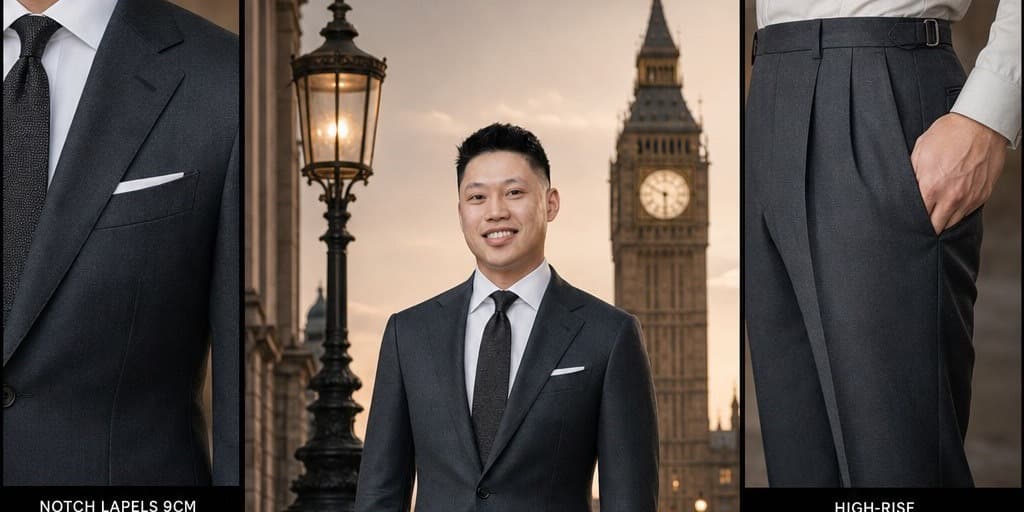
A custom suit in Hoi An made with real wool from established mill suppliers costs $100-$350. A comparable made-to-measure or off-the-rack at SuitSupply runs $499-$799. A western bespoke tailor in real wool? $1,500-$2,500+. Honest note: we are not claiming Hoi An tailors stock the same heritage cloth a $4,000 luxury brand uses -- we do not, and shops that name-drop specific Italian mills should be read with skepticism. Real wool, custom cut, at a fraction of Western prices is the honest pitch.
The reason is not that the quality is lower. It is that the overhead is lower. No Midtown Manhattan rent. No six layers of middlemen between the fabric mill and the cutting table. A Hoi An tailor who sees 30-50 customers a day has more hands-on experience than a western tailor who sees 5-15 a week. Volume is a training program.
Best for: Work, weddings, events you already have on the calendar. Get it in a versatile color -- navy or charcoal -- that you will wear repeatedly. A navy suit with the right cut works at a wedding, a job interview, a client dinner, and a date. That is four outfits from one garment.
Time needed: 2-3 days. Day 1 measure, Day 2 first fitting, Day 3 final pickup. If you are getting a 3-piece (jacket, trousers, vest), give it the full three days.
3. Women's Dresses -- Cocktail, Evening, Work
This is where Hoi An's Pinterest-to-reality skills are at their absolute best.
Bring a photo of a dress you love -- from a magazine, Instagram, a designer website, wherever. The tailors here are remarkable at looking at a 2D image and turning it into a 3D garment that fits your specific body. Not a body that looks like a mannequin. Your body, with all its actual dimensions.
Silk and cotton work best. A simple cotton work dress costs $40-$80. A silk cocktail dress runs $80-$200. An elaborate evening gown with beading or lace detailing pushes higher, but still a fraction of what you would pay at home.
The advantage of a made-to-measure dress: it solves the eternal problem of "I love this dress but it does not fit my body type." Off the rack is designed for a standard set of measurements that may or may not resemble yours. Custom is designed for you. Full stop.
4. Ao Dai -- The Vietnamese National Dress
Even if you came to Hoi An with zero intention of getting anything tailored, consider an ao dai.
The ao dai (pronounced "ow-zai" in the south, "ow-yai" in the north) is a fitted tunic worn over wide-leg trousers. It is elegant, flattering, and deeply tied to Vietnamese culture. There are versions for women, men, and children. Getting a custom ao dai made in Hoi An -- a town with a 300-year silk and tailoring tradition -- is one of those experiences that is both a beautiful keepsake and a real cultural connection.
They are fast (24-48 hours), affordable ($40-$100 depending on fabric), and make incredible photos. Couples and families getting matching ao dai sets and doing a sunrise photoshoot in the Old Town is one of the most charming things I see in this town.
5. Silk Pajama Sets -- The Sleeper Hit
Pun intended, and I am not sorry.
Custom silk pajama sets are one of Hoi An's best-kept secrets. Real mulberry silk -- not the polyester "satin" that Victoria's Secret sells for $80 and calls luxurious. Actual, temperature-regulating, soft-against-your-skin, 19-22 momme mulberry silk. Custom-fitted to your measurements. $60-$120.
For context: Lilysilk charges $169-$218 for a comparable set. Lunya charges $278-$348. Olivia von Halle charges $475-$690. And none of those are custom-fitted.
Silk pajamas are also one of the best gifts you can bring home. Your mom, your sister, your partner, your best friend -- everyone lights up when they unwrap a set of real silk pajamas. We wrote a whole post on silk pajamas if you want the deep dive on momme weight, fabric testing, and why "satin" is not silk.
6. Winter Coats and Overcoats
This one surprises people. "Why would I get a winter coat made in a tropical country?"
Because real cashmere and wool-cashmere blends are available in Hoi An through established mill suppliers. A custom wool-cashmere overcoat in Hoi An costs $100-$250. The same kind of coat at a western tailor runs $800-$2,000+. A genuine luxury-tier cashmere overcoat on Savile Row? $3,000-$5,000+. We are not pretending our cloth is the same as a Savile Row coat -- it is not. What we are saying is that real cashmere content in real wool, custom-cut to your body, sits in this price range here in a way it never will in London or New York.
This became a viral talking point in 2026 when content creators started posting about getting cashmere-blend suits made in Hoi An for less than the price of a single cashmere blazer back home. Hoi An is one of the more reliable places in the world for custom cashmere-blend tailoring, because the labor costs are a fraction of London or New York. Just be aware that any Hoi An shop name-dropping specific heritage mills (Loro Piana, VBC, and so on) for $200 suits is almost certainly making it up -- the cloth is real cashmere blend, but the provenance claims are usually fiction.
If you live somewhere cold -- or you are heading home to a cold climate -- a cashmere overcoat or cashmere-blend suit is one of the highest-value items you can order. The catch is time: overcoats are heavier garments with more structure, so give them 3 days minimum. Do not try to rush this one.
7. Blazers and Sport Coats
Think of this as a suit jacket's cooler, more relaxed cousin. A blazer goes with jeans, chinos, or trousers. It works at a dinner, a date, a casual Friday, or a weekend event where a full suit feels like overkill.
Linen blazers are perfect for warm climates. Wool blazers work year-round. Hopsack weave, flannel, herringbone -- the fabric options are vast and the tailors know how to work with all of them. $80-$200 depending on fabric. This is one of those items where the versatility-per-dollar is off the charts.
The "It Depends" Tier: Great If You Do Your Homework
These items CAN be excellent. But they require more care, more research, or more time than the "Worth It" tier. They are not automatic wins -- they depend on the shop, the materials, and your specific situation.
8. Leather Jackets
Some shops in Hoi An make genuinely beautiful leather jackets. But leather quality varies enormously, and this is where less experienced shoppers can get burned.
Here is the test: touch it and smell it. Real leather has a rich, distinctive smell -- you know it when you smell it. It feels supple and warm in your hand. Fake leather (or low-grade bonded leather) smells like plastic, feels stiff or rubbery, and will start peeling within a year. If a shop cannot tell you clearly where their leather is sourced from, that is a red flag.
Good leather jackets in Hoi An run $100-$300 and can be fantastic. But this is not a "walk into any shop and order one" item. Ask questions. Touch the material. If the leather does not feel right, walk away. There are shops that do this brilliantly -- just make sure you are in one of them.
9. Leather Shoes and Boots
Hoi An has dedicated shoe shops (these are separate from tailor shops). The good ones can make excellent leather shoes, boots, loafers, and sandals. The quality range, however, goes from "these are incredible" to "these fell apart in two months."
What works well: classic leather shoes, Chelsea boots, loafers, and simple sandals. Timeless designs where the craftsmanship can shine.
What does not: custom sneakers. The shops that claim to make "custom Nike-style" or "custom Air Jordan" shoes are producing something that looks similar from a distance but does not have the engineering, the sole technology, or the durability of an actual athletic shoe. Sneakers are an industrial product -- they involve injection-molded soles, proprietary cushioning systems, and manufacturing processes that a small cobbler shop cannot replicate. This is not a knock on the cobbler. It is just a different craft.
For leather shoes, budget $50-$150 and give the shop 3-5 days. Ask to see examples of finished work. A good shoe shop will proudly show you photos and samples.
10. Wedding Dresses
A custom wedding dress from Hoi An can be absolutely stunning. I have seen dresses come out of shops in this town that made everyone in the room go silent. Silk, lace, beading -- the craftsmanship for formal gowns is genuinely exceptional.
But this is a high-stakes garment, and I want to be honest about what that requires:
- Time: 4-5 days minimum. A wedding dress needs more fittings, more detail work, and more precision than a cocktail dress. A 2-day trip is not enough.
- References: Bring very specific photos. Front, back, side. Detail shots of the neckline, the train, the sleeves. The more specific you are, the better the result.
- Multiple fittings: Plan for at least two, ideally three. A wedding dress has to be perfect, not "pretty good."
If a wedding dress is on your list, plan the extra days; across Hoi An they run roughly $199-$600 versus $2,000-$5,000+ at home. Message us on WhatsApp to talk it through. For the groom and groomsmen, our wedding page covers how we handle wedding suit orders.
The "Probably Skip" Tier (Said with Love)
I am a tailor shop owner telling you not to order certain things. Yes, I am aware of the irony. But honesty is the whole point of this blog, and these are the things I have seen cause the most disappointment.
11. Custom Sneakers and Athletic Shoes
I know. Someone on TripAdvisor said they got amazing custom sneakers in Hoi An. And maybe they did, for a few months. But athletic shoes are engineered products. The sole cushioning, the arch support, the traction patterns, the breathable mesh construction -- these come from factories with specialized machinery, not a cobbler's bench. A local shoe shop can make something that looks like a sneaker. It will not perform like one, and it will not last like one.
Save your money. Buy sneakers from a sneaker brand. Spend your Hoi An budget on the things Hoi An actually does better than anywhere else.
12. Technical Outerwear and Down Jackets
Heavily structured technical jackets -- think Gore-Tex shells, insulated puffer jackets, ski jackets -- require specialized materials, heat-welded seams, and manufacturing techniques that are fundamentally different from tailoring. A tailor works with fabric, thread, and a sewing machine. A technical jacket is closer to engineering than sewing.
A beautiful wool or cashmere overcoat? Absolutely, get that made here. A waterproof down puffer? That is a Patagonia or North Face purchase. Different skills, different tools, different product entirely.
13. Anything You Do Not Have an Occasion For
This is the big one. The number one mistake I see tourists make in Hoi An is ordering clothes for a future version of themselves.
"I might need a tuxedo someday." "This evening gown would be great if I ever get invited to a gala." "I will definitely wear this linen suit... somewhere." The prices are so good that it feels irrational not to order everything. I get it. The economics are intoxicating.
But here is the reality: "someday" clothes end up in the back of the closet. Your body changes. Your style evolves. The event you imagined never materializes, or when it does, you want something different. Meanwhile, the tuxedo you ordered "just in case" hangs in your closet for three years, untouched, serving only as a reminder of vacation enthusiasm.
The rule I tell every customer: Order for events you already have on the calendar, the job you currently have, and the climate you currently live in. A wedding in October? Get a suit for that. Starting a new job next month? Get work shirts. Have a beach vacation coming up? Linen pieces. Concrete, specific, near-future occasions.
If you follow this rule, you will wear everything you order. And when the next occasion comes up? You can always order remotely.
The Fabric Guide in Plain English
You do not need a textile science degree. You need to know six words and what they mean for your actual life.
Cotton -- The everyday king. Breathable, durable, easy to throw in the wash. Best for: shirts, casual dresses, chinos, summer trousers. If you are ordering shirts (and you should be), cotton is your default. Egyptian cotton and Supima cotton are the premium tiers -- finer, softer, more lustrous -- but even standard cotton makes a beautiful custom shirt.
Linen -- Incredible in heat. Light, airy, gets softer with every wash. The catch: it wrinkles like crazy. That is the charm, not a defect. A perfectly pressed linen suit does not exist by 11 AM, and that is fine. If you hate wrinkles, linen is not your fabric. If you think a lived-in look is effortlessly cool, linen is perfect. Best for: summer suits, casual shirts, vacation wear, relaxed blazers.
Wool -- The suit fabric. This is what you want if you are ordering a suit, blazer, or trousers to wear in a temperate or cool climate. The Super-number system (Super 100s through Super 180s) is a general industry framework for fiber fineness, with higher numbers meaning finer weave and a softer hand. A mid-range fineness is the durable sweet spot for daily wear. Read Super-number claims at any Hoi An shop with skepticism -- shops cannot independently verify the spec on every roll, and "Super 150s" is one of the most-faked numbers in menswear globally. What matters more is whether the fabric is real wool (do a burn test or trust the hand), the weight, and how it drapes.
Silk -- Hoi An has a 300-year silk tradition, and the real thing is extraordinary. Smooth, luminous, temperature-regulating (cool in summer, warm in winter). Best for: ao dai, pajamas, evening dresses, scarves, blouses. How to test: Real silk warms in your hand when you rub it. Synthetic "satin" stays cool and slippery. Real silk has a subtle, soft sheen. Polyester has an aggressive, plastic-y shine. Ask the shop. A good shop will be transparent about what is silk and what is not.
Cashmere -- Luxury, full stop. Incredibly soft, warm without bulk, lightweight. Best for: overcoats, suits, blazers, scarves, sweaters. More expensive than wool, but a cashmere overcoat or cashmere-blend suit is the kind of garment you wear for a decade and it only gets better. Cashmere is harvested from the undercoat of cashmere goats raised primarily in Mongolia and China, then spun and woven into suiting fabric through layered global supply chains. In Hoi An, a cashmere-blend suit starts around $200 -- versus $1,500-$3,000 at a western tailor for equivalent custom construction. We will not pretend our cloth is the same as a top-tier Italian house cloth -- it is not -- but for outerwear and statement suits, the cashmere-content-per-dollar is hard to beat anywhere else in the world.
Blends -- Wool-silk, wool-linen, cotton-linen. Often the practical sweet spot. A wool-silk blend gives you the structure of wool with the sheen and softness of silk. A cotton-linen blend breathes like linen but wrinkles less. Blends are not "cheaper" -- they are engineered to combine the best qualities of each fiber. Ask your tailor what they recommend for your specific garment and climate.
The Golden Rule: Order for Events You Already Have
I keep repeating this because it is the single most important piece of advice in this entire post.
Before you order anything, ask yourself: "When will I wear this?" Not "when could I hypothetically wear this" -- when will I actually wear this.
- Wedding coming up? Get a suit or dress for that. You know the date, the venue, the dress code. Perfect.
- Starting a new job? Get 3-5 work shirts and maybe a blazer. You will wear them within two weeks of getting home.
- Vacation planned somewhere warm? Linen shirt, linen trousers, a casual cotton dress. Immediate use.
- Anniversary dinner? A cocktail dress or a sport coat. Specific, practical, meaningful.
- Heading back to a cold climate? An overcoat. You will reach for it November through March every single year.
Do not order a tuxedo "just in case." Do not get a ballgown because "the price is too good to pass up." The best price on a garment you never wear is still wasted money. Order what you will actually wear in the next six months. And when the next occasion comes up, you can always message us on WhatsApp and order remotely.
A Quick Note on Timing
Every garment has an ideal timeline. Rushing the process is the fastest way to end up with something that is "fine" instead of "perfect." Here is the honest breakdown:
- Shirts and simple trousers: 1-2 days (one fitting)
- Casual dresses and ao dai: 1-2 days (one fitting)
- Suits, blazers, cocktail dresses: 2-3 days (two fittings)
- Overcoats and complex garments: 3 days minimum (two fittings)
- Wedding dresses: 4-5 days (two to three fittings)
If you are getting multiple items, get measured on Day 1 of your visit. Do not save tailoring for your last day. Walk in when you arrive, browse fabrics, get measured, and give the tailors the maximum window to work. For a full walkthrough of the process, see our first-time custom clothes guide.
Frequently Asked Questions
What is the single best thing to get made in Hoi An?
Dress shirts. No contest. Fast, affordable, low-risk, and the quality difference compared to off-the-rack is dramatic. Start there. You will order more once you see the first one.
Is a custom suit from Hoi An actually as good as a $1,500 suit back home?
If the shop uses real wool (not synthetics), proper construction (canvas or half-canvas, not fused), and gives you proper fittings -- yes. The construction techniques are the same as Western tailoring. The difference is overhead and labor costs. We are not pretending Hoi An tailors stock the same cloth tier a $4,000 luxury brand uses; we do not. But for the SuitSupply / Indochino tier, the cloth gap is smaller than the price gap suggests, and the construction can be honestly comparable. A Hoi An tailor who has been making suits for 20 years and does 30+ orders a week is not less skilled than a tailor in London who does 5. If anything, the volume means more reps, more experience, more pattern recognition.
What about quality control? How do I know it will be good?
Google reviews are your best friend. A shop with 300+ genuine five-star reviews did not get there by accident. Look for reviews that mention specific garments, fit quality, and communication. Also: start with a shirt. It is a low-cost quality test before you commit to bigger items. For more on this, read our guide to avoiding scams.
Can I order remotely if I do not have time to visit?
Absolutely. We ship to 50+ countries via DHL and FedEx. The process involves our online Guided Measurement App that walks you through every measurement step-by-step with photos, WhatsApp consultations, fabric selection via photos and swatches, and an excellent first-time fit record on remote orders. It takes longer than an in-person visit (2-3 weeks instead of 3 days), but the quality is the same. Here is how it works.
My partner wants matching outfits. Is that a thing?
Very much a thing. Matching suits for a couple or a wedding party and matching silk pajamas are some of the most fun orders we do. Families getting matching ao dai sets for photos is one of the most charming Hoi An traditions.
What if something does not fit when I get home?
This is the fear everyone has and almost no one experiences. A proper tailor with two fittings gets it right the overwhelming majority of the time. But if something is off, reputable shops have policies for this. At Nathan Tailors, we build generous seam allowances into every garment and ship a spare piece of the same fabric so a local tailor can adjust the fit, and we stay reachable to help you get it right. More on this in our what to do if your custom suit does not fit post.
How much should I budget for tailoring in Hoi An?
A good starter order -- say, 3 shirts and a blazer -- runs about $155-$335. A more ambitious order -- 2 suits, 5 shirts, and a pair of silk pajamas -- is roughly $385-$870. That same order at home would be $3,000-$6,000+. Budget what makes sense for you, but remember the golden rule: only order what you will actually wear.
You are a tailor shop. Why are you telling me not to buy stuff?
Because we would rather you order three items you love and wear for years than ten items where half of them collect dust. Happy customers come back. Happy customers tell their friends. Happy customers leave five-star reviews. A customer who ordered a "just in case" tuxedo that never leaves the closet does not feel great about the experience -- even if the tuxedo is beautiful. Trust is more valuable than a bigger receipt. We will survive.
The Bottom Line
Hoi An is one of the best places in the world to get custom clothes. That is a fact. But "the best place to get custom clothes" does not mean "order everything you can think of." It means order the right things, in the right fabrics, for the right occasions -- and you will walk away with garments that fit better, last longer, and cost less than anything you would find at home.
Shirts? Always. Suits? Absolutely. Dresses and ao dai? Worth it in this town. Silk pajamas? The best gift you will buy on this trip. Sneakers? Buy those at home. A tuxedo you might wear someday? Order it when "someday" has a date on the calendar.
And if you want to start the conversation before you even get to Hoi An, we are always here.
Nathan Tailors -- 127 Tran Hung Dao Street, Hoi An, Vietnam. Established 1999. 530+ five-star Google reviews from 5,000+ happy clients worldwide. Whether you are visiting in person or want to order remotely, we would love to help.
Message us on WhatsApp: Chat with us
Browse our menu: See our full pricing | How to measure yourself