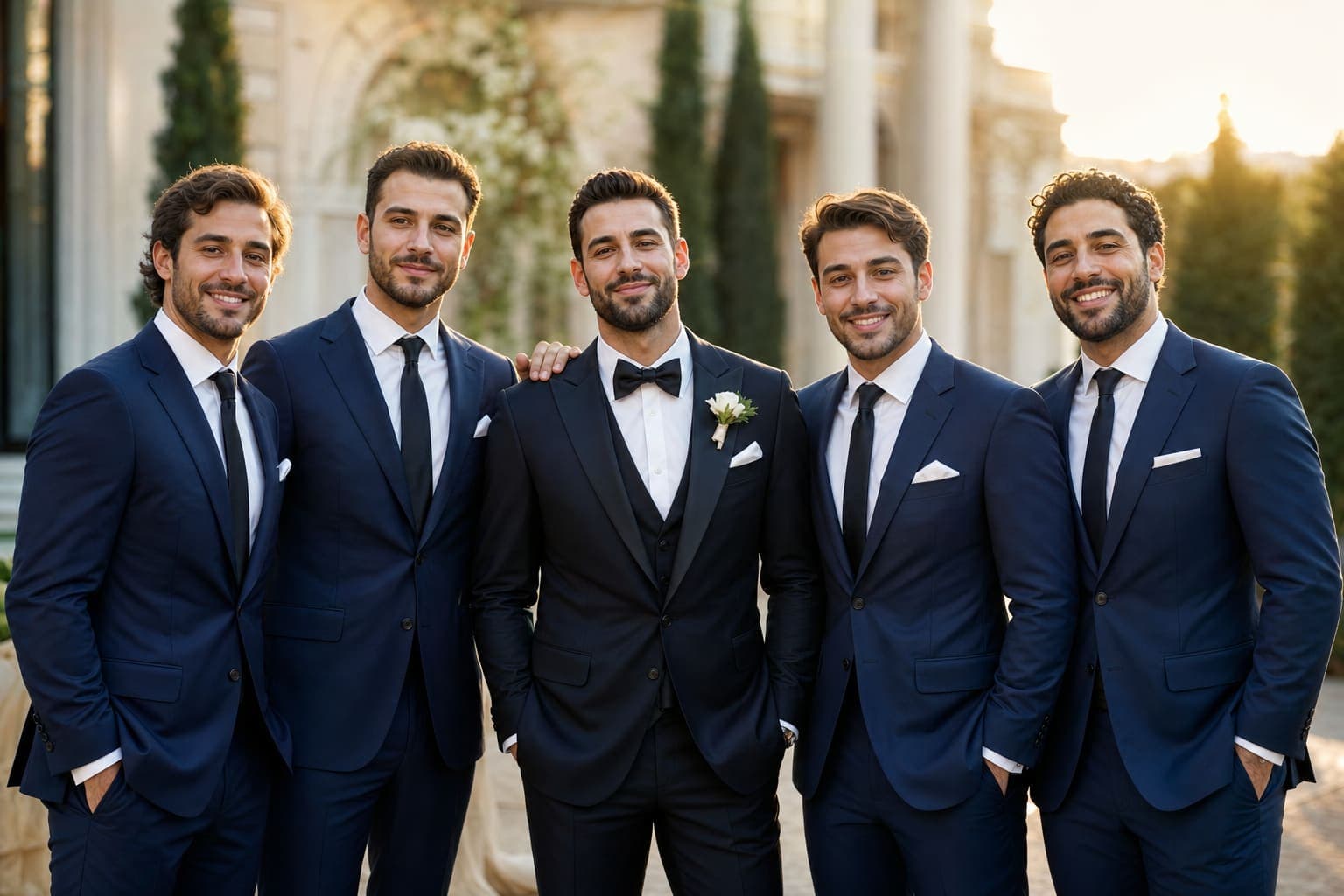
We render wedding parties in sixteen different palettes every single day. Brides send us a Pinterest board, we turn it into a real party — sometimes ten people deep — in our mood board tool, and the same palette goes out to the photographer for first-look planning. After thousands of these renders, one truth keeps surfacing: the palette that wins on Pinterest is not always the palette that survives the actual ceremony light.
Pinterest is back-lit with strobes. Cathedrals are lit with candles and clerestory windows. A barn at 4pm is not the same as a barn at 6pm. Beach light at noon murders dusty blue. Cathedral candlelight turns sage into a ghost. We have watched it happen, photographed and unphotographed, and we have learned which palettes hold up and which ones go to mud.
What follows is forty combinations grouped by venue, plus the sixteen palettes we render most often as the editorial ground truth. Use it to choose, then render your palette on a real wedding party in ninety seconds before you commit.
Why Palettes Look Different in Real Light
A colour is not a colour. It is a colour plus the temperature of the light that hits it. Daylight at noon is around 5500K — neutral, almost clinical. Golden hour drops to 3200K, which is why everything photographs warm and forgiving from 5pm to sunset. Tungsten room light reads about 2700K — warmer still. Candlelight is about 1900K, deeply orange. Cathedrals frequently mix all four through stained glass.
This matters for palettes because of three behaviours:
- Cool tones drift warm under tungsten. A dusty blue suit photographed under chandeliers at 7pm is not the dusty blue you saw on the swatch in daylight. It will read closer to slate or even mauve.
- Warm tones bloom under candlelight. Terracotta becomes saturated and almost orange. Burgundy turns toward oxblood. This is usually flattering — but it shifts your bridesmaids' bouquets out of step.
- Pastels collapse without daylight. Lilac, sakura pink, blush — these palettes are built on small differences. Cathedral candlelight eats those differences. The whole party turns ivory.
Photographers know this. Couples often do not. The fix is simple: choose a palette that matches the dominant light source of your venue, then test it.
The Sixteen Palettes We Render Most Often
These are the colour stories we have rendered hundreds of times each. They are our editorial ground truth — what we know works, where, and at what hour. The pricing for the bridal party is essentially the same regardless of palette; what changes is which one will photograph beautifully.
| Palette | Best Venue | Best Light | Best Season | Risks |
|---|---|---|---|---|
| Sage & Terracotta | Garden, vineyard, barn | Golden hour, daylight | Late summer, autumn | Goes muddy in cool-blue daylight |
| Dusty Blue & Ivory | Coastal, courtyard, modern barn | Daylight, overcast | Spring, early summer | Reads grey under tungsten |
| Burgundy & Gold | Ballroom, cathedral, hotel | Tungsten, candlelight | Autumn, winter | Looks heavy at noon outdoor |
| Emerald & Ivory | Library, chapel, country house | Daylight, mixed indoor | Year-round | Photographs flat in pure tungsten |
| Blush & Champagne | Garden, hotel, courtyard | Golden hour | Spring | Disappears in candlelight |
| Coastal White & Sand | Beach, cliffside, terrace | Daylight | Summer | Featureless at noon — needs texture |
| Plum & Mauve | Gallery, urban loft, ballroom | Mixed indoor | Autumn, winter | Reads brown under warm light |
| Mustard & Olive | Vineyard, barn, garden | Golden hour | Late summer, autumn | Bilious at midday |
| Peach & Coral | Garden, beach, terrace | Daylight, golden hour | Spring, early summer | Saturates aggressively in candlelight |
| Midnight Charcoal | Hotel, cathedral, gallery | Any | Year-round | Flat in low light without highlights |
| Lavender & Lilac | Garden, country house | Daylight, overcast | Late spring | Greys out in tungsten |
| Rust & Copper | Barn, vineyard, autumnal estate | Golden hour | Autumn | Muddied by daylight blue cast |
| Sapphire / Emerald / Amethyst | Ballroom, cathedral, hotel | Tungsten, mixed | Winter | Heavy in summer outdoor |
| Sakura Pink & Ivory | Garden, courtyard, spring estate | Daylight, overcast | Spring | Reads bridal-shower at scale |
| Forest Moss & Slate | Forest, lakeside, mountain lodge | Overcast, daylight | Autumn, winter | Goes black-and-grey in low light |
| Desert Terracotta & Bleached Sand | Desert, ranch, terrace | Golden hour, daylight | Spring, autumn | Looks dusty-flat under fluorescent |
Render Before You Order
The fastest sanity check we can offer is this: take any of those sixteen palettes, drop them into our wedding attire mood board, and watch them on real bodies in your party size. Ninety seconds, no commitment, and you see the colour story play out before any cloth is cut.
Forty Combinations by Venue Type
Barn and Vineyard (10 combinations)
Barns are warm-wood, low-ceiling, golden-hour-magic environments. They flatter every warm-side palette and quietly eat every cool one. The reclaimed wood throws an orange cast on everything.
- Sage suits + terracotta bouquets + ivory dress. The classic. Photographs gorgeously from 4pm onwards.
- Olive groomsmen + mustard ties + cream gowns. Reads earthy and editorial. Avoid noon light.
- Rust suits + cream florals + copper accents. Best for late October weddings — the foliage matches.
- Charcoal suits + sage ties + white dress. The "modern barn" route. Adds contrast where warm-on-warm gets sleepy.
- Tan suits + burgundy ties + dusty pink florals. Beautiful at golden hour, soft after.
- Forest green suits + cream and gold florals. Reads like an English country house.
- Mocha suits + ivory + warm white florals. The most photographed combination of 2026 so far.
- Black suits + mustard pocket squares + olive bridesmaids. Sharper than head-to-toe earth tones.
- Camel suits + burgundy bouquet + champagne dress. A strong move for autumn vineyard ceremonies.
- Navy suits + rust ties + amber florals. The dark-and-warm pairing. Holds up in candlelight reception.
Cathedral and Chapel (8 combinations)
Stained glass, tall ceilings, mixed candle and daylight. Cool palettes flatten. Warm palettes glow. Pastels disappear unless you weight them with structure.
- Burgundy suits + gold ties + ivory dress. Old-world, regal, photographs deep in any light.
- Charcoal suits + emerald ties + cream florals. Restrained and architectural.
- Black tuxedos + white tie + ivory. Cathedral default. Hard to ruin.
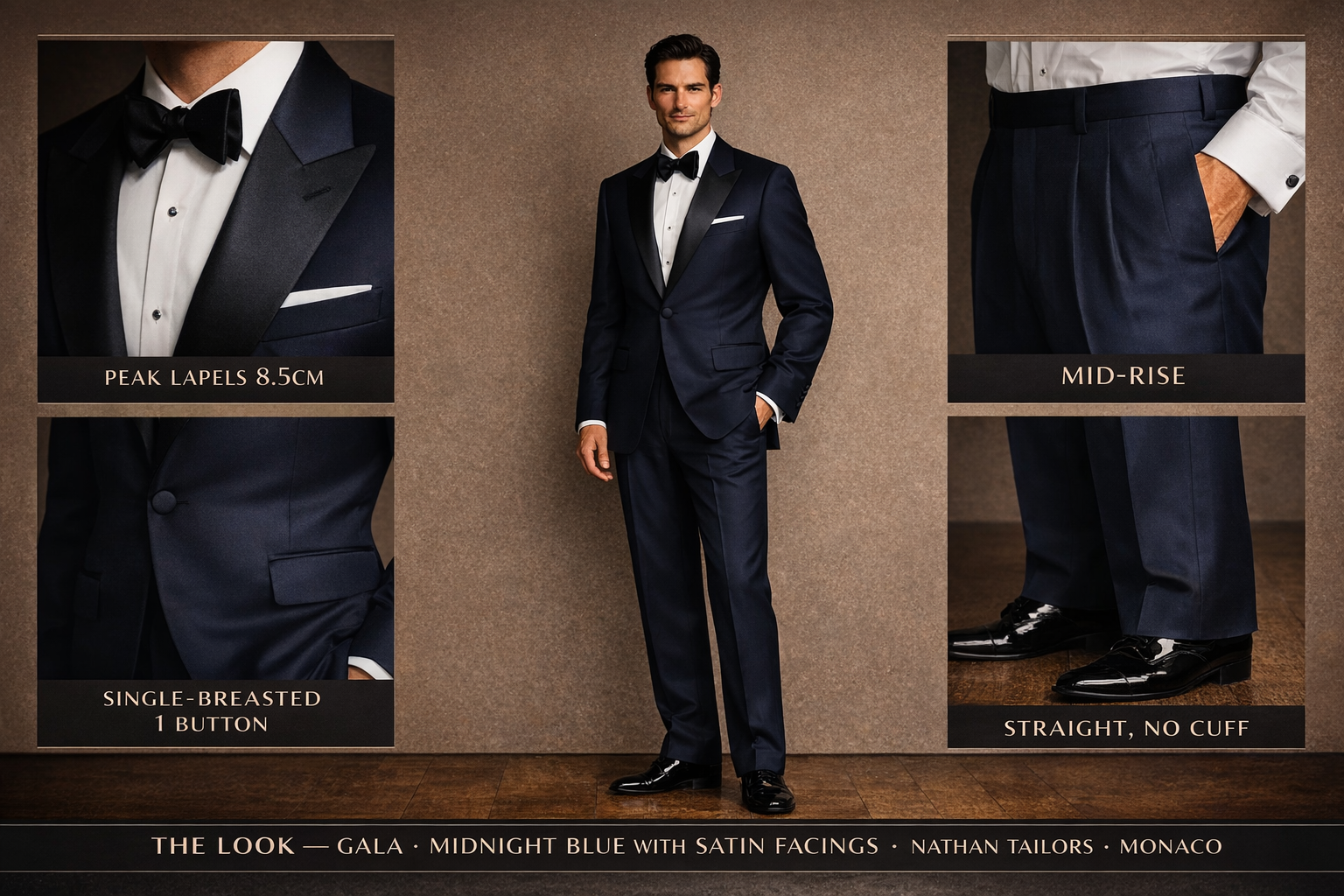
- Midnight blue suits + champagne accents + ivory. Black tie's softer cousin.
- Plum suits + mauve ties + soft pink florals. Strong in candlelight, less so by daylight.
- Sapphire / emerald / amethyst jewel-tone bridesmaids. Each girl in her own jewel, groomsmen in charcoal.
- Forest green suits + cream florals + gold accents. Reads like an early Christmas wedding.
- Charcoal + dusty rose ties. Subtle warmth that survives mixed cathedral light.
Beach and Coastal (7 combinations)
Noon beach light is unforgiving. It bleaches whites, intensifies blues, and washes everything mid-tone. Palettes here need either high pigment or deliberate neutrality.
- Coastal white linen suits + sand ties + ivory dress. The textural-not-colour route.
- Light grey linen + dusty blue ties + white. Holds dusty blue better than indoor venues do.
- Khaki linen + coral pocket squares + blush dresses. Lifts the palette without fighting the sun.
- Stone linen + sage ties + champagne. A cooler take on the warm-earth palette.
- Tan linen + cream + sea-glass green florals. Mediterranean, tactile, easy.
- Light blue linen + white + driftwood-grey accents. Avoid if your venue is also blue.
- Bone linen + apricot + soft yellow. Photographs sun-drenched without going neon.
Garden and Courtyard (8 combinations)
Soft daylight, often dappled. Pastels, jewel tones, and saturated florals all behave well. The risk is the green of the garden itself competing with your palette.
- Blush suits + champagne dresses + soft pink and white florals. Spring's defining combination.
- Lavender bridesmaids + grey suits + ivory dress. Light, romantic, photographs cleanly.
- Sakura pink dresses + cream suits + white florals. Best for early spring, before deep greens kick in.
- Sage suits + dusty pink dresses + greenery florals. The 2026 default.
- Peach suits + coral ties + ivory dress. Warm without being hot.
- Lilac dresses + grey suits + white florals. Reads as "considered" rather than "themed."
- Mustard ties + olive suits + cream florals. An autumn garden palette that survives noon.
- Charcoal suits + dusty pink + sage florals. The "anchor with charcoal" move keeps pastels from washing out.
Ballroom and Hotel (7 combinations)
Tungsten, gold leaf, mirrors, candles. Saturated tones glow. Pastels go grey. This is where jewel tones earn their reputation.
- Burgundy suits + gold + ivory dress. Maximalist, glamorous.
- Midnight charcoal + emerald accents + cream. Restrained ballroom luxury.
- Black tuxedos + jewel-tone bridesmaids + ivory. Each girl in a different jewel.
- Forest green velvet jackets + black trousers + cream. Winter ballroom, candlelit, gorgeous.
- Plum suits + champagne dresses + bronze florals. Photographs richer than it sounds.
- Sapphire suits + silver pocket squares + ivory. Black-tie-adjacent, modern.
- Charcoal + bronze accents + ivory dress. A neutral ballroom palette that still has weight.
The Mistakes We Watch Couples Make
Picking a Palette Without Knowing the Hour
"I want sage and terracotta" is fine. "I want sage and terracotta for a noon ceremony in March" is a different request. The sage you saw on a vineyard at 6pm in October is not the sage that will photograph at noon in March. Always pin your palette to the hour and the season as well as the venue.
Trusting Pinterest Lighting
Pinterest favours the strobe. Wedding photographers shooting for editorial work bring strobes that punch through ambient light and produce that signature crisp, evenly-lit look. Your photographer at your venue may or may not be working that way. The palette that looks luminous in a styled shoot can read flat in a real ceremony.
Choosing for the Bridesmaids' Bouquets, Not the Suits
Florals get replaced if they wilt; suits do not. The party gets photographed mostly in two-piece groupings where the suits dominate the frame. Palette decisions should weight what the men are wearing more than couples typically realise.
Ignoring Skin Tones
Sixteen people in a party means sixteen different undertones. A palette that flatters six bridesmaids but leaves the seventh sallow is a problem. The fix is not to pick "neutral" colours — it is to give people tonal latitude inside one palette. We touch on this in our piece on coordinating groomsmen.
Picking Six Pastels in a Cathedral
If your venue is candlelit, your palette needs at least one anchor — charcoal, midnight, burgundy, forest green, or black. Pure pastel parties in candlelight photograph as a single soft beige blob. We have seen this. The fix is one suit colour with weight; the palette stays the same.
Translating a Palette Into Real Cloth
A palette is not a Pantone chip; it is a story told across nine different fabrics worn by ten different bodies in motion. Translating it correctly takes three things:
- One workshop, one dye lot. The reason five "charcoal" off-the-rack suits all read different on camera is that they were made in five different mills, in five different dye lots, with five different finishings. Same workshop, same lot, same fabric — all of that disappears.
- Render before you commit. Most couples who use our wedding attire visualizer adjust their palette at least once after seeing it on bodies. The mood board catches what the swatch cannot.
- Test against the venue's mood board, not just yours. Send the palette to your venue. Ask them what they have seen photograph well in their light. Most venues have done this hundreds of times.
What 2026 Wedding Palettes Are Trending Toward
From the renders we have seen this season, three movements are reshaping what couples are choosing:
- Tonal over identical. Six different shades of sage on six different bridesmaids is replacing six identical bridesmaids. The whole party reads as a colour family, not a colour uniform.
- Earth grounded with one anchor. Sage, terracotta, mustard, rust — none of them on their own. Almost all paired with charcoal, midnight, or black to give the photo somewhere to land.
- Saturated jewel tones returning. After three years of dusty everything, deep emerald, sapphire, plum, and amethyst are back, particularly for autumn-winter cathedral and ballroom weddings.
Pricing the Palette Across the Party
Whatever palette you land on, the cloth and the construction is what determines whether it photographs as tailored or as rented. Our Nathan Tailors wedding collections are built around the idea that the entire party — bride, groom, groomsmen, mother of the groom, ring bearer — comes out of one workshop, in one dye lot, photographed as a single visual statement. That is what makes the palette decision actually pay off in the photographs.
For couples coordinating a remote fit across continents, we have written about how the destination-wedding workflow actually runs. Most parties send measurements and a mood board; we ship the finished party in time for a single fitting before the rehearsal dinner.
FAQ
What is the most photogenic wedding palette overall?
Across all venue types and lighting conditions, sage and terracotta with charcoal as an anchor is the single most reliable palette we render. It photographs warm at golden hour, holds up at noon, and survives candlelight without going to mud. It also forgives mixed skin tones across a party.
What palette should I avoid for a candlelit reception?
Pure pastels — blush only, lilac only, sakura pink only — without any structural anchor in charcoal or midnight. Candlelight collapses subtle distinctions in light colours. The whole party will read ivory in photos.
Does white-on-white work for the bridal party?
Yes, but it depends entirely on texture. White linen with cream silk reads luxurious; white polyester with ivory polyester reads identical and flat. If your palette is genuinely all-white, invest in fabric texture variation: linen, raw silk, gabardine, fine wool. The differences photograph even when the colours do not.
How early should we lock in the palette?
Wedding-party orders typically run 3-4 weeks door-to-door, including shipping. Lock the palette two to three months out for comfort if you are coordinating a large party.
Can we change the palette after seeing the renders?
That is the whole reason we built the mood board tool. Most couples adjust their palette after seeing the renders — sometimes a shade lighter, sometimes a different anchor colour, sometimes one bridesmaid moves from sage to olive. None of that is a problem until the cloth is cut.