Somewhere in your onboarding packet -- between the compliance training that takes four hours and the sexual harassment module you click through in 22 minutes -- there is a section on dress code. It says something like "business professional attire is expected." Maybe it mentions "business casual Fridays." Maybe it has a photo of a smiling man in a suit that was clearly taken in 2009.
That document is useless. Throw it away.
I traded investment-grade bonds at a Japanese bank in Manhattan for over a decade. I sat on an IG desk surrounded by guys who collectively managed billions in notional and communicated almost entirely in grunts, Bloomberg messages, and the occasional withering glance. I learned the dress code the way everyone learns it -- by getting it wrong and having people look at me like I had just tracked mud across their carpet.
My first week on the IG desk, I wore a tie. My MD looked at me like I had shown up in a Halloween costume. "We are not client-facing today," he said, which was Japanese-bank code for "what the fuck are you doing." I never made that mistake again.
This article is the one I wish someone had handed me before my first day. It is not about fashion. It is about survival. Because on Wall Street, what you wear tells people three things before you open your mouth: your seniority, your awareness, and whether you are worth their time. Get it wrong and you are not just badly dressed -- you are broadcasting that you do not understand the culture. And on a trading floor or in a deal room, that is the worst thing you can be.
Why the HR Dress Code Email Is Worthless
"Business professional" is a phrase that means everything and nothing. It is the corporate equivalent of "dress nice." It tells you to wear a suit but not which suit. It tells you to look professional but not whose version of professional. It does not tell you that wearing a tie on a trading floor will get you roasted. It does not tell you that French cuffs on an analyst are considered presumptuous. It does not tell you that the admin who has been at the firm for 20 years will notice your shoes before she notices your name, and she will whisper about them to the other admins, and that information will somehow reach your VP by lunch.
The real dress code on Wall Street is unwritten, tribal, and division-specific. What works in IBD will get you laughed at in S&T. What works at Goldman will feel underdressed at Evercore. What works at a multi-manager hedge fund will look absurd at a Japanese bank.
So let me break it down properly.
The IBD Rules: Suits, Subtlety, and Not Outshining Your MD
Investment banking division is the most formal environment on Wall Street. Always has been. Always will be. You are client-facing -- or at least, you are expected to be ready to be client-facing at any moment. An MD could pull you into a meeting with a Fortune 500 CFO at 2 PM on a Tuesday, and you need to look like you belong in that room.
The Suit
Navy or charcoal. That is it. Those are your two colors for year one. Navy is the default -- it reads as confident, serious, and appropriately boring. Charcoal is the alternative. Medium grey is acceptable after you have been there a while. Black is for funerals and is the single most common mistake new analysts make. A black suit in IBD reads as either "I am going to a funeral" or "I borrowed this from my dad." Neither is good.
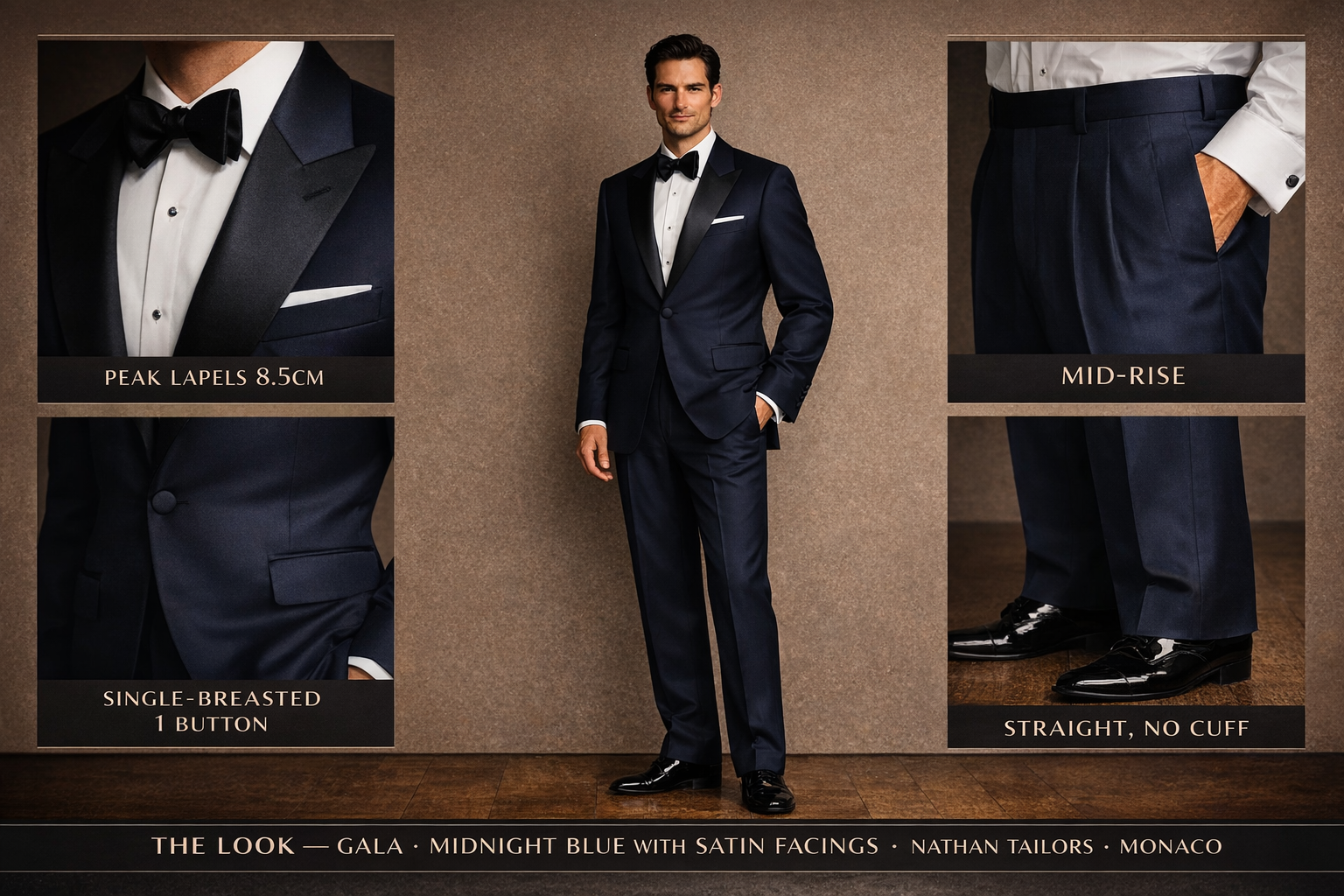
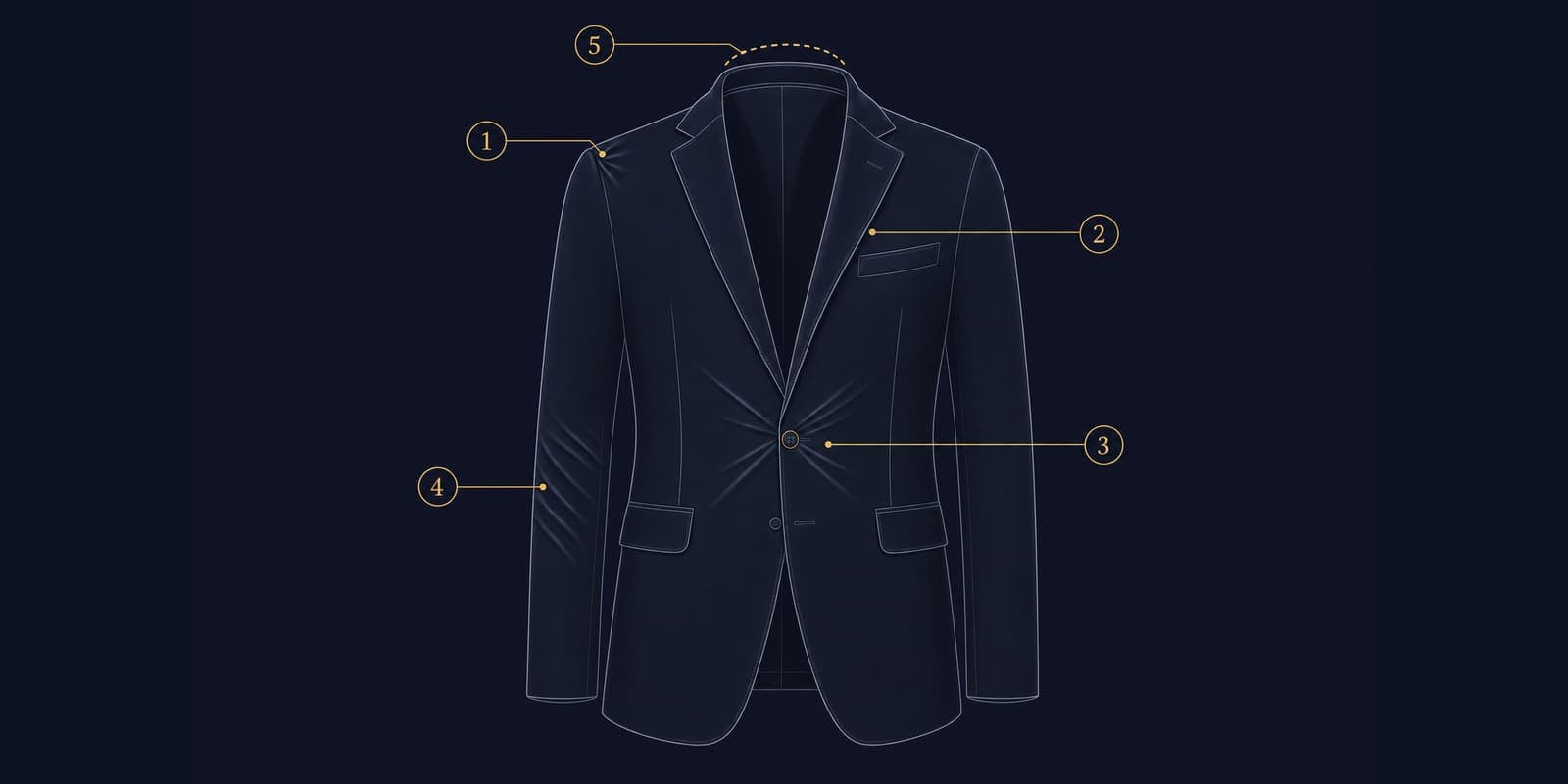
The suit should be two-button, single-breasted, notch lapel. That is the template. Do not get creative. No peak lapels until you are a VP at minimum. No double-breasted anything until you are an MD and have decided that is your thing. The jacket should button cleanly without pulling across the chest. The trousers should have a slight break -- no pooling fabric at the ankle, no high-water look either.
The Shirt
White or light blue. Point collar or spread collar. Semi-spread is ideal -- it works with or without a tie. No button-down collars in IBD. Button-downs are for S&T and business casual environments. In banking, a button-down collar says "I dressed for a different job."
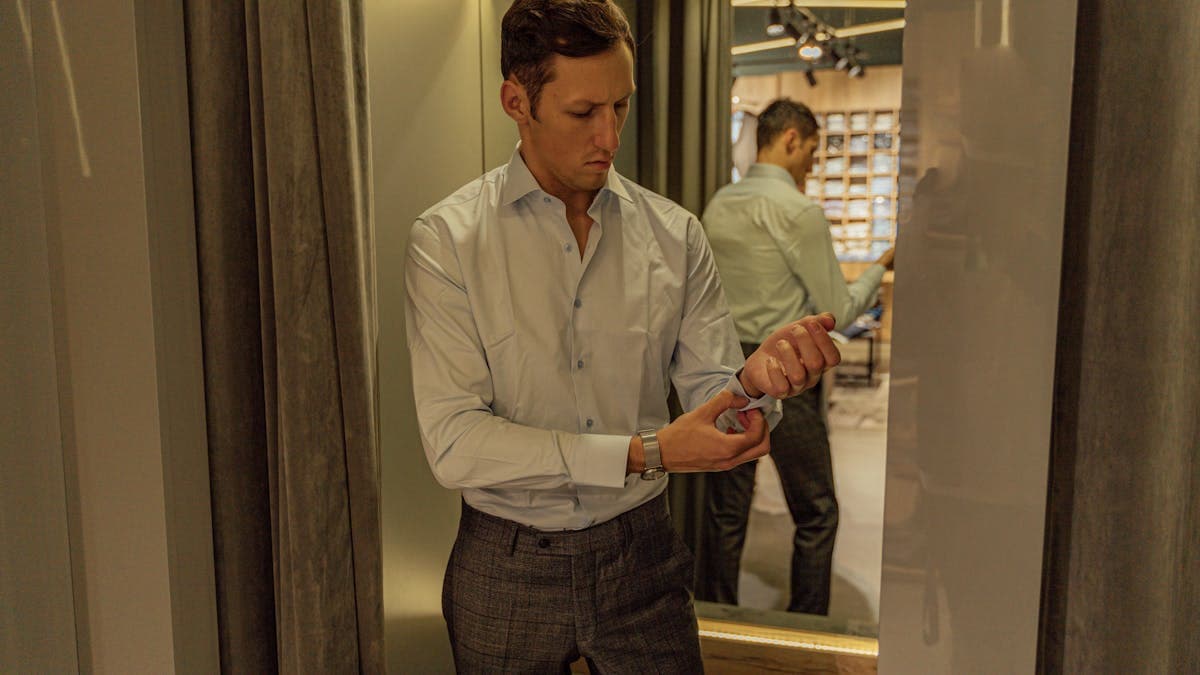
No French cuffs unless you are a VP or above. I cannot stress this enough. A first-year analyst in French cuffs is a meme waiting to happen. Your desk will notice. They will mention it. It will become part of your identity in a way you do not want. Barrel cuffs, white shirt, keep it simple.
No monogramming. No contrast collars. No shirts with patterns that are visible from more than five feet away. A very fine Bengal stripe is acceptable. Anything that could be described as "interesting" is not.
The Tie Situation
Ties are for external meetings and client-facing days. You do not wear a tie at your desk unless you have a meeting. Keep a tie in your desk drawer -- a solid navy or a small-pattern burgundy. When you see your MD reach for his jacket, you have about 90 seconds to get your tie on. Practice a four-in-hand knot until you can do it blind.
No novelty ties. No ties with animals on them. No ties your aunt gave you for Christmas. Solid colors, small repeating patterns, or regimental stripes. Width should match your lapels -- around 3 to 3.25 inches. Skinny ties are over. Wide ties make you look like a used car dealer.
The "Don't Outshine Your MD" Rule
This is the most important unwritten rule in banking and nobody puts it in writing because it sounds ridiculous. But it is absolutely real. You should never be the best-dressed person in any room where your MD is present. If your MD wears a $600 SuitSupply suit, you should not show up in a $2,000 Canali. If your MD does not wear pocket squares, you do not wear a pocket square. If your MD wears his collar open, your collar is open.
I watched an associate get frozen out of a coverage team because he showed up to a client dinner wearing a suit that was visibly nicer than the group head's. Nobody said anything directly. Nobody ever does. But suddenly he was not invited to the next dinner. Or the one after that. He lateraled to another group within six months.
The solution is to dress well but not expensively. A perfectly fitted $249 custom suit from a place where the tailoring is excellent but the label is invisible looks better than a badly fitted $1,200 suit from a name brand. The goal is fit and subtlety -- not brand signaling.
The S&T Rules: The Floor Is 62 Degrees and Nobody Wears a Tie
Sales and trading is a different planet from IBD. The culture is louder, faster, more casual in dress but more intense in every other way. If IBD is a law firm that happens to do deals, S&T is a casino that happens to have Bloomberg terminals.
The Patagonia Vest Is Not a Meme -- It Is a Survival Strategy
Trading floors are kept cold. Deliberately. The servers, the monitors, the sheer density of humans and electronics in a room the size of a football field -- it all generates heat. So the building pumps in air conditioning that would make a walk-in freezer jealous. The floor sits somewhere between 60 and 65 degrees Fahrenheit. Your desk might be even colder if you sit near a vent.
This is why the Patagonia vest exists in finance. It is not a fashion statement. It is not ironic. It is thermal regulation. A fleece or down vest keeps your core warm without adding bulk to your arms, which matters when you are reaching across three monitors and a turret all day. The vest became a uniform because it solves a genuine problem. Patagonia even stopped doing co-branded vests for finance firms because they were embarrassed by the association -- which only made the vest more iconic.
What to Actually Wear on the Floor
- Shirt: Button-down collar is standard. Oxford cloth or broadcloth. Light blue, white, or a gingham check. No spread collars -- too formal for the floor. Roll the sleeves if you want. Nobody cares.
- Tie: Never. Absolutely never. A tie on a trading floor is like a hard hat at a yoga studio. It is technically a garment but it has no business being there. The only exception is if you are meeting a client and your desk head specifically tells you to wear one, which will happen approximately twice a year.
- Pants: Chinos or dress trousers. Not suit pants -- they look too formal without the matching jacket. Navy, charcoal, khaki, or olive. Flat front. No pleats unless you are over 50.
- Shoes: Loafers are the default. Cole Haan was the trading floor standard for years -- comfortable enough to stand in, dressy enough to not look sloppy. Brown or burgundy leather. No oxfords -- too formal. No sneakers -- unless you are a senior trader, which leads me to the next point.
- The vest: Patagonia Better Sweater, Patagonia Nano Puff, or any quarter-zip fleece. Your firm may have branded ones. Wear those. If not, solid colors -- navy, charcoal, black. No logos larger than a postage stamp.
The Seniority Gradient
This is the part nobody explains. On a trading floor, the more senior you are, the worse you are allowed to dress. It is an inverse hierarchy. The head of the desk wears sneakers, jeans, and an untucked shirt. The PM wears New Balance 990s and a hoodie. The senior trader has not worn a collared shirt since 2019.
You, the first-year analyst or associate, cannot do this. You have to earn the right to dress down. Think of it as a seniority tax -- you pay it in starch and leather until you have been there long enough that nobody questions your commitment. This usually takes two to three years. By your third year, you can start wearing sneakers. By year five, the dress code barely applies to you. By year ten, you could show up in a bathrobe and people would just assume you had a good year.
But week one? Button-down shirt. Dress trousers. Leather shoes. Vest. Every single day.
The PE and Hedge Fund Rules: Quiet Money, Quiet Clothes
Private equity and hedge funds operate on a different axis entirely. The dress code is nominally "smart casual" or "business casual," but what that actually means varies wildly depending on whether you are at a megafund or a pod shop.
Mega PE: Blackstone, KKR, Apollo, Carlyle
These firms are more formal than you expect. They deal with institutional LPs, pension funds, sovereign wealth -- people who wear suits. The juniors wear suits. The principals wear suits. The MDs might lose the tie, but the jacket stays on. Navy blazer and grey trousers is the minimum. Most days, a full suit is safer.
The quality expectation is high but the flash expectation is zero. Your suit should be well-made and fit perfectly. It should not be identifiable. No visible branding. No loud lining. No statement pieces. These are firms where a $15,000 bonus gets spent on a Patek Philippe that nobody is supposed to notice. The aesthetic is old money -- or at least the aspiration of old money.
Multi-Manager Hedge Funds: Citadel, Millennium, Point72, Balyasny
Pod shops are more casual than mega PE but more formal than you would think based on the tech-casual reputation. The portfolio managers set the tone for their individual pods. Some PMs wear suits. Some PMs wear jeans. You, the junior, wear whatever is one notch above your PM.
The safe bet: A well-fitted blazer, a crisp shirt (no tie), tailored trousers, and clean leather shoes. This works in every pod, at every fund, in every market condition. You can dress it down by losing the blazer on days when the desk is casual. You can dress it up by adding a tie if a client walks in. It is the Swiss army knife of hedge fund clothing.
The unspoken expectation at these firms is quality over formality. A perfectly fitted custom blazer over a well-made shirt reads better than a full suit from Men's Wearhouse. They want you to look like you have taste, not like you are following a dress code. Loro Piana vibes on a junior salary. Which, frankly, is an absurd expectation -- but I will show you how to pull it off at the end of this article.
Quant Funds: Two Sigma, D.E. Shaw, Jane Street, Renaissance
I am including this for completeness. Quant funds are basically tech companies that happen to trade securities. T-shirts, jeans, sneakers. Nobody cares. If you show up in a suit to Two Sigma, people will assume you have a court date. Wear whatever you want but keep a blazer at your desk for the occasional LP meeting or recruiting event.
The Firm-by-Firm Breakdown
Here is what I have seen, heard from friends who work at these firms, and pieced together from a decade of sitting across the desk from their traders and bankers. This is the real picture as of 2026.
| Firm | IBD / Client-Facing | S&T / Non-Client | Culture Notes |
|---|---|---|---|
| Goldman Sachs | Full suit for client days; relaxed at desk since 2019 dress code update | Business casual; vest + button-down standard on the floor | Most relaxed on paper since David Solomon's 2019 memo. IBD still formal in practice. S&T genuinely casual. |
| JPMorgan Chase | Suit expected daily in IBD; tie for external meetings | Business casual; slightly more formal than GS | Most conservative major bank culture. Jamie Dimon era. "Flexible" policy but floors still lean formal. |
| Morgan Stanley | Suit for client work; jacket at desk recommended | True business casual; chinos acceptable | Middle ground between GS and JPM. Wealth management side is more formal than the bank. |
| Evercore / Lazard / Centerview | Full suit daily; tie culture still alive | N/A (pure advisory) | Boutique banks are more formal. Smaller teams = more client exposure = suit every day. No place to hide. |
| Nomura / MUFG / Daiwa | Full suit daily; tie expected | Shirt and tie; more formal than US peers | Wall Street + Japanese corporate = double formal. Hierarchy is visible in everything, including clothing. Do not test boundaries. |
| Citadel / Point72 / Millennium | Blazer + trousers for client/LP meetings | Business casual to casual; pod-dependent | PM sets the tone. Some pods are jeans-and-sneakers. Some are blazers. Default to one notch above your PM. |
| Two Sigma / D.E. Shaw / Jane Street | Blazer only if LPs are visiting | Jeans, t-shirt, sneakers -- genuinely casual | Tech company culture. Wearing a suit is actively weird. Keep a blazer in your desk for emergencies. |
A few things jump out from this table. First, the boutiques and Japanese banks are the most formal. If you are going to Evercore, Lazard, Centerview, Nomura, MUFG, or Daiwa, buy a suit. Buy two suits. Wear one every day. Second, even at the "relaxed" firms, IBD is more formal than S&T. Always. Third, the hedge funds vary so much by team that any generalization is dangerous -- which is why defaulting to blazer-and-trousers is the safest play.
The Unwritten Rules That Will Save You
These are the rules nobody puts in the onboarding packet. I learned every single one of them by either breaking them myself or watching someone else break them and seeing what happened.
1. Do Not Wear a Watch Nicer Than Your MD's
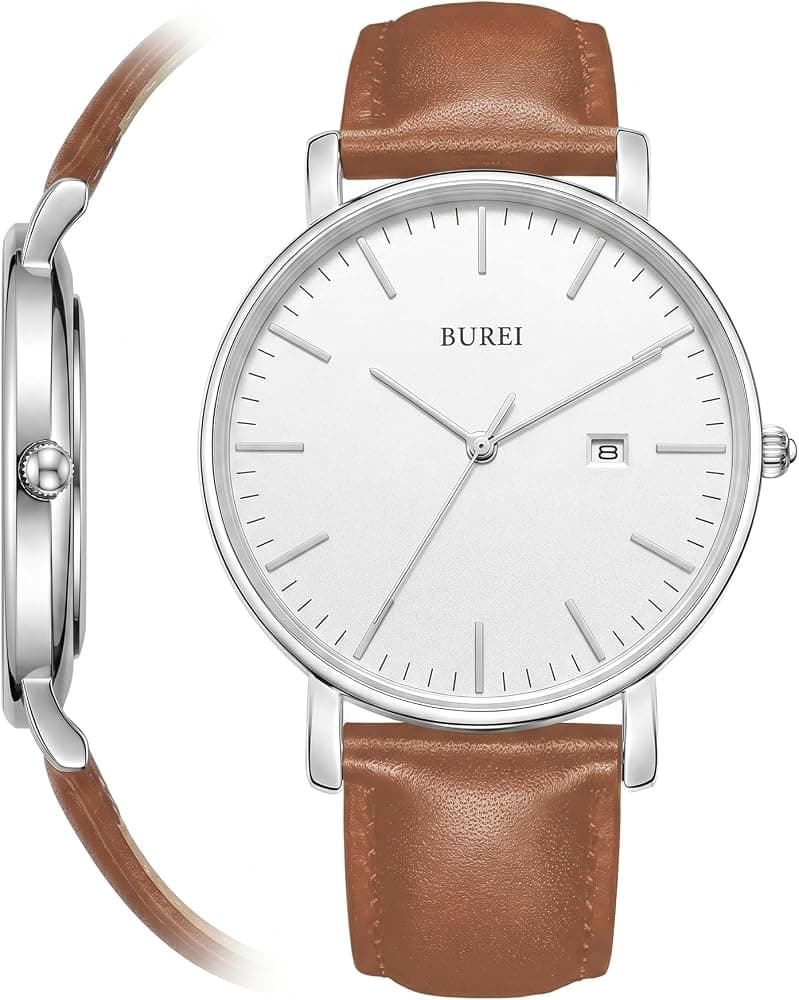
This is the dress code version of the "don't outshine your MD" rule. If your MD wears a Rolex Datejust, you do not show up with a Royal Oak. If your MD wears an Apple Watch, you wear an Apple Watch or a modest automatic like a Seiko Presage or a Hamilton Khaki. Your watch should be invisible. If someone compliments it, it is too nice.
I knew an associate who wore a Panerai Luminor his grandfather left him. Beautiful watch. He got asked about it in his first week. By three people. All senior. The questions were friendly but they were not friendly -- they were assessments. "Nice Panerai. Family money?" That associate started wearing a Casio within a month.
2. No Brown Shoes Until Year Three
This is more nuanced than it sounds. Brown shoes with a navy suit is a perfectly legitimate combination -- it looks great, in fact. But on Wall Street, brown shoes are read as a confidence play. They say "I know the rules well enough to bend them." As a first-year analyst, you do not know the rules well enough to bend them. Black shoes. Years one and two. Black. Dark brown becomes acceptable in year three. Medium brown in year four. Burgundy or oxblood if you are feeling adventurous in year five. Light brown or tan never, unless you are in S&T and it is summer.
3. Your Collar Cannot Be Limp
A limp collar is the single fastest way to go from "well dressed" to "slept on a park bench." Cheap shirts develop limp collars after a few washes. The collar points curl up or fold over. It looks terrible and everyone notices. Either buy shirts with collar stays (removable, metal) or buy shirts with enough structure to hold their shape. If your collar is flopping by noon, that shirt is dead to you. Throw it away.
4. Your Pocket Square Should Not Match Your Tie
If your pocket square and tie are the same color, pattern, or -- God forbid -- from a matching set, you look like you got dressed from a gift box. The pocket square should complement the tie, not match it. A white linen pocket square is the universal safe choice. It goes with everything and it never looks try-hard. If you do not know what you are doing with pocket squares, just use a white one in a flat fold. Nobody will think about it, which is exactly the point.
5. No Visible Designer Labels
If someone can identify the brand of any item you are wearing from across a conference table, you have failed. No Gucci belt buckles. No Ferragamo buckles. No visible logos on your cufflinks, tie bar, or watch band. The only acceptable logo is on your Patagonia vest -- and even that is debatable. Wall Street's aesthetic is stealth quality. The best-dressed people in the room are the ones nobody can place. Their suit fits perfectly, their shirt is crisp, their shoes are polished -- and nothing screams a brand name.
6. The 3mm Rule
The difference between "not trying hard enough" and "trying too hard" is incredibly narrow. It is about 3mm of collar height. It is about whether your trousers break at the shoe or just above. It is about whether your jacket sleeve shows a quarter inch of shirt cuff or a full inch. The goal is the middle of every spectrum. Not too long, not too short. Not too wide, not too narrow. Not too shiny, not too matte. When in doubt, choose the more conservative option. You can always adjust once you understand the culture.
7. Keep a "Client Emergency Kit" at Your Desk
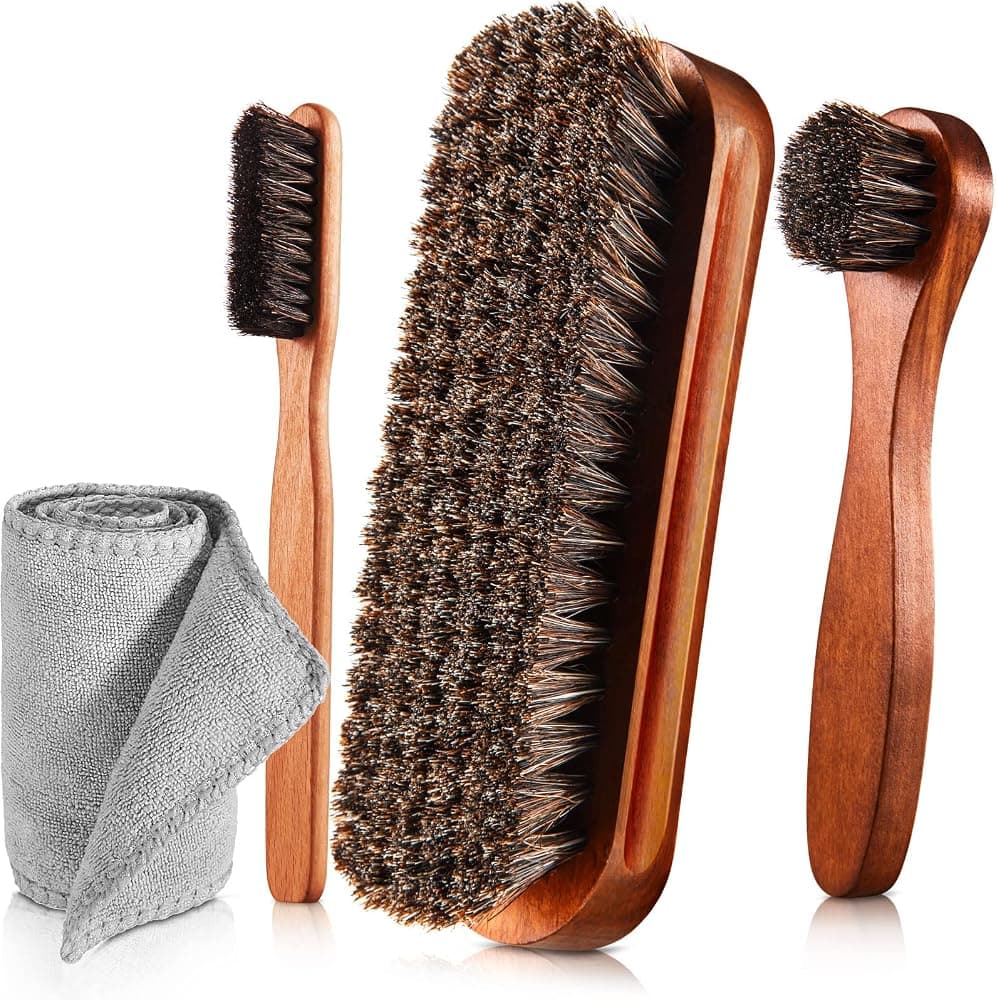
Every experienced banker and trader has a drawer with: a clean tie, a lint roller, a spare white shirt (still in plastic), shoe polish, collar stays, and a breath mint tin. You will need all of these at some point. The day you get pulled into a surprise client meeting with pasta sauce on your sleeve is the day you will thank me for this advice.
Your Day 1 Starter Kit: Exactly What to Buy
You have accepted the offer. You start in two weeks. Here is exactly what you need before your first day, broken down by division.
IBD Starter Kit
| Item | Specification | SuitSupply / Off-the-Rack | Nathan Tailors (Custom) |
|---|---|---|---|
| Suit 1 -- Navy | 2-button, notch lapel, wool or wool blend | $499 - $799 | $149 - $249 |
| Suit 2 -- Charcoal | Same as above, darker shade | $499 - $799 | $149 - $249 |
| Dress shirts (x5) | 3 white, 2 light blue; point or semi-spread collar | $79 - $149 each ($395 - $745 total) | $39 - $49 each ($195 - $245 total) |
| Shoes -- Black cap-toe oxford | Leather sole, no chunky rubber | $250 - $400 (Allen Edmonds / Meermin) | -- |
| Shoes -- Black loafer | Penny or horsebit, for desk days | $200 - $350 | -- |
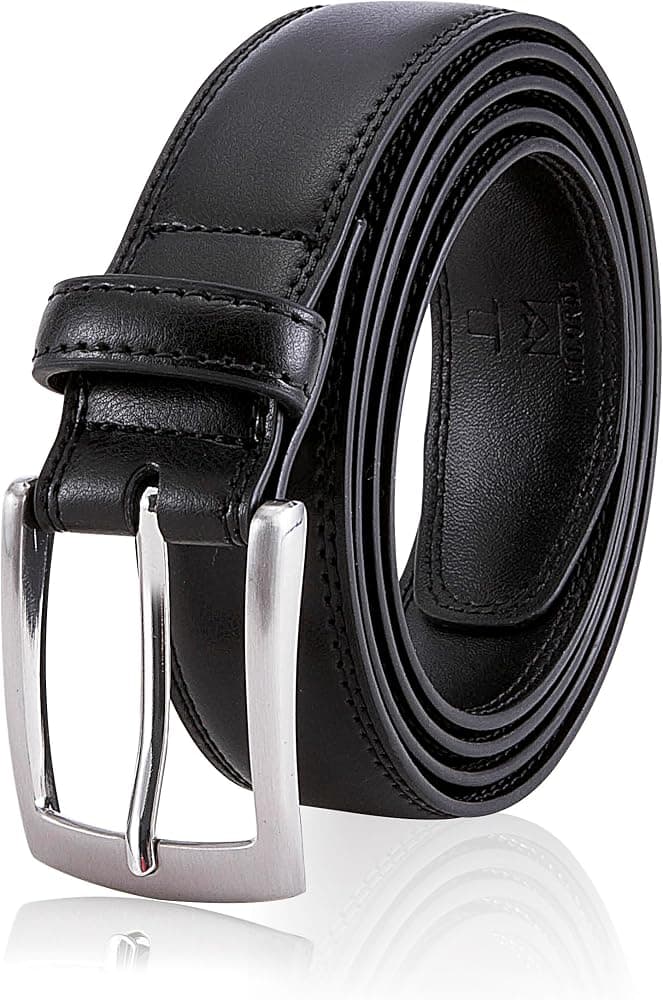
| Belt -- Black leather | Simple buckle, no logo, matches shoes | $75 - $150 | -- |
| Ties (x2) | 1 solid navy, 1 small-pattern burgundy | $79 - $120 each | -- |
| TOTAL (suits + shirts) | $1,393 - $2,343 | $493 - $743 |
S&T Starter Kit
| Item | Specification | Off-the-Rack | Nathan Tailors (Custom) |
|---|---|---|---|
| Blazer -- Navy | Unstructured or half-canvassed, wool | $399 - $599 | $149 - $219 |
| Dress trousers (x3) | Navy, charcoal, khaki; flat front, slim straight | $98 - $148 each ($294 - $444 total) | $79 - $109 each ($237 - $327 total) |
| Button-down shirts (x5) | 2 white, 2 light blue, 1 gingham; button-down collar OK | $69 - $120 each ($345 - $600 total) | $39 - $49 each ($195 - $245 total) |
| Vest | Patagonia Better Sweater or Nano Puff | $120 - $200 | -- |
| Shoes -- Leather loafer | Brown or burgundy; Cole Haan or similar | $150 - $300 | -- |
| TOTAL (blazer + trousers + shirts) | $1,038 - $1,643 | $581 - $791 |
Look at those numbers. The off-the-rack option for an IBD starter kit runs $1,400 to $2,300 for just the suits and shirts -- and that is before shoes, belt, and ties. And you are getting clothes that fit "close enough" off a rack, cut for an average body that is not your body, with seam allowances so thin that meaningful alterations are often impossible.
The custom option from Nathan Tailors -- same quality fabrics, measured to your exact body, delivered to your door -- comes in at $493 to $743 for the same suits and shirts. That is not a typo. That is what happens when you cut out the middlemen, the Manhattan retail rent, the inventory warehousing, and the marketing budget, and go directly to where the clothes are actually made.
Why Custom at These Prices Is Not Too Good to Be True
I know what you are thinking. "If a SuitSupply suit costs $600 and this guy is saying I can get a custom suit for $149, something is off." Fair. Let me explain the economics, because this is not charity and it is not a scam -- it is just how supply chains work when you remove the layers of markup.
A SuitSupply suit at $599 breaks down roughly like this:
- Fabric cost: $40 - $70 (they buy in enormous volume from established mill suppliers)
- Manufacturing: $30 - $60 (cut and sewn in China, Vietnam, or Eastern Europe)
- Shipping and logistics: $15 - $25
- Retail rent and overhead: $80 - $120 (they have 150+ stores in prime locations worldwide)
- Marketing: $40 - $60 (those magazine ads, influencer partnerships, and Google ads)
- Corporate overhead: $50 - $80 (Amsterdam HQ, design team, management)
- Profit margin: $150 - $200+
The fabric and labor -- the actual suit -- cost somewhere around $85 to $155. Everything else is middlemen, marketing, and margin.
Nathan Tailors operates from Hoi An, Vietnam -- a city with 25 years of tailoring tradition and some of the most skilled tailors in Southeast Asia. We work with established mill suppliers across a range of wool blends, premium wool blends, and wool-cashmere blends. We will not name-drop specific Italian mills the way bigger brands do -- that game is usually marketing fiction even when they play it, and we would rather tell you what is actually true. Our tailors see 30 to 50 customers a day, which means they have more hands-on experience in a single month than most Western tailors get in a year. Our rent is a fraction of a Midtown Manhattan storefront. We do not have a $20 million marketing budget. We do not have 150 stores.
What we have is the ability to make a beautifully constructed custom suit, measured to your body, in real wool, for $149 to $309 depending on the cloth tier. The cost of making the actual garment is not what makes a $599 SuitSupply a $599 suit -- everything around it is.
For remote orders, we walk you through our free Guided Measurement App at /measurement/new -- step-by-step with photos -- back it up with a WhatsApp video call if you want one, and ship your finished garments via DHL or FedEx to anywhere in the world. We have done this for 5,000+ clients across 50+ countries and the work shows up in 530+ five-star Google reviews. If something is off when it arrives, we work through it with you on WhatsApp -- usually a quick local alteration on your end, sometimes a return to us. We figure it out together.
The Case for Custom When You Are Starting Out
Let me make the practical case for why custom tailoring makes more sense than off-the-rack when you are starting a career in finance. It is not about luxury. It is about math and time.
You do not have time to shop. You are about to work 80 to 100 hours a week. You will not have Saturday afternoons to wander around SuitSupply trying on jackets. You will not have the energy to drive to three different stores looking for a charcoal suit that fits your shoulders and your waist simultaneously. With custom, you measure once -- at home, in 15 minutes -- and everything arrives at your door.
Off-the-rack never fits right. Your shoulders are 44 inches but your waist is 32. Or your arms are slightly different lengths. Or your right shoulder sits half an inch lower than your left. Off-the-rack suits are cut for an idealized average body. Custom suits are cut for your body. On Wall Street, where the difference between "sharp" and "sloppy" is measured in millimeters, that fit advantage is worth more than any brand name.
The math favors buying more, cheaper. Two $600 SuitSupply suits give you two options. For the same $1,200, you could get four to five custom suits from Nathan Tailors -- which means you are rotating through a full week without repeating, your suits last longer because each one gets worn less frequently, and you have more versatility for different situations. That is just smarter capital allocation. Any analyst should understand that.
Nobody can tell the difference. I will say it plainly: a well-fitted custom suit from Vietnam, made in real wool, is indistinguishable from a $1,500 suit to anyone sitting across a conference table. What they can tell is whether it fits. And custom always wins on fit.
Your First 90 Days: A Survival Timeline
Here is how to navigate the first three months without making a single dress code mistake.
Days 1 - 5: Overdress Slightly
Wear your best suit. Tie in pocket (IBD) or no tie (S&T). Keep the jacket on when walking the floor. Observe. Take mental notes. What is your MD wearing? What are the associates wearing? What are the other analysts wearing? Do not ask anyone about the dress code. Asking is a signal that you do not know, and not knowing is the problem. Just watch and adjust.
Days 6 - 30: Calibrate
By now you should have a clear picture of where the lines are. Start matching the median of your peer group. If the other analysts are wearing suits without ties, do that. If they are in blazers and chinos, do that. You are not trying to stand out. You are trying to disappear into the background while your work speaks for itself.
Days 31 - 90: Settle In
You have established yourself. Your desk knows your name, your work ethic, your sense of humor. Now you can start expressing the tiniest bit of personal style. A light pattern on your shirt. A different shade of blue. Maybe -- maybe -- a brown belt on a Friday. But slowly. The fastest way to reset everyone's opinion of you is a sudden wardrobe change that makes people think you got a signing bonus and lost your mind at Nordstrom.
Common Mistakes I Have Seen (And What Happened)
These are real examples from my decade on the Street. Names changed. Cringe preserved.
- The "Statement Suit" Analyst: New analyst at a bulge bracket shows up in a windowpane plaid suit with peak lapels on day one. He looked fantastic -- for a wedding. His desk called him "The Groom" for six months. He started wearing navy by week two but the nickname stuck until he lateraled.
- The Gucci Belt Guy: Second-year associate wore a Gucci belt with the double-G buckle every single day. His MD pulled him aside and said, "People are going to think I don't pay you enough that you have to flex, or that I pay you too much. Neither is good for either of us." Belt disappeared the next day.
- The Summer Intern in French Cuffs: A summer intern -- a summer intern -- showed up in French cuffs with silver knots on his first day of a 10-week program. The entire desk knew about it by lunch. He was called "Cufflinks" for the entire summer. He did not get a return offer. (To be fair, his modeling was also weak. But the cufflinks did not help.)
- The Sneaker Senior: A third-year analyst saw a VP wearing Common Projects and decided he could do the same. He could not. His desk head told him to "come back when you close a deal." He went back to Allen Edmonds.
A Note on Japanese Banks
I spent the bulk of my career at a Japanese bank, so I want to give this its own section. Nomura, MUFG, Daiwa, and SMBC have a specific culture that combines Wall Street norms with Japanese corporate expectations. This creates a dress code that is more formal than any American bank.
At Japanese banks, ties are still common on the floor. Suits are expected daily, not just for client meetings. The hierarchy is deeply respected, and that respect is partly expressed through attire. Junior people dress up. Senior people dress slightly less up. But nobody dresses down the way a Goldman S&T guy might.
The Japanese concept of "reading the air" -- kuuki wo yomu -- applies directly to clothing. You are expected to intuit what is appropriate without being told. My MD never explicitly told me not to wear a tie on a non-client day. He just looked at me in a way that communicated it more clearly than any words could have. The next day I showed up without a tie. He nodded. That was the entire conversation.
If you are starting at a Japanese bank, default to the most formal version of every rule in this article. Suit every day. Tie ready at all times. Black shoes. No experiments. You can relax once you understand the specific dynamics of your floor, but that understanding will take longer than at an American bank because the feedback is more subtle.
The Bottom Line
Wall Street's dress code is not about clothes. It is about signaling. It tells people that you understand the culture, that you respect the hierarchy, that you pay attention to detail, and that you are serious about being there. Getting it right will not make your career. But getting it wrong can set you back in ways that are invisible and hard to recover from.
The good news is that it is not complicated once someone tells you the rules. And now someone has.
Two suits. Five shirts. Two pairs of shoes. A belt. A tie or two. Measured to your body, made from quality fabric, delivered before your first day. That is all it takes.
I spent 10 years figuring out what to wear on the trading floor. I had the wrong tie, the wrong shoes, the wrong collar, and the wrong watch before I got it right. Now I help guys like you skip the learning curve.
WhatsApp us your firm and role -- we will tell you exactly what you need. No guesswork. No wasted money. No desk nicknames you cannot shake. Just the right clothes, fitted to your body, at a price that makes sense even on a first-year salary.
Or start by reading the full story of how a bond trader ended up running a tailoring business in Vietnam. Then check our pricing and see what four custom suits cost compared to one off-the-rack option. The math does not lie.
And if you just read this entire article and still show up to Goldman on day one in a black suit with French cuffs and a Gucci belt -- well, I cannot help you. But the admins will definitely be talking about you.