I wore the vest. Every day. Patagonia Better Sweater in navy over a white button-down, grey slacks, Cole Haans. I am not here to tell you to ditch it -- the trading floor is 62 degrees and your Bloomberg terminal does not care about your outfit. I am here because after 10 years of wearing it, I figured out which version of the uniform actually looks good and which version makes you look like you got dressed in the dark.
I traded IG bonds at a Japanese bank in Manhattan for over a decade. I sat in a desk chair from 6:45 AM to sometimes 7 PM, staring at rates screens, picking up the turret when Tokyo called, and eating lunch from a Seamless bag balanced on my keyboard. I was not thinking about fashion. Nobody on the floor was thinking about fashion. But I was definitely noticing -- without consciously realizing it -- which guys looked put-together and which guys looked like they rolled out of a sleeping bag and onto the 4/5/6.
The difference was never the brand. It was never who spent more money. It was always the same handful of details that separated "that guy looks sharp" from "that guy looks like he is wearing his older brother's clothes." And those details are what this article is about.
The Midtown Uniform Is Not Dead. Stop Writing Its Obituary.
Media has been declaring the Midtown Uniform dead since Patagonia stopped doing corporate-logo vests in 2019. New York Magazine wrote about it. The Wall Street Journal ran a think piece. Finance Twitter had a field day. "The vest era is over." "Wall Street is going back to suits." "Business casual is dead."
Walk down Park Avenue between 47th and 57th at 7 AM on any Tuesday morning and tell me it is dead.
It is alive. It is everywhere. The Patagonia logo just got replaced by Arc'teryx or lululemon or whatever vest the guys in S&T adopted that quarter. The core uniform -- fleece or puffer vest over a button-down shirt, dress trousers, some kind of hybrid dress shoe -- is exactly the same as it was in 2016. The only thing that changed is which logo is on the chest.
Here is the real problem. The uniform is not dead. It is stale. Every guy in the vest looks the same. Same collar. Same fabric. Same slightly-too-long sleeves peeking out the bottom of the vest. Same pants that bag at the knee by 2 PM. Same Cole Haans that have been resoled twice and should have been replaced eighteen months ago. Same overall silhouette that says "I am in finance" the way a baseball cap says "I watch sports." It communicates the tribe but communicates nothing about you.
This article is not about replacing the Midtown Uniform. I wore it for a decade and I get it -- it is practical, it is comfortable, it is the path of least resistance, and when you are managing a book and your phone is ringing and Tokyo is asking about a spread you do not have time to think about what you are wearing. This article is about upgrading within the uniform so that the same basic pieces look intentional instead of accidental.
The Shirt Is Everything
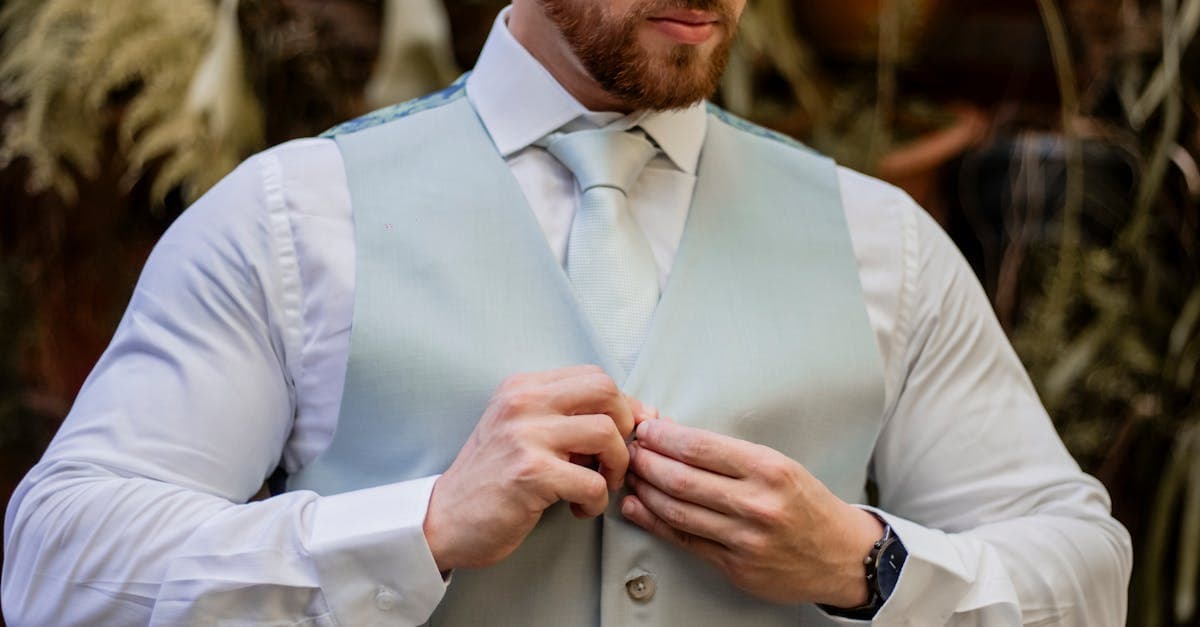
Under a vest, the shirt is 80% of what people see. Think about the actual visual real estate: the collar and neckline are framed by the vest's neckline. The cuffs peek out at the bottom of the vest sleeves. Whatever is visible between the vest's zipper or buttons -- if it is unzipped -- is shirt. The shirt IS the outfit. Everything else is supporting cast.
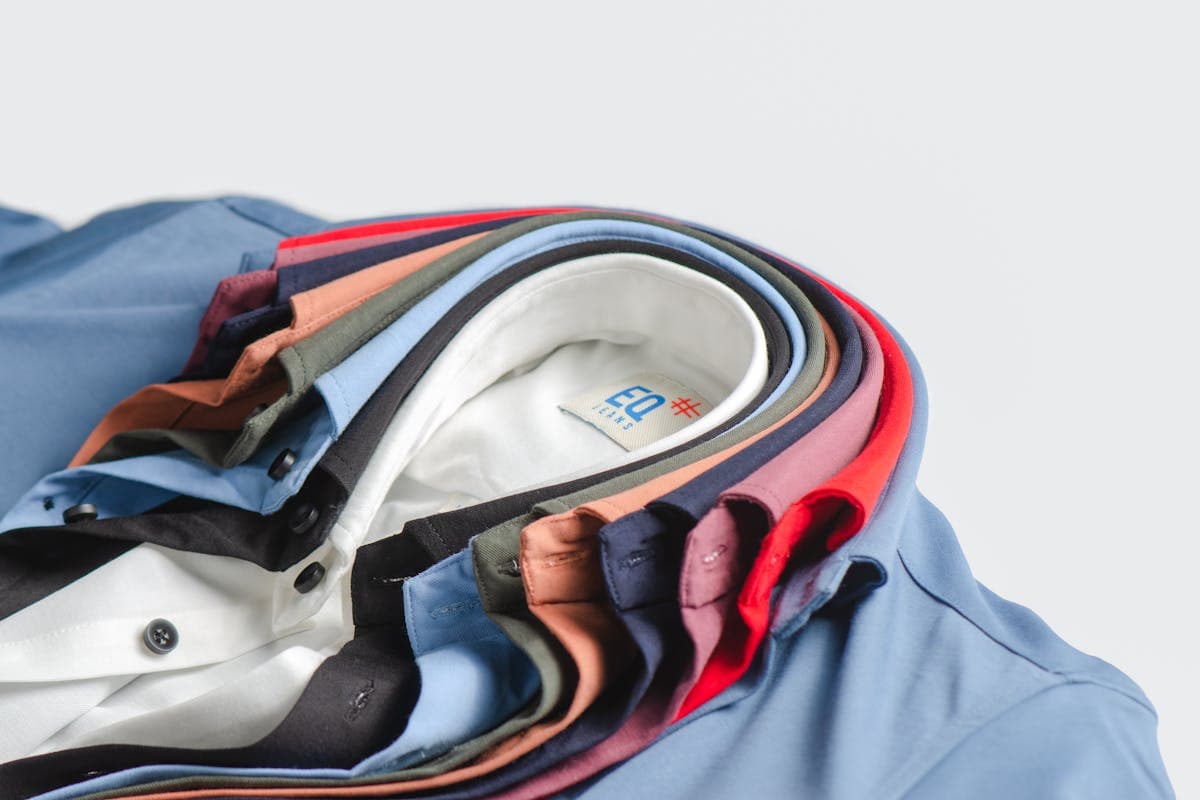
And yet most guys treat the shirt as the thing they think about least. They grab whatever Charles Tyrwhitt three-pack was on sale, cycle through the same four shirts for three years until the collars start fraying, and wonder why they look exactly like every other guy on the trading floor. The shirt is where the leverage is.
Collar Height and Structure
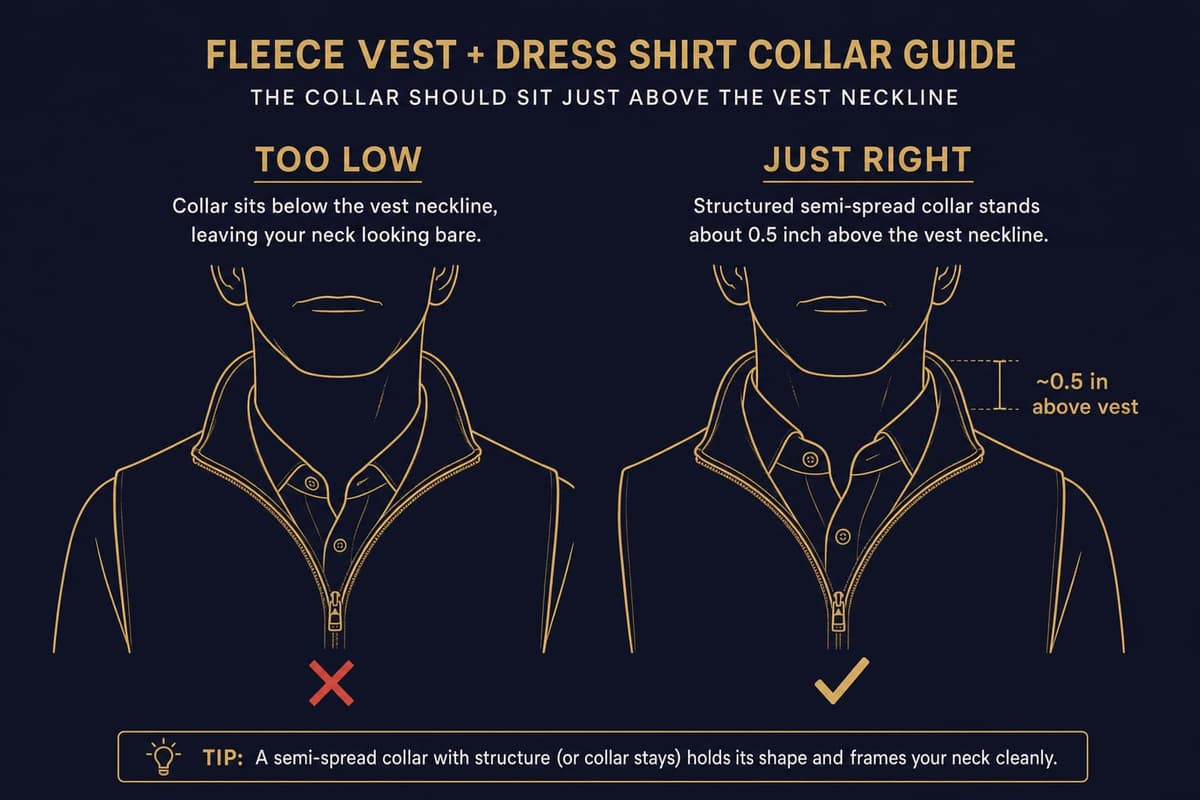
This is the single biggest detail most guys get wrong and do not even know they are getting wrong. A low-profile collar -- the kind that sits flat and barely reaches above the vest neckline -- disappears under the vest. Your neck looks bare. The whole outfit looks unfinished, like you forgot to put on a tie or like the shirt is too small. You end up looking like a turtle poking its head out of a shell.
What you want is a medium-spread collar with enough structure to stand up above the vest neckline by about half an inch. This frames your face. It creates a clean visual transition from vest to neck to jaw. It makes the whole outfit look like you thought about it for more than four seconds -- even though, once you own the right shirt, you did not have to think about it at all.
Specifically, look for:
- Semi-spread collar -- the most versatile option. Works with or without a tie. The spread is wide enough to be visible above a vest but not so wide that it looks like it is trying to escape your neck. Collar points should be around 3 to 3.25 inches.
- Button-down collar -- the casual alternative. Fine for S&T where nobody is wearing ties anyway. The buttons keep the collar points anchored so they do not curl up under the vest. The Brooks Brothers OCBD has been the Wall Street default for decades for a reason.
- Avoid: Point collars (too narrow, disappear under vests), cutaway collars (too wide for the casual vest context, reads as "trying to look Italian"), and any collar without interlining (it will collapse by noon and look like a wet napkin).
Fabric Weight
Under a vest, your shirt fabric is doing double duty. It needs to look crisp at 7 AM when you sit down, and it needs to still look presentable at 5 PM after you have been sitting, reaching, leaning, and sweating through a trading day in an office that fluctuates between 62 and 68 degrees depending on which MD is winning the thermostat war that week.
- Too thin (under 80 thread count broadcloth): wrinkles visibly under the vest by noon. Every crease from your arm movements shows through the vest opening. It also feels insubstantial and looks cheap under overhead fluorescent lighting.
- Too thick (heavy oxford, flannel-weight): you are layering a thick shirt under an insulated vest in a temperature-controlled office. You will sweat. The vest is already providing the warmth layer -- the shirt should not be competing with it.
- The sweet spot: medium-weight cotton poplin or end-on-end. Poplin has a smooth, slightly crisp hand that resists wrinkles well. End-on-end has a subtle texture that hides minor wrinkles and adds visual depth under a vest. Both are breathable enough for all-day wear and substantial enough to hold their shape. A fabric weight of 100-120 GSM is ideal.
Fit Under the Vest
Here is the fit problem specific to the Midtown Uniform that nobody talks about: the shirt needs to be slim enough that there is no fabric bunching under the vest, but not so tight that it pulls when you reach for your turret or lean across your desk.
When you wear a vest over a shirt that is too loose, the excess fabric bunches up at the sides and back. You can see it through the vest -- little puffs of white cotton pushing against the fleece. It looks sloppy. It looks like you bought the shirt without trying it on, which you probably did because you ordered it online at 11 PM while watching Succession.
When the shirt is too tight, it pulls at the buttons when you sit down or reach forward. Under a vest, this is even more visible because the vest compresses the shirt against your torso and any pulling is amplified.
The right fit: you should be able to pinch about one inch of excess fabric at the side seam when standing, and the buttons should sit flat with no pulling when seated. The shoulder seam should sit exactly at your shoulder point -- not dropping down your arm, not riding up onto your neck. The sleeves should extend about half an inch below the vest cuffs when your arms are resting at your sides.
The Pants Problem
Bonobos Weekday Warriors are fine. I owned three pairs. Every single guy on my floor owned at least one pair. They are comfortable, they come in a reasonable range of colors, and they have stretch. But here is the thing about Bonobos Weekday Warriors that nobody warns you about: they bag out.
Every. Single. Pair.
By 3 PM, you have knee bubbles. By 5 PM, the seat has stretched and there is a visible sag in the back that makes you look like you are wearing a diaper. The stretch fabric that makes them comfortable in the morning is the same stretch fabric that loses its recovery over the course of an 11-hour sitting marathon. The silhouette at 7 AM and the silhouette at 6 PM are two different silhouettes.
The same problem applies to most of the "performance trouser" category -- Lululemon ABC pants, Ministry of Supply Velocity pants, all the athleisure-meets-workwear hybrids. They prioritize comfort and stretch over structure and shape retention. And for a lot of jobs, that trade-off is fine. But if you are sitting in a desk chair for 11 hours and then standing up for a post-market drink at Bobby Van's, you want pants that look the same at the end of the day as they did at the beginning.
What to Look for Instead
A mid-weight wool trouser with 2-3% elastane (stretch). This is the answer. Not premium wool blend, which has no give and will be uncomfortable after an hour of sitting. Not a cotton-elastane blend, which will stretch out and never snap back. Wool with a small amount of stretch. Here is why this combination works:
- Wool is naturally resilient. It has a molecular structure that wants to return to its original shape. When you stand up after sitting for three hours, wool trousers bounce back. Cotton and synthetic trousers do not -- they remember the shape of your knees and hold it there like a grudge.
- 2-3% elastane gives you enough stretch for comfort without compromising the wool's natural recovery. You can cross your legs, sit on a high stool at a standing desk, and walk 14 blocks from Grand Central without feeling restricted.
- Mid-weight (240-280 GSM) is the year-round sweet spot. Light enough for summer with AC, heavy enough for winter. You do not need seasonal pants when your office is climate-controlled to 65 degrees twelve months a year.
The Hem
I am going to say something that will sound extreme but is completely correct: the hem of your trousers is the second most visible detail in the Midtown Uniform after your collar, and almost nobody gets it right.
Full break -- where the trouser fabric pools on top of your shoe in a visible fold -- makes you look like you are wearing your uncle's trousers. It adds visual weight to the bottom of your silhouette. It makes your legs look shorter. It makes even expensive trousers look cheap because the eye reads "these were not hemmed for this person."
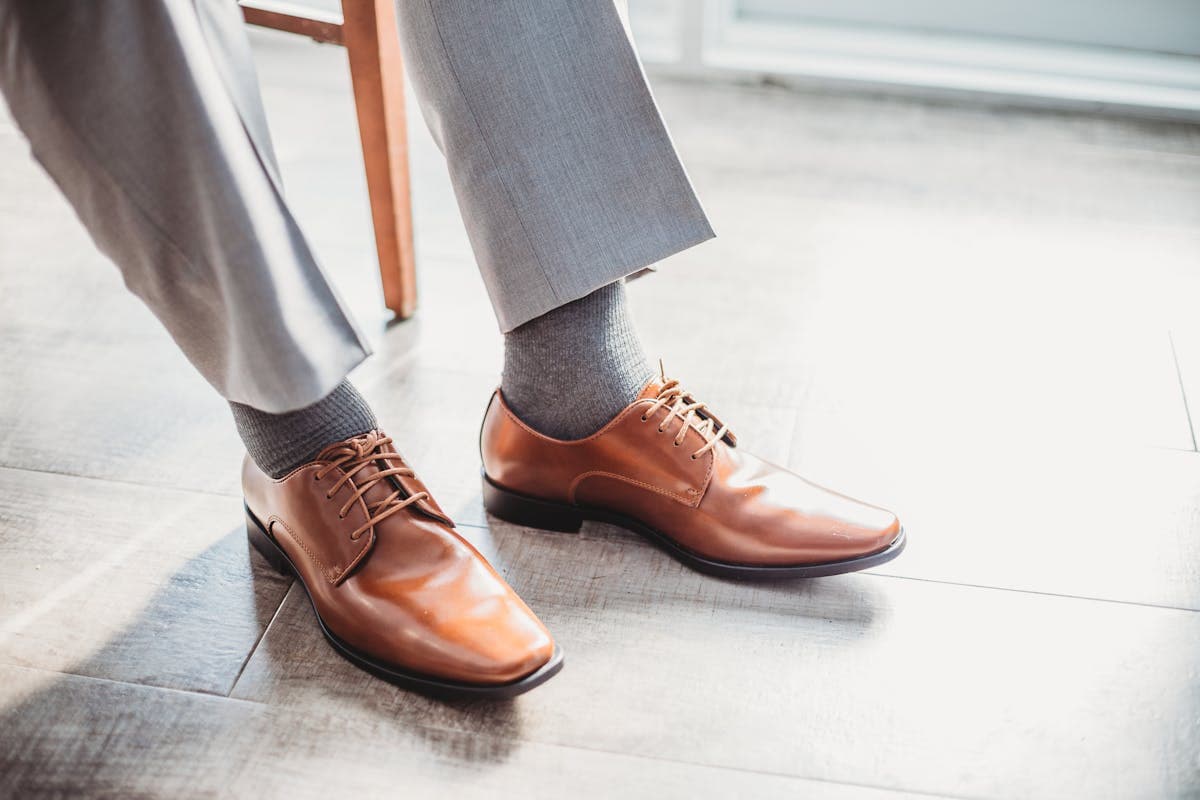
What you want is no break or a slight break. The trouser hem should just kiss the top of your shoe. When you stand straight, there should be zero pooling. When you walk, the fabric should lift cleanly off the shoe and settle back without folding over itself. This creates a clean, intentional line from knee to ankle that makes your legs look longer and the overall silhouette look sharper.
If you buy off-the-rack trousers, you will almost certainly need to have them hemmed. Budget $15-$20 at any dry cleaner in Midtown. It takes 24 hours and it is the highest-ROI alteration you can make. If you order custom trousers, specify a slight break or no break and give your exact inseam measurement. The tailor handles the rest.
The Vest Itself
Not all vests are equal. The Patagonia Better Sweater is the gold standard of the Midtown Uniform and has been for a decade. It is the Toyota Camry of Wall Street outerwear: reliable, inoffensive, and so ubiquitous that it has become invisible. But it has real problems.
- It pills after a year. The fleece surface develops those little fabric balls, especially on the sides where your arms rub against the torso. After 18 months of daily wear, your $139 vest looks like it has been through a lint roller's nightmare.
- The fit is generous. Which is a polite way of saying it is boxy. Patagonia cuts for outdoor layering, not for office wear. There is excess fabric in the sides that bunches up when you sit down.
- Everyone has one. Walk through any S&T floor in Midtown and count the Better Sweaters. It is the unofficial uniform of the unofficial uniform.
The Patagonia Nano Puff vest is the other common option. It is warmer, which matters if your desk is near the AC vent. But it looks puffy -- literally. The quilted panels add visual bulk to your torso. If you are already a bigger guy, the Nano Puff makes you look wider. If you are slim, it makes you look like you are wearing a life jacket.
Alternatives Worth Considering
- Arc'teryx Atom Vest: Cleaner silhouette than the Nano Puff, synthetic insulation that handles temperature regulation well, minimal branding. The fit is slimmer through the torso. It has become increasingly common on trading floors since 2023 and signals "I know there are other options besides Patagonia."
- lululemon Down For It All Vest: Polarizing choice. Some guys on the floor will give you grief for wearing lululemon. But the fit is genuinely excellent -- slimmer and more tailored than Patagonia -- and the fabric resists pilling better than fleece. If you can handle the chirping, it is objectively a better-looking vest.
- Uniqlo Ultra Light Down Vest: The sleeper pick. Under $60, available in navy and black, extremely slim profile, and light enough that it does not add bulk. It does not have the brand cachet of Patagonia or Arc'teryx, but remember -- the point of this article is looking good, not impressing your colleagues with your vest budget.
But More Importantly: SIZE
This is the part that matters more than which brand you buy. Most guys wear their vest too big.
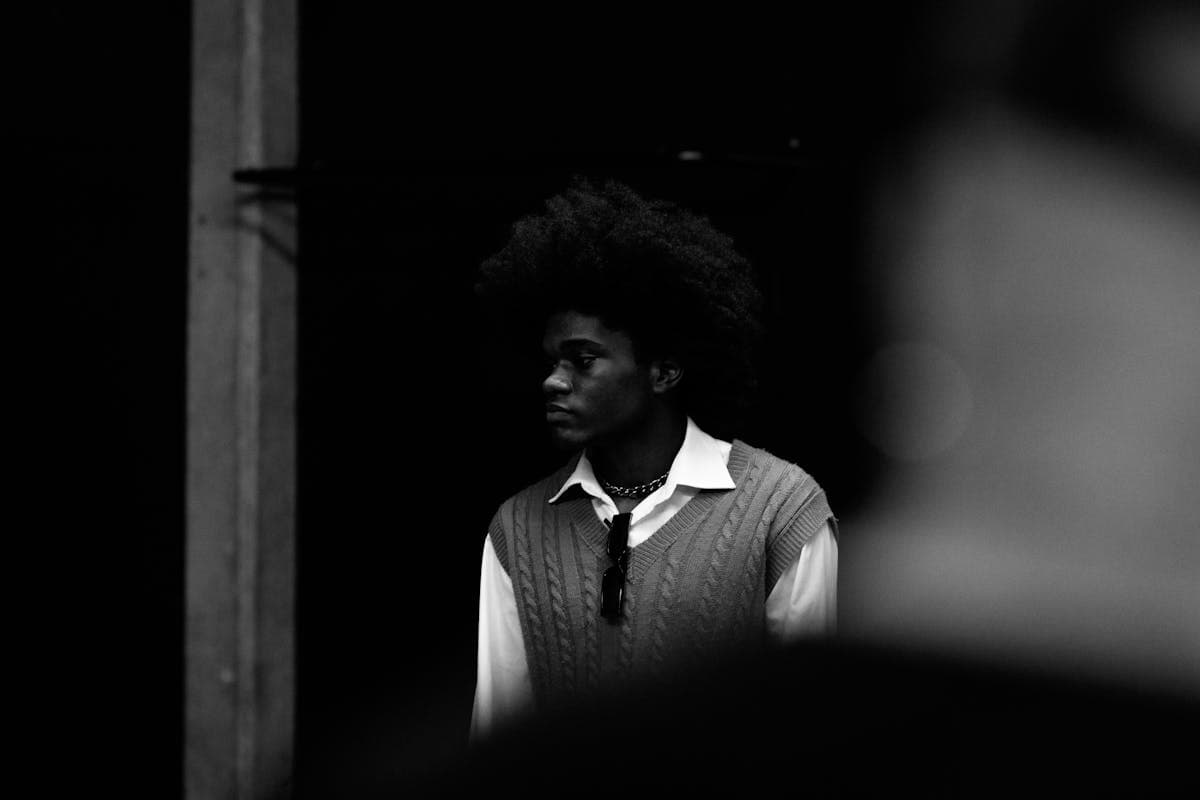
They buy a large because they are a large in T-shirts, and then the vest hangs off their frame with excess fabric pooling at the sides and the shoulders drooping past their natural shoulder line. A vest that is too big makes you look like you are wearing a sleeping bag with a zipper. A vest that fits properly -- snug through the torso, with the shoulder seam sitting at your actual shoulder point, and no excess fabric bunching at the sides -- looks like a completely different garment.
Try this: go to your closest Patagonia store and try on one size down from what you normally wear. If the zipper closes without strain and you can move your arms freely, that is probably your actual size. A fitted vest over a well-fitted shirt is a completely different look from a boxy vest over a boxy shirt. Same two items. Completely different impression.
The Shoes
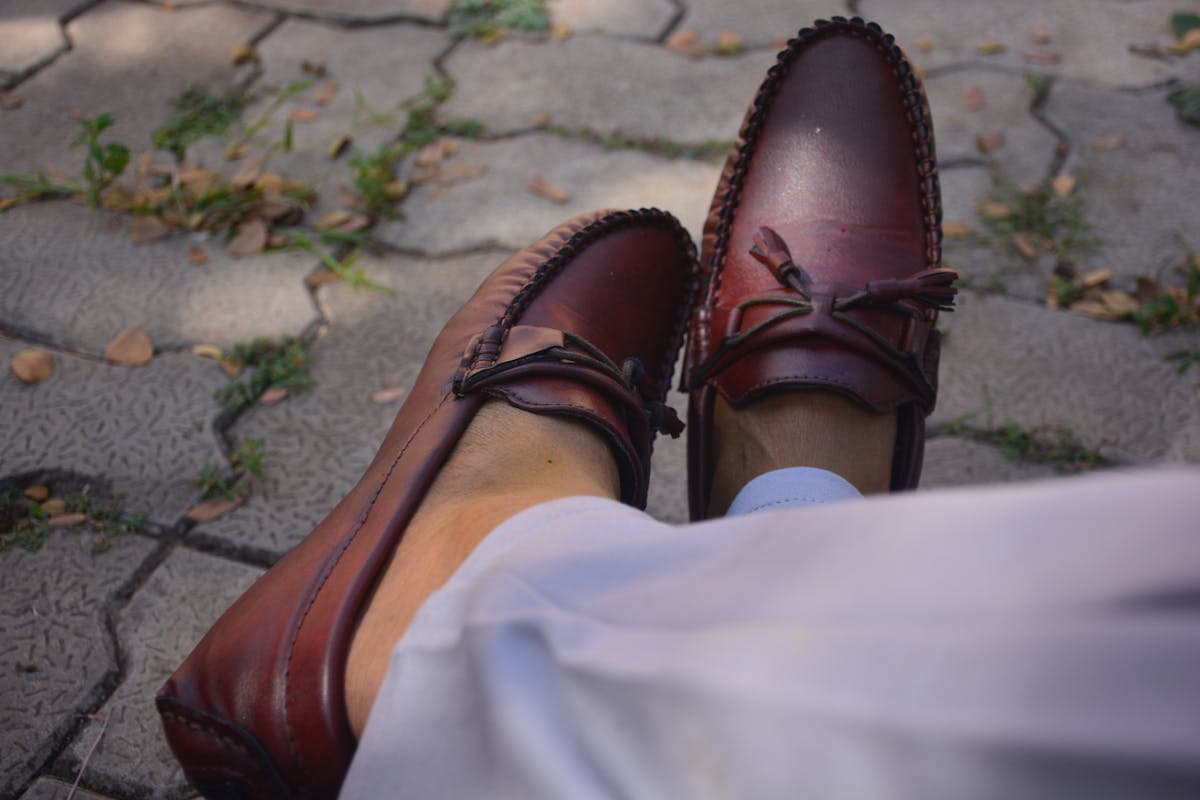
You walk 14 blocks from Grand Central and then sit for 11 hours. You need shoes that handle both. They need to look like dress shoes from across the trading floor but feel like something you can actually walk 20 minutes in without developing a blister. This is a real constraint and it eliminates a lot of options.
The Default: Cole Haan Grand Series
Cole Haan OriginalGrand or ZeroGrand is the Wall Street default for a reason. The outsole is Nike-derived, the upper looks like a dress shoe from a distance, and they are comfortable enough for the Grand Central commute. I owned three pairs over 10 years. They are fine.
But "fine" is not what this article is about. The problem with Cole Haan Grands is that they look like exactly what they are: a hybrid shoe trying to be two things at once. The chunky sole gives them away up close. The construction is not especially durable -- the leather cracks around the toe box after about a year of daily wear. And like the Better Sweater, everyone on the floor has a pair. They are the path of least resistance, which means they are the path to looking like everyone else.
Better Options
- Penny loafers or minimal horsebit loafers in dark brown or burgundy. Loafers are superior to lace-ups for desk comfort because you can slip them on and off, they do not create pressure points across the top of your foot, and they are faster to put on at 6:30 AM when you are running for the 6 train. A clean penny loafer from Meermin ($175), Beckett Simonon ($200), or Allen Edmonds ($250-$350) will last two to three years of daily wear and look substantially better than a hybrid sneaker-dress-shoe. Dark brown is the most versatile color. Burgundy is the power move if you want to add a subtle point of interest.
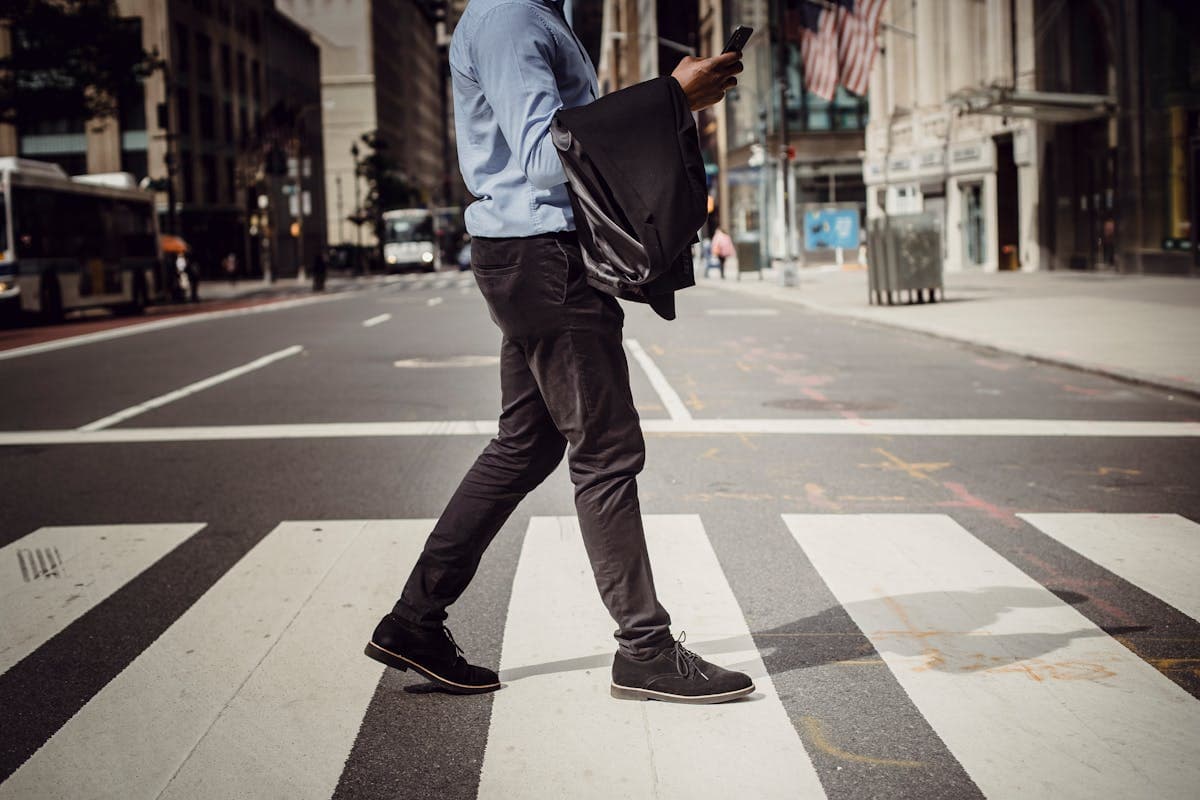
- Suede derbies in dark brown or tobacco. Suede is more casual than polished leather but still reads as "dress shoe." It is also more forgiving of scuffs and water spots -- you brush it off and move on. A suede derby in tobacco brown paired with charcoal trousers is one of the best-looking combinations in the Midtown Uniform and almost nobody does it because they are stuck in the Cole Haan loop.
- Chelsea boots in dark brown leather. For the colder months. They slip on, they look clean, they work with everything from trousers to dark jeans on casual Fridays. Thursday Boots ($200) or Meermin ($200) both make excellent options that handle the commute and the desk equally well.
The through-line: the shoe should look like a dress shoe from a distance but be comfortable enough for an 11-hour sitting day plus the commute walk. Loafers, suede derbies, and Chelsea boots all accomplish this. Chunky hybrid sneaker-dress-shoes do not -- they compromise on both ends and excel at neither.
The Watch and Accessories
Keep it minimal. The Midtown Uniform is inherently utilitarian -- it is what guys wear when they are focused on work, not on appearance. Loading it up with accessories defeats the purpose and makes you look like you are compensating for the vest with jewelry.
The Watch
A clean, simple watch. Not a Richard Mille -- you are not an MD, and even if you are, the guys who actually make the most money on the floor tend to wear the least flashy watches. A Seiko Presage ($300-$500), an Omega Seamaster (if you have the budget), or a Tudor Black Bay are all solid choices that say "I own a nice watch" without saying "I want you to notice my watch." A clean dial, a leather or metal bracelet, and nothing that looks like it was designed for deep-sea diving. Your desk is at sea level.
Everything Else
- Belt: Match it to your shoes. Dark brown shoes, dark brown belt. Black shoes, black belt. That is the entire rule. No logos, no contrast stitching, no braided leather. A simple, clean dress belt in the same leather tone as your shoes.
- No bracelet. Not even a tasteful one. Under a vest, a bracelet peeks out alongside your shirt cuff and watch, and it is too many things happening at the wrist. You are not at Burning Man.
- No visible necklace. If you wear one, tuck it under your shirt. A gold chain peeking out of a button-down collar under a Patagonia vest is a look, but it is not the look you want.
- No pocket square. You are not wearing a blazer. There is nowhere to put it. I am mentioning this because I have seen guys try to stuff a pocket square into their vest's chest pocket. Do not.
Over-accessorizing the Midtown Uniform makes you look like you are trying to compensate. The uniform's strength is its simplicity. Let the fit of the shirt, the quality of the trousers, and the clean shoe do the talking. Everything else is noise.
The Custom Upgrade That Changes Everything
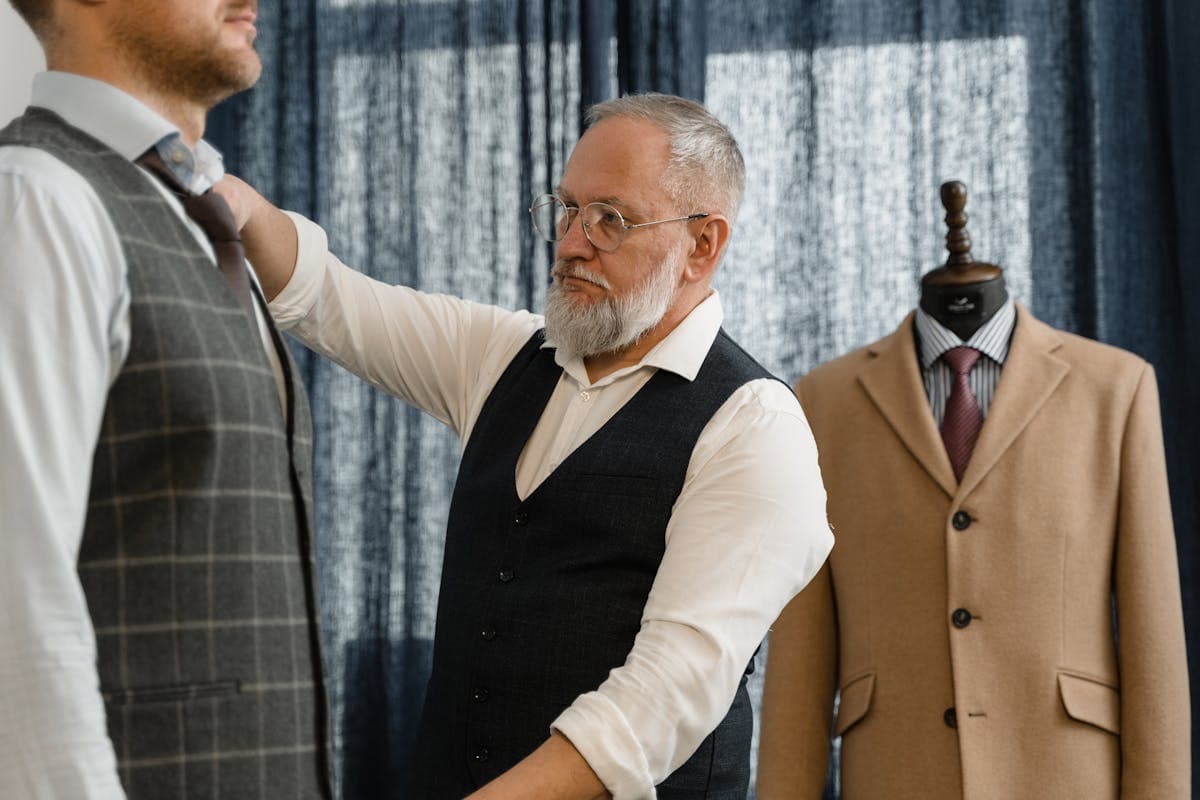
I have spent this entire article talking about details. Collar height. Fabric weight. Trouser hem. Vest sizing. These details matter, and getting them right with off-the-rack clothes is possible. But here is the honest truth from someone who spent a decade trying to optimize the Midtown Uniform with off-the-rack pieces: the single biggest improvement you can make is custom shirts.
Not custom suits. Not custom trousers (though those help too). Custom shirts.
Here is why. A shirt measured to your exact neck circumference, chest width, arm length, and shoulder width looks DRAMATICALLY different under a vest than an off-the-rack Charles Tyrwhitt. Everything I described above -- the collar sitting right, the shoulders not bunching, the sleeves being the exact right length showing below the vest -- all of those problems disappear when the shirt is cut for your body. You do not have to think about it. You do not have to hope the medium fits. You do not have to compromise between a neck that is right but sleeves that are too long, or shoulders that fit but a body that billows.
The collar sits right because it was made for your neck. The shoulders are clean because they were cut to your shoulder measurement. The sleeves are the exact right length because they were hemmed to your arm, not to the "average" arm of a statistical ghost that does not exist.
The Economics
Here is the part that kills me about the way most guys on Wall Street buy shirts. Charles Tyrwhitt -- the unofficial shirt sponsor of the Midtown Uniform -- charges $70-$80 per shirt at "sale" prices (and they are always on "sale"). These are off-the-rack shirts made in factories in China, Bangladesh, or Vietnam, sold through a website and a handful of stores with Madison Avenue rent baked into the price. The fabric is decent. The construction is decent. The fit is generic.
At Nathan Tailors, custom shirts start at $45. That is less than a Charles Tyrwhitt shirt on sale. And it actually fits.
Let me explain how this is possible, because I know it sounds too cheap to be real. The same economics that make the Midtown Uniform so expensive in Manhattan make it so cheap in Hoi An, Vietnam:
| Cost Factor | Charles Tyrwhitt | Nathan Tailors |
|---|---|---|
| Fabric source | Cotton mills in India, Egypt, China -- sourced via importers and distributors | Same quality cotton mills -- sourced directly, no middlemen |
| Manufacturing | Factory production with standard sizing templates | Individual cutting and sewing to your measurements |
| Retail overhead | Stores on Madison Ave, Jermyn Street; massive web marketing budget | Workshop in Hoi An, Vietnam. Monthly overhead less than CT's daily rent. |
| Labor | Factory workers on production lines | Skilled tailors doing 30-50 garments/day -- more experienced through sheer volume |
| Markup | 4-6x to cover brand, retail, marketing | Honest margin. No brand tax. No subway ads to fund. |
| Your price | $70-$80 (off-the-rack, generic fit) | $45+ (custom, measured to your body) |
This is not a gimmick. It is not a loss leader. It is basic supply chain economics. We are closer to the source. Our overhead is lower. Our tailors are more practiced because they see more garments in a week than a Manhattan tailor sees in a month. We pass the savings to you instead of spending them on a brand narrative about heritage and craftsmanship. The craftsmanship is in the garment, not the marketing deck.
How It Works If You Have Never Ordered Custom
I know the resistance. "I cannot try it on before I buy it." "What if it does not fit?" "I do not know my measurements." I had all the same objections before my first order. Here is how the process actually works:
- Get measured. Use our interactive measurement guide -- it walks you through each measurement with visual references and video. Takes about 10 minutes. You need a soft tape measure -- a cheap cloth one from Amazon or any Duane Reade for $3 works fine. If you want help, message us on WhatsApp and our team will walk you through it live.
- Pick your fabric and style. For the Midtown Uniform, you want a medium-weight cotton poplin or end-on-end in white or light blue. Semi-spread collar. No pocket (cleaner under a vest). Standard cuff. We will help you pick if you are not sure -- just WhatsApp us and say "I need shirts for under a vest" and we will know exactly what you mean.
- We cut and sew your shirt. Production takes 3-4 working days. Each shirt is individually cut from your pattern, not pulled off a rack.
- DHL ships it to your door. 3-5 business days to New York. We ship to 50+ countries.
- If it does not fit, we help you fix it. The overwhelming majority of our remote orders fit right the first time, and every shirt is cut with generous seam allowances and ships with a piece of the same fabric, so a local tailor can adjust the fit if anything needs tweaking. If something is off, send us photos and we will help you find the right fix. Over 5,000 clients worldwide have been through this process. We have 530+ five-star Google reviews with a 5.0 rating. This is not a gamble -- it is a proven system.
The ROI in Midtown Uniform Terms
Say you currently buy four Charles Tyrwhitt shirts a year at $70 each. That is $280 for shirts that fit generically and start fraying at the collar after six months.
For the same $280 at Nathan Tailors, you get six custom shirts -- measured to your exact body, in the exact collar and fabric that works under your vest. Shirts that fit from day one and look better because they were made for you. You end up with more shirts, better shirts, and you spend the same amount of money.
That is not an upgrade. That is just math.
The Full Midtown Uniform Upgrade Checklist
Here is everything in one place. Print this out, tape it to your monitor, or just screenshot it and reference it next time you are about to default-buy another Charles Tyrwhitt three-pack.
| Item | The Default (What You Are Probably Wearing) | The Upgrade | Why It Matters |
|---|---|---|---|
| Shirt collar | Low-profile point collar | Semi-spread with interlining | Frames your face above the vest neckline |
| Shirt fabric | Thin broadcloth or stiff oxford | Medium-weight poplin or end-on-end | Resists wrinkles, breathes, looks crisp at 5 PM |
| Shirt fit | Off-the-rack "slim fit" (still bunches) | Custom measured -- 1 inch pinch at side seam | No bunching under vest, no pulling when reaching |
| Trousers | Bonobos Weekday Warriors or Lulu ABCs | Wool blend with 2-3% elastane, 240-280 GSM | Holds shape all day, no knee bubbles at 3 PM |
| Trouser hem | Full break (fabric pooling on shoe) | No break or slight break | Clean line, longer legs, intentional silhouette |
| Vest | Better Sweater one size too big | Same vest (or Arc'teryx Atom), one size down | Snug torso, no side bunching, fitted silhouette |
| Shoes | Cole Haan OriginalGrand | Penny loafer or suede derby in dark brown | Looks like a real shoe, not a sneaker in disguise |
| Watch | Apple Watch with sport band | Clean analog watch, leather or metal band | One adult accessory that completes the outfit |
Every single one of these upgrades is achievable without spending more money than what you are currently spending. Most of them actually cost less. The custom shirts are cheaper than Charles Tyrwhitt. The wool trousers are available at every price point. Sizing down your vest costs nothing. Getting your pants hemmed is $15. This is not about spending more. It is about spending the same amount on the right things instead of the wrong things.
The Bottom Line
The Midtown Uniform is not going anywhere. It is practical, it is comfortable, and it is the path of least resistance for guys who need to focus on work, not on getting dressed. I respect that. I lived that. I am not here to sell you on a wardrobe overhaul or convince you to start wearing Italian sport coats to the trading floor.
But the difference between the guy in the uniform who looks sharp and the guy in the uniform who looks like everyone else comes down to a handful of details that cost almost nothing to get right. A collar that stands up above the vest. A shirt that does not bunch. Trousers that hold their shape. A hem that does not pool. A vest that actually fits. Shoes that look like shoes.
These are not fashion decisions. They are engineering decisions. You are optimizing a system for performance, the same way you would optimize a spreadsheet or a trading strategy. Input the right specs, get a better output. The specs just happen to be collar height, fabric weight, and inseam length instead of basis points.
And the single highest-ROI spec change you can make -- the one that affects the most visible part of the outfit, that fixes the most common problems, and that actually costs less than what you are currently doing -- is switching from off-the-rack shirts to custom.
I Wore the Midtown Uniform for a Decade. Let Me Help You Wear It Better.
WhatsApp us your neck size and we will show you what a $45 custom shirt looks like versus your Charles Tyrwhitt. We will recommend the exact collar, fabric, and fit for under-vest wear. No commitment, no pressure, just a side-by-side comparison that speaks for itself.
Message Nathan Tailors on WhatsApp →
Or check out our full pricing menu, read about the Wall Street dress code nobody tells you about, or learn how I went from Wall Street to Hoi An.