Most men treat the Triple Crown as one event with one dress code. It is not. The Kentucky Derby, the Preakness Stakes, and the Belmont Stakes each have a distinct unofficial dress code, shaped by three very different venues, crowds, and traditions. Show up to the Preakness in your Derby outfit and you will look like you wandered in from the wrong party.
I am Jay. I spent 10 years in the US and now help run Nathan Tailors in Hoi An, Vietnam -- 5,000+ clients across 50+ countries, 5.0 stars across 530+ Google reviews, and a steady stream of men every spring asking the same question: what do I actually wear to these races? This is the overview. Each race also has its own deep-dive guide, linked below.
The Triple Crown 2026 Calendar
Three races, five weeks, three states:
Kentucky Derby -- the 152nd, the first Saturday in May, at Churchill Downs in Louisville, Kentucky.
Preakness Stakes -- the 151st, two weeks later, in 2026 at Laurel Park, Maryland (Pimlico is under reconstruction).
Belmont Stakes -- the 158th, June 6, 2026, at Saratoga Race Course, New York (Belmont Park is under reconstruction; 2026 is the final year at Saratoga).
Two of the three legs are at temporary venues in 2026 -- and the venue, more than anything, is what sets the dress code.
Three Races, Three Dress Codes
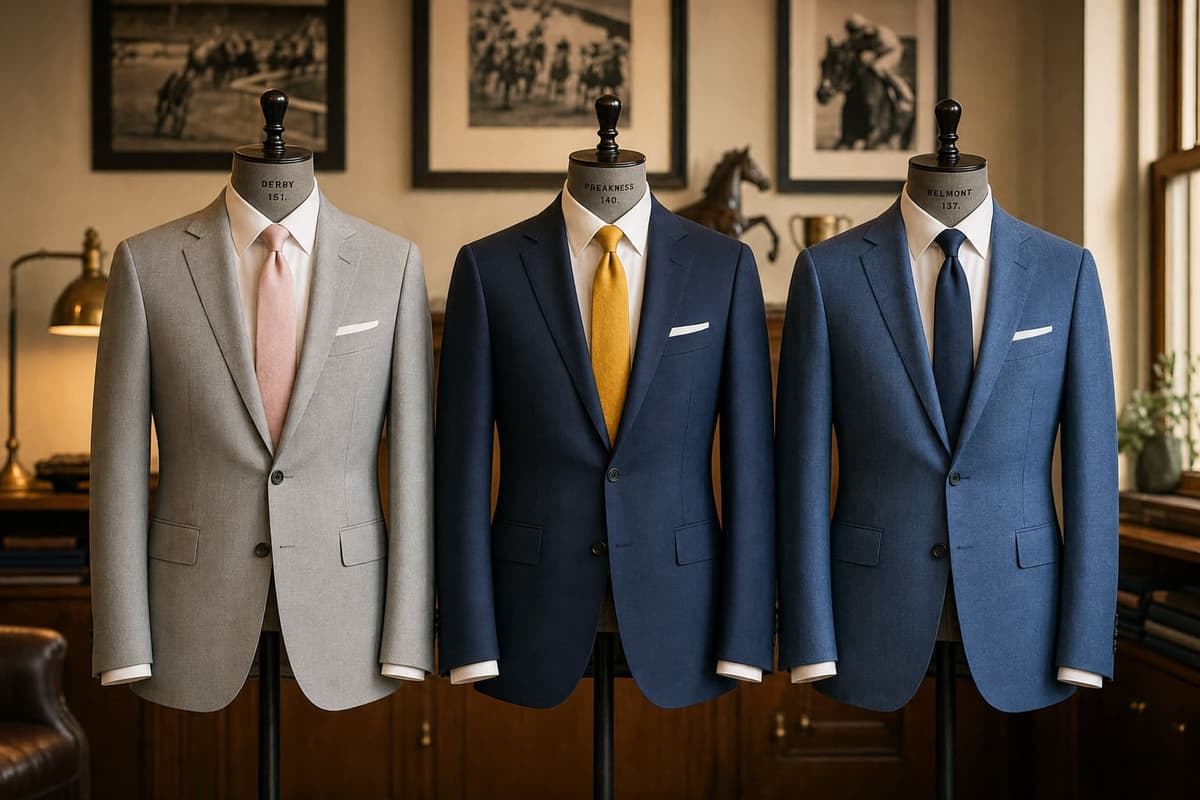
Here is the whole thing in one view.
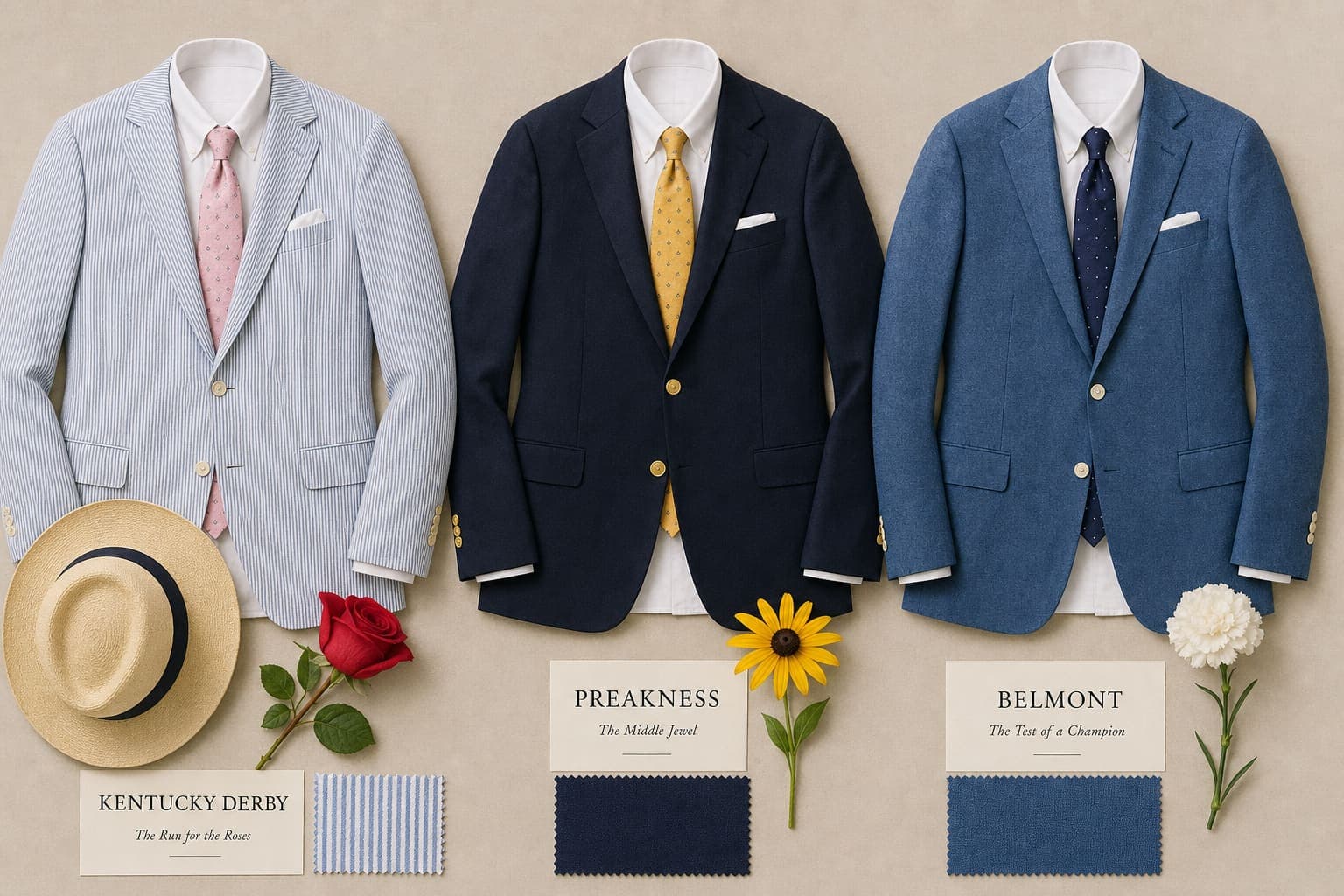
Kentucky Derby -- the Garden Party
The Derby is the most expressive of the three. Churchill Downs on the first Saturday in May is a pastel garden party: light suits, bolder color, floral and check patterns, statement accessories. This is the one race where a pink linen suit or a boldly patterned jacket is not just allowed -- it is the spirit of the day. The Derby rewards personality. Just keep the fit sharp; expressive is not the same as sloppy.
Palette: pastels, light blue, soft pink, sage, butter yellow, bold checks. Read the full Kentucky Derby guide.
Preakness Stakes -- the Heritage Leg
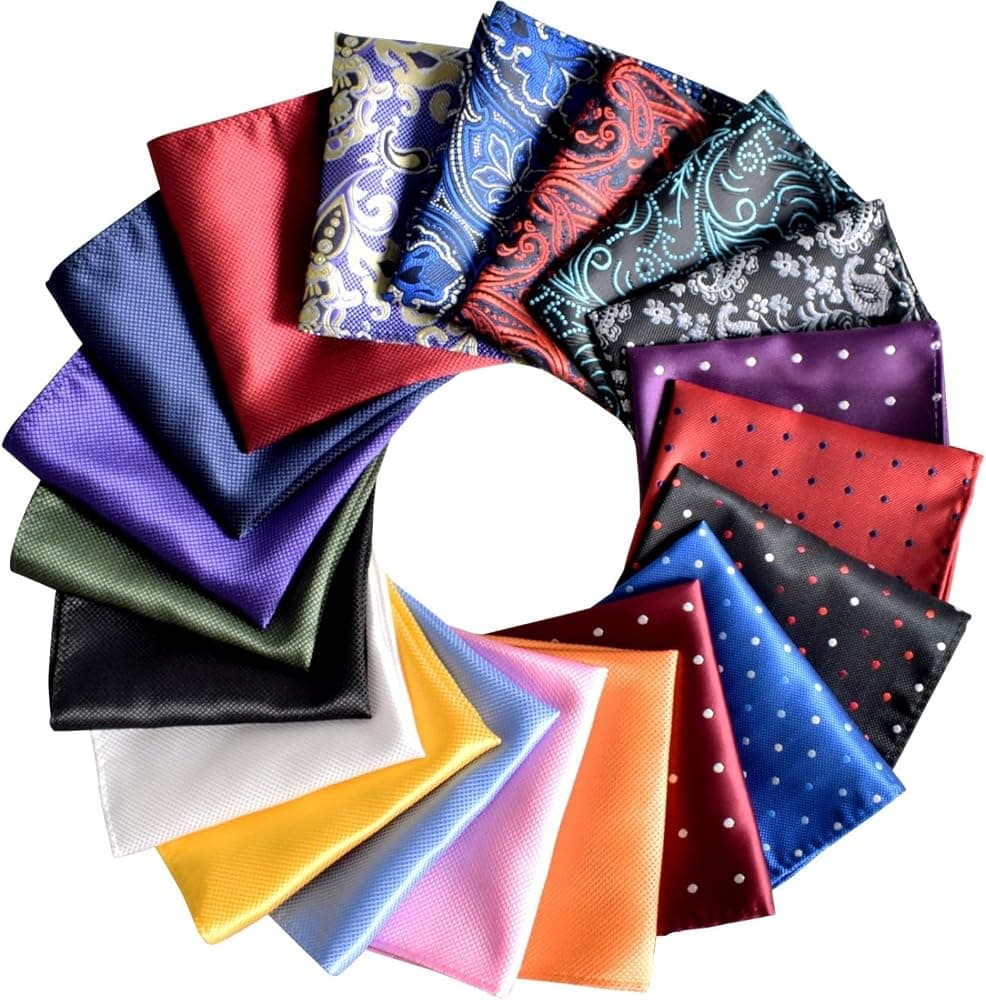
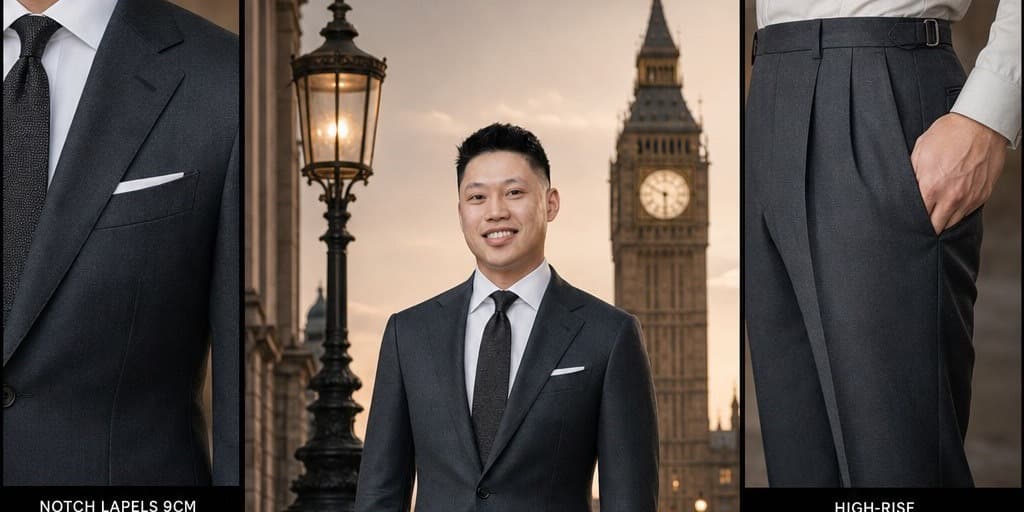
The Preakness draws a slightly older, more establishment crowd, and in 2026 it is at Laurel Park, Maryland. The aesthetic is heritage, not flashy: think Maryland country club meets East-Coast prep. Navy is the anchor color. The seersucker and the hot-pink linen that turned heads at the Derby read as costume here. Preakness rewards quieter sophistication -- a navy suit, a knit tie, a pocket square in the black-eyed Susan colors.
Palette: navy, charcoal, olive, restrained. Read the full Preakness Stakes guide.
Belmont Stakes -- the Elegant Finale
The Belmont at Saratoga is the most elegant dress code of the three. Saratoga is the oldest major sporting venue in America -- genteel, tree-shaded, Gilded-Age summer resort. It is June and it is warm, so the cloth goes light: stone, sand, pale grey, soft blue, summer-weight wool and linen. The Belmont rewards a man who looks like he has nothing to prove. There is even a quiet color note -- the Belmont's flower is the white carnation, so a white or cream accent is the correct insider nod.
Palette: stone, sand, pale grey, soft blue, light summer cloth. Read the full Belmont Stakes guide.
One Wardrobe, All Three Races
You do not need three separate raceday outfits. You need a small, well-built capsule that recombines across all three. Here is how to think about it.
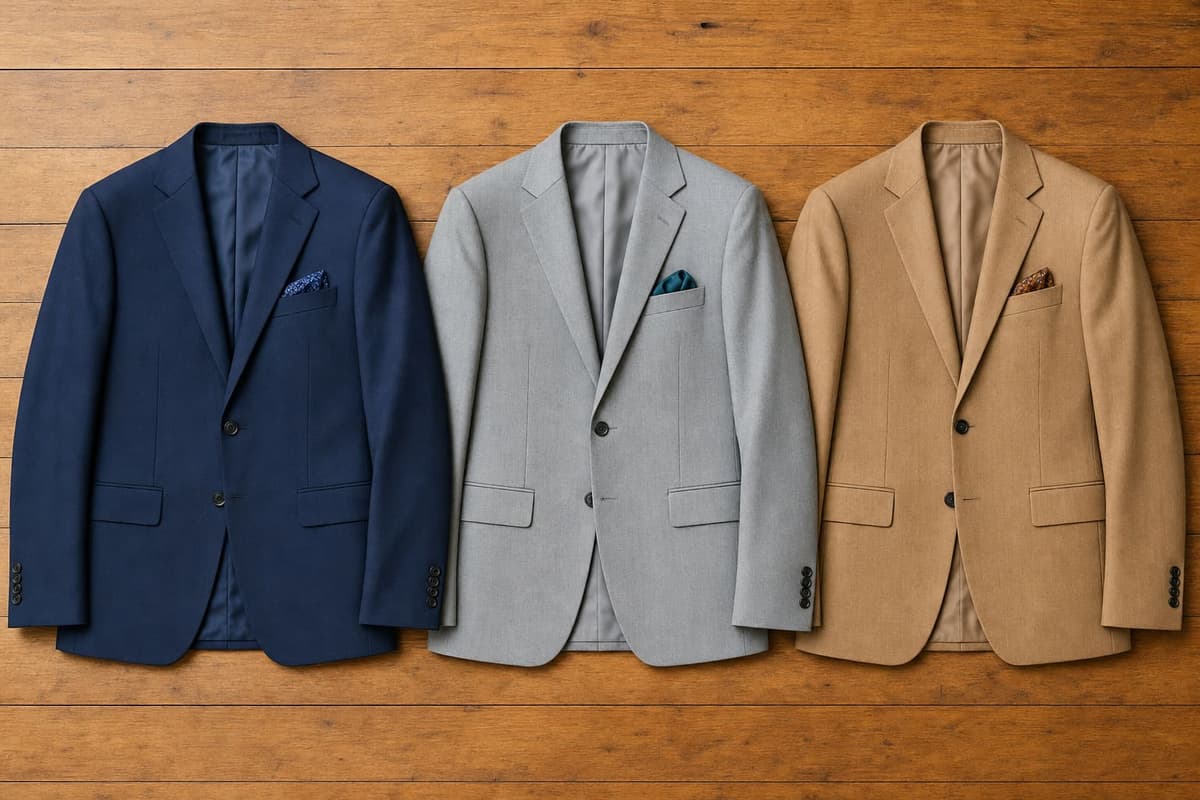
Two summer-weight suits. One navy -- your Preakness anchor, and the most useful suit you will own beyond racing. One in light grey or stone -- your Belmont suit, and a suit that doubles for summer weddings and warm-weather events. Both in genuinely lightweight cloth so they breathe in May and June heat.
One expressive jacket. For the Derby. A patterned sport coat, a check, or a bolder color -- the one piece in the capsule that is allowed to have personality. Worn with the trousers from either suit, it becomes a Derby outfit.
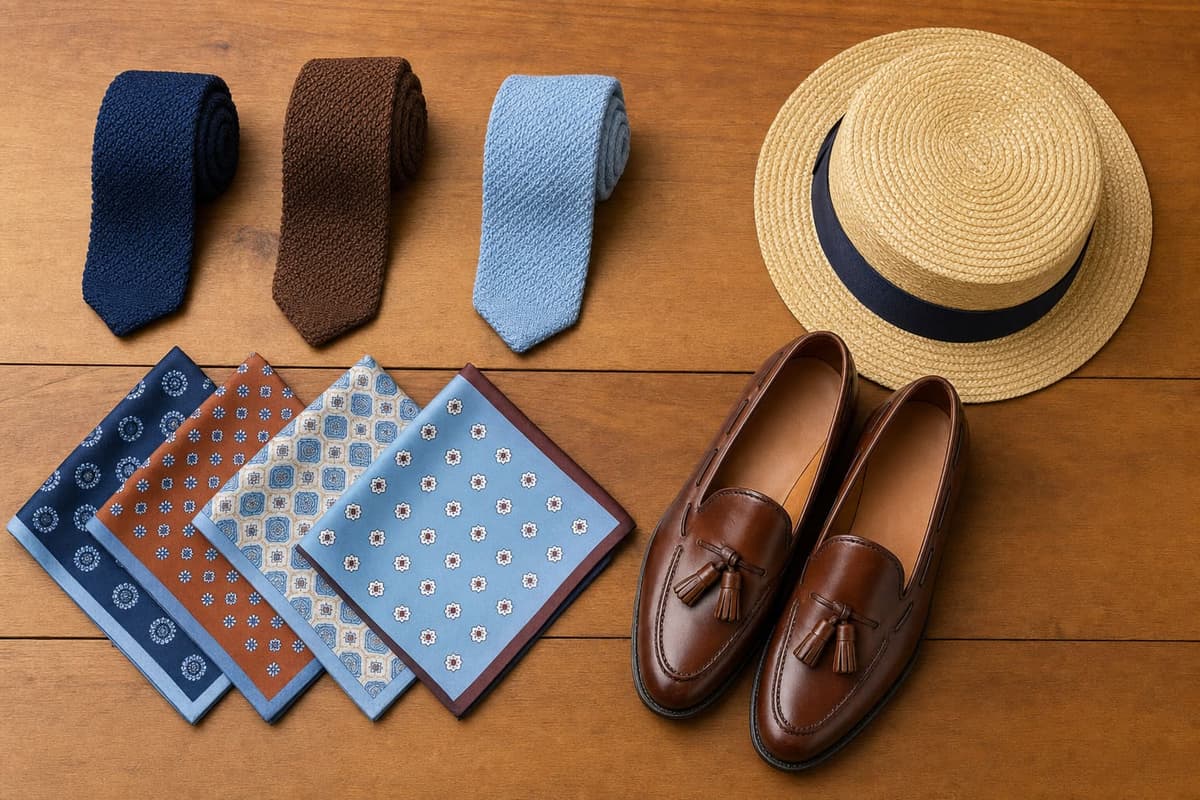
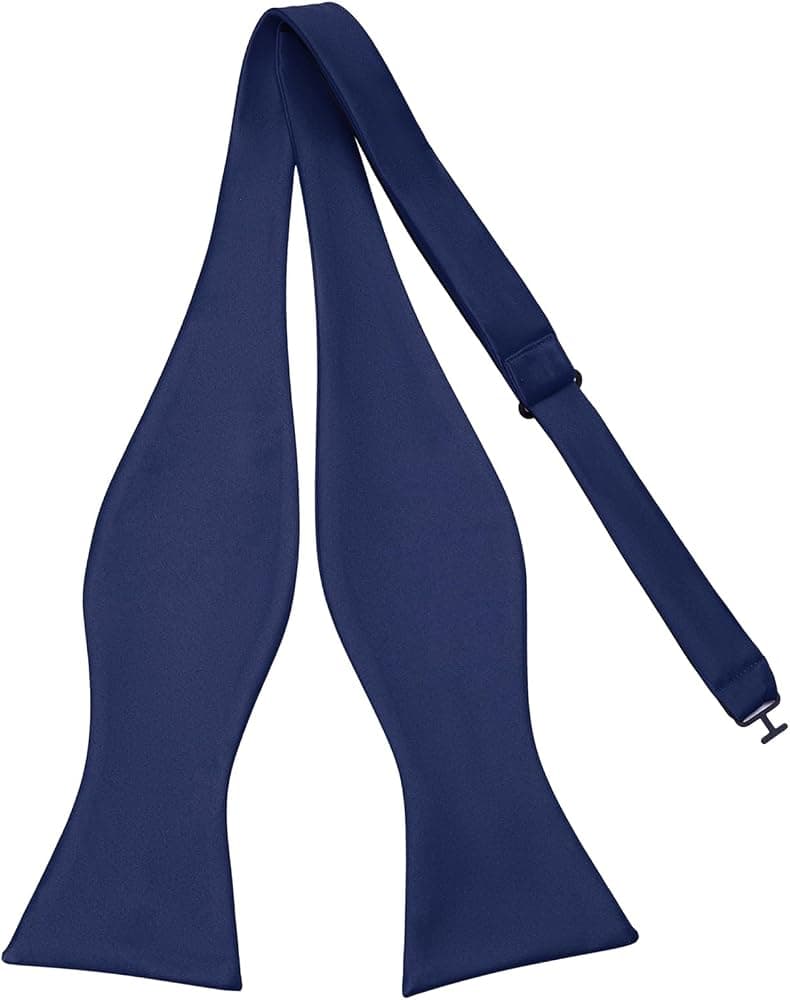
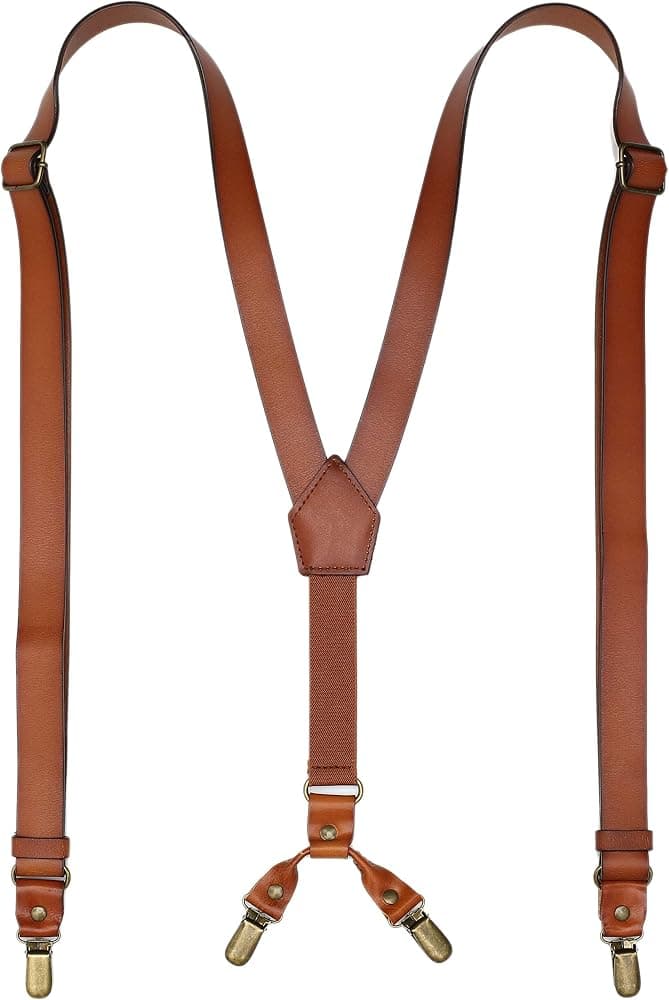
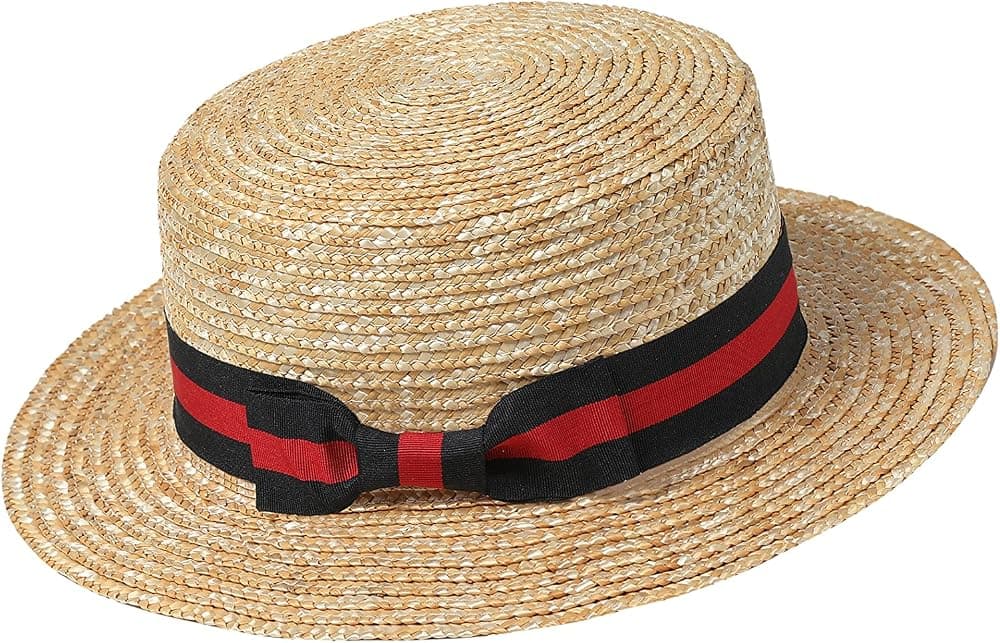
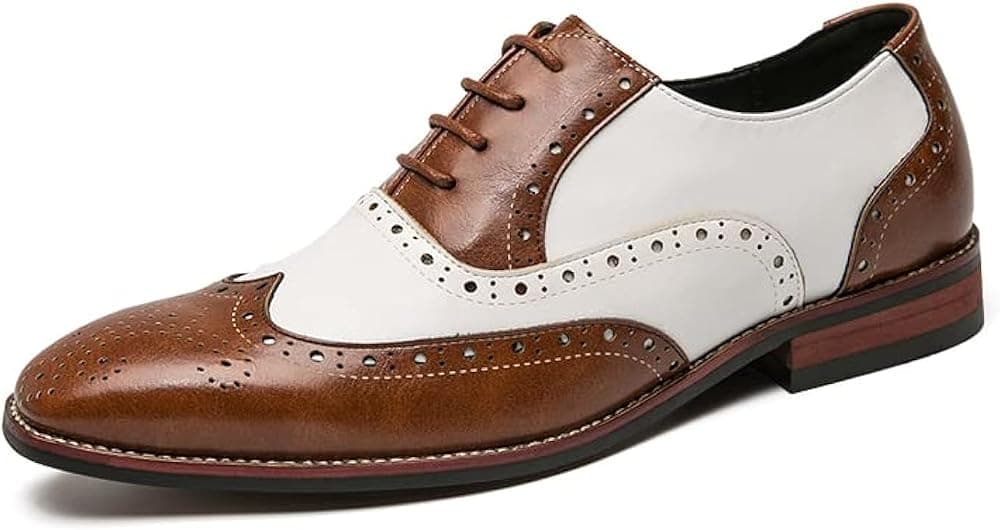
The connective tissue. Two or three knit or grenadine ties, a few pocket squares (including one white or cream for the Belmont carnation note, and one in warmer tones for the Derby), brown leather loafers, and a straw hat. These small pieces are what let two suits and one jacket produce three distinct raceday looks.
Built that way, the wardrobe does not retire after the Belmont. The navy suit works year-round. The light suit carries the whole summer. The jacket lives at every garden party and warm-weather wedding you attend. Raceday is just the reason you finally bought them.
The Thing That Matters More Than Color
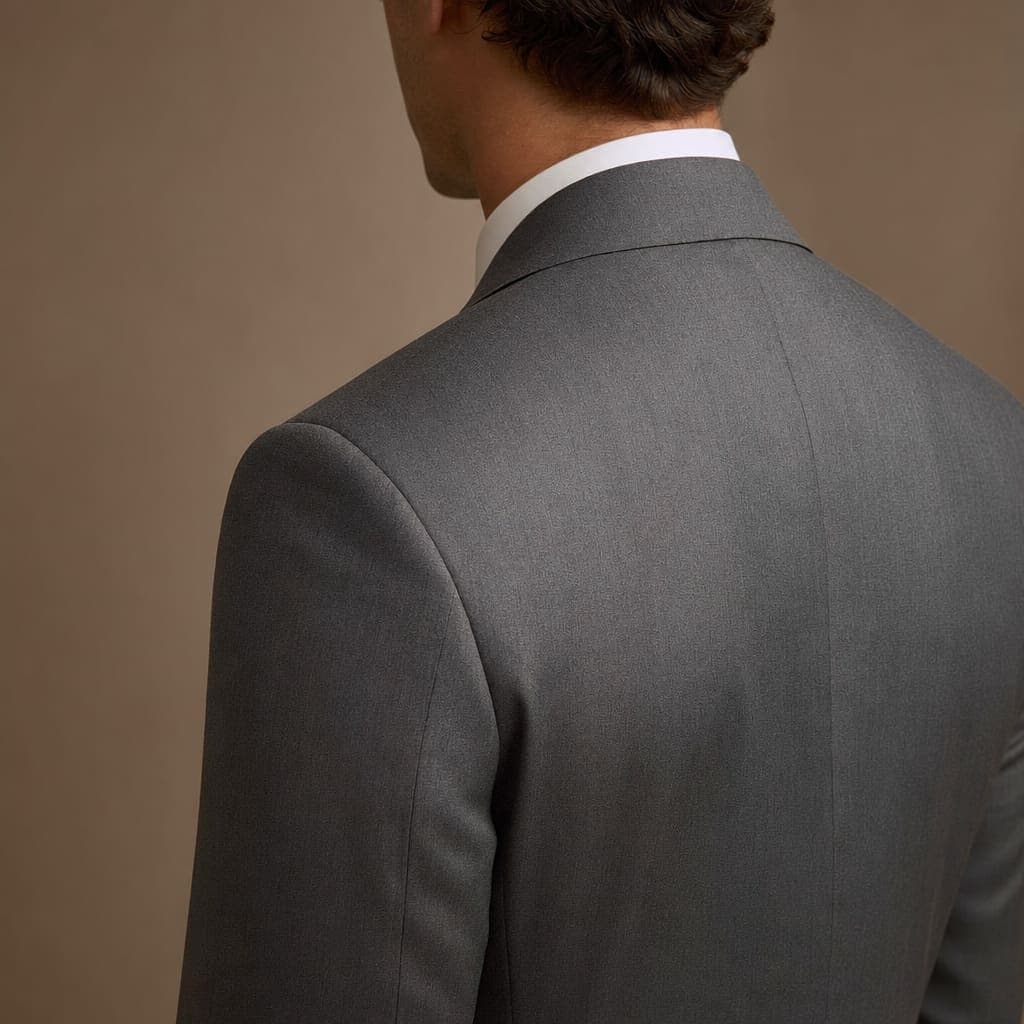
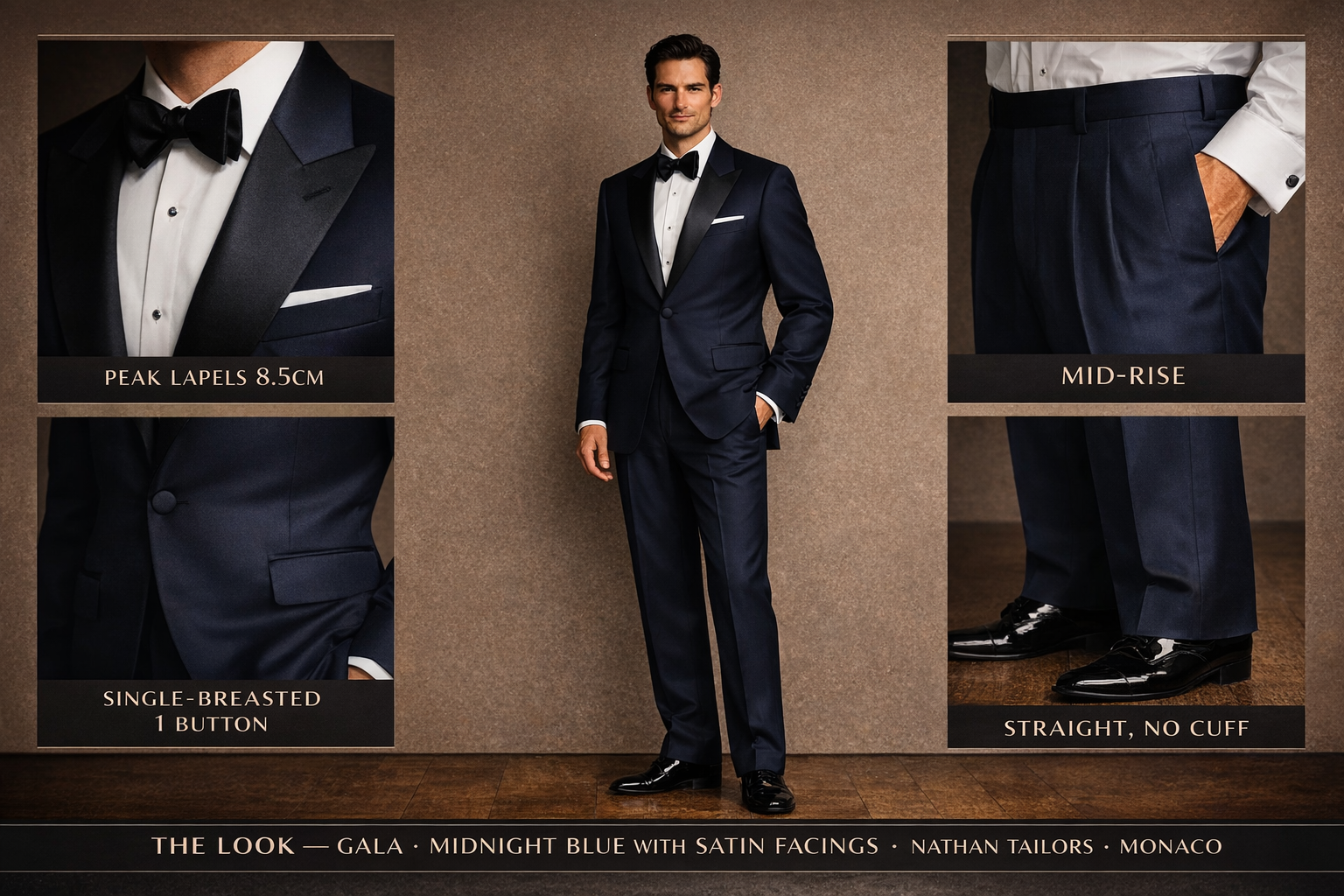
Across all three races, one factor outranks palette, pattern, and accessories combined: fit. A boxy rented jacket with sleeves that swallow your hands undoes every other good decision. A suit cut to your actual measurements -- shoulders that sit right, a jacket that closes cleanly, trousers that break properly -- reads as "this man belongs here" at every venue, in every color.
That is the entire argument for custom over rental for raceday season. A rental is a one-day cost with a one-day result. A made-to-measure suit cut to your body is a multi-year wardrobe that happens to debut at the races.
How to Build the Capsule
A custom suit from Nathan Tailors takes about three weeks from order to delivery, fully remote: you design it, self-measure at home in about fifteen minutes with a guided video walkthrough, and a real atelier rep reviews every measurement before we cut. It ships worldwide.
If you are reading this mid-season, the honest timeline is that a fresh order may not make this year's next race -- but Triple Crown season repeats every spring, and a well-built navy and a light summer suit are wardrobe foundations regardless. The smart move is to get measured now so you are set for the rest of this summer's racing and ready well ahead of next spring.
To start building your raceday capsule, see our custom tailoring options here or message us on WhatsApp -- tell us which races you are dressing for and we will walk you through the cloth and the timeline honestly.
Three races. Three dress codes. One wardrobe, if you build it right.