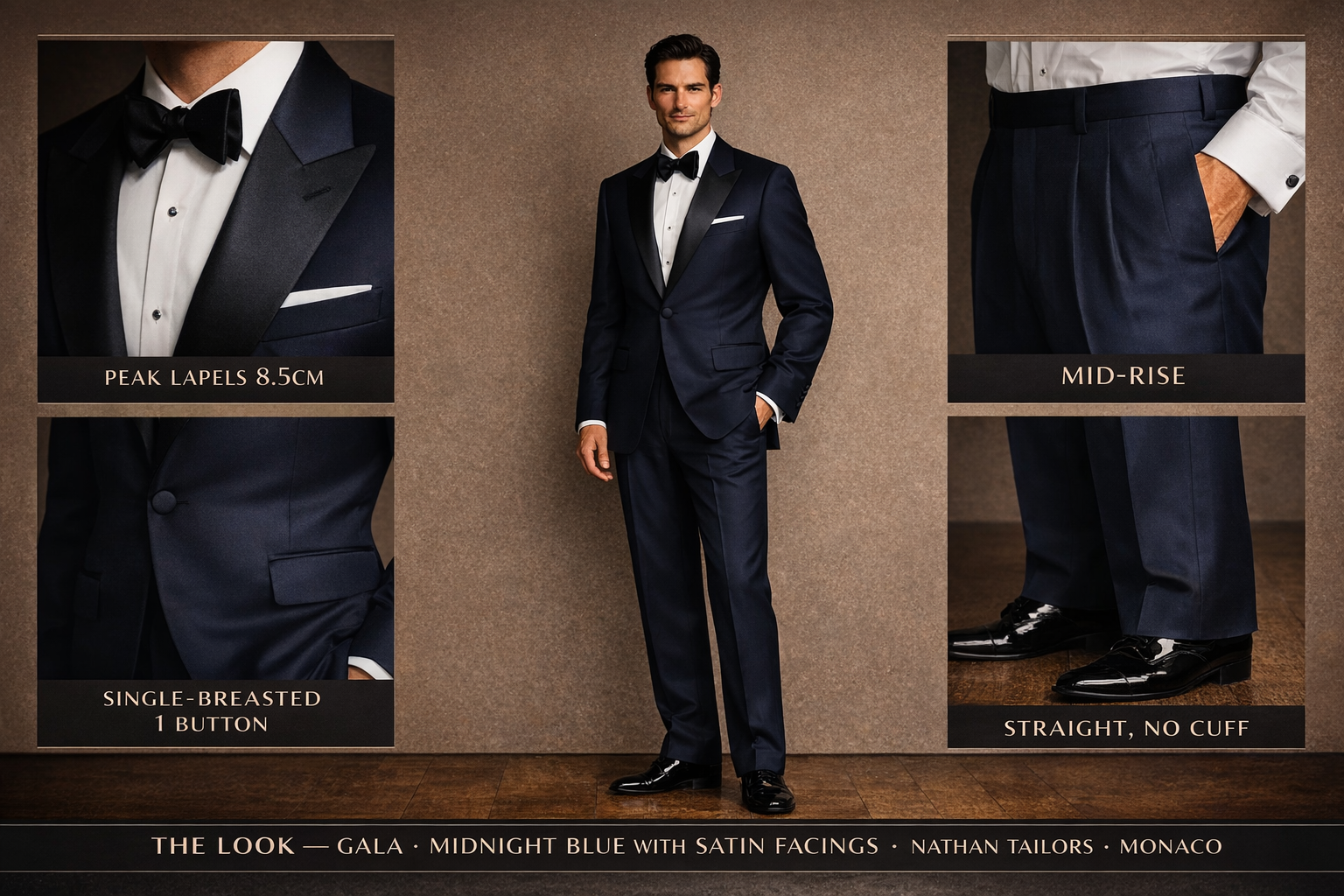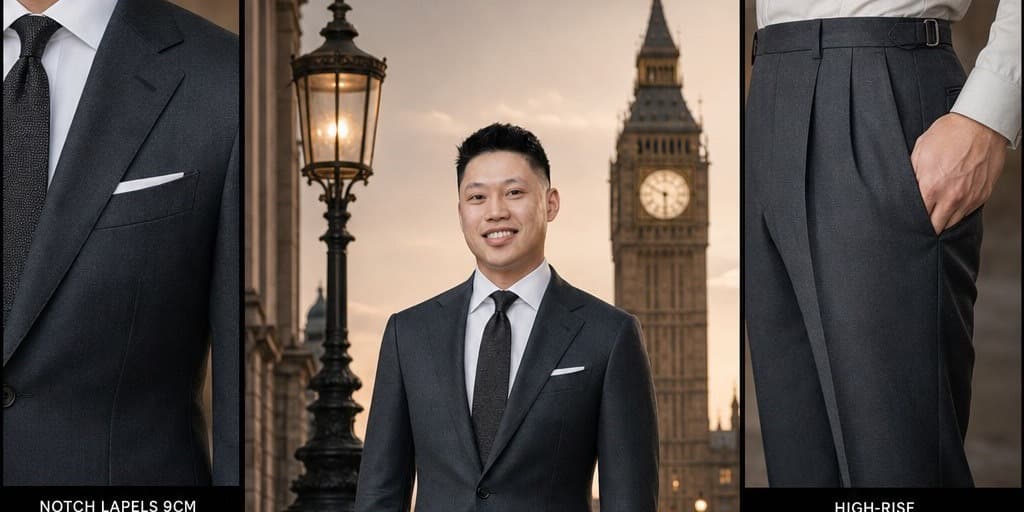
Every year, without fail, the same requests arrive at the shop: a Vegas-themed party, a casino night, an "old Hollywood glamour" wedding, a jazz singer who wants to look like he walked off the stage of the Sands in 1960. The screenshot attached is almost always the same five men -- Frank Sinatra, Dean Martin, Sammy Davis Jr. and company, laughing under the marquee lights. And the question is always the same: "Can you make me this?"
I am Jay. I spent ten years in the United States -- Pennsylvania, New York, Houston -- before settling in Hoi An and helping run Nathan Tailors. The Rat Pack request is one of my favorites, because hiding inside it is the single most useful fact in this whole genre of "dress like the icon" guides, and almost nobody selling you a skinny tie will tell you it: the Rat Pack's suits were custom-made. Hollywood tailor Sy Devore cut for Sinatra, Martin and Davis, and the entire effect people are trying to copy -- that thrown-on, effortless sharpness -- is the effect of cloth cut to one man's body. The Rat Pack look was never something you bought off a rack. It was something you commissioned. So let's treat it that way: the exact spec, the cloth, the numbers, and how to have it made to your measurements without paying 1960s-Hollywood prices.
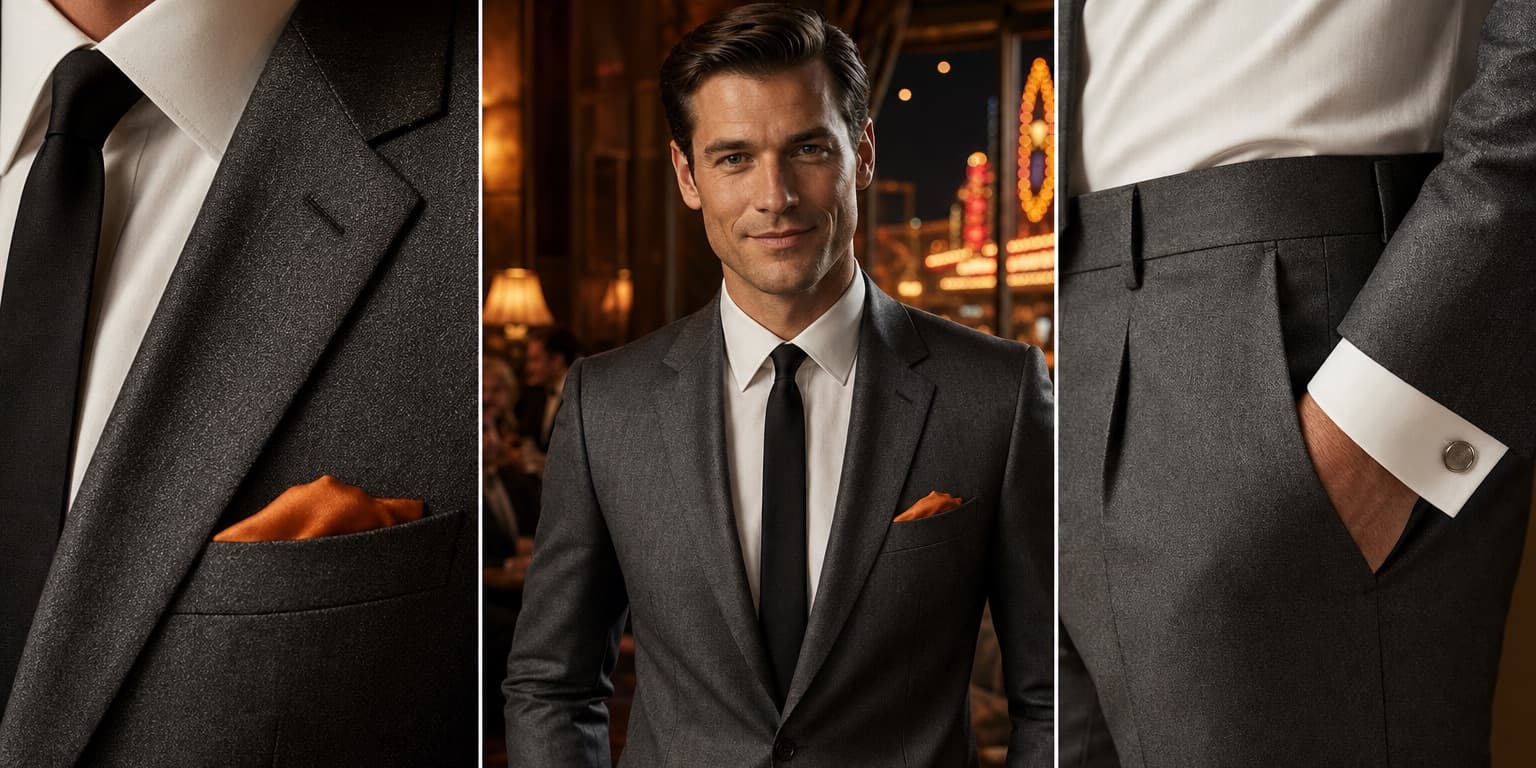
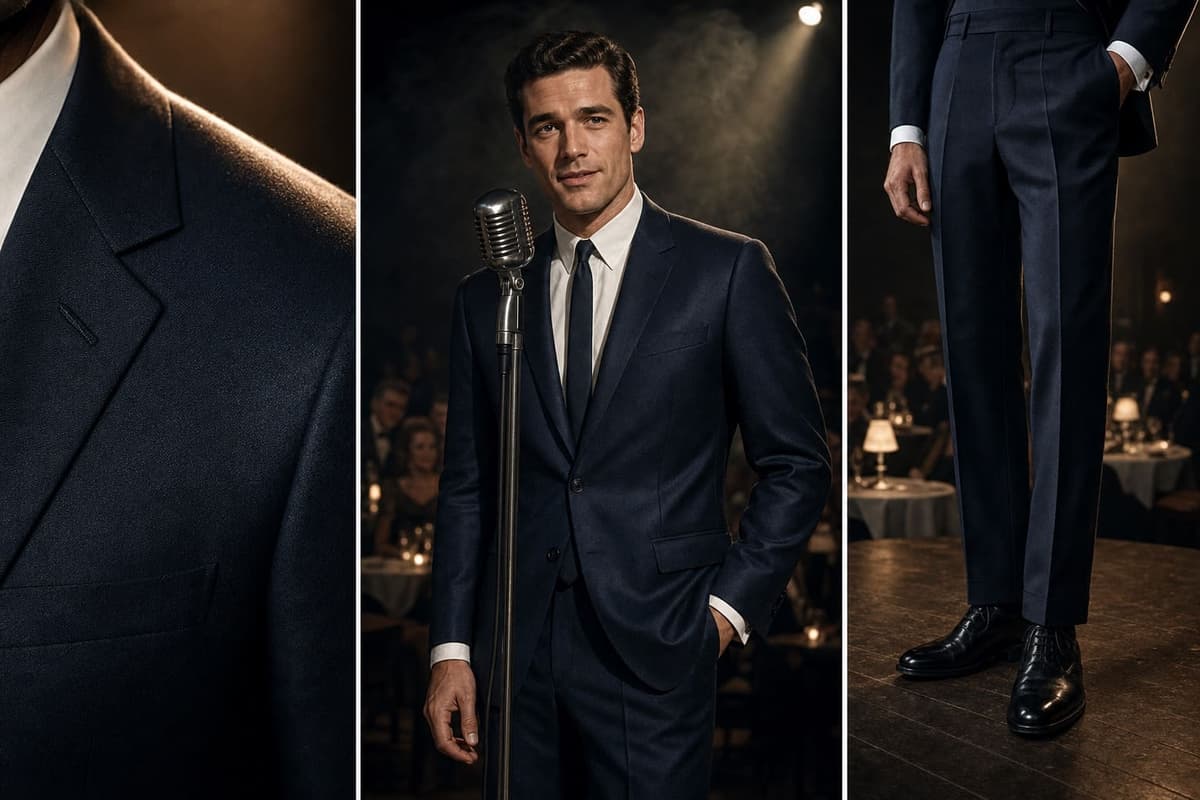
- A single-breasted, notch-lapel suit in sharkskin, a mohair blend, or smooth worsted wool -- charcoal, midnight navy, or black -- with a subtle sheen that comes alive under stage and lounge light.
- The "goldilocks" cut: trim but never skinny -- a close jacket, high-rise trousers with a clean, slight break, room to move (and to hold a microphone).
- Worn with a crisp white shirt with French cuffs, a skinny silk tie (about 6cm), simple cufflinks, and -- if you're channeling Sinatra specifically -- an orange pocket square, his signature color.
- The history: Sy Devore, "tailor to the stars," made the Rat Pack's suits. The look is fit, and fit is bespoke -- a boxy rental "Rat Pack costume" just looks like a costume.
- Made to your measurements from $149 ($149-$309 depending on cloth), 5.0 stars across 530+ reviews, shipped worldwide.
First, the fact every other guide skips
Search "Rat Pack suit" and you will find tie sellers describing the accessories and style blogs describing the vibe. What almost none of them say plainly is where the suits actually came from. Sinatra, Martin and Davis did not shop. Their suits came from Sy Devore's shop on Vine Street in Hollywood -- Devore was famously "the tailor to the stars," and the group's sharp, identical-but-individual stage look was cut man by man, to each man's build. Sinatra's jackets fit like they had been poured at body temperature. Dean Martin's hung looser and lazier, because that was Dean. Sammy Davis Jr., the smallest of the group, wore the trimmest, most fashion-forward cut, because on his frame it flew.
That is the entire lesson. Three men, one uniform, three different suits -- each cut to its owner. The "effortless" quality people chase in this look is not an accessory you can add to a boxy off-the-rack suit. It is the fit itself. Which means the honest answer to "how do I get the Rat Pack look" has been the same since 1960: you have the suit made. A custom tailored suit is not the premium version of this look -- it is the look, and everything else is an approximation. The good news is that a bespoke-style, made-to-measure commission no longer requires Vine Street money, which we will get to.
The Rat Pack suit: the exact spec sheet
Here is the code sheet, element by element. Screenshot this and you have a brief you could hand to any real tailor.
| Element | The Rat Pack spec | Why it matters |
|---|---|---|
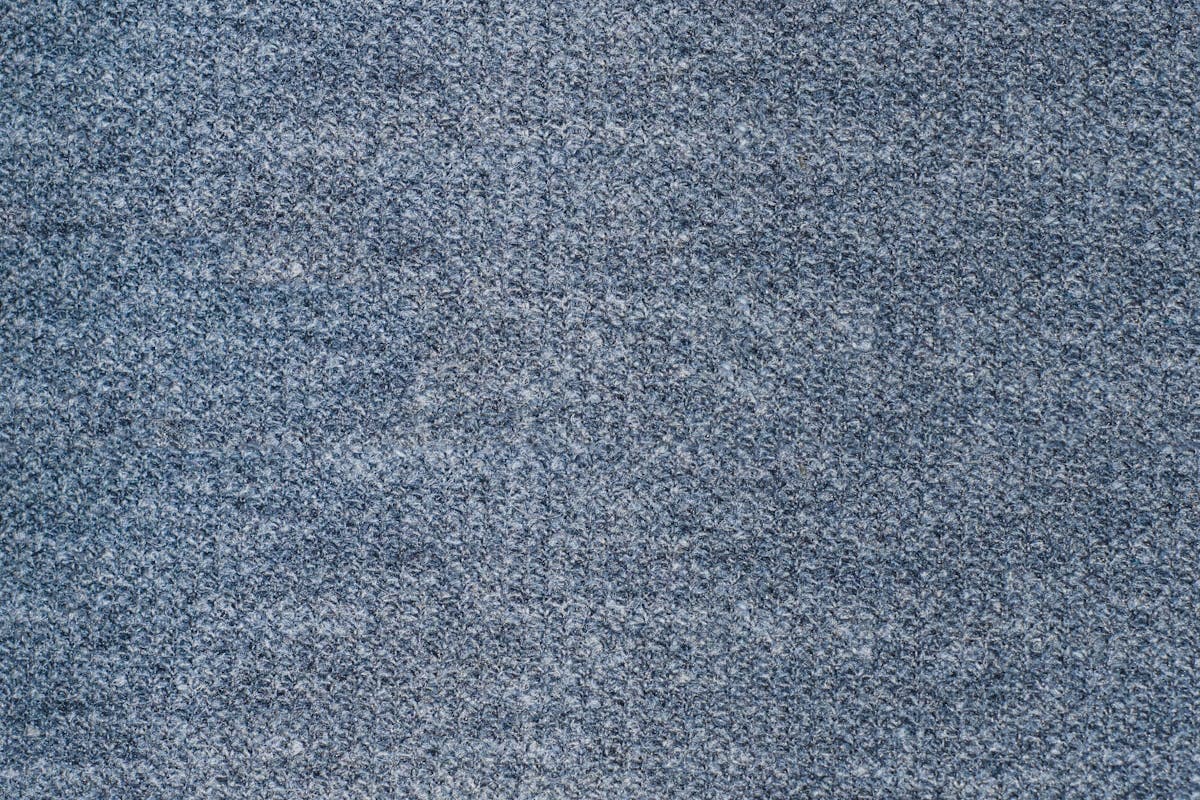
| Cloth | Sharkskin, a wool-mohair blend, or a smooth worsted with a slight sheen | The subtle shimmer is the signature -- it catches lounge and stage light without ever reading as shiny-cheap |
| Color | Charcoal, mid-grey, midnight navy, or black | Dark, urban, after-dark colors; this is a nightclub suit, not a boardroom suit |
| Jacket | Single-breasted, two-button, slim notch lapel | The clean early-60s American line -- never wide, never louche |
| Fit | The "goldilocks" cut: trim and close, but with room to move -- never skinny | These men performed in these suits; the cut is sharp and lived-in |
| Trousers | High-rise, flat front, tapered, a clean slight break | The high waist is period-correct and lengthens the leg -- the single most-missed detail |
| Shirt | Crisp white, point or spread collar, French (double) cuffs | The white ground and the flash of cufflink at the wrist are non-negotiable |
| Tie | Skinny silk, about 6cm (2.25-2.5 in), solid or quiet texture, four-in-hand knot | The narrow dark tie against the white shirt is half the silhouette |
| Pocket square | Optional -- but Sinatra's was famously orange | His signature color; one small flame of it in the breast pocket is the deepest cut in the whole look |
| Cufflinks | Simple, silver or dark stone | A glint, not a statement |
| Hat (optional) | A fedora or trilby with a snapped-down brim, worn slightly back and tilted | The finishing flourish -- but the suit must carry the look on its own first |
Two of those rows deserve a moment more. The high-rise trouser is the detail that separates a real period silhouette from a modern suit wearing a skinny tie: the waistband sits at the natural waist, the jacket's button point meets it, and the whole figure reads long and unbroken. And the orange pocket square is the connoisseur's move -- orange was Sinatra's declared favorite color, and he ran it through his pocket squares and sweaters for decades. At a themed party, that one square of orange silk tells the other people who did their homework that you did yours.
Sharkskin, explained in one minute
The word does most of the intimidating, so here is the whole idea. Sharkskin is a two-tone cloth: two different-colored yarns -- say, a grey and a white, or a blue and a black -- woven together in a fine twill, one crossing the other pick by pick. The result is a fabric that is not quite either color and that changes as you move, throwing a soft, liquid shimmer under light. No metallic thread, no gloss finish -- just optics from the weave itself. Mohair blends work a similar magic a different way: mohair fiber is naturally lustrous and crisp, so a wool-mohair cloth holds a razor crease and gives off a dry, glassy sheen that reads beautifully on stage. This is why the Rat Pack glowed under the Sands' lights while every accountant in the audience, wearing perfectly nice matte worsted, did not. If you want the full lounge effect, sharkskin or a mohair blend is the cloth to ask for; if you want one suit that also works at the office, a smooth worsted in charcoal or midnight navy gets you ninety percent of the way. For a deeper tour of cloths, our fabric guide goes long.
Where you'll actually wear it
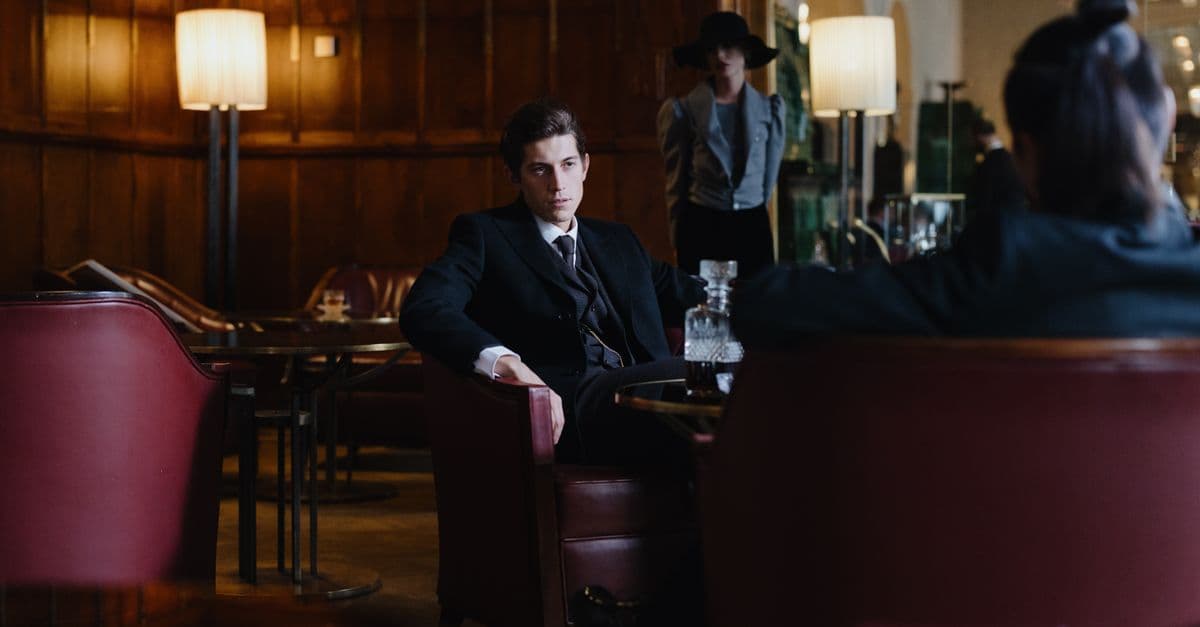
The reason this look never dies is that the occasions never die. The same suit covers all of them:
- Vegas or casino night. The literal home turf. Dark sharkskin, skinny tie, French cuffs -- you are dressed exactly one notch better than everyone in a rented tux, which is precisely the point.
- A black-tie-optional or "old Hollywood glamour" wedding. Midnight navy or black in a cloth with sheen sits gracefully next to tuxedos without pretending to be one. (Grooms going full period should also look at our Godfather guide for the more formal end of the era.)
- A Rat Pack, speakeasy, or decades-themed party. The trick is that you arrive in a real suit while everyone else is in a costume -- more on that below.
- Jazz and swing performers. If you sing or play under lights for a living, sharkskin and mohair were engineered for your job. This is workwear.
And here is the honesty line, because it is the difference between spending your money once or twice: a boxy off-the-rack "Rat Pack costume" just looks like a costume. The magic of this look is a close cut on a real body -- take away the fit and what remains is a dark suit, a hat, and a slightly embarrassed man. If the budget only covers one thing, spend it on the suit that fits and skip the fedora. Nobody at the Sands was wearing a bad suit under a good hat.
Done right, a charcoal or midnight-navy sharkskin suit is not a party trick. It is an evening suit you will wear to weddings, dinners, shows and every "dress sharp" invitation for the next decade -- with the skinny tie for the full 1960 effect, or a modern tie when you want it quiet. That is the difference between dressing up as Sinatra and simply owning the best evening suit of your life.
Sinatra, Martin, Davis: three ways to wear one uniform
If you want to be precise about which member you are channeling, the differences are real and they are all about cut and attitude, which is itself the made-to-measure argument in miniature.
| Trait | Frank Sinatra | Dean Martin | Sammy Davis Jr. |
|---|---|---|---|
| Cut | Immaculate, exact -- the template | A touch fuller and easier | The trimmest, most fashion-forward |
| Signature | The orange pocket square, the tilted fedora | The undone top button, tie at half-mast, glass in hand | Slim ties, jewelry, the boldest colors of the three |
| Energy | Command | Nonchalance | Electricity |
| Copy him if | You want the definitive version | You want the look relaxed, not rigid | You are slim-built and want the sharpest line in the room |
For a first commission, build Sinatra: it is the template the other two are riffing on, and it is the version that doubles most easily as a regular evening suit. If this genre of screen-and-stage decoding is your thing, the Rat Pack sits alongside Don Draper (the corporate face of the same decade), the Peaky Blinders three-piece, and the rest of the looks in our cinematic suit archetypes hub.
What a Rat Pack suit should actually cost
Sy Devore's suits cost Sinatra around $285 in the early 1960s -- north of $2,500 in today's money -- and the modern equivalents keep that tradition alive: search "sharkskin suit made to measure" and you will land on Western tailors quoting four figures, or Australian outfits at AUD-premium prices. To be fair to them, they are selling the right thing. They are just selling it with an expensive street address attached.
We make the exact spec above -- sharkskin or mohair-blend or smooth worsted, single-breasted, slim notch lapel, high-rise trousers, cut to your measurements -- from $149, topping out at $309 for a half-canvas suit in the finest cloth on our wall. That is not a costume-grade shortcut; it is the same category of garment, made to measure in Hoi An, Vietnam -- a town that has been cutting cloth for centuries -- without the Melbourne or Manhattan lease baked into the price. The suit is bespoke to your numbers either way. The only thing you are declining to pay for is the neighborhood.
We cut every jacket with generous seam allowances and tuck a piece of your spare matching cloth into the parcel. If your body changes, or you want the trousers let out a touch after the holidays, any local tailor can make the adjustment with the cloth we send -- no shipping it back across the world, just a small, easy tweak close to home.
How to get yours made
Two easy ways to start, both from anywhere on earth. If you like to see it first, design the suit in our Atelier -- choose a charcoal or midnight sharkskin-style cloth, the slim notch lapel, the two-button front, and watch it render in front of you. When you are ready for numbers, our guided measurement tool walks you through measuring yourself at home in about fifteen minutes -- or Linda, who runs the shop, will do it with you live on a video call and charm you more thoroughly than Dean Martin ever charmed a Vegas audience.
Either way you end up where Sinatra started: a suit cut to your body, in a cloth that comes alive after dark. Start a free consultation on WhatsApp at +84 905 311 273, or browse the full range of custom tailored suits we make and ship worldwide from Hoi An. Everything lives at https://www.nathantailors.com.
The Rat Pack never owned a single off-the-rack suit between them. Sixty-five years later, that is still the whole secret -- and it is a lot easier to commission one now than it was on Vine Street in 1960.
-- Jay