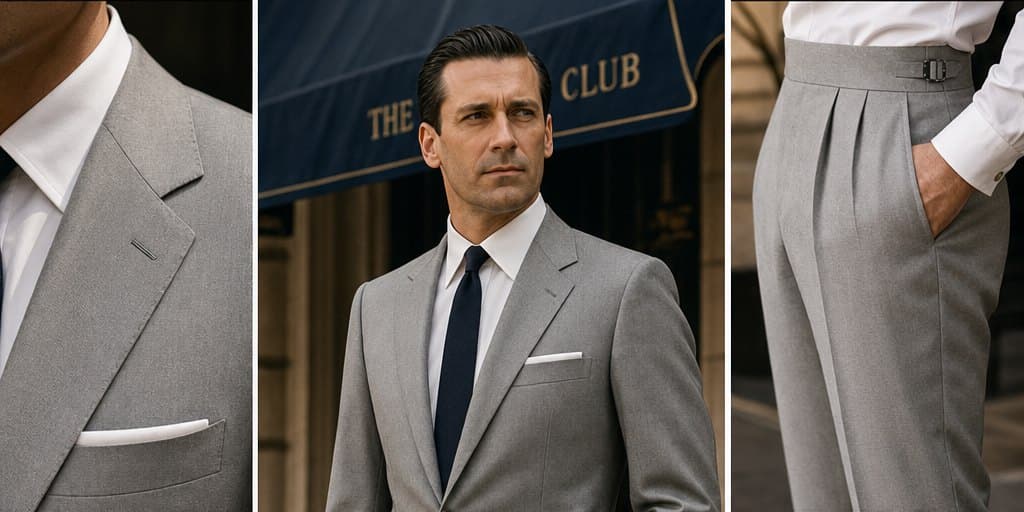
Every few weeks someone messages the shop with a screenshot of Don Draper and a single line: "Can you make me this?" The answer is yes -- and it is easier than people expect, because the Don Draper suit is not really a costume. Strip away the cigarette and the 1960s office and what is left is a plain grey business suit cut beautifully to one man's body. That is the entire secret. It reads as power because it fits.
I am Jay. I spent ten years in the United States -- Pennsylvania, New York, Houston -- before I settled in Hoi An and ended up helping run Nathan Tailors. "Make me a Draper" is one of my favorite requests, because the look is a lesson in what tailoring actually does. So let me break it down to the exact numbers -- lapel width, tie width, shoulder, cloth -- show you how it changed across the show, how it differs from Roger Sterling's louder wardrobe, and how to have it made to your measurements without paying Savile Row prices.
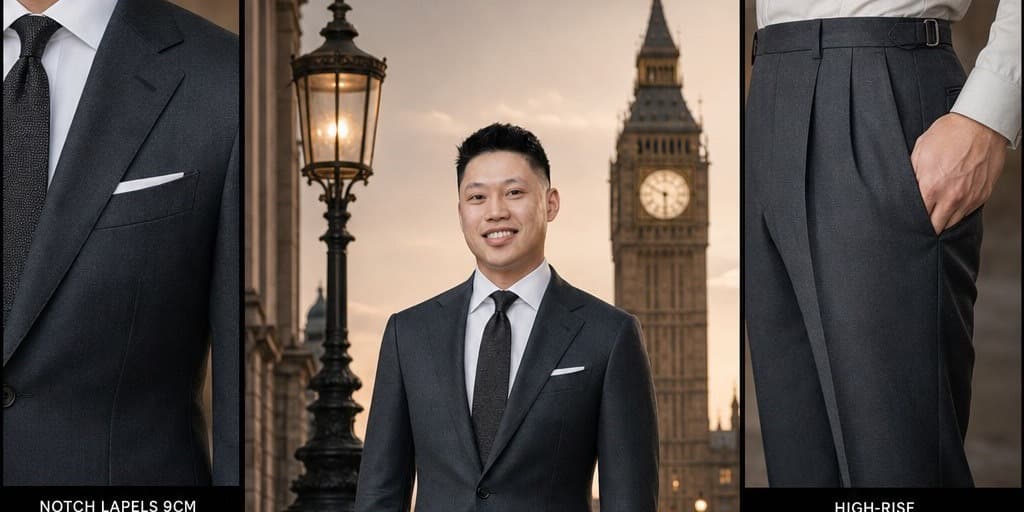
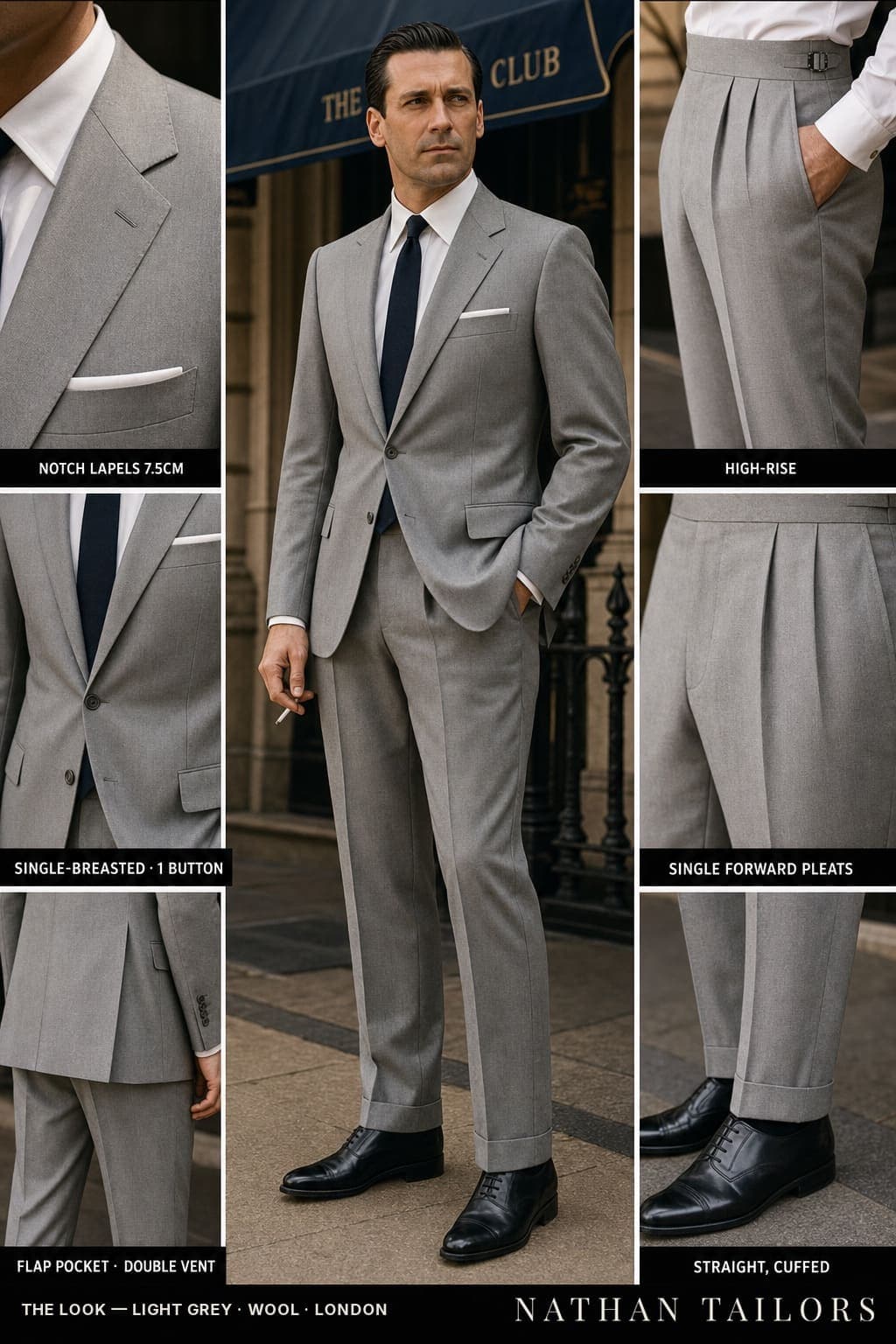
- The Don Draper suit is a grey or charcoal worsted-wool, single-breasted, two-button suit with a slim notch lapel (about 7.5-8cm), a single rear vent, and a structured-but-soft natural shoulder.
- Worn with flat-front trousers (no break or a slight break), a crisp white French-cuff shirt, a skinny tie (about 6-6.5cm), a flat white linen pocket square in a TV fold, and small, subtle cufflinks.
- The point is fit, not flash. It looks powerful because it is trim and cut to the body -- clean 1960s lines, never modern super-skinny.
- Draper is the restrained minimalist (grey, charcoal, the occasional navy); Roger Sterling is the louder dandy. Copy Draper for a suit you will actually wear everywhere.
- Made to your measurements from $149 ($149-$309 depending on cloth), 5.0 stars across 530+ reviews, shipped worldwide.
First, the thing every other guide misses
Search "Don Draper suit" and you will find a dozen pages describing the color and the tie. Almost none of them tell you the truth, which is this: the color and the tie are the easy part. You can buy a grey suit and a narrow tie anywhere for a few hundred dollars. What you cannot buy off a rack is the reason Draper looks like Draper -- the suit is cut to him. The shoulder sits exactly on his shoulder. The jacket closes without a wrinkle. The trouser breaks once, cleanly, on the shoe. That precision is the whole effect, and it is the one thing a size-40-regular off the shelf cannot give you.
This is why the look is worth having made rather than bought. A custom tailored suit is, by definition, cut to your measurements -- your shoulder slope, your sleeve length, your seat. When people say a bespoke suit "has presence," they are describing fit and nothing else. Draper's wardrobe is the clearest argument on television for why fit beats price, beats brand, beats everything. Keep that in mind as we go through the spec, because every number below only matters once the thing actually fits you.
The Don Draper suit: the exact spec sheet
Here is the whole look, element by element, with the numbers that keep it period-correct. Screenshot this and you have a brief you could hand to any real tailor.
| Element | Draper's spec | Why it matters |
|---|---|---|
| Cloth | Grey or charcoal worsted wool, smooth and matte, mid-weight (about 10-11oz) | Reads as business, not fashion; takes office light without shine |
| Jacket | Single-breasted, two-button | The clean 1960s American business default |
| Lapel | Slim notch, about 7.5-8cm (3-3.25 in) | Period-correct width -- not 2010s skinny, not 1970s wide |
| Shoulder | Structured but soft -- lightly padded, natural line, clean sleevehead | The signature; the straight shoulder line your eye reads as authority |
| Vent | Single rear vent | Conservative and period-correct; a clean back |
| Trousers | Flat front, mid-rise, gently tapered, no break or a slight break | The trim 1960s line; sits clean on the shoe |
| Shirt | White, spread or point collar, French (double) cuffs | The crisp white ground that makes grey read sharp |
| Tie | Skinny, about 6-6.5cm (2.25-2.5 in), dark solid or quiet texture, four-in-hand knot | Period-correct slim width; the neat small knot completes it |
| Pocket square | White linen, flat TV fold (a straight horizontal edge) | The one flourish -- restrained, and always white |
| Cufflinks | Small, subtle, silver or dark | A quiet detail, never a talking point |
| Overall fit | Trim and clean, cut to the body -- not super-slim | The entire point of the look |
A few of those choices deserve a sentence more. The worsted wool is doing quiet work: it is matte, so it never shines cheaply under fluorescent light, and it holds a crisp line from morning to evening. The slim notch lapel is the detail people most often get wrong -- too narrow and you slide into a 2010s look, too wide and you land in the disco 1970s; the 7.5-8cm range is the sweet spot that stays 1960s. The white linen pocket square in a flat TV fold is the only ornament in the whole outfit, and it is always white -- the moment you add a colored or patterned square, you have stopped dressing like Draper and started dressing like his boss, which we will get to.
The shoulder is the whole game
If you take one technical idea from this guide, make it this one, because it is where most Draper attempts fall apart. There are, roughly, three ways to build a suit shoulder, and Draper's is the disciplined middle path.
On one end is the Neapolitan or "roped" shoulder -- soft, often unpadded, with a shirt-like sleevehead that puckers on purpose. It is relaxed and beautiful and very Italian, and it is the wrong answer here. Draper is a 1960s American ad man, not a Neapolitan gentleman on holiday; a soft spalla-camicia shoulder makes the look read casual and modern, which is the opposite of what you want.
On the other end is the old American "sack" shoulder -- the natural, unpadded, boxy line of a 1960s Brooks Brothers three-button. It is authentically of the era, but it is shapeless, and shapeless is not Draper either. He never looks soft. He looks cut from stone.
Draper's shoulder sits between the two: structured but soft. A light pad -- just enough to create a clean, straight line from neck to sleeve -- with a smooth set-in sleevehead and no rope, no divot, no bulk. That single straight line across the top of the jacket is what your eye reads as authority. It is the reason he looks powerful even sitting down in a meeting. When you order, this is the one instruction worth being specific about: a natural shoulder, lightly padded, with a clean sleevehead. Not Neapolitan. Not a sack. The line in between.
Season 1 Draper versus later-season Draper
The look is not static across the show. If you want to be precise about which Draper you are copying, here is how the wardrobe evolves. Early Draper -- Season 1, around 1960 -- is fuller, greyer, and more conservative: he is the buttoned-up account man on the way up. Later Draper -- Seasons 5 through 7, into the late 1960s -- somehow gets both sharper and a little looser, and navy starts sharing the closet with grey.
| Trait | Early Draper (Season 1, ~1960) | Later Draper (Seasons 5-7, ~1967-70) |
|---|---|---|
| Silhouette | Fuller, softer, more conservative | Trimmer, sharper, more confident |
| Dominant color | Grey and charcoal, almost exclusively | Grey still leads, but navy joins the rotation |
| Lapel and tie | Slightly more generous width | A touch slimmer and cleaner |
| Shirt | Nearly always white | White, with the occasional pale blue |
| The mood | Ambitious ad man on the rise | Established, assured, a little looser |
| Best for | Your safest, most timeless first suit | A second suit with more personality |
Which should you copy? For a first suit you will wear everywhere, early Draper is the safer, more timeless template -- pure grey, clean, conservative. If you already own a good grey suit and want a second with a touch more edge, later Draper, with its trimmer line and creeping navy, is the one to build.
Draper versus Roger Sterling: two ways to wear power
The fastest way to understand Draper's style is to stand it next to Roger Sterling's. They are both powerful men in expensive suits, and they could not dress more differently. Draper is the restrained minimalist -- grey, charcoal, solids, one white pocket square, nothing that raises its voice. Sterling is the dandy -- bolder colors, stripes and checks, more flourish, a man who plainly enjoys getting dressed. Neither is wrong. They are two philosophies.
| Dimension | Don Draper | Roger Sterling |
|---|---|---|
| Palette | Grey, charcoal, the occasional navy | Bolder greys and blues, the odd bold check |
| Pattern | Solids and quiet textures | Stripes, checks, more visible pattern |
| Personality | Minimalist, controlled | Dandy, playful, a showman |
| Flourish | One white linen pocket square, subtle links | Colored squares, bolder ties, more of it |
| Reads as | Discipline, which looks like power | Personality, which looks like charm |
| Copy him if | You want one suit that does everything | You already own the basics and want to play |
For most men building a wardrobe from scratch, Draper is the smarter first move: discipline is versatile, and a restrained grey suit goes to more places than a bold checked one. Sterling is what you graduate to once the basics are handled and you want to have some fun. Learn Draper first. Earn Sterling later.
Fabric, color, and the one mistake everyone makes
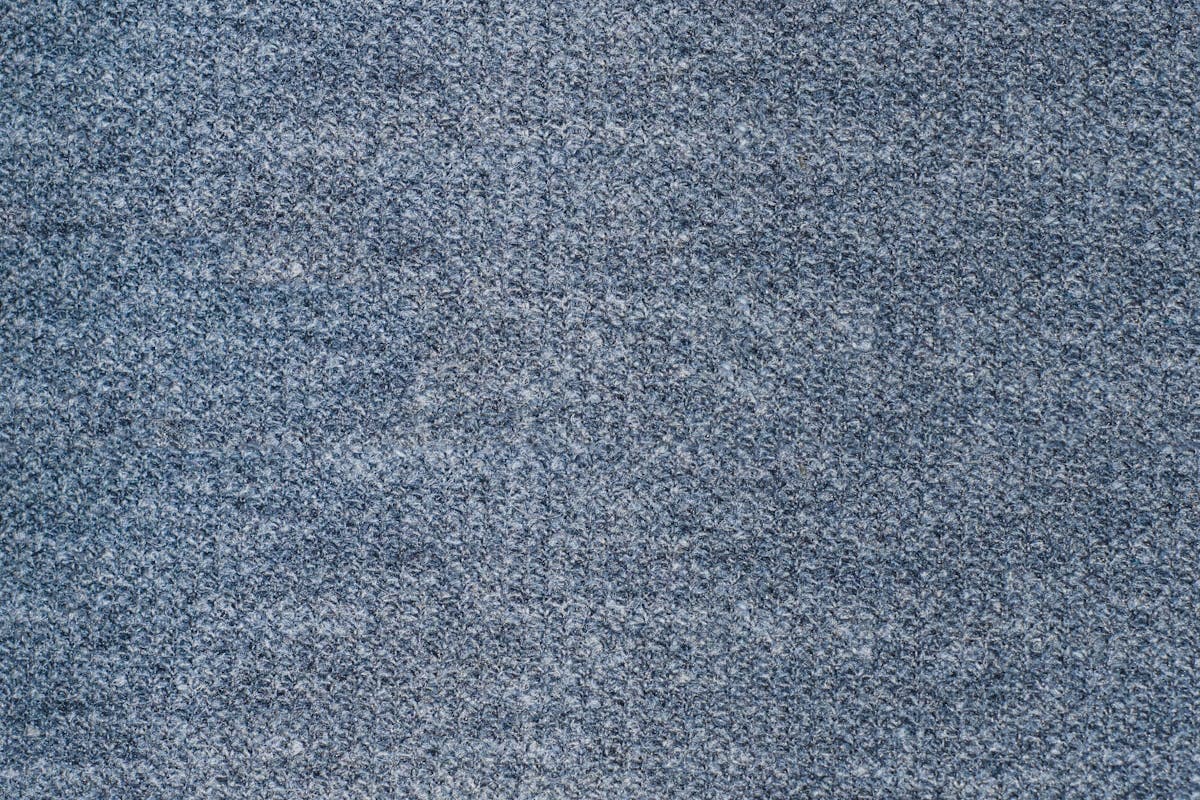
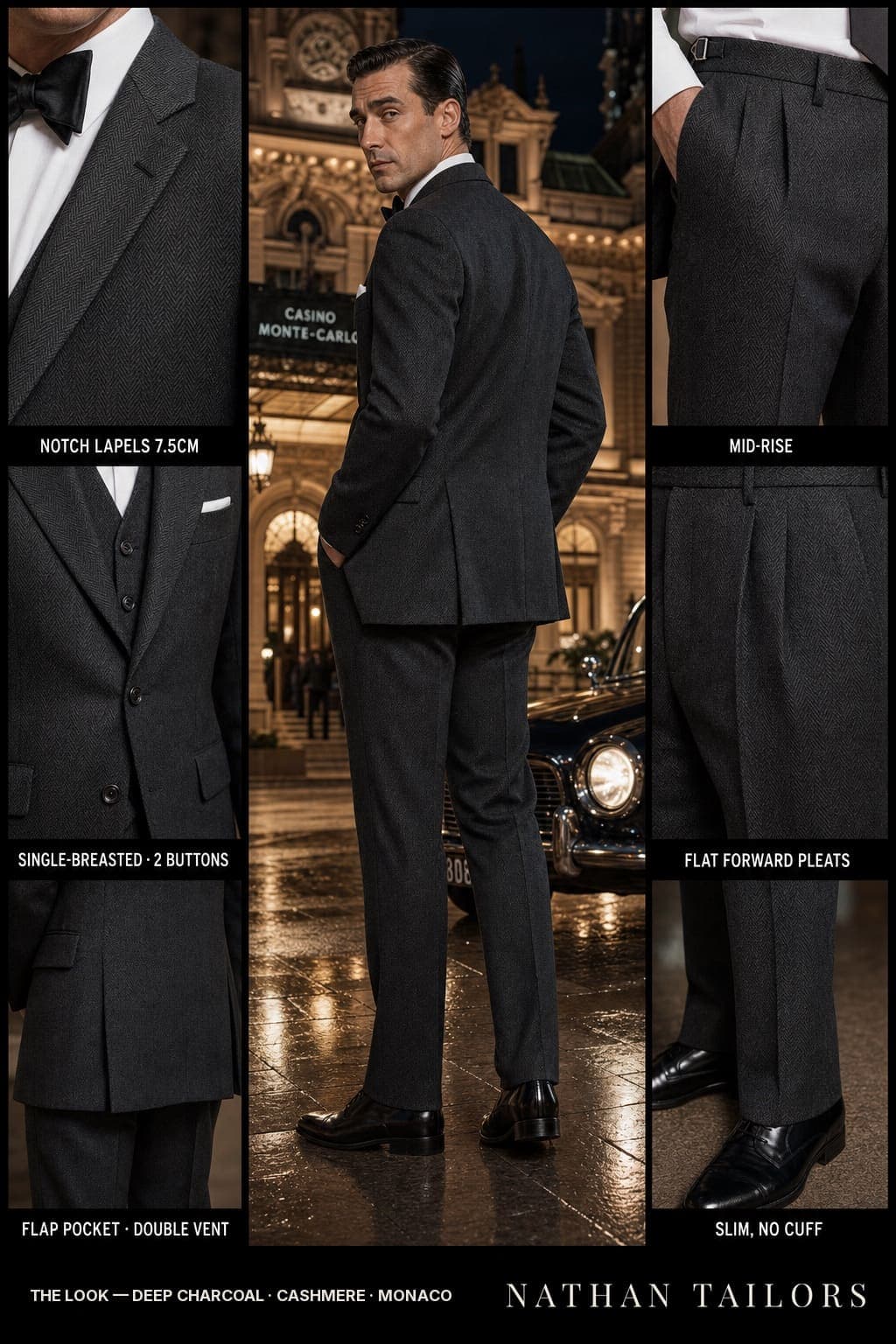
Cloth first. Draper lives in worsted wool -- a smooth, tightly woven, matte cloth in the 10 to 11 ounce range. Worsted is the right call because it does two things at once: it holds a crisp line all day, and it reads as business rather than fashion. Avoid anything with a sheen -- cheap suits shine under office light -- and avoid heavy texture like tweed or flannel for this specific look. Those are wonderful cloths, but they belong to a different, more rustic story. For a full tour of wool and its cousins, our fabric guide goes deep.
Color is almost the whole identity. Draper is a grey man: mid-grey and charcoal do ninety percent of the work across seven seasons. As the show moves into the later 1960s, a navy creeps in, and navy is a perfectly Draper-correct second suit. What you will almost never see him wear is brown, and never anything patterned enough to notice from across a room. If you are building one suit, make it charcoal. If you are building two, add a mid-grey or a deep navy.
Now the one mistake everyone makes, and it earns its own paragraph. When people try to modernize the Draper look, they reach for a 2014-era super-slim fit -- painted-on trousers, a jacket cut like a sausage casing, lapels shrunk to a finger's width. That is not the 1960s. Draper's suits are trim, but they are clean and they have room to move: a full trouser leg with a gentle taper, a jacket that skims rather than grips. The whole silhouette shifted away from skinny years ago, and for good reason -- I wrote about that silhouette shift in detail. Aim for trim-but-clean, not squeezed. Draper would never look like he had been poured into his suit.
Done right, a grey Draper suit is not a costume you wear once to a Mad Men party. It is a grey worsted business suit you will actually wear to weddings, to work, and to every "quiet luxury" or "old money" occasion for the next ten years. That is the whole difference between dressing up as a character and simply owning the best grey suit of your life. If that wearable, understated direction is what you are after, our quiet luxury guide for men is the natural next read.
If you enjoy decoding screen wardrobes like this, the Draper suit sits in a small hall of fame of looks worth stealing -- I broke down ten of them in our cinematic suit archetypes guide.
What a Draper suit should actually cost
Here is where the story usually ends badly. You decide you want the look, you search "made to measure grey suit," and you land on Hockerty or some Savile-Row-inspired label, and the number is somewhere between six hundred dollars and several thousand. Hockerty is the one made-to-measure name that reliably comes up for this look, and to be fair they do a decent job -- but you are paying three to four times what the same suit should cost. A true Savile Row homage runs well into four figures before you have even chosen a lining.
We make the exact spec above -- grey or charcoal worsted, single-breasted, natural shoulder, slim notch lapel, cut to your measurements -- from $149. The top of our range, a half-canvas suit in fine merino wool, is $309. That is not a lower-quality shortcut. It is the same category of garment, in real cloth from established mill suppliers, without the Western retail markup. A half-canvas, made-to-measure grey suit from $149 is not a gimmick; it is simply what this thing costs when you remove the middlemen.
The reason is geography, not magic. A $900 suit on a New York sales floor is maybe $40 of cloth and $70 of labor; the rest is rent on an expensive street, marketing, and margin stacked by each hand the suit passes through between the mill and you. We are the people who actually cut and sew the thing, working with the same fabric brokers, minus the SoHo lease. Skip the layers in between and a made-to-measure grey suit lands between $149 and $309. That is the whole trick, and there is no catch.
We cut every jacket with generous seam allowances and tuck a piece of your spare matching cloth into the parcel. If your body changes, or you simply want a hair more room after a good winter, any local tailor can adjust the fit using the cloth we send -- no shipping it back across the world, no drama, just a small, easy tweak close to home.
How to get your Draper suit made
Here is the part people worry about: can this really be done from the other side of the world, from a screenshot and a set of measurements? Yes. We do it constantly, for men who will never set foot in Hoi An. There are two easy ways to start.
If you like to see it before you commit, design it yourself in our Atelier -- our online generator where you choose the cloth, the lapel, and the details and watch the suit render in front of you. It is the fastest way to see a grey Draper two-button come together in your exact colors. When you are ready for numbers, our guided measurement tool walks you through taking your own measurements at home in about fifteen minutes -- or Linda, who runs the shop, will do it with you live on a video call, and she will probably ask why you are so handsome before you have finished the first one.
Either way, you end up with the same thing: a made-to-measure grey suit cut to your body, for a fraction of what the look costs anywhere else. Start a free consultation any time on WhatsApp at +84 905 311 273, or explore the full range of custom tailored suits we cut and ship worldwide from Hoi An. Everything lives at https://www.nathantailors.com.
Don Draper's suits were never about money or logos. They were about a plain grey suit that fit one man perfectly -- which, when you think about it, is the most achievable look in all of menswear. You just have to have it cut to you.
-- Jay