Short answer: no, a cocktail suit is not a distinct garment the way a tuxedo is. It is a use, not a construction. Retailers list it as a category because people search for it; tailors deny it because nothing in the cutting room changes. Both are right, and the practical consequence is good news — you do not need to buy a special suit.
Two industries, two answers, one confused customer
Search "cocktail suit for men" and you will get product pages. Filter by it on most menswear sites and you will get results. So it must be a thing.
Then ask a tailor what makes a suit a cocktail suit and you will get a pause. Because in the workroom there is no such pattern. There is no cocktail canvas, no cocktail lapel, no cocktail cut. A suit is a jacket and trousers cut to a person; what it becomes depends on the cloth, the colour, and what you put with it.
Both answers are honest. The retailer is describing demand — a real thing people ask for. The tailor is describing supply — and nothing on their side changes. The disagreement exists because a dress code got mistaken for a product category.
What "cocktail attire" is actually asking for
Cocktail attire sits in a specific place on the formality ladder. Above business, below black tie. It emerged for evening events that were too social for a work suit and too casual for a dinner jacket — and that middle position is the entire definition.
Translated into things you can actually check:
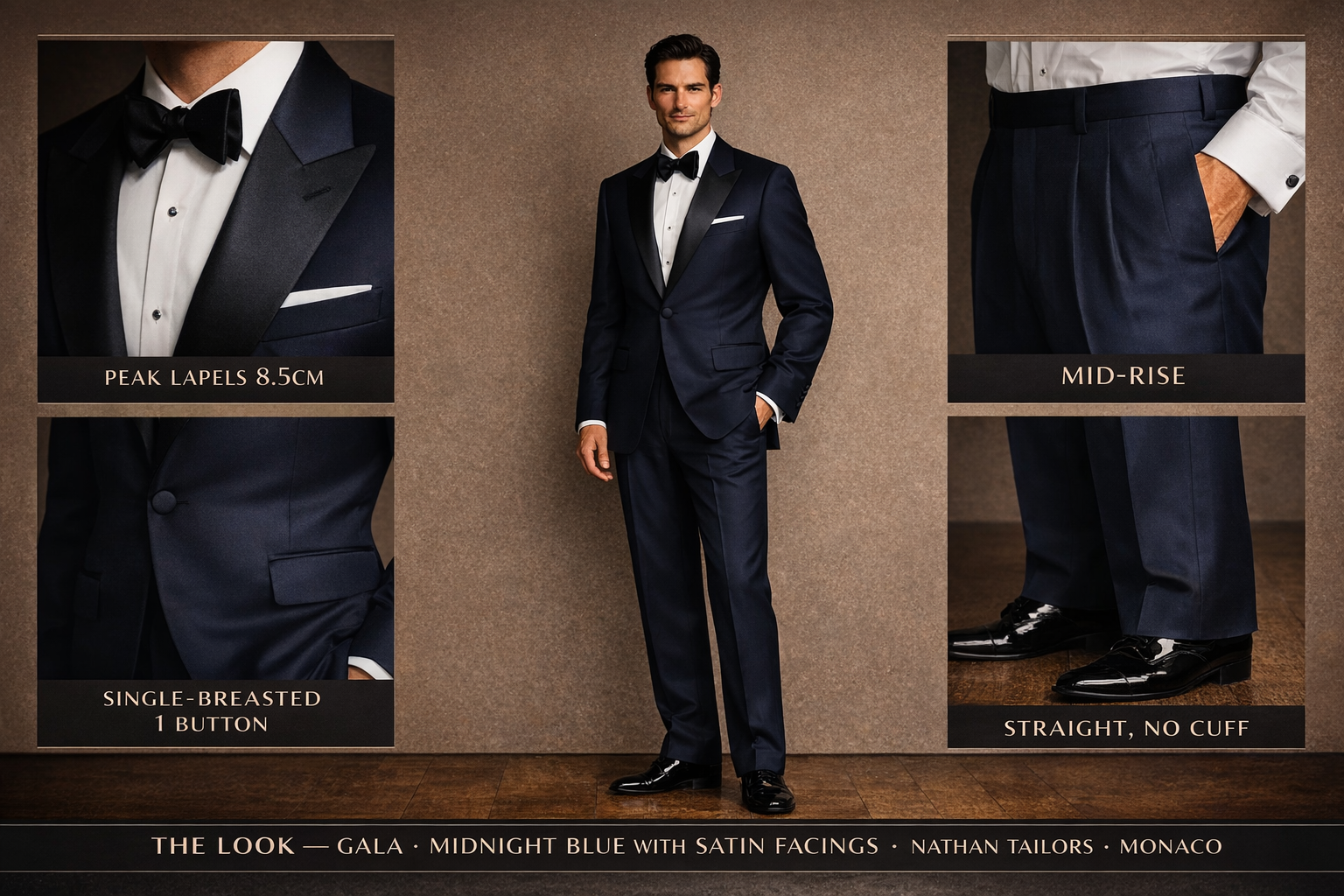
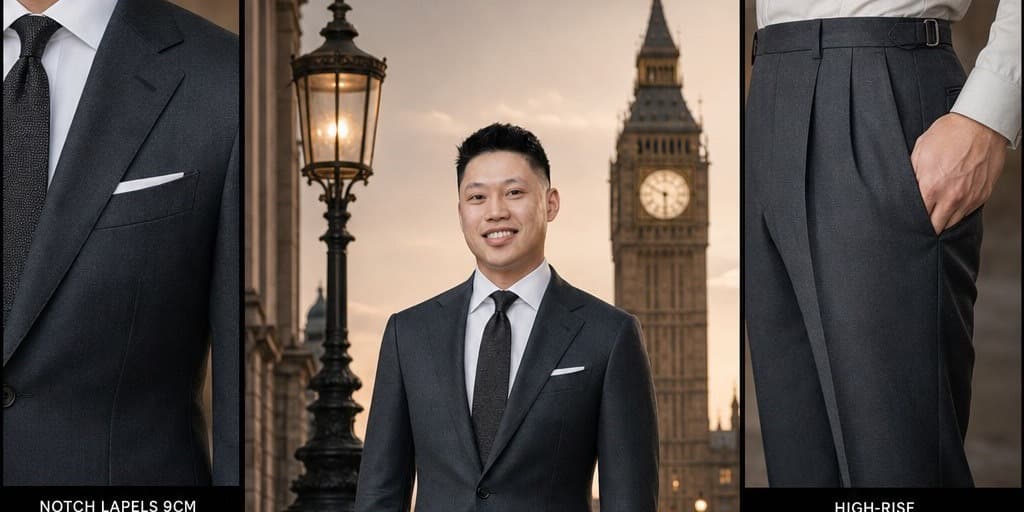
- A dark suit. Navy, charcoal, or genuinely black. Not mid-grey, not tan, not a pattern that announces itself across a room.
- A jacket and trousers that match. The moment they do not, you are in smart casual, whatever else you get right.
- A tie is optional, and increasingly assumed absent. This is the single biggest shift of the last decade. A cocktail invitation in 2026 does not require one.
- Leather shoes, properly dark. Black or dark brown. This is where most people actually fail.
That is it. There is no fifth rule, and anyone adding one is selling something.

The three codes people mix up
Most of the anxiety around "cocktail suit" is really confusion between three adjacent codes. They differ less than the names suggest.
| Code | What changes | Tie? |
|---|---|---|
| Cocktail | Dark matching suit | Optional |
| Semi-formal | Same suit, dressed up — darker, crisper, quieter | Usually yes |
| Black tie optional | Tuxedo or the darkest suit you own | Yes |
Read that column again. The same suit satisfies all three. What moves is the shirt, the tie, and the shoes — not the garment. That is why "buy a cocktail suit" is bad advice: it solves one invitation and leaves you shopping again for the next.

The one suit that covers all of it
If you own a single dark suit that fits properly, you are dressed for every cocktail, semi-formal and black-tie-optional invitation you will receive. The specification is unglamorous:
- Navy or charcoal. Navy reads slightly warmer and works in daylight too; charcoal is marginally more formal after dark. Either is right. Black is the narrowest of the three — it only really works in the evening.
- Plain or so subtle it reads plain. A quiet weave is fine. A visible check is not.
- A matte finish. Shine is the single fastest way to make an expensive suit look cheap under event lighting.
- Mid-weight cloth. Heavy enough to hang, light enough for a warm room full of people.
None of that is exotic, and none of it requires a garment sold under a special name.

Where the fit actually matters
A cocktail event is standing, moving, holding a drink, talking at close range. It exposes different failures than a desk does. Three that show up every time:
- Shoulder. The one thing no alteration truly fixes. If it does not sit right, nothing below it will. How to measure shoulder width.
- Jacket length and button position. Standing all evening means the button is under constant view. Pulling at the waist is far more visible upright than seated.
- Sleeve. You are holding something at chest height for hours. A sleeve that swallows the cuff is obvious in every photograph. How to measure sleeve length.

How we approach it
Nathan Tailors cuts every suit from an individual pattern, so there is no "cocktail" line to choose from — there is your measurements, and a cloth appropriate to what you are wearing it to. Suits run $149–$309, garment only; shipping is quoted separately by destination before payment.
If you are buying one dark suit to cover the whole middle of the formality ladder, tell us that when you order. It changes the cloth we recommend, not the price.
Going to a specific event rather than building a wardrobe? Our guide to summer wedding dress codes decodes the invitation wording line by line.
The honest summary
There is no cocktail suit. There is a dark suit that fits you, and a set of conventions about what you put with it. The retailers are not lying to you exactly — they are answering a question in the language it was asked. But the useful answer is the tailor's one, because it means you already own the solution, or you need to buy it exactly once.