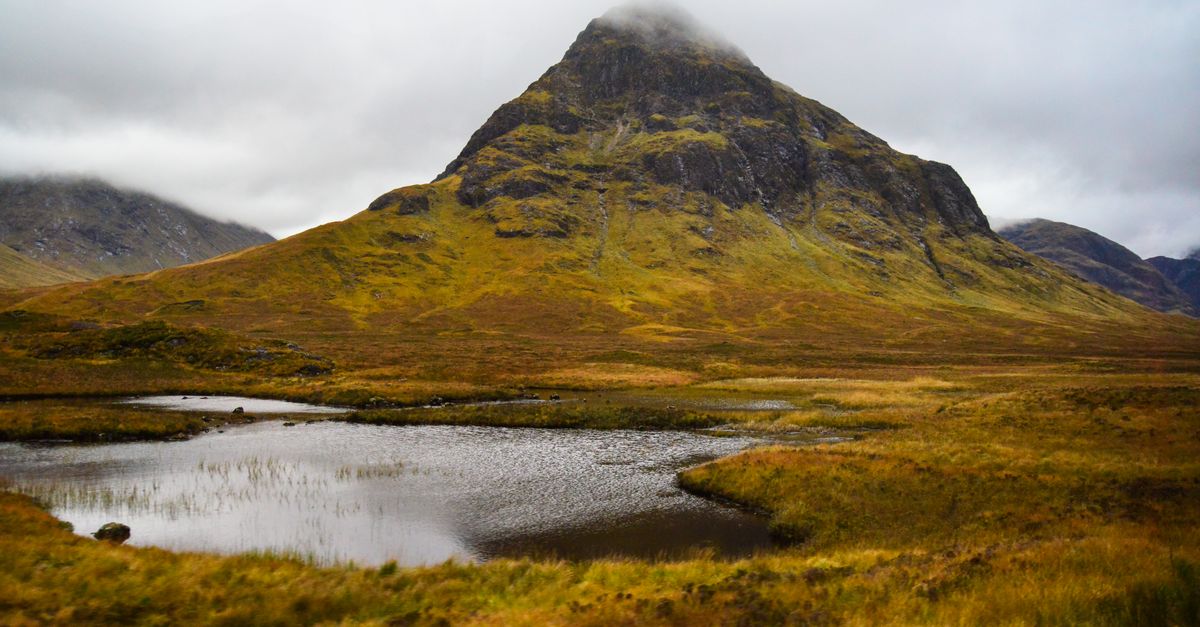
What to Wear to a Wedding in Scottish Highlands in July
Northern Scotland / Scottish Highlands · Men's guest guide · researched 2026-07-18
The short answer
- Climate: 18°C/64°F days, 10°C/50°F after dark — Generally humid and often damp, but not tropical – air feels fresh rather than muggy, with occasional breezy, penetratin. Expect showers or light rain on roughly a third to half of July days depending on micro‑location, with brief downpours then bright spells; plan for at least some wet ground and a shower during photos or drinks.[2][7][9][11]
- The suit: A mid‑weight wool or wool‑rich blend around 260–320 gsm (8–11 oz) is ideal, potentially with a touch of cashmere or a linen/silk blend in the weave for texture; this weight copes with cool, damp air and wind while still being comfortable in the mild daytime highs.[3] Colours: Deep navy, mid‑to‑dark charcoal grey, or a muted forest/Highland green; a subtle mid‑grey or faint check (windowpane or Prince of Wales) also works if the overall effect remains restrained beside tartan kilts.[7].
- The register: Expect classic British wedding formality—suits, ties and polished shoes in the daytime—even at rural hotels or estates, with a mix of kilts and lounge suits and a long, sociable reception that runs into the light late evening.
- Feet: Dark‑brown or oxblood leather cap‑toe Oxfords or derbies with a thin rubber or Dainite‑style sole for grip on wet grass and gravel; loafers can work for more relaxed venues but should still be in dark leather and worn with proper socks.[5][ Over‑the‑calf fine wool or wool‑blend socks in dark navy, charcoal or matching your trousers to stay warm on cool, damp ground and when standing around outdoors; no‑show socks look out of place with t
The July climate, in tailoring terms
18°C / 64°F
Daytime high
10°C / 50°F
Evening low
Generally humid and often damp, but not tropical – air feels fresh rather than muggy, with occasional breezy, penetratin
Humidity
Cool, bright and changeable: think long luminous evenings where you’re fine in shirtsleeves in the sun but instantly glad of a wool jacket when a breeze, drizzle or midgey dusk rolls in.
How weddings actually run in Scottish Highlands
Expect classic British wedding formality—suits, ties and polished shoes in the daytime—even at rural hotels or estates, with a mix of kilts and lounge suits and a long, sociable reception that runs into the light late evening.
Black tie is occasional here. Highlands weddings are usually fairly formal by day, with many local men in full Highland dress and others in dark lounge suits and ties, then they loosen slightly after dinner for dancing rather than turning into full black‑tie affairs unless explicitly stated.
- Many Highland weddings run as all‑day affairs: mid‑afternoon ceremony, long drinks and photos, late dinner then dancing until close to or past midnight, taking advantage of July’s very long daylight.[2]
- A significant share of male relatives wear traditional Highland dress (kilt, jacket, sporran), while other guests wear dark or muted lounge suits; it is normal for guests in suits to be in the minority next to kilted men.
- Church or religious venues expect covered shoulders and generally a collared shirt and tailored trousers for men; removing jackets is fine later at the reception but not usually during the ceremony.
- White and ivory are effectively reserved for the bride’s gown, but for men the colour to treat with care is very bright tartan or novelty ‘costume’ accessories, which can read touristy beside genuine clan kilts.
- Outdoor elements are common—photos on lawns, drinks in walled gardens, maybe a short walk between church and reception—so locals quietly plan for rain, wind and midges even if dressed formally.[2][5]
- Bars and ceilidh dancing can get warm even when it’s cool outside; locals are used to rolling up sleeves and stashing jackets on chairs while still looking pulled together thanks to good shirts, ties and well‑fitting trousers.
The complete spec, head to toe
Suit fabric
A mid‑weight wool or wool‑rich blend around 260–320 gsm (8–11 oz) is ideal, potentially with a touch of cashmere or a linen/silk blend in the weave for texture; this weight copes with cool, damp air and wind while still being comfortable in the mild daytime highs.[3]
Cloth weight
Aim for roughly 260–320 gsm (about 8–11 oz) tailoring cloth; true tropical‑weight summer suits are often too flimsy for Highlands breezes, while very heavy tweeds are unnecessary in July.[3]
Colours
Deep navy, mid‑to‑dark charcoal grey, or a muted forest/Highland green; a subtle mid‑grey or faint check (windowpane or Prince of Wales) also works if the overall effect remains restrained beside tartan kilts.[7]
Colours to avoid
Avoid head‑to‑toe black that can look funereal in daytime, very bright or neon colours, and novelty tartans or oversized ‘clan’ accessories that read as touristy next to genuine Highland dress; keep white and ivory to shirts only.[7][14
Jacket
A single‑breasted, two‑button, half‑lined or fully lined jacket with soft but structured shoulders, enough chest canvassing to resist wind, and a slightly longer length for a classic British proportion that looks right next to Highland dress.[3]
Lapel
Notch lapels in a classic medium width (around 8–9 cm / 3–3.5 in) suit the semi‑formal British look and balance well with ties and kilted guests’ jackets; peak lapels are fine on more formal suits but
Shirt
A long‑sleeve, pale blue or white cotton poplin or twill shirt, or a very fine cotton‑linen blend, with a classic spread or semi‑spread collar and single cuffs; avoid short‑sleeve shirts, button‑down collars for the main ceremony, and heavy
Trousers
Flat‑front or very subtle single‑pleat trousers with a mid‑rise that sits comfortably at the natural waist, a gentle taper to the shoe, and either no break or a slight break; cuffs are optional but common on British tailoring, and help the
Shoes
Dark‑brown or oxblood leather cap‑toe Oxfords or derbies with a thin rubber or Dainite‑style sole for grip on wet grass and gravel; loafers can work for more relaxed venues but should still be in dark leather and worn with proper socks.[5][
Socks
Over‑the‑calf fine wool or wool‑blend socks in dark navy, charcoal or matching your trousers to stay warm on cool, damp ground and when standing around outdoors; no‑show socks look out of place with t
Belt
Either a slim dark‑brown or oxblood leather belt matching your shoes, or side‑adjusters to keep a clean line; side‑adjusters are practical in changeable weather as they reduce bulk and avoid a damp leather belt against your shirt.
Tie
Unless the invitation clearly relaxes things, wear a tie: silk or textured grenadine in navy, deep green, burgundy or muted patterns such as small foulards or regimental stripes; standard width (around 7.5–8.5 cm / 3–3.25 in) complements th
Accessories
A white linen or cotton pocket square in a simple TV fold, a sturdy but understated watch on leather or brushed metal strap, and classic wayfarer or keyhole sunglasses with non‑mirrored lenses for bright spells; a flat cap or tweed hat is optional but should be subtle and functional, not costume.[2]
Grooming
Opt for a neat, not over‑styled haircut that will sit well in wind and drizzle, use a matte or cream hair product rather than high‑shine gel, and consider an antiperspirant plus light, breathable base layer to stay comfortable as you move between cool outdoors and warm, busy dance floors.[2][5]
Dress code on the invitation?
The spec above assumes no stated code. If the invitation names one, we translate it against Scottish Highlands's July climate and customs — bright chips are ready; dim ones build themselves in ~3 seconds.
What gives visitors away
- Turning up in a shiny tuxedo or full black-tie unless the invite explicitly says so; it will look overdressed and out of place compared with tailored lounge suits.
- Wearing lightweight tropical linen or very thin cotton suits without a layer; wind, drizzle and cool evenings will make you cold.[3]
- Planning only smooth leather soles for the whole weekend; many venues involve wet grass, gravel drives and cobbles that get slippery.[5]
- Ignoring rain and midges: no water‑resistant layer, no umbrella, no repellent – you’ll suffer during outdoor photos and drinks.[2][5]
- Turning up in very loud ‘tourist tweed’ or novelty tartan accessories; locals generally wear real Highland dress or classic tailoring, not costume pieces.
- Assuming strict ‘no black at weddings’: in Scotland dark suits are normal, but avoid head‑to‑toe funeral styling and lift it with shirt/tie/pocket square.
Adjust for the venue
Historic castle hotel or country house estate
Prioritise rubber‑soled or Dainite‑soled dress shoes for wet gravel, pack a compact umbrella, and consider a slightly more formal suit (navy or charcoal) to sit well alongside kilts and the period setting.[5]
Village church followed by hotel or inn reception
Expect some walking between car park, church and reception on potentially wet pavements and steps, so choose comfortable dress shoes and a coat that looks acceptable over a suit; a slightly more conservative tie and darker suit works well i
Barn, converted steading or marquee on estate grounds
Ground can be soft or uneven, so avoid thin leather soles and consider boots‑style dress shoes or derbies with discreet lugged soles; a subtle check or textured suit cloth blends nicely with rustic décor while still feeling smart.[5]
After sunset
After sunset temperatures slip toward 10–12°C (50–54°F), the air feels damper and midges intensify in still spots, so you’ll want your jacket back on and may appreciate a light merino layer or scarf for lingering outdoors.[2][5]
Packing notes
- · Carry your suit in a proper garment bag as cabin baggage if possible, as rural travel and small aircraft or trains make checked luggage more vulnerable to delays and creasing.[5][14]
- · Pack at least one spare dress shirt for sweating during ceilidh dancing or in case of an unexpected soaking from a shower or spilled drink.[2][5]
- · Bring a compact, dark‑coloured travel umbrella and a lightweight, packable raincoat or trench that looks acceptable over tailoring for moving between venues in rain.[2][9][11]
- · Include midge repellent, after‑bite treatment and, if you’re sensitive, a very fine knit under‑layer or long‑sleeve tee to wear under your shirt on outdoor days; midges are notoriously bad in the Highlands in July.[5][9]
- · Choose a subtle, unscented or lightly scented sunscreen that will not yellow collars, and apply it to face and neck for long outdoor photo sessions.[2][11]
- · Pack shoe trees, a soft cloth and neutral cream or conditioner so dress shoes can dry overnight if they get wet, plus thin wool socks that cope well with both cool and mild temperatures.[2][5][9]
The Wedding Atelier
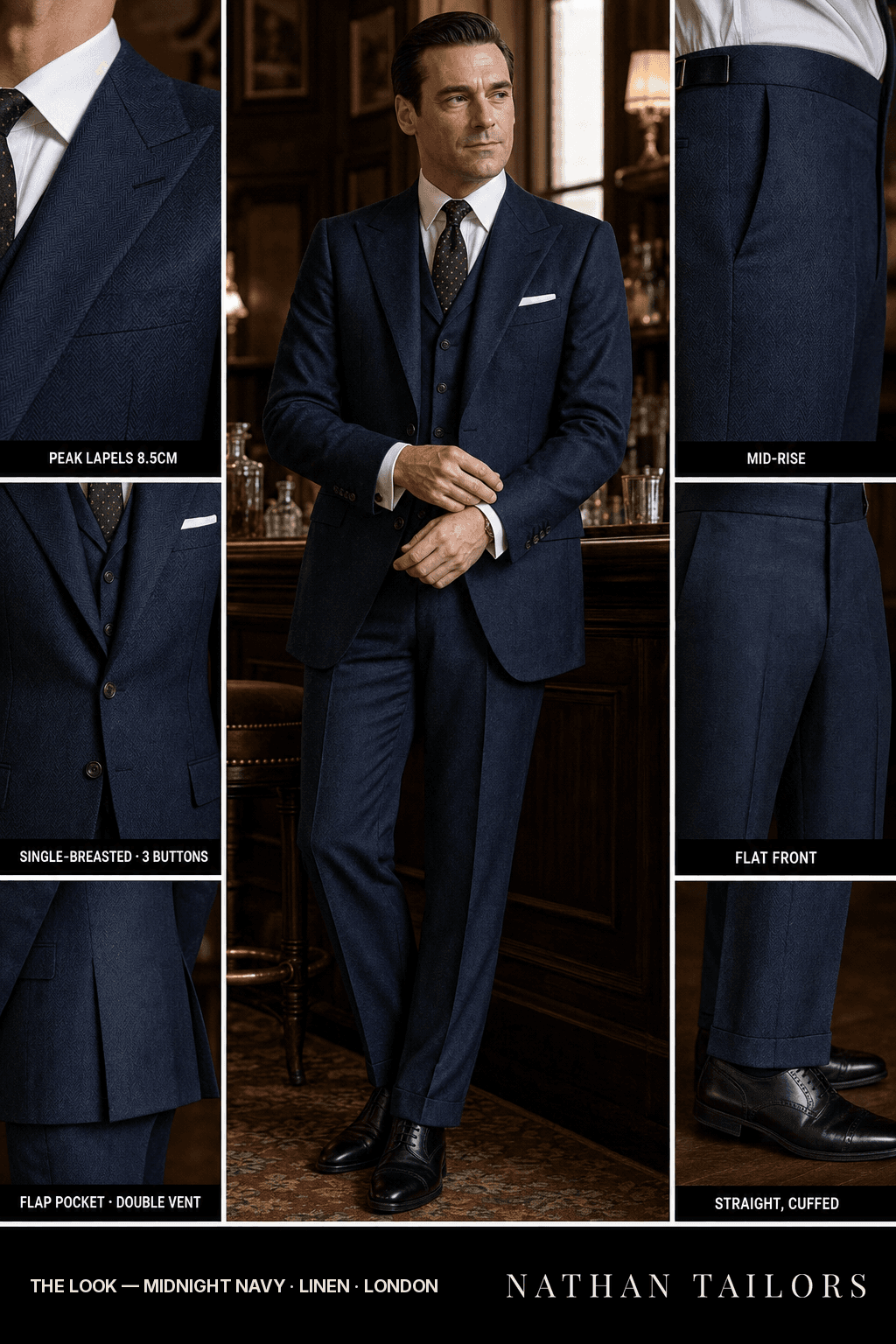
The suit we’d cut for Scottish Highlands in July
Everything this guide recommends — the cloth, the colour, the construction for July weather — configured as a real tailor brief. One click shows it rendered; one more makes it yours, cut to your measurements from $149.
45-second AI render, no signup to design. Every render is a working tailor brief.
Don't own the right suit for this? That's literally our job.
We're Nathan Tailors, a workshop in Hoi An, Vietnam — we cut bespoke suits and custom tailored suits to your exact measurements in precisely the cloths these briefs call for — real linen, fresco-weave wool, tropical-weight worsted — from $149 to $309, shipped worldwide in 2–3 weeks. Measure yourself at home in ~15 minutes with our guided measurement tool; a master tailor checks every number before cutting. 5.0★ across 500+ reviews.
“Suit arrived! It’s incredible, amazing job thank you.”
“Ordered two suits and four shirts, remotely from the US. They fit great and are great quality! Was able to do everything over WhatsApp for measurements, etc. Will definitely visit if I ever make it to Hoi An. Highly recommend!”
“Being a short and stocky person, I could never truly get clothing that fitted properly. "Off the rack" was never an option... As I opened the small box, I got nervous and wondered if I made a big mistake and basically gambled away a fair amount of money. I ordered a 3 piece suit, 2 shirts and had a pair of leather dress shoes. Everything fitted nicely... the shirts were absolutely PERFECT.”
“Very satisfied; incredibly skillful to make clothes fit so perfectly. Beautiful fabric exactly as promised, very neat — would simply love to order from here again!”
“They did such an amazing job, my suit fits perfectly and the craftsmanship is superb! Linda was a great help and she knows exactly what she is doing. I can't recommend this place enough and I will be getting more suits from them in the future guaranteed!”
“Great place to get perfect suit, they send me to Poland with no problems.”
“WOW! Ordered a suit online with Linda. She contacted me by video call to go through the measuring process and once confirmed measurements again, around 4 weeks later a made to measure suit arrived in the UK. Fitted perfectly and I didn't even visit! Fantastic quality and customer service from Linda. Would definitely recommend!”
“Exceptional experience from start to finish. I ordered a fully custom two-piece double-breasted suit remotely from France, Linda and Jennifer guided me through every step with patience and professionalism. The suit arrived in under 3 weeks and the result is flawless: fabric, cut, lining, silhouette, everything is perfect. Nathan Tailors delivered exactly the vision I had in mind. I will absolutely be ordering again. Highly recommended.”
“This was my first time buying suits online so I was a bit apprehensive. However, the online order form was both easy to use and very thorough, and they did a video call with me to make sure of a couple of measurements that were out of the normal range. Two suits and a shirt arrived here in New Zealand in less than two weeks, are well-made, and fit perfectly. I'm thrilled with the service.”
Scottish Highlands in July: guest questions
Can I wear linen or linen‑blend in the Scottish Highlands in July?
Yes, linen is acceptable if the invite is smart‑casual or the venue leans rustic, but in the Highlands a **linen‑blend** or heavier Irish/Italian linen around 270–300 gsm is better than ultra‑light tropical linen. Pair it with a proper shirt, leather shoes and (if the dress code is not explicitly relaxed) a tie for church or formal civil ceremonies.
Is a black suit OK for a Highlands wedding, or will it look too funereal?
Black suits are fine in Scotland and commonly worn for formal events, but a plain, funeral‑looking black can feel a bit sombre in daylight Highlands settings. Navy, charcoal or dark forest green look more at home; if you do wear black, brighten it with a pale shirt, coloured tie and pocket square.[7]
Do I need to wear a tie as a male guest in the Highlands?
Unless the invite states ‘no tie’ or uses wording like ‘smart casual’, assume a tie is expected for a Highlands wedding, especially if there is a church or formal civil ceremony. You can always remove it later in the evening if the atmosphere relaxes and other guests do the same.
Is a blazer with chinos acceptable, or do I really need a full suit?
A blazer and chinos can work if the dress code is clearly smart‑casual or the setting is a barn, field or very relaxed hotel, but they should still be sharp (no distressed denim or trainers). For most Highland hotel, castle and estate weddings in July, a full suit will blend in better alongside guests in Highland dress.
Should I rent and wear a kilt to fit in at a Highlands wedding?
Local men attending formal Highland weddings often wear kilt outfits, but this is not expected of visitors and it is better not to rent a full kilt unless you are comfortable and the couple encourages it. A well‑cut lounge suit in muted colours sits perfectly alongside kilts without looking like costume.
How should I handle rain and terrain without ruining my outfit?
Pack a compact umbrella, a light but proper raincoat or trench in a dark neutral, and consider leather‑soled dress shoes with rubber half‑soles or discreet rubber overshoes. These let you stay smart through showers, wet lawns and gravel while keeping your suit and feet dry.[2][5]
Keep planning
Sources
- 1. weatherspark.com/m/150484/7/Average-Weather-in-July-in-Scottish-Highlands-United
- 2. invernesspalacehotel.co.uk/blog/weather-scottish-highlands/
- 3. weatherspark.com/y/150484/Average-Weather-in-Scottish-Highlands-United-Kingdom-Y
- 4. nomadseason.com/weather/united-kingdom/scotland/highland-july.html
- 5. roamglade.com/guides/weather/
- 6. timeanddate.com/weather/@2646943/climate
- 7. currentresults.com/Weather/United-Kingdom/Scotland/temperature-rainfall-average-
- 8. tripreport.com/cities/the_highlands/climate