
What to Wear to a Wedding in Jamaica in February
Jamaica weddings in February are typically a mix of warm-weather resort ease and family-centred formality, with church, · Men's guest guide · researched 2026-07-18
The short answer
- Climate: 28°C/82°F days, 21°C/70°F after dark — humid, usually around the mid-70s to low-80s percent range depending on location. February is one of Jamaica’s drier months, so rain is usually brief and scattered rather than day-ruining; if it falls, expect a short shower that mainly makes outdoor ceremonies and hems more annoying than impossible.[1][2][12]
- The suit: Linen-wool blend or tropical wool with a touch of linen: wool keeps the suit looking refined, while linen content improves breathability in Jamaica’s heat and humidity.[1][2] Colours: Mid-grey, navy, warm tan, or light blue-grey are the safest blend-in choices; these stay wedding-appropriate without baking in the heat..
- The register: Dress tends to be smart and celebratory, with guests often wearing light suits or suit separates in tropical-friendly fabrics. Traditional church weddings remain more formal and conservative, while resort and villa celebrations are usually more relaxed in fabric and color.
- Feet: Dark brown or oxblood loafers, derbies, or sleek monks with leather or rubber-dotted soles; choose grip over fragile soles if the venue has sand, lawn, or damp stone. Wear socks for church and formal venues; choose lightweight dress socks in dark brown, navy, or a shade matching the trousers.
The February climate, in tailoring terms
28°C / 82°F
Daytime high
21°C / 70°F
Evening low
humid, usually around the mid-70s to low-80s percent range depending on location
Humidity
Warm, bright, and lightly humid: the day feels like tailoring-friendly tropical heat in the shade, but fabric will cling if you stand too long in sun or humidity.[1][2]
How weddings actually run in Jamaica
Dress tends to be smart and celebratory, with guests often wearing light suits or suit separates in tropical-friendly fabrics. Traditional church weddings remain more formal and conservative, while resort and villa celebrations are usually more relaxed in fabric and color.
Black tie is occasional here. Jamaican weddings range from beach-resort relaxed to church-and-reception formal, but the practical guest norm is polished, colorful, and climate-aware rather than stiff. Black-tie exists, especially in upscale hotel or evening settings, but it is not the default.
- Church weddings generally call for more covered shoulders, a proper tie, and a cleaner, more tailored look than a beach or resort ceremony.
- Bright but tasteful color is normal; a dark funeral-like suit can feel out of place at a daytime celebration.
- For outdoor receptions, guests often prioritize breathable fabrics over rigid formality, but they still keep the outfit neat and pressed.
- If the invitation says resort, villa, or garden, you will blend in better with unstructured tailoring than with a boardroom suit.
- Jamaican wedding days can run long into the night, so a jacket that still looks good after heat and movement matters more than a super-structured one.
- If the ceremony is at a church or chapel, be prepared for more conservative expectations than at the reception venue.
The complete spec, head to toe
Suit fabric
Linen-wool blend or tropical wool with a touch of linen: wool keeps the suit looking refined, while linen content improves breathability in Jamaica’s heat and humidity.[1][2]
Cloth weight
About 7–9 oz / 240–305 gsm; lighter if the venue is outdoors, but not so sheer that the suit loses structure.
Colours
Mid-grey, navy, warm tan, or light blue-grey are the safest blend-in choices; these stay wedding-appropriate without baking in the heat.
Colours to avoid
Avoid head-to-toe white, ivory, or cream unless the couple specifically requests it; avoid heavy black because it can look too severe for a daytime island wedding.
Jacket
Unstructured or lightly constructed single-breasted jacket, half-lined or unlined, with enough shape to look wedding-appropriate but enough softness to breathe.
Lapel
Medium-width notch lapel, about 7.5–9 cm / 3–3.5 in; peak lapels are fine only if the suit is otherwise relaxed and the wedding is more formal.
Shirt
Lightweight cotton poplin, fine twill, or linen-cotton blend in white or pale blue with a breathable spread or semi-spread collar.
Trousers
Flat-front or very shallow pleats, mid-rise, with a clean no-break or slight break; cuffs are optional but usually best omitted in humid, less formal settings.
Shoes
Dark brown or oxblood loafers, derbies, or sleek monks with leather or rubber-dotted soles; choose grip over fragile soles if the venue has sand, lawn, or damp stone.
Socks
Wear socks for church and formal venues; choose lightweight dress socks in dark brown, navy, or a shade matching the trousers.
Belt
Use side-adjusters if possible; if trousers need belt loops, keep the belt slim and tonal so the outfit stays clean in heat.
Tie
Bring a tie and wear it for church or more traditional weddings; choose silk, grenadine, or a silk-linen blend in a medium width around 7–8 cm / 2.75–3.25 in.
Accessories
Pocket square in white or soft color, discreet watch, and sunglasses only for arrival or outdoor travel, not the ceremony; a hat is usually unnecessary unless the event is explicitly daytime resort-casual.
Grooming
Keep hair neat but not shellacked; use anti-shine or sweat-control products and bring blotting papers so your face and collar stay controlled in humidity.
Dress code on the invitation?
The spec above assumes no stated code. If the invitation names one, we translate it against Jamaica's February climate and customs — bright chips are ready; dim ones build themselves in ~3 seconds.
What gives visitors away
- Do not wear a heavy wool suit; February is warm and humid enough that it will read overheated fast.[1][2]
- Do not arrive in a shiny black business suit unless the invitation is explicitly formal; in Jamaica, guest dress is usually festive and climate-appropriate rather than sombre.
- Do not wear white, ivory, or cream head-to-toe if the couple is using those shades; in Caribbean wedding settings those colors are commonly reserved for the bride.
- Do not choose delicate leather soles for beach, lawn, or resort venues; they will struggle on sand, grass, and damp stone.
- Do not skip sweat planning; collar stains and back-of-jacket dampness are the most common blend-in mistakes in this climate.
Adjust for the venue
Beach resort
Beach resort ceremony → use loafers or rubber-soled dress shoes and keep the jacket unstructured; skip heavy ties if the invite is clearly relaxed.
Church or chapel
Church ceremony → add a tie, keep shoulders and chest covered, and avoid overly casual shoes or linen that looks wrinkled on purpose.
Garden villa
Garden or villa reception → lighter colors and breathable cloth work best; choose shoes with better traction for lawn or stone paths.
Hotel or ballroom
Hotel ballroom or upscale city venue → you can sharpen the look with a darker navy or mid-grey suit and a more formal tie.
After sunset
After sunset it stays warm rather than cool, but humidity can linger and a light breeze may make a jacket feel welcome for the reception and photos; keep the jacket on hand, not on your body, until needed.[1][2]
Packing notes
- · Pack a lightweight suit in a garment bag so it arrives uncrushed and ready for humid weather.
- · Bring a second shirt in case of collar or underarm dampness after the ceremony.
- · Carry a pocket square and tie that add color without looking flashy.
- · Pack breathable socks and a handkerchief or blotting cloth for heat management.
- · Choose shoes that can handle hot pavement, resort paths, or cobbles if the venue is not fully indoors.
- · Bring sunscreen that will not stain collars or lapels.
The Wedding Atelier
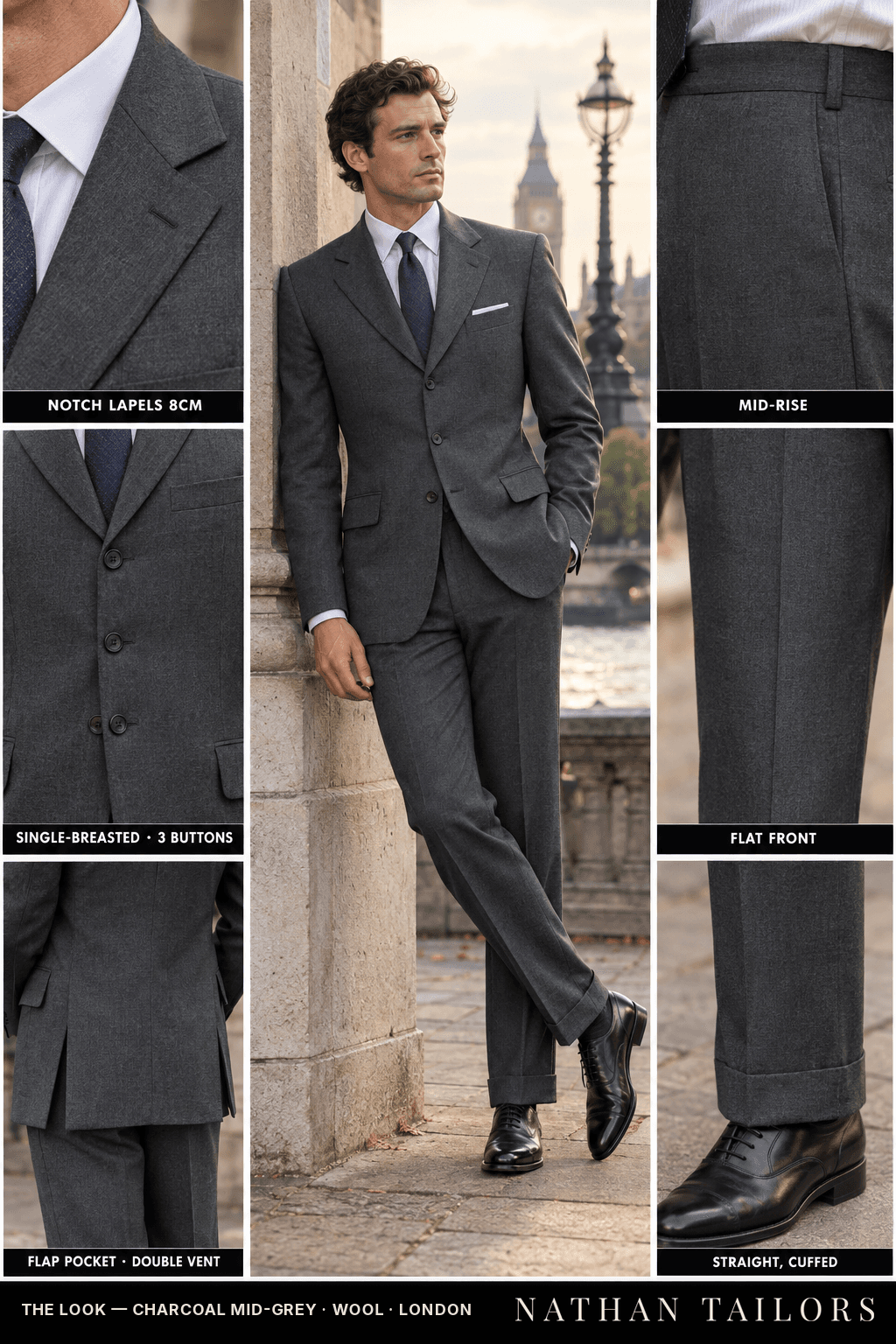
The suit we’d cut for Jamaica in February
Everything this guide recommends — the cloth, the colour, the construction for February weather — configured as a real tailor brief. One click shows it rendered; one more makes it yours, cut to your measurements from $149.
45-second AI render, no signup to design. Every render is a working tailor brief.
Don't own the right suit for this? That's literally our job.
We're Nathan Tailors, a workshop in Hoi An, Vietnam — we cut bespoke suits and custom tailored suits to your exact measurements in precisely the cloths these briefs call for — real linen, fresco-weave wool, tropical-weight worsted — from $149 to $309, shipped worldwide in 2–3 weeks. Measure yourself at home in ~15 minutes with our guided measurement tool; a master tailor checks every number before cutting. 5.0★ across 500+ reviews.
“Suit arrived! It’s incredible, amazing job thank you.”
“Ordered two suits and four shirts, remotely from the US. They fit great and are great quality! Was able to do everything over WhatsApp for measurements, etc. Will definitely visit if I ever make it to Hoi An. Highly recommend!”
“Being a short and stocky person, I could never truly get clothing that fitted properly. "Off the rack" was never an option... As I opened the small box, I got nervous and wondered if I made a big mistake and basically gambled away a fair amount of money. I ordered a 3 piece suit, 2 shirts and had a pair of leather dress shoes. Everything fitted nicely... the shirts were absolutely PERFECT.”
“Very satisfied; incredibly skillful to make clothes fit so perfectly. Beautiful fabric exactly as promised, very neat — would simply love to order from here again!”
“They did such an amazing job, my suit fits perfectly and the craftsmanship is superb! Linda was a great help and she knows exactly what she is doing. I can't recommend this place enough and I will be getting more suits from them in the future guaranteed!”
“Great place to get perfect suit, they send me to Poland with no problems.”
“WOW! Ordered a suit online with Linda. She contacted me by video call to go through the measuring process and once confirmed measurements again, around 4 weeks later a made to measure suit arrived in the UK. Fitted perfectly and I didn't even visit! Fantastic quality and customer service from Linda. Would definitely recommend!”
“Exceptional experience from start to finish. I ordered a fully custom two-piece double-breasted suit remotely from France, Linda and Jennifer guided me through every step with patience and professionalism. The suit arrived in under 3 weeks and the result is flawless: fabric, cut, lining, silhouette, everything is perfect. Nathan Tailors delivered exactly the vision I had in mind. I will absolutely be ordering again. Highly recommended.”
“This was my first time buying suits online so I was a bit apprehensive. However, the online order form was both easy to use and very thorough, and they did a video call with me to make sure of a couple of measurements that were out of the normal range. Two suits and a shirt arrived here in New Zealand in less than two weeks, are well-made, and fit perfectly. I'm thrilled with the service.”
Jamaica in February: guest questions
Can I wear linen to a wedding in Jamaica in February?
Yes, but keep it lightweight and matte. A linen or linen-blend suit is acceptable for many Jamaican weddings, especially resorts and outdoor venues, but at a church ceremony it should still look polished rather than beach-casual.
Is a black suit OK?
Usually no. Black can read too severe in a tropical guest setting unless the invitation is very formal or the wedding is being held in the evening with a stricter dress code.
Do I need a tie?
Often yes, but the formality of the venue matters. Outdoor and resort weddings can be tie-optional; church ceremonies and more traditional family weddings are safer with a tie.
Can I wear a white shirt and light suit?
Avoid white unless you know the couple specifically wants guests in it. In many weddings, white and ivory are treated as bride-adjacent colors and are best left off a guest outfit.
Can I dress in a Caribbean style print?
Yes, but choose breathable construction and low-contrast accessories. A relaxed tropical print would usually be too casual unless the invitation clearly signals island-chic rather than formal.
Keep planning
Sources
- 1. tui.co.uk/holidays/weather/caribbean/jamaica/february.html
- 2. thomascook.com/holidays/weather/jamaica/february/
- 3. weather2visit.com/central-america/cuba/jamaica-february.htm
- 4. sunheron.com/central-america/jamaica-weather-february/
- 5. climaatlas.com/jamaica/february
- 6. weatherspark.com/m/150241/2/Average-Weather-in-February-in-Jamaica
- 7. caribeez.com/jamaica/article/jamaica-weather-in-february
- 8. visit-jamaica.com/chasing-the-sun-uncover-february-weather-perfection-in-jamaica