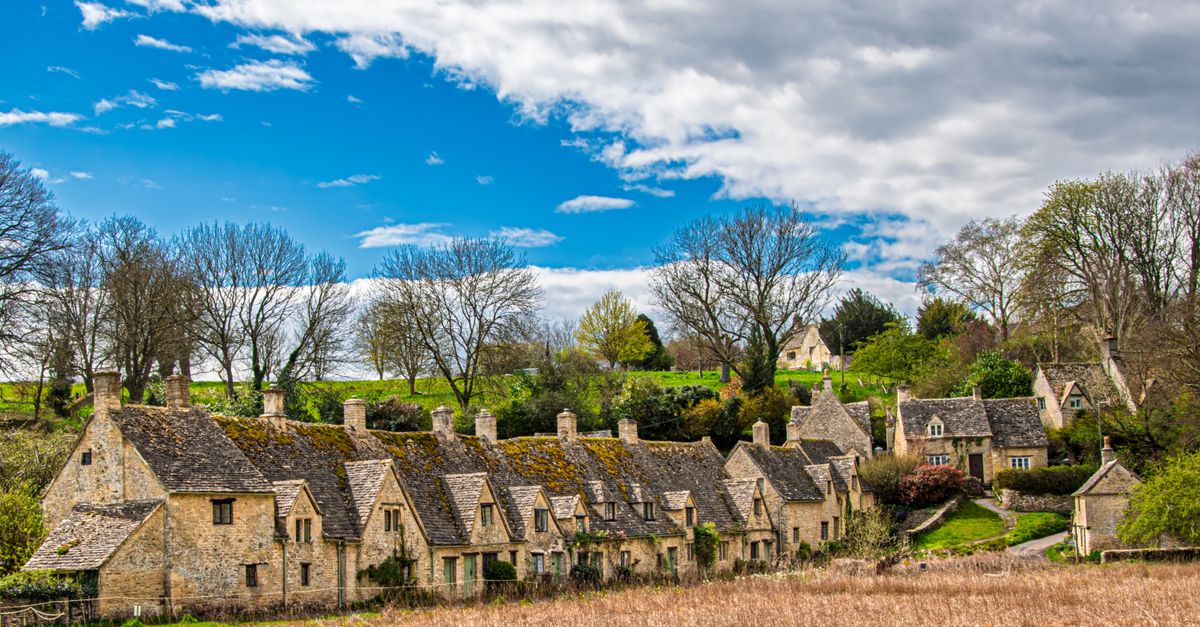
What to Wear to a Wedding in Cotswolds in June
Rural England – Cotswold Hills and stone villages · Men's guest guide · researched 2026-07-18
The short answer
- Climate: 19°C/66°F days, 10°C/50°F after dark — High but comfortable: typical relative humidity sits around 65–80%, so the air feels soft and damp rather than dry, help. Expect moderate rainfall with around 60–70 mm over roughly 12–13 days; showers are common but usually passing, so you need rain‑savvy shoes and a plan for wet grass rather than full storm gear.[5][9][11]
- The suit: Lightweight worsted wool or wool‑blend (optionally with a little linen) for breathability and crease resistance in mixed, damp English summer conditions.[4] Colours: Navy, mid‑grey, or charcoal, with lighter blue or soft grey acceptable for daytime if the dress code is relaxed; these tones match local tastes and photograph well against stone villages and green fields.[8].
- The register: A lounge suit is the baseline for male guests; black tie appears only when explicitly requested and morning dress is typically confined to the wedding party or very traditional families.
- Feet: Dark brown or black leather oxfords or brogues with discreet rubber or studded soles to cope with wet lawns, gravel and cobbles; whole‑cut or very sleek shoes are less practical than something with a bit of robustness.[4] Over‑the‑calf dress socks in dark navy, charcoal, or black in breathable wool‑blend or cotton; no‑show socks look out of place with suits in this setting and risk bare ankles in church pews.
The June climate, in tailoring terms
19°C / 66°F
Daytime high
10°C / 50°F
Evening low
High but comfortable: typical relative humidity sits around 65–80%, so the air feels soft and damp rather than dry, help
Humidity
Long, bright days that feel like mild, green English summer: cool, fresh mornings, pleasantly warm afternoons in the high teens to around 20°C, and slightly chilly evenings that favour a proper jacket rather than true summer tailoring.[4]
How weddings actually run in Cotswolds
A lounge suit is the baseline for male guests; black tie appears only when explicitly requested and morning dress is typically confined to the wedding party or very traditional families.
Black tie is occasional here. Cotswolds weddings mix classic English formality with countryside ease: daytime church or manor‑house ceremonies usually mean full suits and ties, while relaxed barn or marquee receptions may soften the edges but still lean smart rather than beachy casual.
- Timings skew later than some countries: ceremonies often start early afternoon, with daylight drinks on lawns or courtyards, and dancing running into the night, so your outfit needs to work from cool early afternoon to chilly late evening.[8]
- Many ceremonies are still held in small parish churches, where removing hats on entry, keeping shoulders covered, and avoiding overly flashy colours or loud patterns is expected decorum.
- Women avoid all‑white; men can technically wear light suits but pure white or cream tailoring is rare and can look bridal or showy in the countryside setting.
- Weather‑related pragmatism is normal: guests think about mud and grass, so leather‑soled dress shoes without grip are less common than rubber‑soled or Dainite‑style oxfords and brogues.[4]
- The drinking and dancing culture is strong even at smart weddings; jackets often come off after dinner but shirt sleeves stay rolled neatly rather than fully undone.
- Photos often happen outside among stone villages and fields, so locals favour classic, non‑shiny suits that photograph well in bright but soft daylight.[8]
The complete spec, head to toe
Suit fabric
Lightweight worsted wool or wool‑blend (optionally with a little linen) for breathability and crease resistance in mixed, damp English summer conditions.[4]
Cloth weight
Around 9–11 oz (approx. 260–310 gsm), light enough for a mild afternoon but substantial enough for cool, breezy evenings and church interiors.[4]
Colours
Navy, mid‑grey, or charcoal, with lighter blue or soft grey acceptable for daytime if the dress code is relaxed; these tones match local tastes and photograph well against stone villages and green fields.[8]
Colours to avoid
Avoid pure white or cream suits (too bridal and flashy), very shiny mid‑blue business suits that look corporate rather than country, and neon or extremely bright ties that clash with the soft, green, stone‑village setting.[8]
Jacket
Single‑breasted, two‑button jacket in a lightweight wool or wool‑blend, half‑lined or lightly structured so it handles both cool shade and mild sun; cut clean through the waist with enough room to move for lawn games and dancing.[4]
Lapel
Notch lapels at a moderate width (about 7–9 cm / 2.75–3.5 in), in keeping with traditional English tailoring and avoiding ultra‑skinny or oversized fashion extremes.
Shirt
A crisp cotton or cotton‑poplin shirt in white or very pale blue, with a classic point or semi‑spread collar for a tie; consider a slightly heavier weave than high‑summer linen to stay warm in cooler church interiors and evening air.[5]
Trousers
Flat‑front or single‑pleat trousers with a mid‑rise that sits on the natural waist, a gentle taper, and a slight break over the shoe; turn‑ups (cuffs) are fine and suit the countryside look, but keep the overall line neat rather than fashio
Shoes
Dark brown or black leather oxfords or brogues with discreet rubber or studded soles to cope with wet lawns, gravel and cobbles; whole‑cut or very sleek shoes are less practical than something with a bit of robustness.[4]
Socks
Over‑the‑calf dress socks in dark navy, charcoal, or black in breathable wool‑blend or cotton; no‑show socks look out of place with suits in this setting and risk bare ankles in church pews.
Belt
Either no belt with side‑adjusters (cleaner under a jacket) or a slim leather belt matching your shoes; both are common, but visible chunky belts feel more casual than local norms.
Tie
Generally expected for church and formal venues: choose a silk or fine grenadine tie in navy, deep green, burgundy or subtle pattern, at a classic width (7–8 cm); for very relaxed barn weddings you can switch to a knitted tie or consider go
Accessories
A simple white cotton pocket square in a TV fold, classic dark sunglasses (wayfarer or similar) for outdoor drinks, a slim leather‑strap watch, and no hat unless you normally wear one; flamboyant accessories are uncommon, so keep everything understated.
Grooming
Keep hair clean and simply styled to withstand light breeze and humidity; use light, matte products rather than heavy waxes that collapse in damp air, and consider an undershirt or sweat‑proof deodorant to keep the shirt fresh through a long day of movement and dancing.[5]
Dress code on the invitation?
The spec above assumes no stated code. If the invitation names one, we translate it against Cotswolds's June climate and customs — bright chips are ready; dim ones build themselves in ~3 seconds.
What gives visitors away
- Turning up in a loud checked or novelty suit that clashes with the very classic, subdued English aesthetic; locals favour understated tailoring.
- Skipping a jacket entirely for a daytime ceremony; in the Cotswolds, a suit or at least tailored jacket still signals respect even in the countryside.
- Wearing brown shoes with a very dark navy/charcoal suit to a formal church service; in traditional English menswear this can read slightly informal compared with dark oxford shoes.
- Choosing very light linen that wrinkles heavily; in photos next to well-pressed wool suits it can look sloppy rather than relaxed.
- Underestimating rain and mud by wearing thin leather soles with no grip; village churches and barn venues often involve wet grass and gravel paths.[4]
- Going tieless when the invite hints at formality (church, manor house, "formal attire"); most male guests will still wear ties in these settings.
Adjust for the venue
Stone parish church in a village
Prioritise a full suit with darker shoes and a conservative tie; keep colours muted and avoid overly casual fabrics like pure linen, and carry a compact umbrella for the walk up the church path.[4]
Converted barn or farmstead wedding
You can slightly soften the look with a lighter‑toned suit or subtle pattern and perhaps a knitted tie, but still keep leather shoes and a jacket—barns can be drafty and floors uneven.[4]
Country manor house or hotel
Leaning into classic navy or grey tailoring with polished leather oxfords and a smarter silk tie will align with the slightly more formal tone, and a pocket square feels more at home here.
Village pub or inn reception
If a reception spills into a pub or inn, you can comfortably remove your tie and open the top shirt button later in the evening, but keep the suit on to avoid feeling under‑dressed among locals.
After sunset
After sunset temperatures drop back towards 10–12°C (50–54°F), and damp air plus light wind can make it feel noticeably cooler, so you’ll want your jacket back on and may be glad of a slightly heavier shirt or a thin undershirt.
Packing notes
- · A breathable wool or wool‑blend suit in navy or mid‑grey, transported in a carry‑on garment bag so it arrives uncrushed for photos and church seating.[13]
- · One spare dress shirt to change into if the first gets damp or creased during a long, mixed‑weather day.[13]
- · Compact, wind‑resistant umbrella and a light rainproof overcoat or mac if you’re staying several days, given frequent showers.[4][9][11]
- · Leather dress shoes with discreet rubber or Dainite‑style soles suitable for wet grass, cobbles, and village paths.[4][11][13]
- · Neutral pocket square and classic sunglasses for outdoor drinks, plus any medications or anti‑chafe/sweat products you rely on for long days in a suit.[11][13]
- · Travel‑size fabric brush and hanger clips so you can press and refresh your tailoring in a cottage or inn without hotel pressing services.
The Wedding Atelier
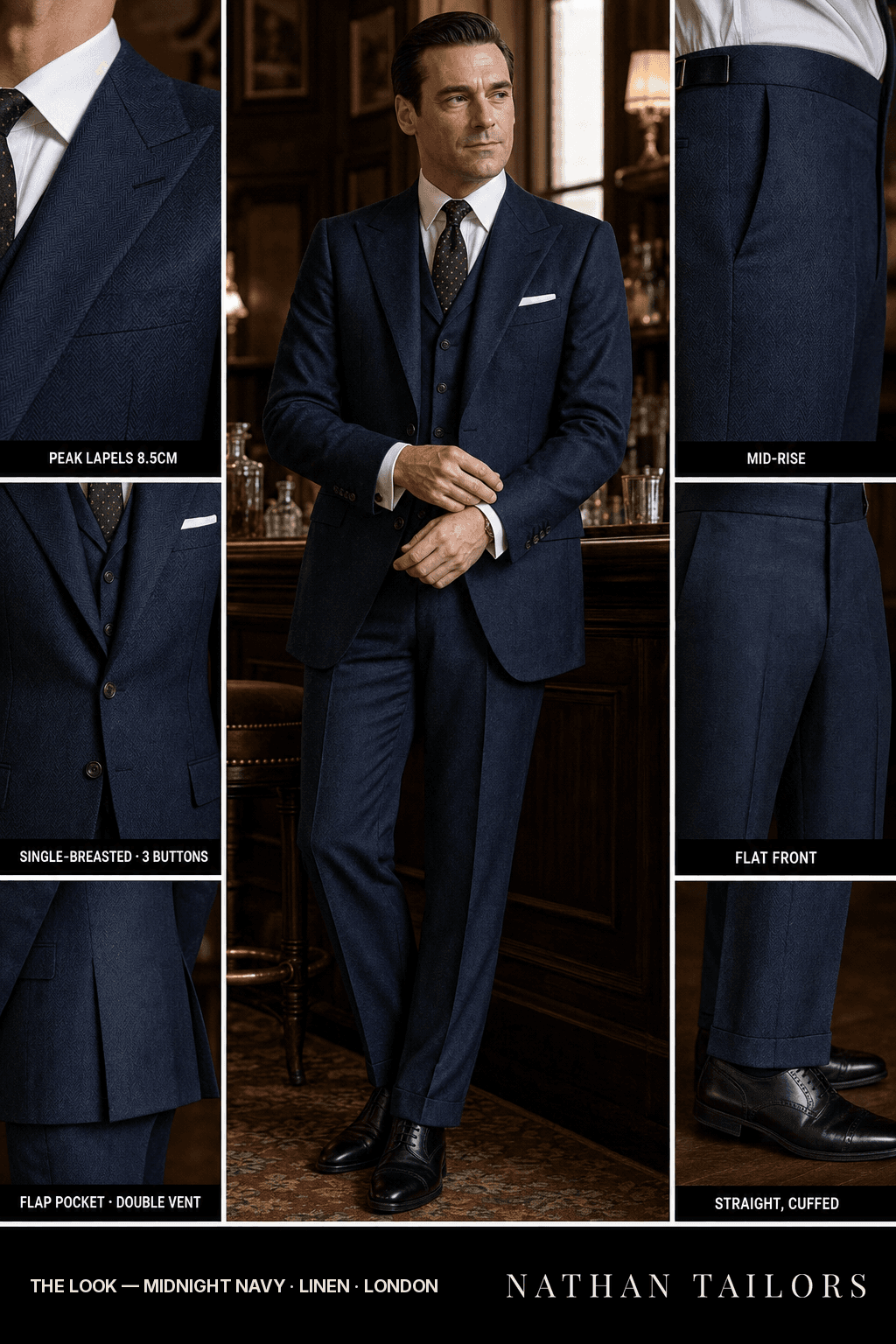
The suit we’d cut for Cotswolds in June
Everything this guide recommends — the cloth, the colour, the construction for June weather — configured as a real tailor brief. One click shows it rendered; one more makes it yours, cut to your measurements from $149.
45-second AI render, no signup to design. Every render is a working tailor brief.
Don't own the right suit for this? That's literally our job.
We're Nathan Tailors, a workshop in Hoi An, Vietnam — we cut bespoke suits and custom tailored suits to your exact measurements in precisely the cloths these briefs call for — real linen, fresco-weave wool, tropical-weight worsted — from $149 to $309, shipped worldwide in 2–3 weeks. Measure yourself at home in ~15 minutes with our guided measurement tool; a master tailor checks every number before cutting. 5.0★ across 500+ reviews.
“Suit arrived! It’s incredible, amazing job thank you.”
“Ordered two suits and four shirts, remotely from the US. They fit great and are great quality! Was able to do everything over WhatsApp for measurements, etc. Will definitely visit if I ever make it to Hoi An. Highly recommend!”
“Being a short and stocky person, I could never truly get clothing that fitted properly. "Off the rack" was never an option... As I opened the small box, I got nervous and wondered if I made a big mistake and basically gambled away a fair amount of money. I ordered a 3 piece suit, 2 shirts and had a pair of leather dress shoes. Everything fitted nicely... the shirts were absolutely PERFECT.”
“Very satisfied; incredibly skillful to make clothes fit so perfectly. Beautiful fabric exactly as promised, very neat — would simply love to order from here again!”
“They did such an amazing job, my suit fits perfectly and the craftsmanship is superb! Linda was a great help and she knows exactly what she is doing. I can't recommend this place enough and I will be getting more suits from them in the future guaranteed!”
“Great place to get perfect suit, they send me to Poland with no problems.”
“WOW! Ordered a suit online with Linda. She contacted me by video call to go through the measuring process and once confirmed measurements again, around 4 weeks later a made to measure suit arrived in the UK. Fitted perfectly and I didn't even visit! Fantastic quality and customer service from Linda. Would definitely recommend!”
“Exceptional experience from start to finish. I ordered a fully custom two-piece double-breasted suit remotely from France, Linda and Jennifer guided me through every step with patience and professionalism. The suit arrived in under 3 weeks and the result is flawless: fabric, cut, lining, silhouette, everything is perfect. Nathan Tailors delivered exactly the vision I had in mind. I will absolutely be ordering again. Highly recommended.”
“This was my first time buying suits online so I was a bit apprehensive. However, the online order form was both easy to use and very thorough, and they did a video call with me to make sure of a couple of measurements that were out of the normal range. Two suits and a shirt arrived here in New Zealand in less than two weeks, are well-made, and fit perfectly. I'm thrilled with the service.”
Cotswolds in June: guest questions
Can I wear linen to a church ceremony in the Cotswolds in June?
Yes—linen or linen‑blend jackets and shirts are fine for Cotswolds churches in June as long as they’re in muted colours and cut smartly; pair them with tailored trousers and a tie so the overall look still reads as a proper suit.
Is a black suit OK for a June countryside wedding, or will it look too somber?
Black is acceptable and quite common for suits at more formal or evening‑leaning weddings, but many local guests prefer navy or mid‑grey, which feel less funereal in daylight countryside settings.
Do I need to wear a tie to a Cotswolds wedding as a guest?
If the invitation doesn’t explicitly say "black tie", a lounge suit is the norm; for church or manor‑house weddings, a tie is still standard, whereas at very relaxed barn or pub‑style receptions some younger guests may lose the tie after the ceremony.
Will other male guests be in morning dress, and do I need it to blend in?
Outside London, morning dress is much less common for guests unless specified; you’ll blend in better in a well‑cut suit in navy or grey and let the groom or wedding party handle any traditional morning dress if they choose it.
How casual can I go—are smart chinos and a blazer acceptable?
Church and manor‑house weddings are rarely casual; even in the countryside, local men usually wear suits with leather shoes, so business‑casual chinos and an untucked shirt would stand out as under‑dressed.
How much should I worry about rain at a June Cotswolds wedding?
Pack a lightweight compact umbrella and choose shoes with some grip; showers and wet paths are common, but weddings are rarely cancelled, so guests just carry on with slightly weather‑savvy outfits.[4]
Keep planning
Sources
- 1. whereandwhen.net/when/europe/england/cotswolds/june/
- 2. ou-et-quand.net/partir/quand/europe/angleterre/cotswolds/mois/juin/
- 3. waar-en-wanneer.nl/when/europa/engeland/cotswolds/juni/
- 4. activeenglandtours.com/stories/cotswolds-weather-what-to-expect-when-visiting/
- 5. timetravella.com/europe/uk/england/cotswolds
- 6. dove-e-quando.it/when/europa/inghilterra-regno-unito/cotswolds/giugno/
- 7. whereandwhen.net/when/europe/england/cotswolds/
- 8. explorethecotswolds.com/best-time-to-visit-the-cotswolds/