Short answer: a sport coat needs eight upper-body measurements — neck, shoulder width, full chest, waist, sleeve length, bicep, armpit and jacket length. Two of them decide whether the garment fits at all: shoulder width and full chest. The other six decide whether it looks finished. You can take all eight at home in about ten minutes with a soft tape and one other person.

Why a sport coat is measured differently from a suit jacket
Only one thing genuinely changes, and it is worth knowing before you pick up the tape.
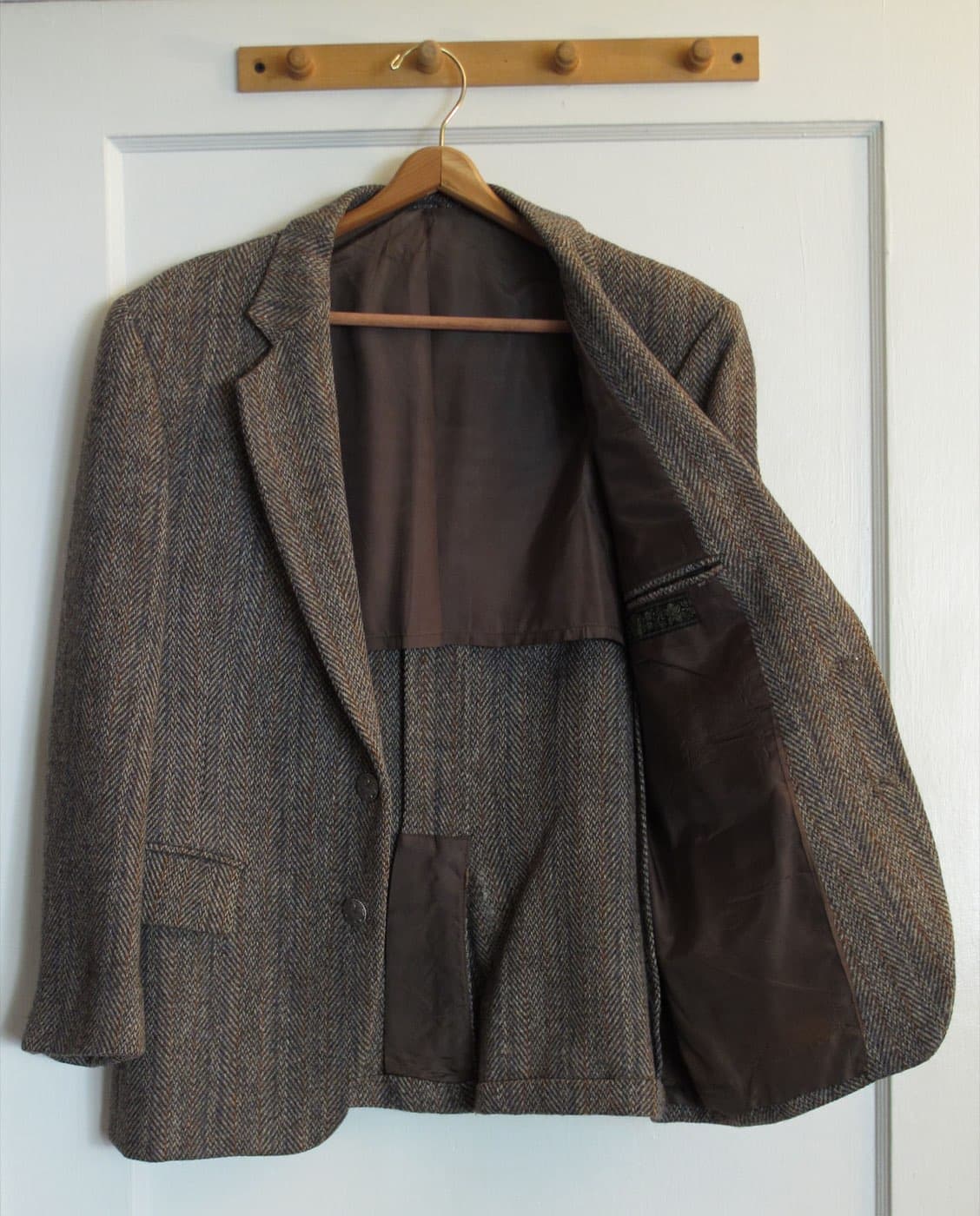
A suit jacket is worn over a shirt. A sport coat is a standalone garment — that is the actual difference between the three — and it gets worn over a shirt, a fine-gauge knit, or a jumper, depending on the season. So the chest measurement wants a little more room in it than a suit jacket would take.
That is the whole adjustment. Everything else is measured identically. If a guide tells you a sport coat needs a completely separate measurement set, it is padding.
What you need before you start
- A soft tape measure. Not a builder's steel tape — it will not follow the curve of your body and every number will come out short.
- Another person. Shoulder width and jacket length are close to impossible to take accurately on yourself. The rest you can manage alone.
- A close-fitting shirt, not a jumper. Measure over a normal shirt. Bulk under the tape is the single most common reason a remote order comes back too big.
- Shoes off, standing relaxed. Do not hold your breath, do not stand at attention, do not pull your stomach in. You will not be doing any of those things while wearing the jacket.
The eight measurements
These are the exact eight our own guided measuring app asks for, in the order it asks for them. The full app takes thirteen for a man — the other five are trouser measurements — and fifteen for a woman, which adds two bust measurements. For a jacket alone, these eight are the set.
1. Neck circumference
Measure around the base of your neck where your collar would sit. Slip one or two fingers flat between the tape and your neck and read the number with them still in — that is your collar comfort room.
Most men land between 35 and 50 cm. This one matters less for the jacket than for a shirt, but it sets where the collar of the coat sits against your neck. Full neck guide →
2. Shoulder width
Measure across the back, from the bony corner where one shoulder meets the arm to the same point on the other side. Let the tape rest on your shoulders and follow their natural line, rising over the base of your neck — the same path a jacket shoulder seam takes.
This is the one that cannot be fixed later. A jacket's shoulder is built around a structured seam; widening or narrowing it means dismantling the top of the garment, which is why tailors quote so much to do it. Typical range is 40 to 56 cm. If you take only one measurement carefully, take this one. Full shoulder guide →

3. Full chest
Stand relaxed, arms at your sides, breathing normally. Wrap the tape around the fullest part of your chest, level all the way around — ask your helper to check it is not drooping at the back, which is the usual error. Pull it snug, then slip one or two flat fingers under the tape (two if you are broad-chested or active) and read the number with them still in.
Typical range is 85 to 125 cm. Together with the shoulder, this is what the pattern is drafted from. Full chest guide →
4. Waist circumference
Measure around your natural waistline — about 3 cm above your belly button, not where your trousers sit. Keep the tape snug but not tight, parallel to the floor. Do not add finger spacing to this one.
The waist is what gives a sport coat its shape through the middle. Skip it or guess it and you get a garment that hangs straight down like a box. Full waist guide →
5. Sleeve length
Measure from the shoulder seam down to the wrist bone, pivoting the tape around the elbow rather than running it straight down a hanging arm. Stop at the wrist bone. Then add 3 cm — men add 3 cm, women and elderly wearers add 4.5 cm.
That allowance is not padding, it is what leaves a half-inch of shirt cuff showing when your arms are at your side. Typical finished range is 55 to 72 cm. Full sleeve guide →

6. Bicep circumference
Measure around the fullest part of your upper arm with the arm relaxed at your side — not flexed. Pull the tape snug, slip one or two flat fingers under it, read with them in. Typical range 26 to 48 cm.
This is the measurement most self-measurers skip, and it is why so many off-the-rack jackets feel like they are gripping the arm. Full bicep guide →
7. Armpit circumference
Measure the circumference around the armpit itself. Snug, one or two fingers under, read with them in. Typical range 38 to 58 cm.
This sets the armhole. A high, clean armhole is the single biggest reason a tailored jacket lets you raise your arm without the whole coat lifting off your shoulders — and it is invisible in a photograph, which is why mass-market jackets cut it low and loose.
8. Jacket length
Measure from the base of your neck, where the collar sits, straight down to where you want the jacket to end, keeping the tape against your body. Typically this lands about 14 to 20 cm below where you wear your trousers. Typical range 60 to 82 cm.
Sport coats are often cut marginally shorter than suit jackets, but this is genuinely a preference rather than a rule — it is the one number on this list where your own taste is the correct authority. Full jacket length guide →
The two that actually decide it
If you are short on time or patience, understand the hierarchy:
- Shoulder width and full chest determine whether the jacket fits. They are structural. Getting them wrong produces a garment no alteration will rescue, because the fix means rebuilding the parts of a jacket that are hardest to rebuild.
- Waist, sleeve, bicep, armpit, neck and length determine whether it looks finished. All six sit in areas a competent local tailor can adjust afterwards, provided the cloth was cut with seam allowance.
So spend your care on the first two and take the other six carefully but without agonising.
Four mistakes that produce a wrong jacket
- Measuring over a jumper. Adds three to five centimetres to the chest and produces a jacket you swim in. Measure over a shirt.
- Pulling the tape tight. A tape you can barely slide a finger under gives a number smaller than your body. The finger check exists precisely to stop this.
- Measuring a jacket you already own instead of yourself. Tempting, and it produces a copy of a garment that may not have fitted in the first place — including all of its errors.
- Holding your breath or standing to attention. You will wear the coat while breathing and slouching slightly. Measure the body that will wear it.
What a tailor does with the numbers

Your eight numbers are drafted into an individual paper pattern, and the cloth is cut from that pattern. This is why measuring matters more in custom tailoring than in buying off a rack: there is no size in between to fall back on. The numbers are the garment.
It is also why any tailor worth ordering from checks your numbers rather than simply cutting to them. At Nathan Tailors a master tailor reviews every submission against the photographs before anything is cut, and we come back to you if a number looks wrong for the rest of your proportions — a 120 cm chest with a 40 cm shoulder is a measuring error, not a body, and it should be caught on our side rather than yours.
Measuring yourself for one, remotely
Our guided app walks you through all thirteen men's measurements — the eight above plus five for trousers — on an interactive 3D body, voice-prompted, with photo verification at each step. It takes about twenty minutes, and you keep the file: a reorder cuts to the same pattern without measuring again.
A made-to-measure sport coat or blazer from Hoi An starts at $149 in wool blend, garment only. Before anything ships, we photograph the finished garment with measuring tapes laid across it, so you can compare the numbers against a jacket you already own and ask for changes while it is still in the workshop.
One honest limit: we do not offer a free-remake guarantee. Every garment ships with seam allowances and spare matching cloth so a local tailor can fine-tune it, and that local alteration is at your cost.
Start the guided measurement →
Tradition versus rule
Almost everything above is a rule: a shoulder seam that ends past your shoulder is wrong in London, Naples and New York alike, and no amount of confidence makes it right.
Jacket length is the exception, and it is worth being clear about which is which. The old British convention was a jacket long enough to cover the seat entirely, and it produced the length most people still read as "correct". The shorter cut that has dominated the last fifteen years is a fashion, not a correction — and fashions reverse. If you are having a coat made rather than bought, the length that suits your proportions will outlast whichever way the trend is currently pointing.



_(14780379615).jpg)
