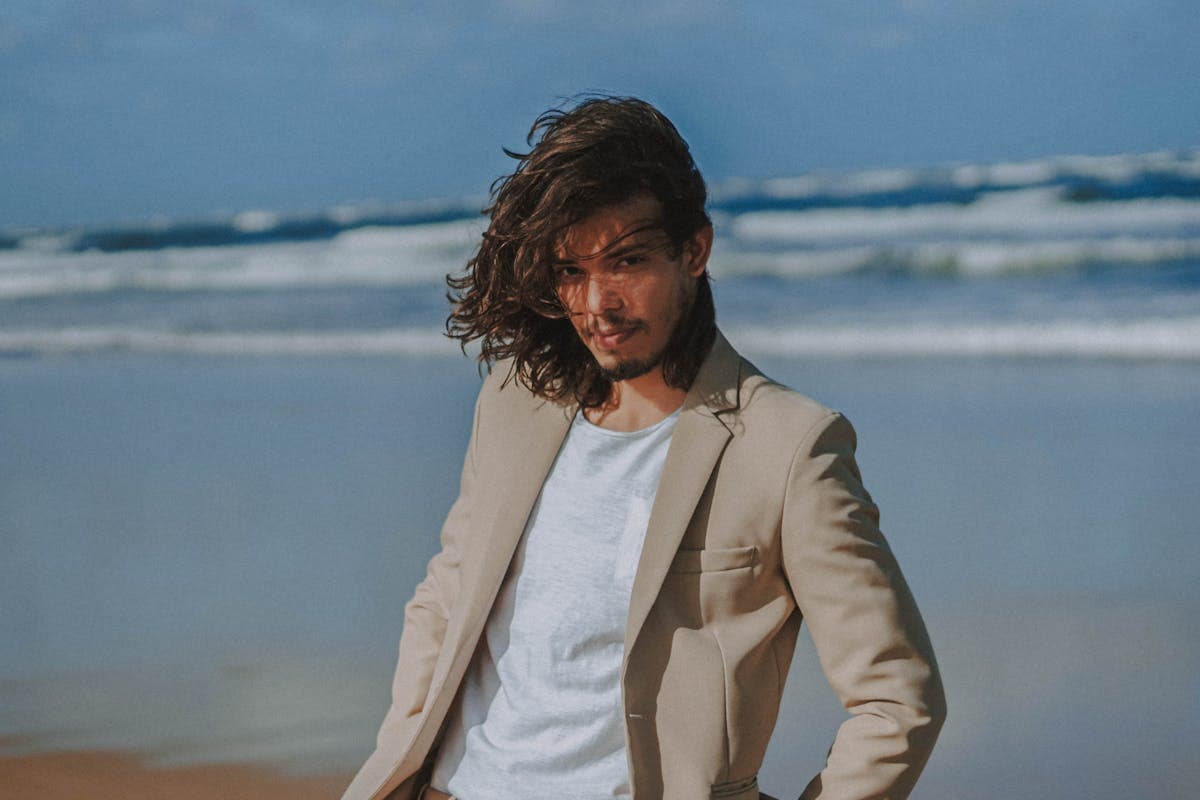
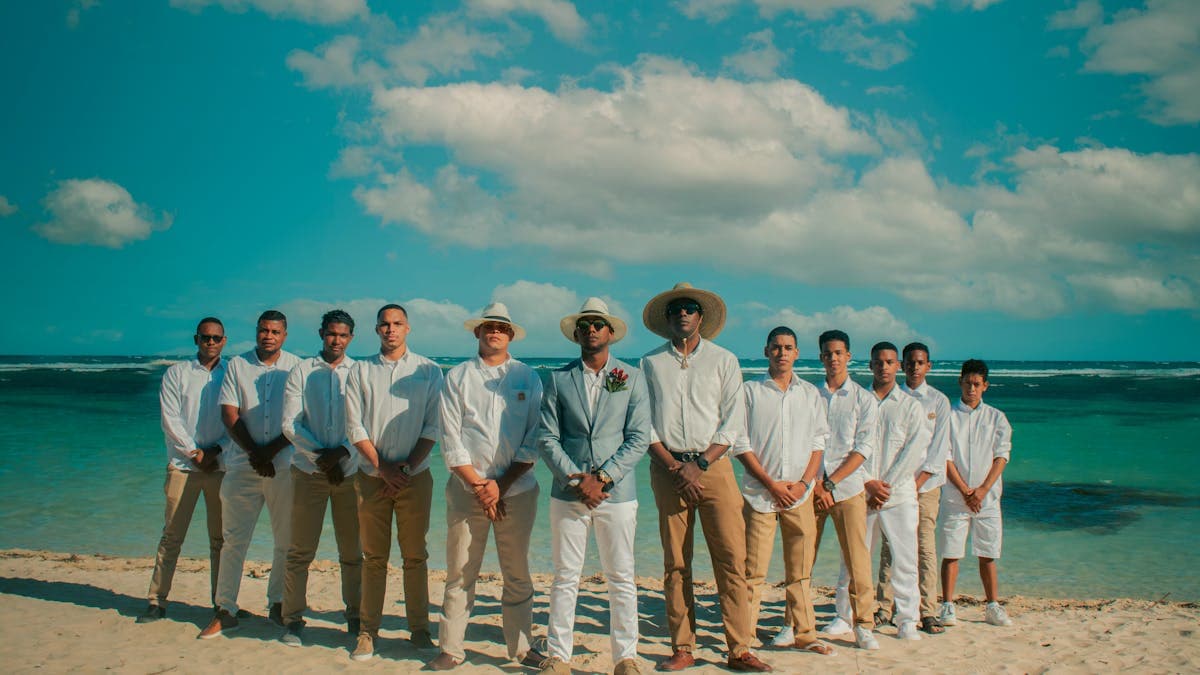
Most beach-wedding-attire articles end at the same sentence. Wear linen. Look relaxed. Then they show a photograph of a man in a slightly oversized cream jacket with a pocket square, and the article is over. Useful, if you have never stood on damp sand at four in the afternoon in Hoi An or Tulum or Malibu and watched your trouser cuff drink the tide line up its own leg.
We dress destination grooms for a living. Most of them never set foot in our shop until forty-eight hours before the rehearsal, which means our linen suits travel in carry-ons, get steamed in unfamiliar hotel bathrooms, and stand for ceremonies on terrain that the off-the-rack industry refuses to acknowledge. Sand is wet. Salt air is corrosive. Sun at the equator is not the sun in Connecticut. Linen is not a single material. Light cream is not the same as oat. And cuffs, if you do not think about them, will betray you.
This is the article we wish we could hand every groom three months out instead of three days out.
Linen weight: the conversation nobody is having
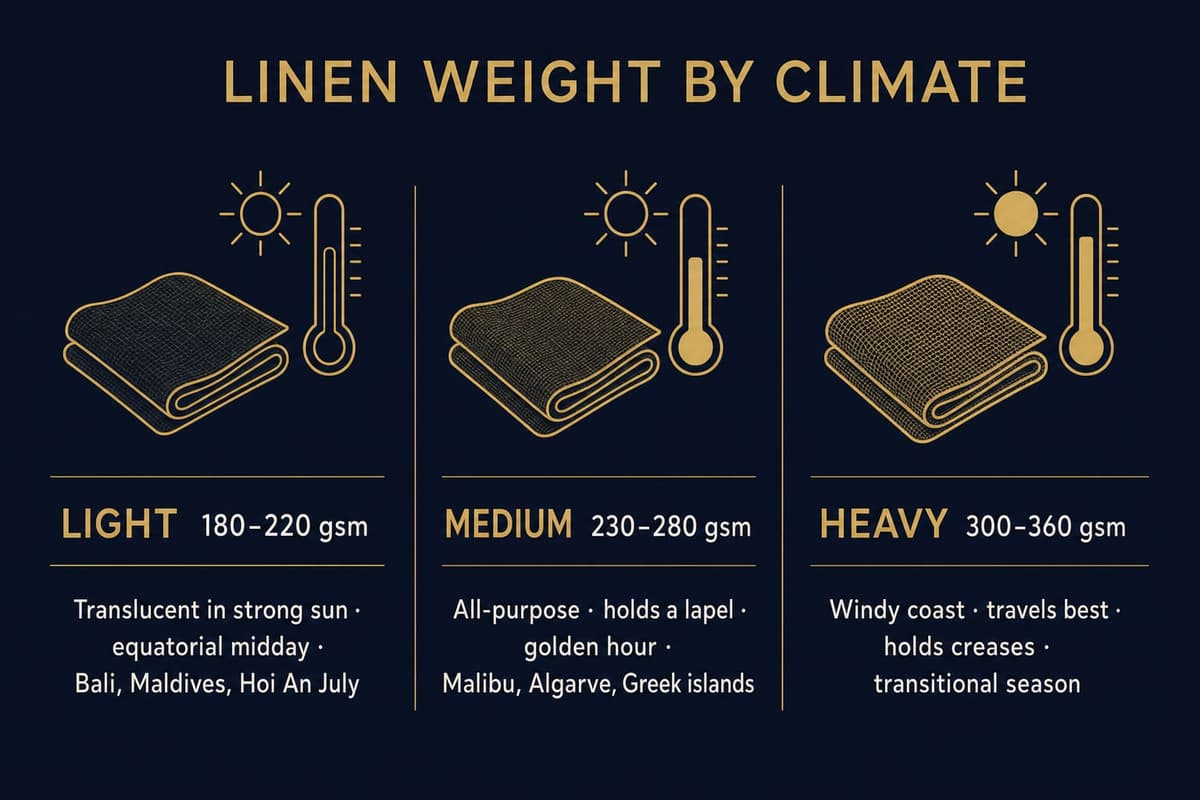
Linen is sold by the gram per square metre. The number on the label, if there is a label at all, is shorthand for how the cloth will behave under heat, under wind, under a long ceremony. Most men buying a beach-wedding suit have no idea this number exists, which is why so many of them turn up in the wrong fabric for the climate they have flown to.
Three weights matter for a beach ceremony.
- Light linen, 180 to 220 gsm. Translucent in strong sun. Almost a shirting weight. Drapes loosely. The right call for an equatorial venue at midday — Bali, the Maldives, Hoi An in July, Tulum dry season. Wear an undershirt; the jacket will betray your skin tone otherwise.
- Medium linen, 230 to 280 gsm. The all-purpose answer. Holds a lapel shape. Photographs as a real suit, not a beach cover-up. Right for late-afternoon or sunset ceremonies in most climates — Malibu, the Algarve, the Greek islands, Cape Cod in August.
- Heavy linen, 300 to 360 gsm. Closer to a year-round suiting weight, with linen's texture and breathability. Right for a windy coastline, a transitional season, or a venue where the ceremony is on the beach but the reception moves inside to air conditioning. Holds creases more cleanly. Travels better.
The mistake a remote groom makes is buying the lightest linen he can find because the wedding is "tropical." Light linen on a windy California beach looks like a hospital gown. Heavy linen on a still afternoon in Phuket looks like a man who lost a bet. Match the weight to the air, not the postcard.
Colours that survive a beach backdrop without disappearing into it
The beach is already running its own colour palette. Sand is warm beige to bone white. Sea is steel blue to turquoise. Sky is pale at noon, gold at sunset. Drop a man dressed head-to-toe in beige into that frame and he becomes a smudge in the photograph. Drop a man in saturated black and he becomes a hole the eye keeps falling into.
The colours that hold their own on sand without fighting it:
- Soft cream and ivory. Reads slightly cooler than the sand, so the silhouette stays legible. Avoid pure stark white — the camera will overexpose either you or the bride, and one of those is a bigger problem than the other.
- Oat and stone. Warmer than cream, with a hint of grey. Photographs beautifully on overcast or golden-hour beaches. Pairs cleanly with most floral palettes.
- Dusty blue and chambray. Echoes the sea without literally matching it. The most reliable colour for a beach groom in our experience. Reads as a real suit even at a loose, unstructured cut.
- Soft sage and seafoam. Modern. Holds up against tropical greenery if the venue has it — palms, banana leaves, vines. Less successful on bare sand.
- Blush and dusty rose. Underused. Reads warmer than skin against the cool blue of the water, which gives the photographer something to work with.
- Sand-and-tan two-piece broken with a colourful linen shirt. The honest workaround if the bride has asked everyone in beige. Lift the look at the shirt instead of the suit.
Save the deep navy and the charcoal for an indoor reception or a city wedding. They photograph as black on a bright beach, which is not the colour anyone wanted.
The trouser-cuff problem nobody warned you about
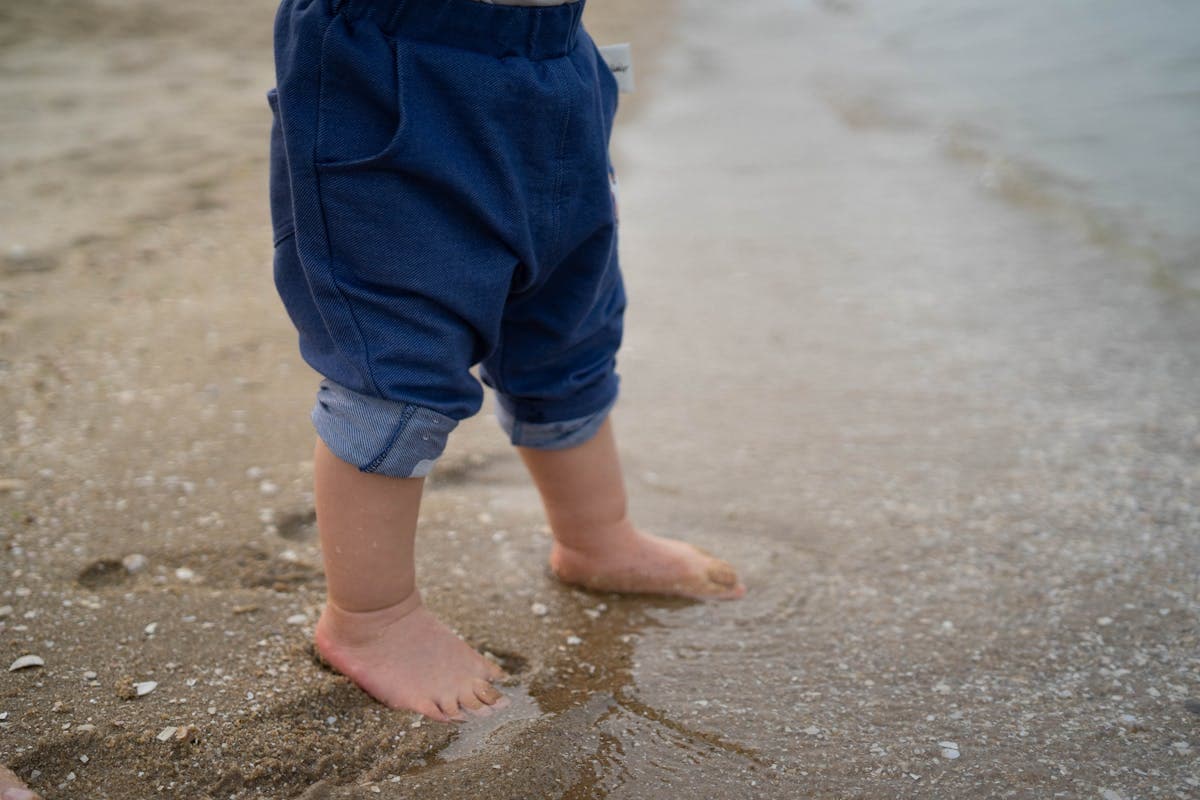
Wet sand wicks up linen. The hem of a linen trouser is, structurally, a rope of long flax fibres standing in a puddle. By the time the ceremony is over, the bottom three or four inches of your trouser leg have darkened by two shades, and they will stay darkened for the rest of the night because the fibres need hours to fully release the moisture.
There are three serious answers to this.
- Cuff the trouser an inch above where you would normally finish. One full break is too long for a beach. A clean half-break or a no-break ankle photograph is what you want. The cuff sits above the wet line and stays its own colour.
- Add a turn-up of one to one and a half inches. A real turn-up, not a hemmed mock-cuff. The fold creates a small pocket of air under the hem that slows wicking. It also weighs the trouser down enough to keep it from blowing wide in beach wind.
- Order one trouser with a finished hem and a second cropped pair to swap into for the ceremony. An indulgent answer, but a real one. We have done this for grooms more often than people would guess. A second trouser in the same fabric is roughly the price of a hotel night and adds a real option to the photographs.
If your wedding is a barefoot ceremony — common in Hoi An, common in the Caribbean — none of this matters for the toes-on-sand part. It still matters for the dance floor afterwards, which is usually wood or stone or wet grass.
Unstructured vs canvassed: the jacket question
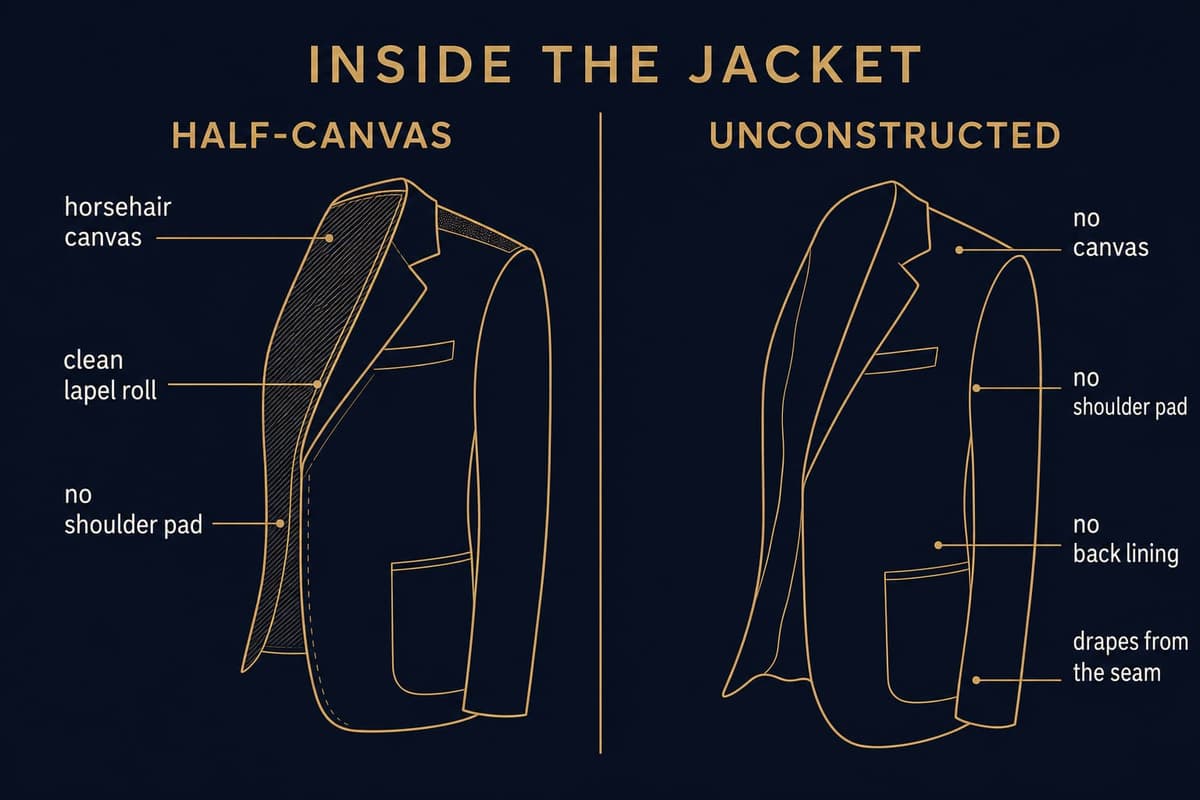
A regular suit jacket is built like a wall. Inside the chest piece sits a layer of horsehair canvas, sometimes a second layer of wool, sometimes glued, sometimes hand-stitched. The structure gives the jacket its shape and helps it hang square on the shoulders. It also traps heat against the chest like a vest.
For a beach ceremony, you want most or all of that structure removed. The fabric we send for destination weddings is almost always one of two builds.
- Half-canvassed jacket with no shoulder pad. Keeps a clean lapel roll and a structured chest, loses the heat trap of a full canvas. Best for medium-weight linen and a real suit silhouette.
- Fully unconstructed jacket — no canvas, no shoulder pad, often no lining in the back. Closer to a soft Neapolitan build. Drapes from the shoulder seam without sitting on it. The body of the jacket moves with you in wind. Right for the lightest linens and the hottest venues.
An unconstructed linen jacket photographs as relaxed because it is relaxed. There is no scaffolding inside trying to hold a shape that the climate is fighting. The wrinkles that form are body wrinkles — at the elbow, behind the knee — and the camera reads them as motion, not as wear.
Shoes that do not sink and do not look like a barefoot apology
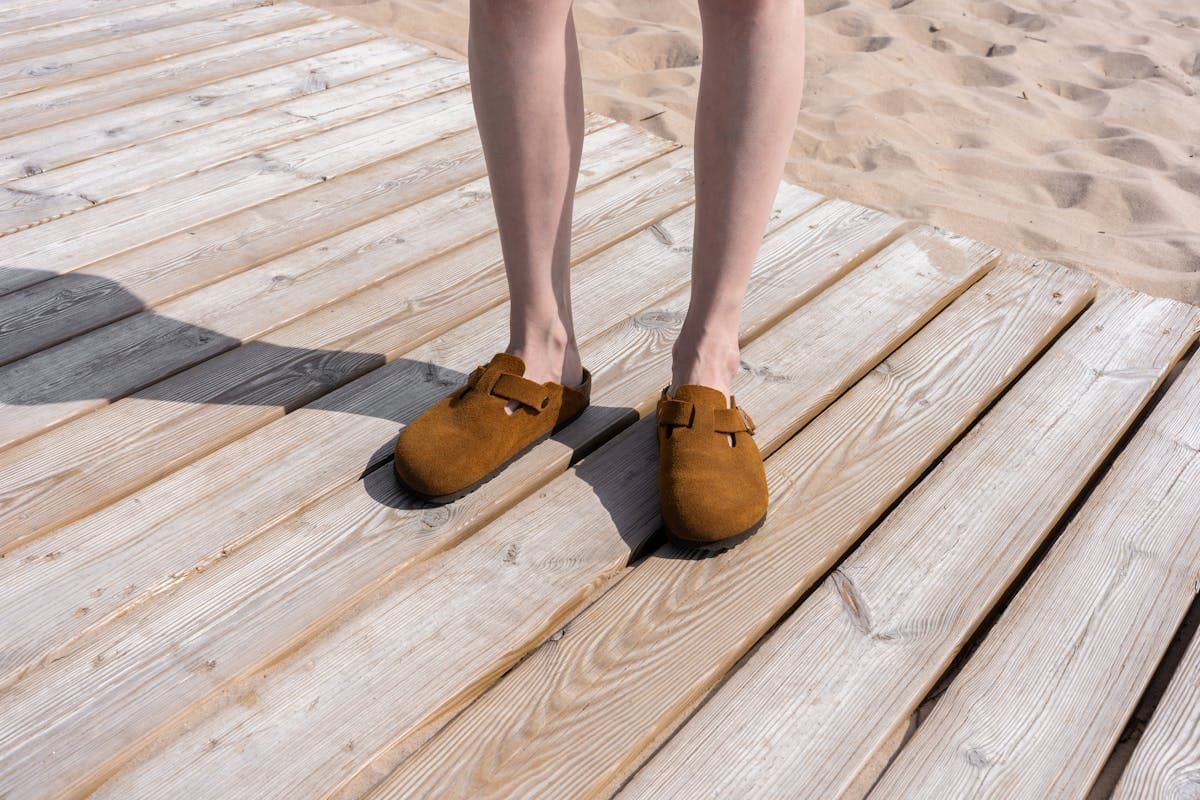
The dress shoe industry is built around hard floors. A beach is not a hard floor. A heeled oxford on dry sand will list you forward like a tipped wine glass; on wet sand it will simply disappear. Stilettos and brogues fail in identical ways.
The shoes that work for a beach groom, ranked from formal to casual:
- A soft suede loafer with a flat leather sole. Espresso, sand, or stone. Worn with no visible sock or with a flesh-tone invisible sock. Photographs as proper.
- A cream or oat espadrille with a tied jute sole. Low-profile, holds the sand, dries quickly. The right call for a fully barefoot-adjacent ceremony where the groom wants to keep something on.
- A leather-soled boat shoe in a rubbed sand or whisky leather. Less formal than the loafer, more grounded than an espadrille. Pairs cleanly with cropped trousers and a turn-up.
- Barefoot for the ceremony itself, with shoes by the dance floor. Shockingly common in Hoi An. The bride does it, the groom does it, the photographer captures it. The shoes go back on for the reception.
A flat-soled shoe redistributes weight wider; a heeled shoe concentrates it under a quarter-inch point. Sand wins every fight against the second one.
Pairing the suit with the gown's fabric
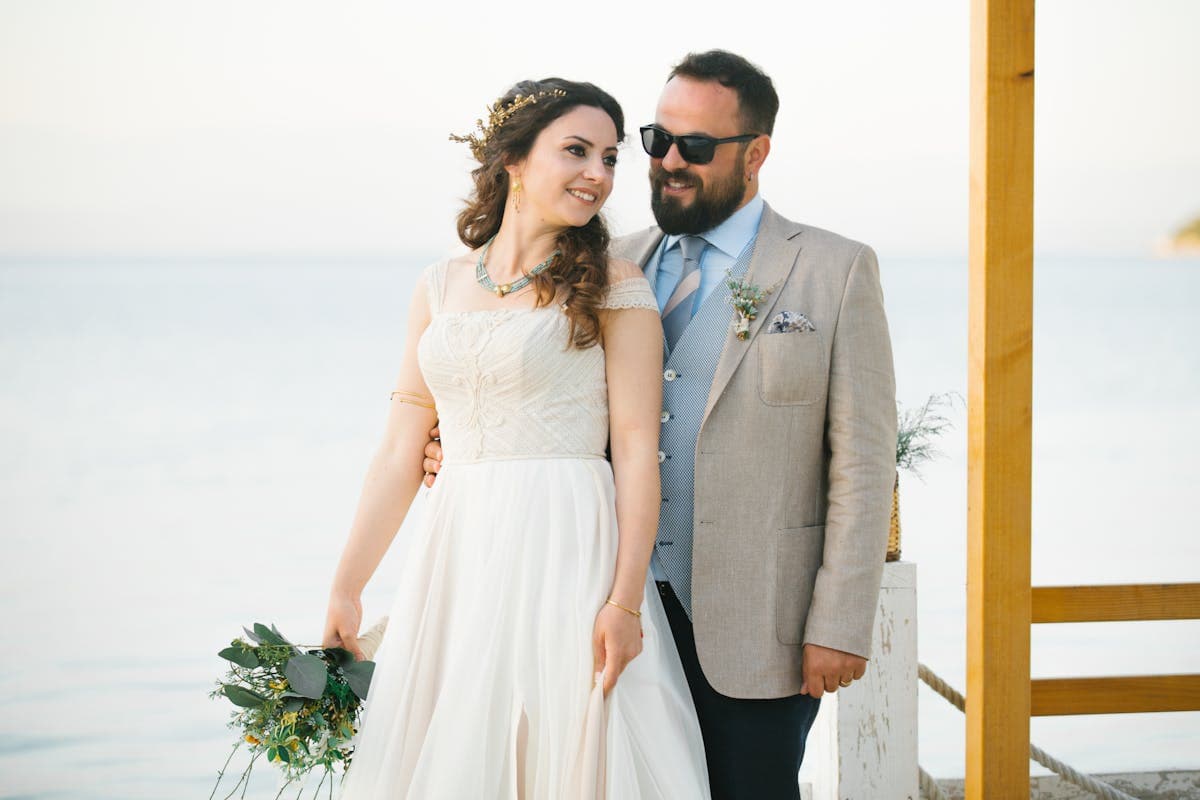
The bride's gown is the colour and texture event of the photograph. Your suit is the second event. The two will be photographed together for the rest of your lives, which is reason enough to spend a sentence thinking about how they pair.
If her gown is a flowing silk crepe or chiffon — which most beach gowns are — your suit should not be a tightly-woven worsted that reads stiff next to her drape. Linen, cotton-linen, or a soft hopsack matches the visual softness of her fabric. If her gown is a structured Mikado or a duchess satin, you can step up to a heavier weight. If she is in a beach-appropriate silk slip, a lightweight linen in a quiet colour will photograph as a complete couple instead of two people in different rooms.
Couples who want to test this before the day arrives can render a beach venue in your palette using the swatch tool we built — drop her gown colour, your suit colour, the linen weight, and the venue light and see how they meet on screen before they meet in person.
Packing a linen suit so it survives the trip
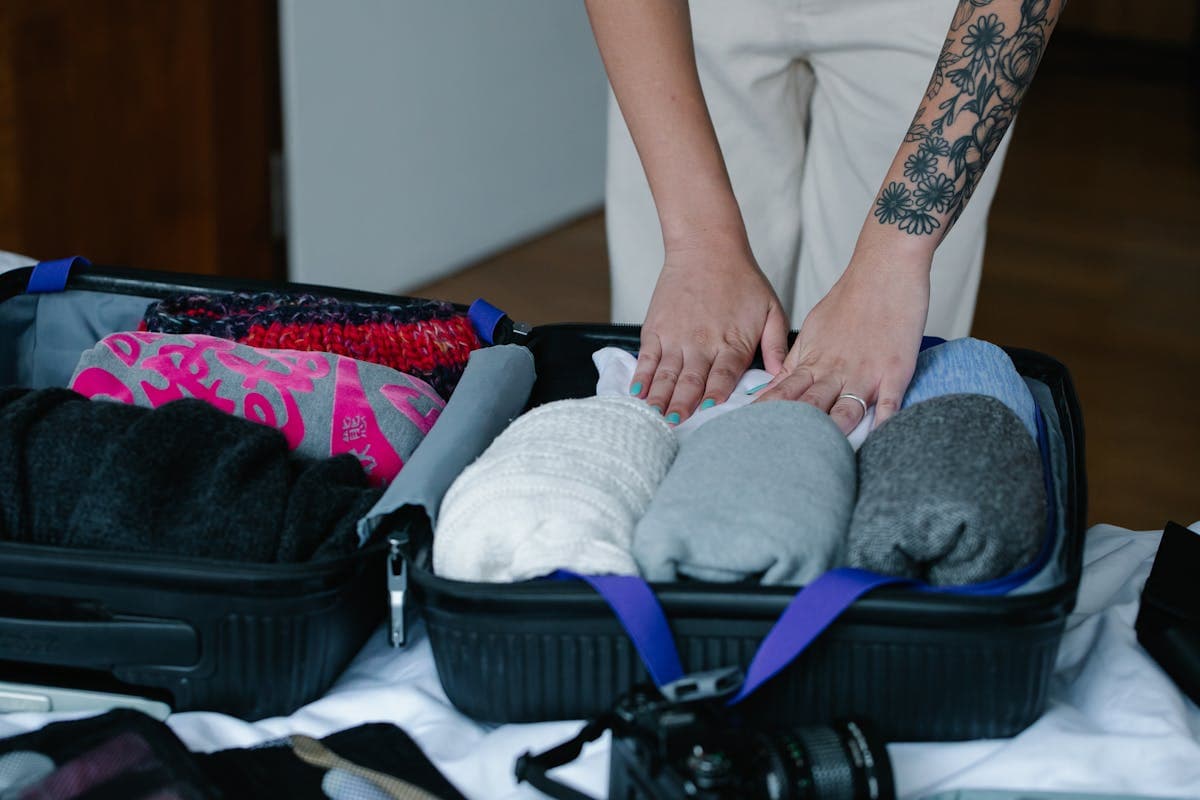
A garment bag in a checked suitcase will arrive looking as though it has been folded inside a shoe. The two methods that work:
- Roll, do not fold. Roll each piece (jacket, trousers, shirt) tightly around a tissue-paper core and slot it into a soft cotton bag. Lay the rolls flat in the suitcase. Wrinkles will form, but they will be parallel and shake out under steam.
- Carry-on garment bag. A real folding garment bag in carry-on dimensions. Hangs in the closet at the destination, releases overnight, photographs cleanly the next morning. Worth the seat-mate inconvenience for a wedding.
The hotel bathroom steam trick is real. Hang the suit on the back of the door, run the shower hot for ten minutes, close the bathroom, leave the suit alone for thirty. Light wrinkles release. Heavy creases need a steamer or a hot iron with a damp cotton press cloth.
For destination grooms working with us out of Hoi An, we have written a longer companion piece — a full guide to linen suits for summer 2026 that goes deeper into the wrinkle-fit relationship and the warm-weather cloth we source from established mill suppliers.
The ceremony, end to end
If you are reading this with a date on the calendar and a venue locked in, the order of decisions is roughly this:
- Climate of the ceremony month. Translate that into a linen weight.
- Light at ceremony hour. Translate that into a colour family — cream and oat for golden hour, dusty blue or sage for midday, blush for cooler light.
- Sand and water proximity. Translate that into trouser length, cuff style, and shoe choice.
- Bride's gown fabric. Translate that into your jacket build — softer fabrics next to softer gowns, structured fabrics with structured gowns.
- Travel logistics. Decide between checked garment bag, carry-on bag, or having the suit shipped to the venue ahead.
If you want to discuss any of these for your specific venue, we offer a one-call destination consultation before any measurements happen — bring the venue, the date, the bride's gown swatches if you have them, and we will tell you which of our linen mills, weights, and builds we would use. You can start with our destination wedding page for the broader process, or message us directly. Linda will probably ask why you are so handsome before the call is over. She does that to everyone.
Hoi An has been a tailoring town for several centuries. We have been doing destination weddings out of it for twenty-five years. The beach is not new to us, and the suit is not new to us, and we would rather get it right with you over a forty-minute conversation than send a beautiful jacket into a climate it cannot survive.
Attending a wedding somewhere unfamiliar? Our destination wedding attire engine researches any place and month -- climate, local customs, and the full men's spec, including every dress code translated to that destination.