The Same Navy Is Not the Same Navy
A groom shows me a phone screenshot. "I want this navy," he says. The image is a Brooklyn rooftop in late May, six o'clock light, the fabric reading almost cobalt. His wedding is the second weekend of November in upstate New York, indoors, hardwood and candlelight. I tell him gently that he can absolutely have the suit. It will simply not look like that photograph.
This is the small, unphotographed truth about wedding suit colour. The shade you pick on a swatch card behaves differently across seasons. Light temperature changes. The fabrics around you change. Your bride's palette, the bridesmaids' shoulders, the colour of the leaves behind you, the warmth or coolness of the venue's wood and stone — all of it pulls on the suit and renames it.
A navy in May, photographed in soft midday sun against pale linen and green hedges, reads light, almost coastal. The same navy in November, beside a bride in ivory satin under tungsten chandeliers, reads inky and grave. Neither is wrong. They are simply two different suits doing two different jobs.
I have outfitted weddings in every month of the year from our atelier in Hoi An — coastal ceremonies in Bali, autumn vineyards in Napa, snow-on-the-ground December in Vermont. Below is the framework I walk grooms through, organised by season, with fabric weight as the second axis. Bring it to whoever is helping you choose, or bring it to us.
Read the Light Before You Read the Colour
Two things govern how a colour photographs on your wedding day, and the swatch card cannot tell you about either of them.
Light temperature. Spring and summer light is cooler at the edges and warmer at the centre — long mornings and golden hours. Autumn light is golden almost all day; the sun sits lower, so even noon photographs warmer than May noon. Winter light is short, clean, and often supplemented by tungsten or candle indoors, which dumps orange across everything.
Fabric weight. Cloth weight is measured in grams per metre or ounces per yard. A 7-ounce tropical wool is not just lighter to wear than a 12-ounce flannel — it reflects light differently, drapes differently, and reads differently in a photograph. Lightweight cloth tends to look brighter and slightly chalkier in colour; heavy cloth eats light and looks deeper, more saturated.
Match those two against your season and the suit suddenly makes sense.
Spring Weddings (March to Early June)
Spring is forgiving. Light is balanced, gardens and orchards do most of the work, and the palette wants to feel optimistic without being costume-y. The suit should look like it belongs at a long lunch.
Best colours
- Mid-blue and French blue. Lighter than navy, holds its character without going chalky. Pairs cleanly with ivory and blush.
- Sage and olive. Not loud. Reads as "I am a person who knows the season." Lovely against tulips, dogwood, peonies.
- Beige and tan. The classic spring move. Wool-silk in stone or bone reads expensive, never beachy.
- Soft grey. A medium grey in a lightweight wool is the most underrated spring suit colour.
Fabric weight
Aim for 7 to 9 ounces. Wool-silk blends are perfect — they catch the light without shouting. Avoid heavy worsteds; they look out of season in photographs.
Summer Weddings (Late June to Early September)
Summer is where most grooms make the most expensive mistake of their wedding wardrobe: they buy a heavy-cloth navy or charcoal because the shop sold it to them in February, and they sweat through every photograph. The fix is not a different colour. It is a different cloth.
Best colours
- Light navy and powder blue. Light navy in linen-wool reads coastal and clean.
- Stone, sand, and warm beige. Linen blends or pure linen, ideally undyed-looking. Photographs beautifully against ocean, sand, and palm.
- Off-white and cream. For confident grooms. Cream double-breasted with a navy tie is one of the loveliest summer-wedding looks I have ever cut.
- Soft sage. Holds up under hard sun without going grey.
Fabric weight
6 to 8 ounces. Pure linen, cotton-linen, or wool-linen blends. The wrinkle is the point — linen that does not wrinkle is not linen. We weave with the wrinkle in mind.
Autumn Weddings (Mid-September to Early November)
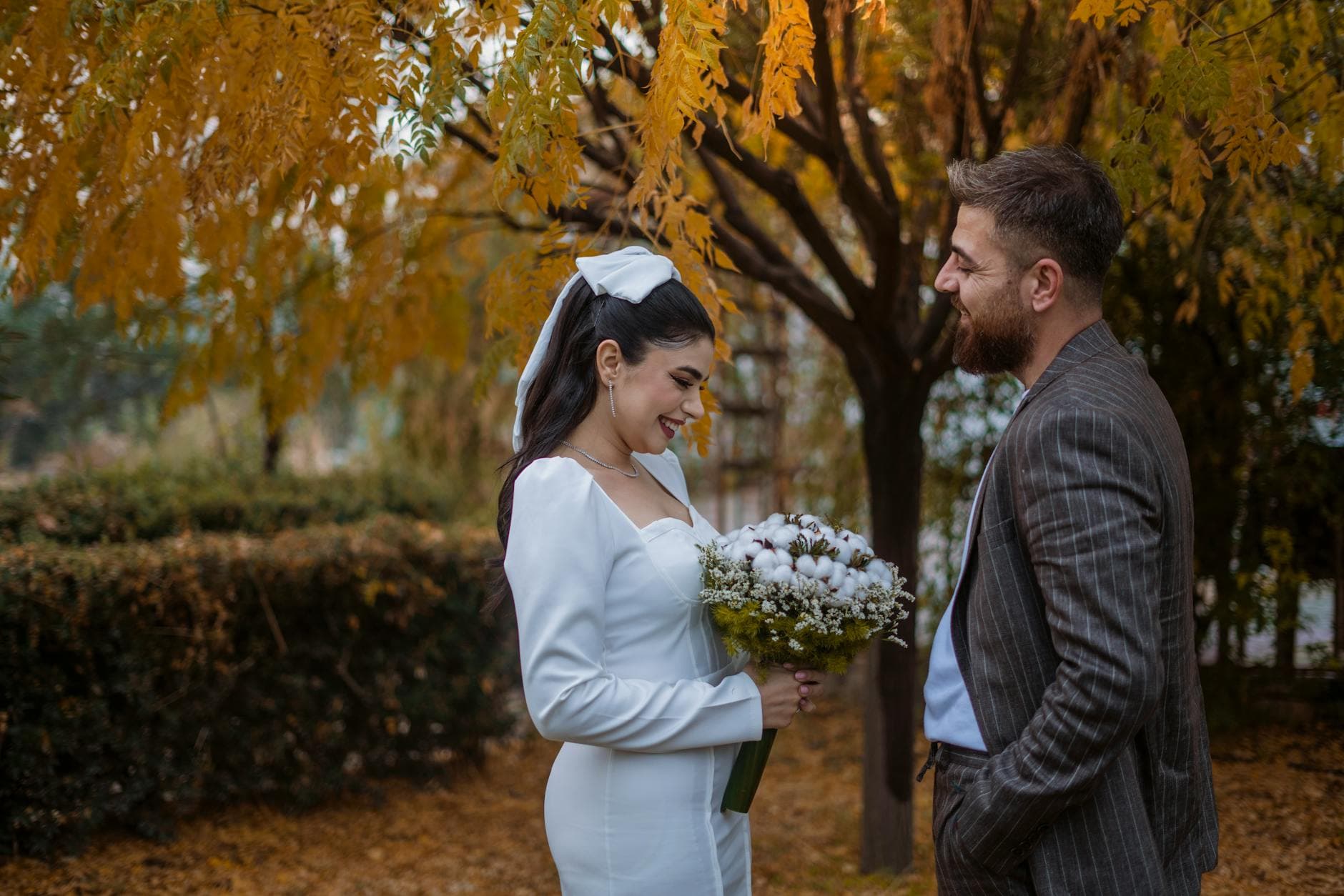
Autumn is the most generous season for grooms. The light is golden almost all day, the palette behind you is doing free art-direction, and almost any tailored colour reads well. This is the one season where deep, rich shades earn their keep.
Best colours
- Burgundy and oxblood. A burgundy three-piece in autumn light is the kind of suit guests still talk about a year later.
- Forest green and bottle green. Reads sophisticated against turning leaves and pumpkin tones.
- Rich navy. Heavier weight, slightly warmer base. This is the navy that reads "deliberate."
- Warm browns — chestnut, tobacco. Underused. Stunning with a cream shirt and gold-toned tie.
- Charcoal. Quiet, formal, photogenic in either daylight or candlelight.
Fabric weight
9 to 11 ounces. Mid-weight worsteds, wool-silk, or a soft tweed for outdoor barn weddings. This is the season tweed actually belongs.
Winter Weddings (Late November to Late February)
Winter weddings happen mostly indoors, mostly under warm artificial light, and the suit needs to hold up to that warmth without looking soft. Fabric does the heavy lifting here.
Best colours
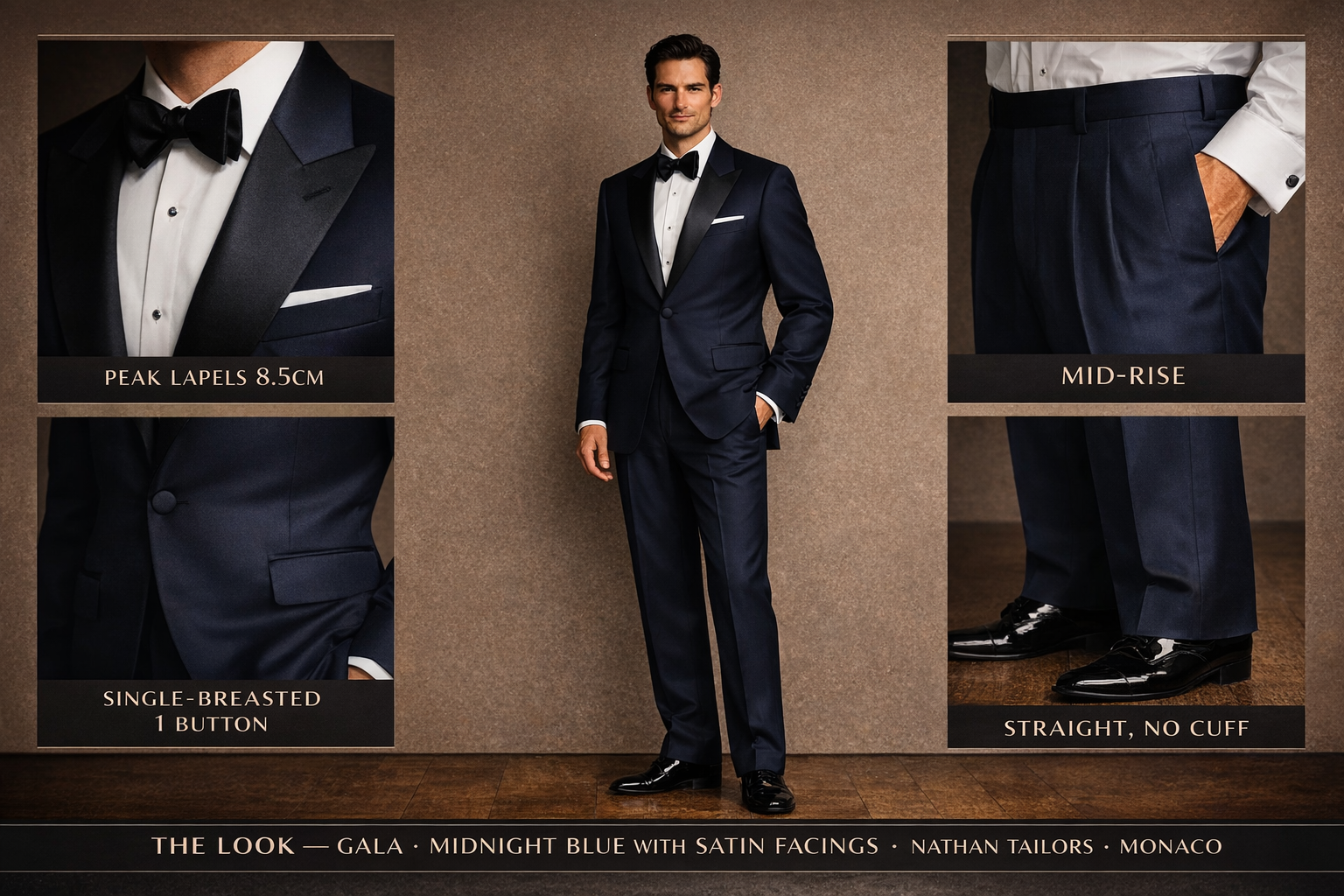
- Midnight navy. Deeper than standard navy, almost black under chandelier light, with the grace not to look like a tuxedo.
- Charcoal and graphite. The most quietly luxurious winter suit colour. Photographs beautifully under tungsten.
- Black. If your wedding is formal and evening — black tie or close to it — this is its season.
- Deep burgundy or hunter green velvet. For evening receptions. Velvet wants candlelight.
- Ivory dinner jacket with black trousers. A grand winter formal move that never looks tired.
Fabric weight
11 to 14 ounces. Flannel, mid-weight worsteds, wool-cashmere blends. Velvet for the reception jacket. The cloth should look like it can stand up to candle smoke and a dance floor.
Fabric × Season Fit Chart
| Fabric | Spring | Summer | Autumn | Winter |
|---|---|---|---|---|
| Pure linen | Good for late spring | Ideal | Avoid | Avoid |
| Wool-linen blend | Ideal | Ideal | Edge of season | No |
| Wool-silk blend | Ideal | Good (light weight) | Ideal | Edge of season |
| Lightweight wool (7-9 oz) | Ideal | Good | Ideal | Edge of season |
| Mid-weight wool (10-11 oz) | Edge of season | No | Ideal | Ideal |
| Flannel | No | No | Ideal | Ideal |
| Tweed | Edge of season (early spring) | No | Ideal | Ideal |
| Velvet | No | No | Edge of season (evening) | Ideal (evening) |
| Wool-cashmere | No | No | Ideal | Ideal |
Venue Lighting Is the Quiet Variable
One more thing the swatch card cannot tell you: the venue. A barn wedding photographed at golden hour is doing different colour work than a cathedral at noon, even on the same calendar day.
- Outdoor, golden hour. Almost any colour reads warm. Burgundy, brown, forest green sing here. Cool greys can go a touch cold.
- Outdoor, midday. True colour. Lights and pales hold up. Deep colours can read flat without dappled shadow to soften them.
- Cathedral or stone interior. Cool, even light, sometimes with stained-glass colour spill. Mid-blue and charcoal photograph beautifully.
- Tungsten or candlelight. Adds warm orange across everything. Navy deepens, browns glow, greys can yellow slightly. Velvet and silk blends earn their fee here.
- White-walled modern venue. Honest light, no flattery. Whatever colour you wear is the colour you get.
If you do not know your venue's lighting, ask the photographer. They will know within five seconds.
How This Translates Into a Suit Order
When a groom comes to us — by appointment in Hoi An, or remotely — we ask three questions before we touch a swatch.
- What month and time of day is the ceremony?
- Is it indoors, outdoors, or both?
- What is the bride wearing — fabric, neckline, colour temperature?
From those three answers, the cloth narrows itself to two or three honest options. Then we look at colour. Then we look at lining and lapel and trouser detail. The suit you end up with is a season-specific suit, not a general-purpose suit pretending to do a wedding job.
If you are coordinating a full wedding party — bride, groom, fathers, groomsmen — and want to see the season-appropriate palette in one place, you can visualise the seasonal palette on our mood-board tool. Drag the colours together and see what reads as a wedding versus a costume party.
What Tailor-Direct Buys You Here
Most retail and made-to-measure operations carry a season-neutral cloth catalogue: a worsted wool that is "fine for any season" and a linen for summer. That is fine for a job interview suit. It is the wrong toolkit for a wedding.
At Nathan Tailors, we hold over 350 fabrics including weights specifically suited to spring, autumn, and winter palettes. Because we work tailor-direct from Hoi An — no Manhattan rent, no department-store markup — we can put a wool-cashmere or a premium worsted into a wedding suit at a price that lets you also dress the rest of the party properly. There is no version of that maths that works through three layers of middlemen.
The One Rule
If you remember nothing else: fabric weight before colour. A perfectly chosen navy in the wrong cloth weight will photograph wrong. A correctly weighted wool in a slightly less perfect colour will look like the suit was made for the day. Get the cloth right, and the colour follows.
Then choose the cloth that matches your bride's fabric, your venue's light, and the leaves outside the window. The photograph will do the rest.