If You Came Here Searching "Vietnam Tailor Scam"
You probably did. The phrase brings a lot of people to this page, and I understand why. You have heard stories — someone got a suit made in 24 hours that fell apart back home, or someone sent money to a shop they never met and never received anything. Those stories exist. The internet repeats them faithfully.
But I live in Hoi An, and I am not going to feed you that narrative. I am a partner in a tailor shop here. I know the hotel owners, the cyclo drivers, the restaurant families, the other tailors. We are a small town and we are very interconnected. The "scam" framing turns ordinary Vietnamese commerce into a moral story, and it is — to put it gently — not the right map.
What I can do instead is give you the honest version. How this district actually works, where the friction points are, what the commission economy really is, and what to ask about so you make a decision you are happy with — whether you order from us, from another Hoi An shop, or not at all.
About Me
I am Jay. I spent over a decade living in the United States — Pennsylvania, New York, Houston. I moved to Hoi An about a year ago because the town pulled me in. I started as a customer at the shop I now help run, ordered enough that the owner and I became friends, and eventually became a partner. So I see this district from two sides: the educated-in-the-West side that read all those scam articles before I came, and the live-here side that watches the actual mechanics up close every day.
Both perspectives matter, and the gap between them is where most of the confusion lives.
How a Small Town Runs on Referrals
Hoi An is small. The Old Town is walkable end-to-end in fifteen minutes. The local economy is dense and interconnected in a way that surprises people from larger cities.
You arrive at your hotel. The desk clerk asks if you have a tailor in mind. If you do not, they recommend one — usually one they actually know, often one a friend or cousin works at, almost always one they have been recommending for years because the customers come back happy.
A cyclo driver picks you up from a museum. As you ride, he mentions a tailor near where you are headed. Same logic — he has a relationship with that shop. He gets a small finder's fee if you order. The shop gets a customer they can serve. You get a tailor.
A restaurant owner overhears you mention tailoring at dinner. She sketches a map to a shop she believes in. Same pattern.
None of this is a scam. It is how a small, integrated Vietnamese town has run for at least a century. The hotel, the driver, the restaurant, the tailor, the shoemaker, the lantern maker — they are all parts of one economy, and they have learned that recommending shops that disappoint customers means fewer guests, fewer tips, fewer regulars. So the recommendations skew, on the whole, toward shops that are actually good.
The Commission Economy — A Western-Educated Perspective

The thing most foreign visitors are uncomfortable about, when they realize how the referrals work, is the commission. The driver gets a percentage. The hotel gets a finder's fee. Sometimes 20%, sometimes 30%, sometimes negligible.
If you grew up in the United States or the United Kingdom or Australia, this can feel uncomfortable at first. We are taught that commissions create distortion, that referrals should be "objective." But step back and the picture shifts.
This is the invisible hand of economics doing what it is supposed to do. Vietnam has grown faster than almost any country in Asia over the last twenty years. A large part of that growth comes from creative incentive structures — small businesses figuring out how to compensate everyone in the chain so the whole community works. The cyclo driver who recommends a tailor is participating in commerce the way commerce has always run in market towns. It is not different in kind from a New York hotel concierge who gets a quiet kickback for booking you into a specific restaurant. It is just more visible here, because the town is small enough that you can see the threads.
The other piece worth saying out loud: the commission you sometimes pay is usually already built into the shop's pricing. The shop knows the cyclo driver expects 20-30%. The price they quote you accounts for it. You are not getting overcharged because of the referral chain — you are getting routed to a shop the local economy has built a network around. The commission funds the network that found you a tailor in the first place.
That is not predatory. That is how Vietnamese small-town commerce works, and the country is wealthier because of it.
The Family Layer Beneath the Commerce
There is a piece of Vietnamese culture that helps the commission economy make sense from the inside, and once you see it you cannot unsee it. Vietnamese people address each other using family pronouns even when they are not related. Anh (older brother). Em (younger sibling). Chị (older sister). Cô (aunt). Chú (uncle). Bác (older uncle). These are not English-style honorifics like "sir" or "madam." They are real relational positions that get assigned in the first thirty seconds of a conversation.
This is why one of the first things a Vietnamese person will ask a new acquaintance is "when were you born?" or "how old are you?" To a Westerner it sounds intrusive. To a Vietnamese speaker it is doing essential work — figuring out whether to call you anh or em, whether you call them chị or chú. The pronoun choice locks the relationship into place. Once it is locked, everything that follows — the prices, the recommendations, the introductions, the favors — happens inside that family-shaped frame.
The commission economy makes much more sense once you see this. When a hotel desk clerk recommends a tailor, the manager and the tailor are almost always already inside the family-pronoun frame with each other. They are anh-em or chị-em or chú-cháu. They are not arms-length businesses contracting at the lowest defensible terms — they are members of an extended community treating each other the way Vietnamese culture treats family. The percentage that passes between them is closer to a holiday gift between cousins than a cold-blooded referral kickback.
The reverse direction matters too, and this is the part Western visitors almost never see until they have lived here for a while. If you, as a customer, introduce someone you know to a Vietnamese business — say you recommend our shop to a friend who flies in — the shop will often want to give you something back. A discount on your next order. A small gift. A meal. Sometimes a real payment if the introduction was for a substantial transaction. From an American consumer-protection lens this looks like a bribe and the reflex is to refuse politely. From inside the Vietnamese frame, it is just the family math doing its work — you contributed to the family by sending a customer; the family contributes back so the balance stays right.
I am educated in the United States — over a decade lived between Pennsylvania, New York and Houston — so I can speak to both sides of this directly. The first time it happened to me, I was uncomfortable. I had introduced a friend visiting from New York to a leather workshop near the river, and a week later the owner pressed an envelope into my hand. I tried to give it back. He looked at me as though I had insulted his mother. By the third or fourth time, I understood. Receiving the gesture is itself a form of belonging. Refusing it keeps you outside the family.
So when you arrive in Hoi An and a cyclo driver mentions a tailor, you are watching this entire system in operation. The driver is inside the family with that tailor. He is sending you toward someone whose work he trusts. The small payment he receives is the gesture-of-belonging that keeps the family math balanced. You can engage with this system or you can opt out — both are completely fine — but it is genuinely not a scam. It is how an interconnected Vietnamese town has run for centuries, and it is the same logic that runs every small Vietnamese economy, from Hoi An to Hội An to Hà Nội.
About Fast Turnaround
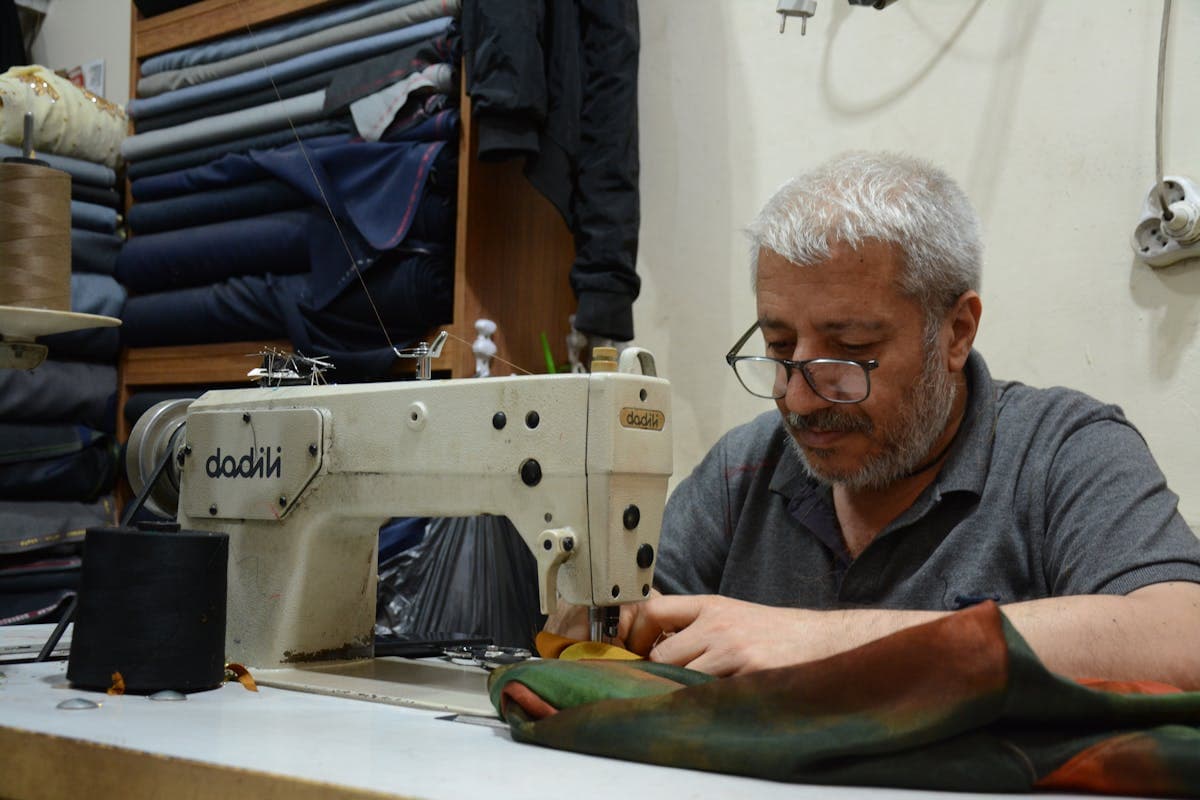
You will hear that "any Hoi An tailor offering a suit in 24 hours is a scam." I want to gently correct that, because we ourselves can produce a suit in roughly 24 hours when the conditions are right, and so can a lot of other shops in this town.
What makes fast turnaround possible:
- Pre-locked measurements. If your numbers are already in our system from a prior order, we skip the longest step. The pattern is already drafted; the cut starts immediately.
- Strong workshop capacity. A shop with several full-time tailors can parallelize a single build — one person on the trousers, one on the jacket shell, one on lining and finishing.
- Honest fabric availability. If the fabric you picked is in stock and does not need to be ordered from a wholesaler, you skip another day or two.
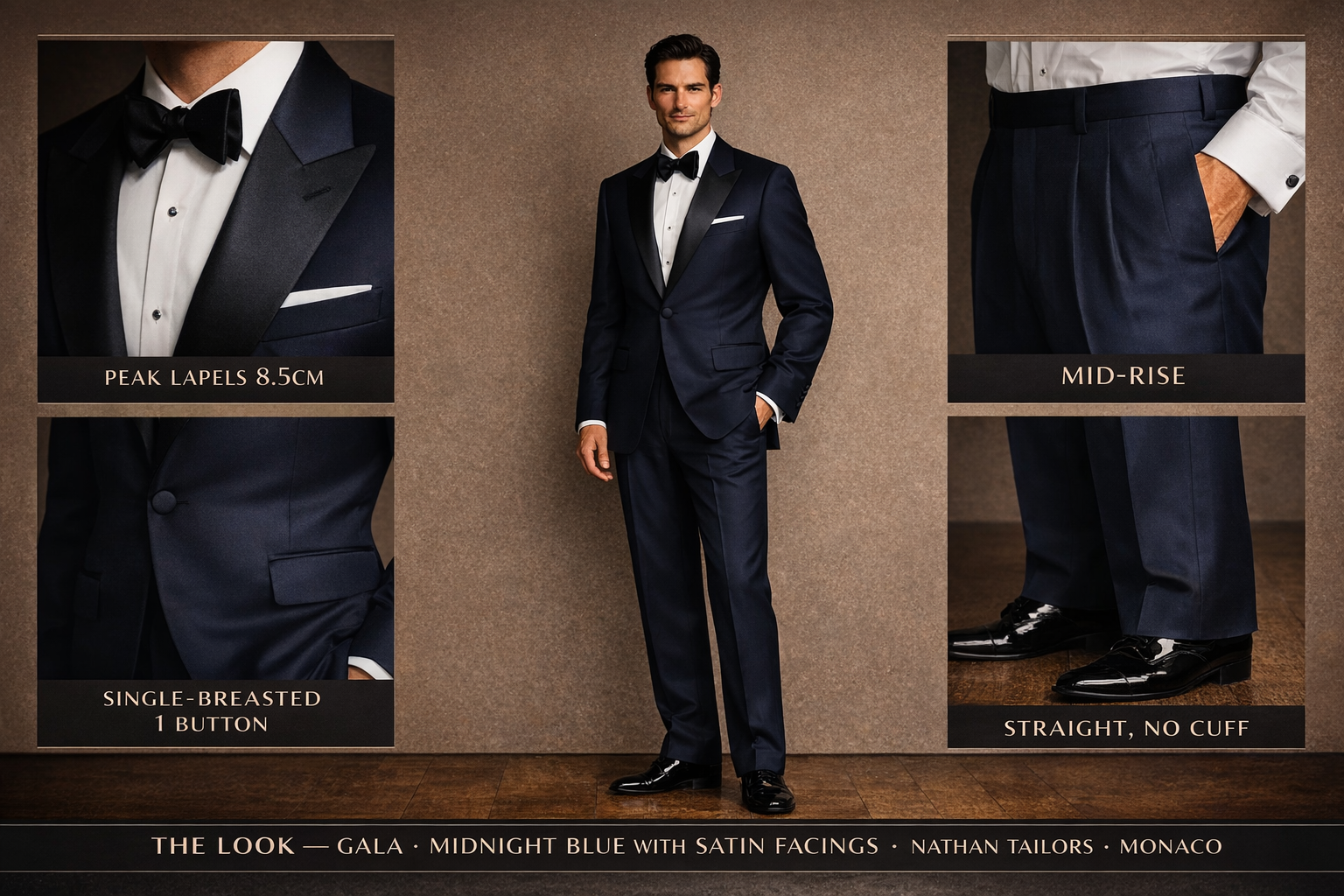
- A simple build. A two-piece notch-lapel suit is faster than a three-piece peak-lapel with surgeon cuffs and hand-rolled buttonholes.
None of that is corner-cutting. It is Hoi An's actual operational capability — a town with hundreds of working tailors, decades of supply-chain relationships, and a culture of producing on-demand because the customer is leaving soon.
What does fall apart? Not "fast." What falls apart is fast combined with fused construction instead of canvassed, polyester-blend fabric quietly substituted at the cut, no fitting cycle at all. A 24-hour suit can be a great suit if the shop is set up for it. The question is not how fast — it is what is inside the jacket.
The Honest Fabric Story
I am going to be direct about this because I should have been earlier.
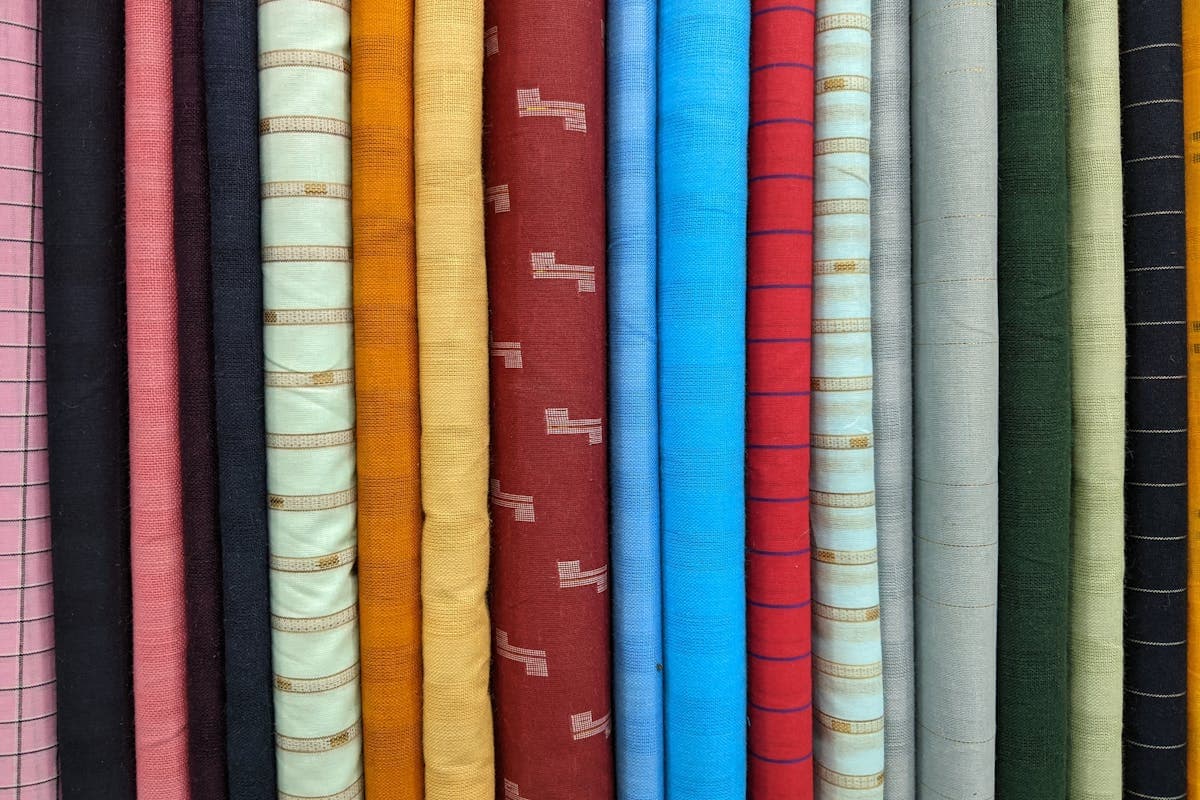
I do not know the exact mill of origin of every bolt in our library. Most Hoi An tailors do not. Our cloth comes through established fabric brokers, mostly serving the broader Asian and European mid-tier tailoring trade. Some of it probably did originate in well-known European mills. Some is from China. Some is from blended supply chains where even the wholesalers cannot tell us a single source.
That is the honest picture. Names of specific Italian mills get repeated in Hoi An a lot because they sell well to foreign visitors who read about them online. We have decided not to play that game, because we cannot prove it. What we will commit to:
- We describe the cloth as what it is. A wool blend is sold as a wool blend, not dressed up as something it isn't. You can feel every swatch before we cut, and ask us the fiber content of any bolt.
- You can pick the cloth honestly. Our pricing is one named fabric at a time — Wool Blend, Wool Silk Blend, Wool Cashmere Blend, Premium Wool Blend, Merino Wool, Cotton/Linen, Tweed, and so on. You see and feel the swatch before we cut anything. The full per-fabric menu is at /en/menu.
- The construction is what we say it is. Half-canvas chest, hand-finished buttonholes, working sleeve cuffs — these are observable, verifiable, and they are what actually determines whether the suit holds up.
If you want a suit because a bolt has a famous European mill's selvedge stamped on it, you should buy from a tailor who can prove it bolt-to-bolt — which means buying in Europe or from a very specific kind of bespoke house. If you want a real custom-cut suit, half-canvas, hand-finished, made by people with thirty years of pattern-cutting experience, at a price the Western market does not match — that is what Hoi An, including us, does well.
What Actually Matters: Construction, Not Origin Myths
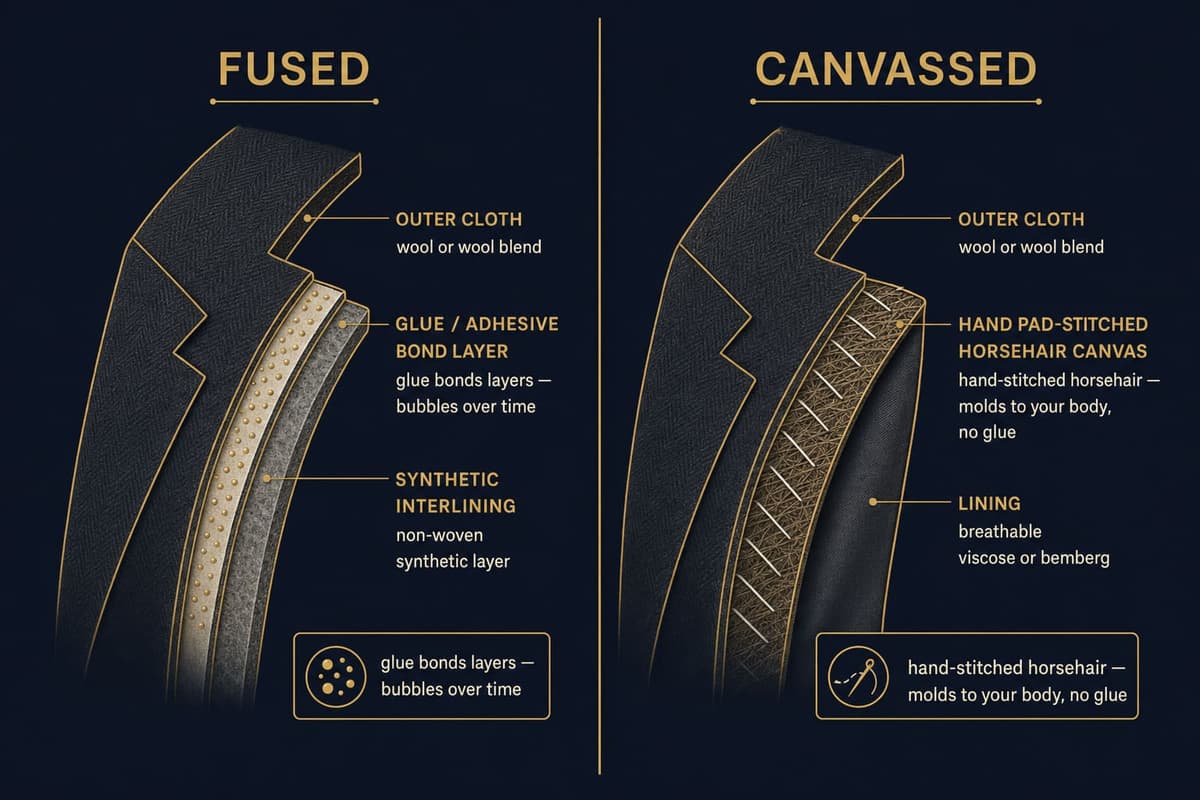
The single biggest variable in whether a Hoi An suit holds up over years is not where the fabric came from. It is the construction inside the jacket. Three things to know:
Fused vs. Canvassed
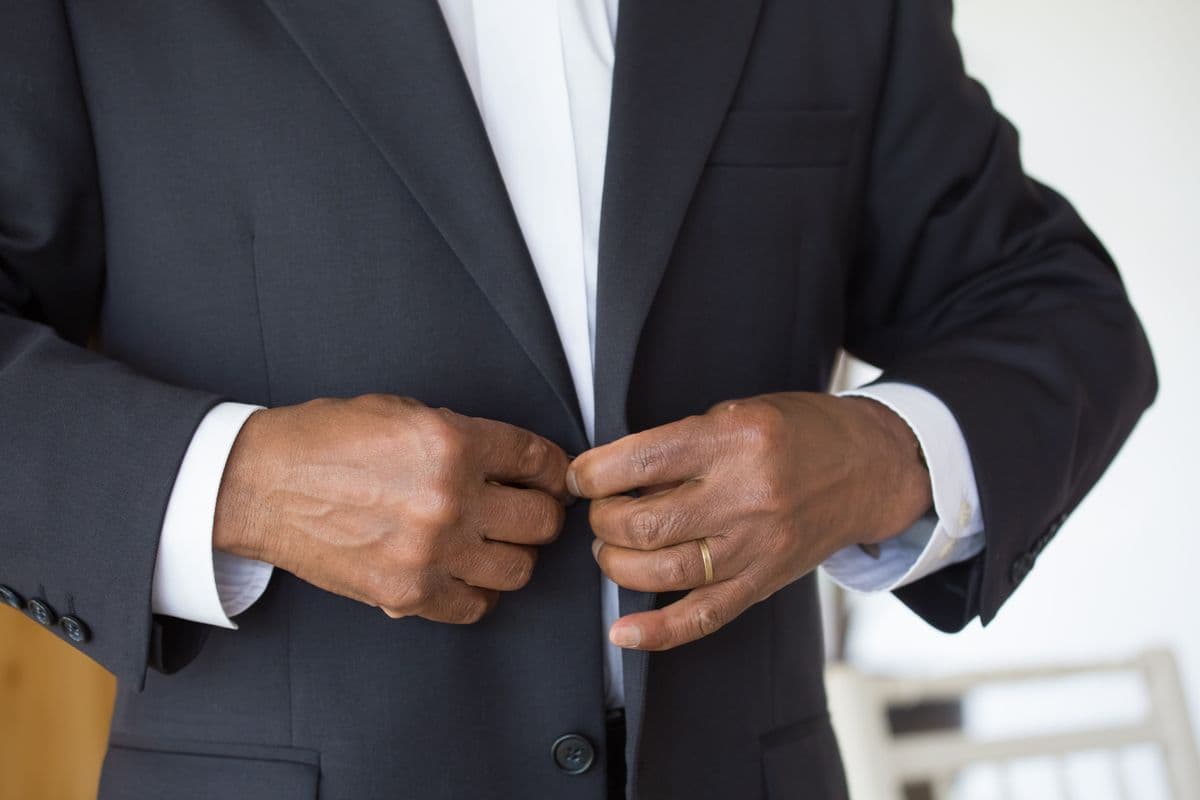
A fused jacket uses glue to bond the outer fabric to a synthetic interlining. It is fast and cheap to produce. Over years and dry cleanings the glue breaks down and the lapels bubble — that telltale puckered look you sometimes see on older inexpensive suits.
A canvassed jacket uses a horsehair canvas hand-stitched between the outer cloth and the lining. There is no glue. Over years the jacket molds to your body. The lapels hold their roll. This is what every serious Hoi An shop builds; it is what we build by default.
If you visit a shop and they cannot tell you which approach they use, walk to another shop. It is the single most useful question to ask.
The Fitting Cycle
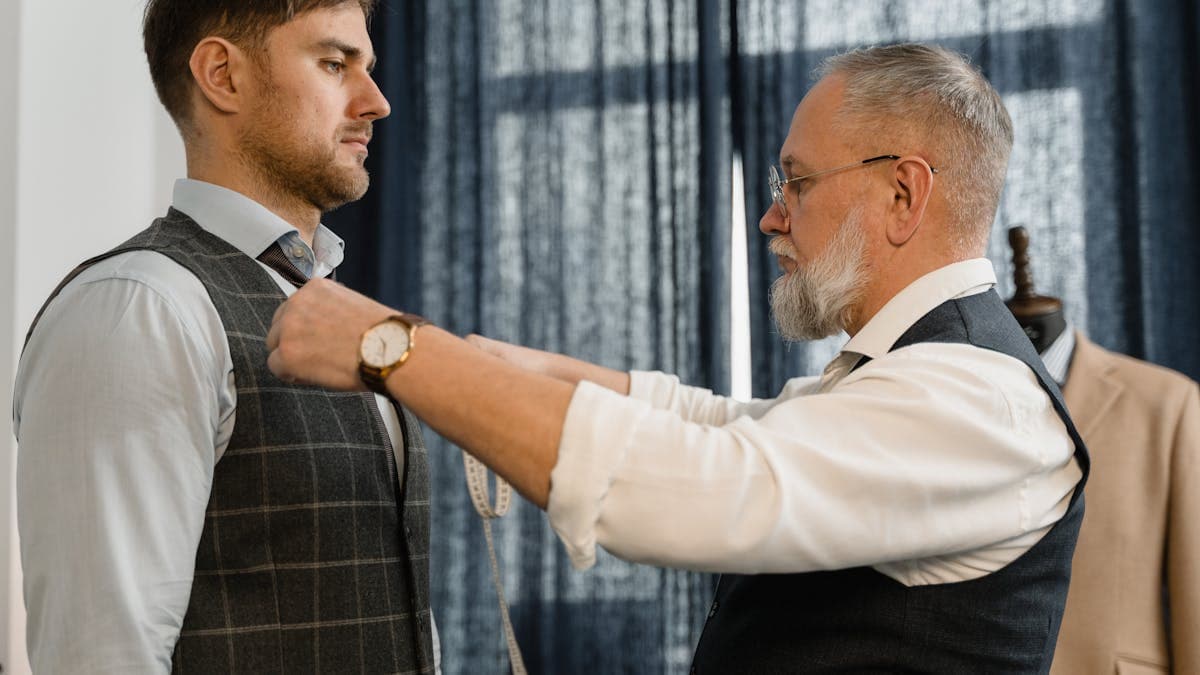
A 24-hour turnaround can still include one fitting if the shop is set up for it. Most multi-day builds include two fittings. The fitting cycle is where shoulder, chest, lapel and trouser-rise corrections get marked in chalk and adjusted. Skipping the fitting is what produces a suit that looks fine in the mirror at the shop and fits poorly six weeks later. A good shop will offer at least one fitting before the suit leaves their hands.
Internal Finishing
Look inside the jacket. Are the internal seams clean and bound, or raw? Is the lining stitched precisely or with visible puckering? Is the canvas pad-stitched into the lapel by hand or fused in flat? These are the indicators of a serious workshop.
Ordering Remotely

The remote question is actually simpler than the in-person one, because the friction points (rushing, language gaps, "is this fabric what I picked") are mostly removed by the workflow.
A reasonable remote process looks like this:
- A real conversation up front. WhatsApp, WhatsApp, email — pick the channel. The shop should walk through what you want, look at reference photos, suggest fabric, and quote a price. No high-pressure close.
- Guided self-measurement. Either a video call walkthrough or a step-by-step app. You measure yourself; they verify the numbers against body-proportion ratios before cutting. If your numbers do not add up, they call you and re-measure.
- Written spec confirmation. Fabric, lapel, button stance, vent style, lining colour, monogram if any — confirmed in writing before anyone touches scissors.
- Production with progress visibility. Photos of the cut shell, photos of the basted fitting, photos of the final pressing. About three to four weeks total from your first message to receiving the garment.
- A fit pathway. If something is off on arrival, how the shop responds is the part of the experience that matters. Ask what their process is before you order — every shop handles it slightly differently.
If you want our specific process, that is at our Guided Measurement App and our Atelier suit generator. About 8-10 minutes for measurements; about 20 seconds for the design quiz.
Pricing — Where Hoi An Sits
Our pricing is fabric-by-fabric, not tier-by-tier. You pick the cloth, you see the swatch, the price is what's on the menu. From the suit menu specifically:
- Wool Blend — $149
- Cotton/Linen Blend — $169
- Wool Cotton Spandex — $179
- Wool Silk Blend — $189
- Tweed — $209
- Premium Cotton / Linen — $209
- Wool Cashmere Blend — $219
- Premium Wool Blend — $249
- Merino Wool — $309
The full per-fabric menu (including blazers, shirts, trousers, vests and overcoats) is at /en/menu.
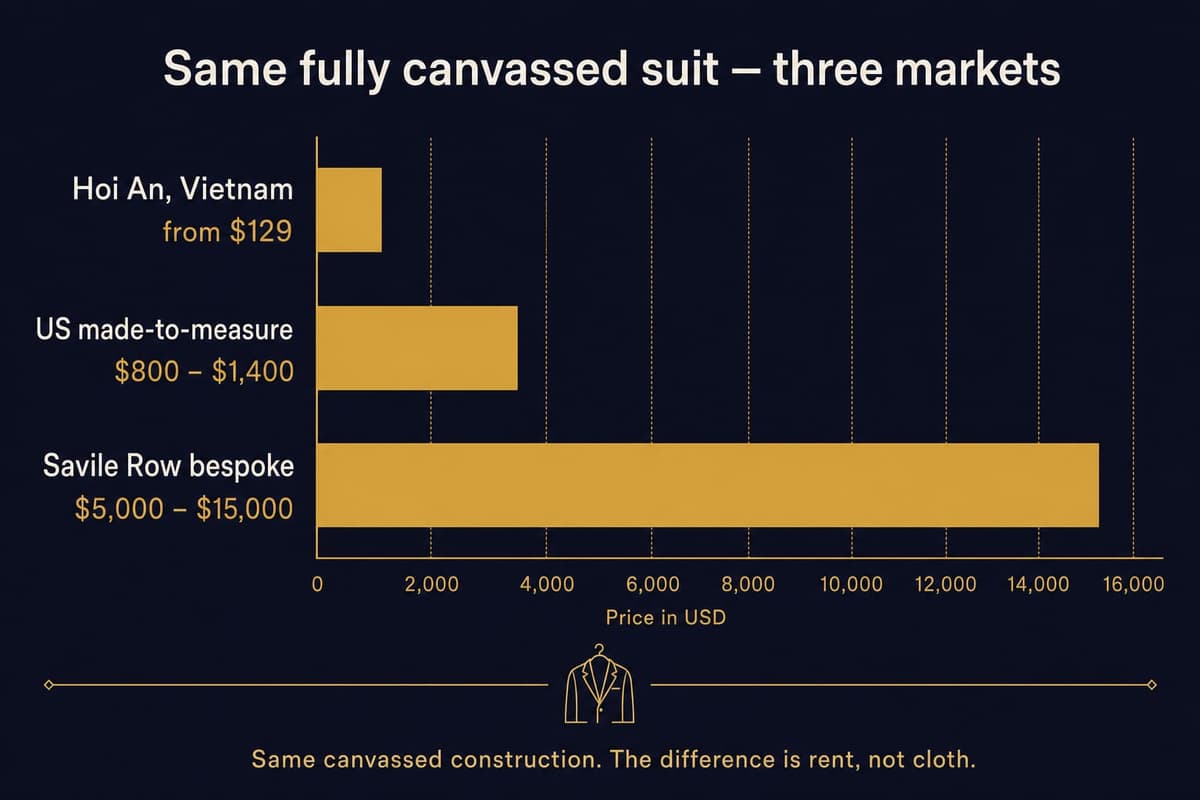
The same half-canvas construction at a US made-to-measure house typically runs $800-$1,400. At a Savile Row bespoke tailor, $5,000-$15,000. The reason Hoi An delivers half-canvas bespoke construction at the prices above is not corner-cutting — it is the rent. We pay Hoi An prices for our workshop, not Manhattan or Mayfair prices. The fabric and the labour are real; the overhead is a fraction of what Western tailors carry.
If a price looks impossibly low — say a "full wool suit" for under $80 — the arithmetic does not work and the shop is doing something to make it work. That is the only economic anomaly you need to watch for, and it is not specific to Vietnam. It is the same anomaly anywhere in the world.
Questions Worth Asking (Of Any Shop, Including Us)
Not anti-scam interrogation. Just the questions that actually help you understand whether a shop is the right fit for you.
- "Is this jacket fused or canvassed?" The most important single question. The answer should be specific and unhesitating.
- "What is the fitting cycle for my build?" Even a fast turnaround should include at least one fitting in most cases.
- "Can I see and touch the fabric I'm picking?" In person, this is automatic. Remotely, a shop should be willing to send swatches before you commit.
- "What is the fibre content?" Worsted wool? Wool blend? A specific blend percentage? A serious shop knows.
- "How long have you been in business and how can I see customer photos?" Google reviews, Instagram, real customer photos (not stock images) are public proof.
- "What happens if the fit is off on arrival?" Every shop handles it differently. There is no universal right answer — what matters is that the shop has a specific process and tells it to you upfront.
- "Can we do a video call before I commit?" Especially for remote orders. A shop that will show you the workshop on camera is not hiding anything.
In-Person vs. Remote
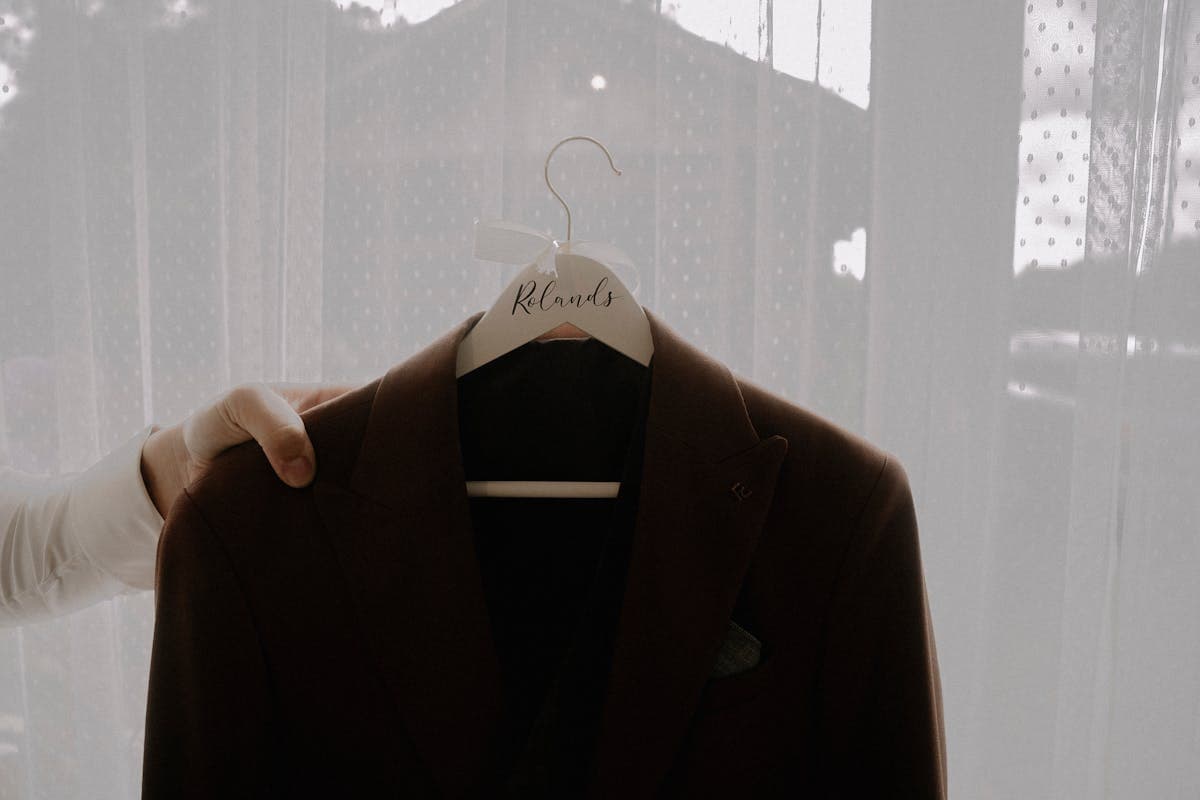
I get asked this constantly so let me lay it out plainly. Both work; the right choice depends on your situation.
In-Person Has
- You touch the cloth before you commit
- You walk the workshop, meet the tailors
- Fittings are immediate; iteration is fast
- You get to spend three or four days in Hoi An, which is its own argument
Remote Has
- No flight to Vietnam required
- No time pressure to decide
- Full written paper trail of every decision
- Credit card or PayPal payment protection
- Same garment quality as in-person; same prices
If you are already traveling to Vietnam, definitely visit Hoi An. If you are not, remote ordering has matured to where the difference is small — the cut, the cloth, and the construction are identical; only the friction is different.
The Things I Cannot Promise
In the spirit of the rest of this article, three things I will not claim:
- I will not claim our fabric comes from any specific named European mill. I cannot verify it bolt-to-bolt and I do not want to pretend to. We sell the cloth by named fabric type — Wool Blend, Premium Wool Blend, Merino, Cashmere Blend, Linen, Tweed, and so on — and let you feel each one before you buy.
- I will not promise free remakes or unconditional alteration credit. What I will say is that we work with every customer individually if the fit is off — share photos, talk through what is wrong, figure out the right next step. The specifics depend on the situation and we keep that conversation open.
- I will not call other Hoi An shops scammers. Some shops in town focus on tourists who will leave and never come back. Some are excellent. Some are mediocre. The same is true of every tailoring market on earth. What I will tell you is what to ask, so you can evaluate any shop yourself.
What We Actually Offer
Plainly stated, since this guide should be useful for evaluating us too:
- 25+ years in business — Hoi An workshop, Tran Hung Dao Street tailoring district
- 5,000+ clients across 50+ countries
- Strong Google review history — public, including the occasional 3-star review which is also public
- Pricing: custom suits from $149, dress shirts from $39 — full pricing here
- Measurement support: guided self-measurement via our app, or live video walkthrough on WhatsApp
- Shipping: DHL or FedEx to 50+ countries, fully tracked and insured
- Payment: credit card, PayPal, or bank transfer accepted
- Contact: email nathantailorshoian@gmail.com or WhatsApp +84 90 531 1273
What to Do Next
If you are planning a Hoi An trip and want to include tailoring, our Trip Builder can lay out a 4-day or 5-day plan with fittings worked in. If you want to start remotely, the Guided Measurement App is the lowest-pressure way to test the waters — submit measurements, no commitment, and we will reach out to talk fabric and pricing.
If you just want to ask questions, the easiest channel is WhatsApp. We respond to every message, usually within hours.
Frequently Asked Questions
Is it safe to order custom clothes from Vietnam in 2026?
Yes, with the same caveat as ordering custom clothes anywhere: do your research on the specific shop, look at real customer photos and review history, ask questions about construction, and use a payment method that has buyer protection. The specific Vietnamese context — fast turnaround, commission-based referrals — is not a risk factor in itself. It is just how the local economy works.
How fast can a Hoi An tailor really make a suit?
Around 24 hours is achievable when the shop has pre-locked measurements, the fabric is in stock, and the build is reasonably standard. Two to three days is more comfortable and includes a proper fitting cycle. Remote orders take longer because international transit time is part of the timeline — three to four weeks from your first message to receiving the garment, with shipping quoted separately.
Do Hoi An tailors use real Italian fabric?
Some shops claim specific famous mill names. Most cannot prove the claim bolt-by-bolt because Hoi An buys cloth through fabric brokers serving the broader Asian and European mid-tier tailoring trade — the supply chains are layered and the original mill is often unverifiable. What you can verify directly is fibre content (premium wool blend versus blend), weight, weave, and how the cloth drapes. We have decided to be explicit about this rather than name-drop mills we cannot back up.
Are the hotel and cyclo-driver recommendations honest?
Mostly, yes — in a small interconnected town like Hoi An, the referral economy self-corrects. A hotel that consistently recommends a bad tailor loses guest goodwill quickly and the recommendations dry up. A cyclo driver who delivers customers to a shop that disappoints them does not get repeat business. The commissions exist (typically 20-30%) and are usually already priced into the shop's quote. They are how the local economy distributes the work of finding customers across many small businesses.
Should I visit Hoi An or order remotely?
Both work. If you are already traveling, absolutely visit — the town is one of the best experiences in Southeast Asia and you get to walk the workshop and meet the tailors. If you are not traveling, remote ordering has matured to the point where the cut, cloth, and construction are identical; only the friction is different. Our 13-point Guided Measurement App makes remote measurement reliable enough that the fit usually lands on the first try.
What if the suit does not fit when it arrives?
Talk to us before assuming the worst. Share photos by WhatsApp, describe what is off, and we work through the right next step together — sometimes a local alteration using the seam allowances and spare cloth we ship, sometimes a small adjustment we coordinate by post. We do not have a universal one-size-fits-all guarantee because the right response varies by what is wrong. What we commit to is a conversation, not a script.
How long does shipping take from Vietnam?
Via DHL or FedEx express, 6-8 days to most destinations in the US, UK, Europe, and Australia. Tracked and insured. Total timeline from order to delivery is typically 2-3 weeks including production.
Can I start with one shirt to test before committing to a suit?
Yes, and we encourage it. A custom dress shirt costs $39-$49 and gives you a real read on the shop's measurement accuracy, fabric handling, finishing standards, and communication. Many of our long-term customers started with a single test shirt. It is the lowest-cost way to find out whether a shop is the right fit for how you want to be served.