Ten Suits, Sixty Years, One Conversation
The men who walk into our atelier in Hoi An almost never describe what they want in tailoring vocabulary. They do not say "a 4-inch peak lapel with a slightly extended shoulder and a 6x2 double-breasted closure." They say something more honest: "I want to look like the guy in that movie." The reference is rarely a measurement -- it is a feeling, a frame, a man on screen with a posture the customer wants to borrow.
Below are ten cinematic suit archetypes that have, between them, defined the last sixty years of menswear. None of them are wrong. A few of them are, with the right body and the right occasion, exactly right. If you want to skip the reading and see yourself in any of them, you can render yourself as any of the 10 in about a minute.
1. The Gekko -- Wall Street Power, 1987
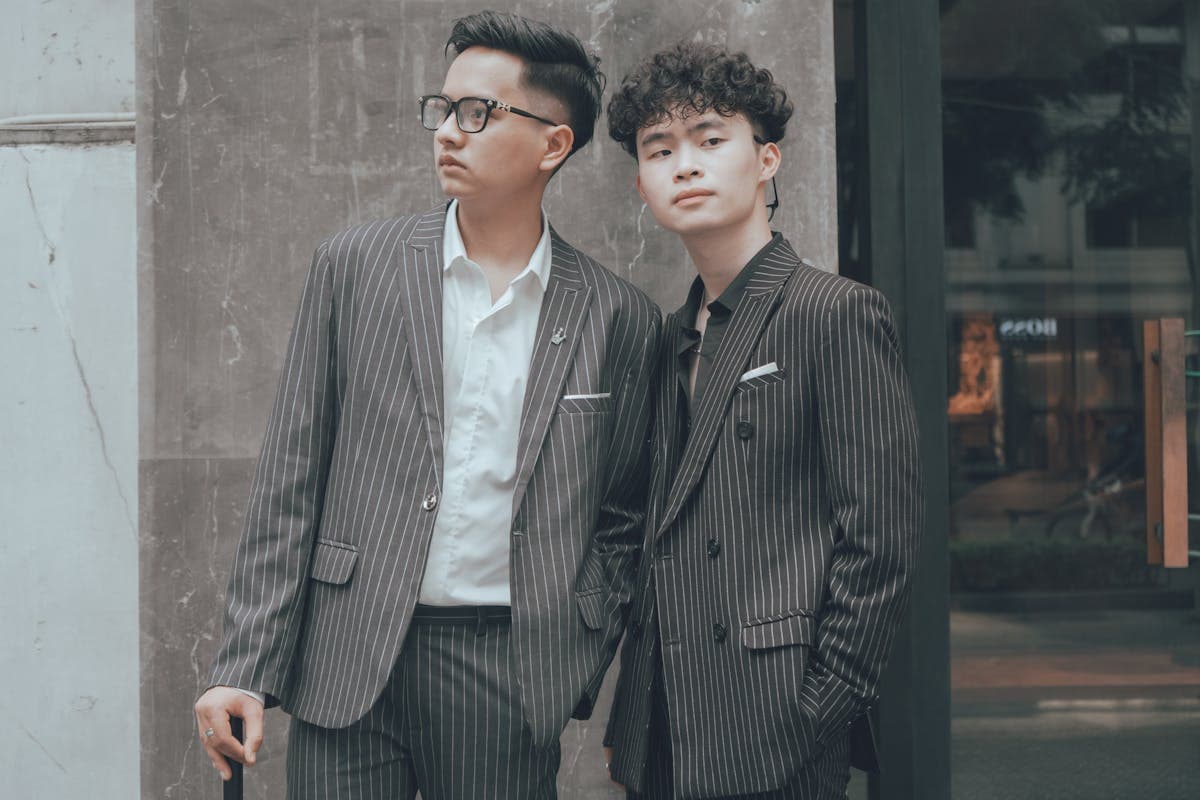
The corporate-raider archetype. Late 1980s, glass-and-steel Midtown, the man buying a company over breakfast. Navy chalk-stripe wool, 12oz fine worsted, cut in the broad-shouldered British silhouette but worn with American swagger. Six over two -- 6x2 double-breasted -- sharp peak lapels, a roped shoulder, deep side vents, button stance high enough to add two inches.
It works because of contrast. The chalk-stripe is loud; the navy is sober. Worn now, in 2026, it has lost none of its menace -- the suit for the senior banker meeting, the IPO photograph, the wedding where you want the father-of-the-bride to underestimate you. Spread-collar white shirt, deep crimson silk tie, dark calf oxfords. Never with brown shoes.
2. The Savile Row Classic
If the Gekko is performance, the Savile Row Classic is permanence. The suit of the second-generation banker, the QC, the diplomat. Three buttons single-breasted -- only the middle one fastened, in the old "sometimes, always, never" formula -- structured canvassed chest, slim notch lapels at 7.5cm, side vents, 11oz worsted. The line is not aggressive. It is correct.
The wedding-and-funeral suit, the suit you keep for fifteen years and re-canvass at year ten. Charcoal, navy, or a quiet glen check. Black calf shoes. White or pale blue shirt. Nothing in the pocket. If you find yourself building a wedding attire mood board and feeling overwhelmed, this is the silhouette that quiets the noise.
3. The Positano -- Neapolitan Soft Tailoring
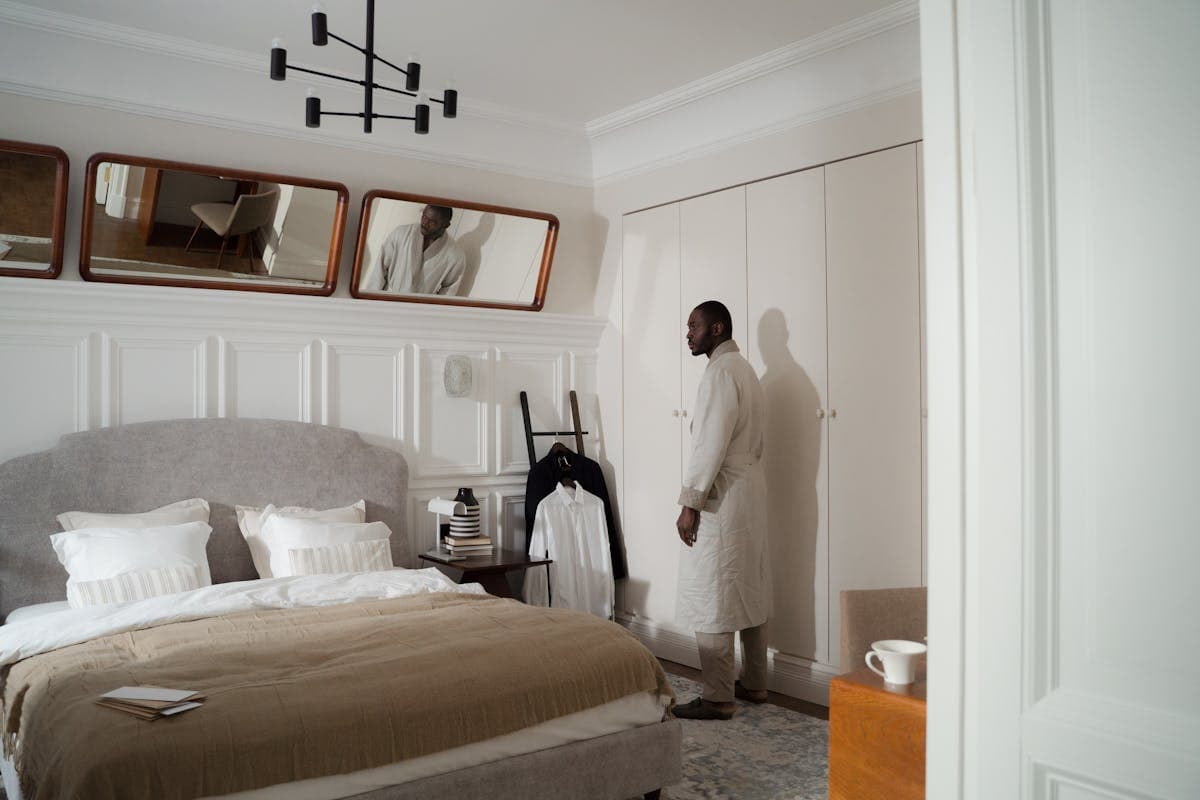
The Positano is the rebellion against Savile Row, in Italian. Neapolitan tailoring treats the jacket like a shirt -- unstructured shoulder, the sleeve set with a soft pleat called the spalla camicia, a high armhole, fabric weight between 7oz and 9oz in tropical wool, fresco, or summer linen. Slim notch lapels. Horn or mother-of-pearl buttons. Trousers unlined and cut a touch wider than current convention.
The man having espresso on the Amalfi Coast at 11am, then disappearing into a long afternoon. It is impossibly comfortable -- the suit that signals confidence without effort. Cream, sand, ice blue, pale grey. Brown suede loafers, no socks if you have the nerve, white linen pocket square. The suit for any wedding south of the Alps.
4. The 007 -- Midnight Blue Tuxedo
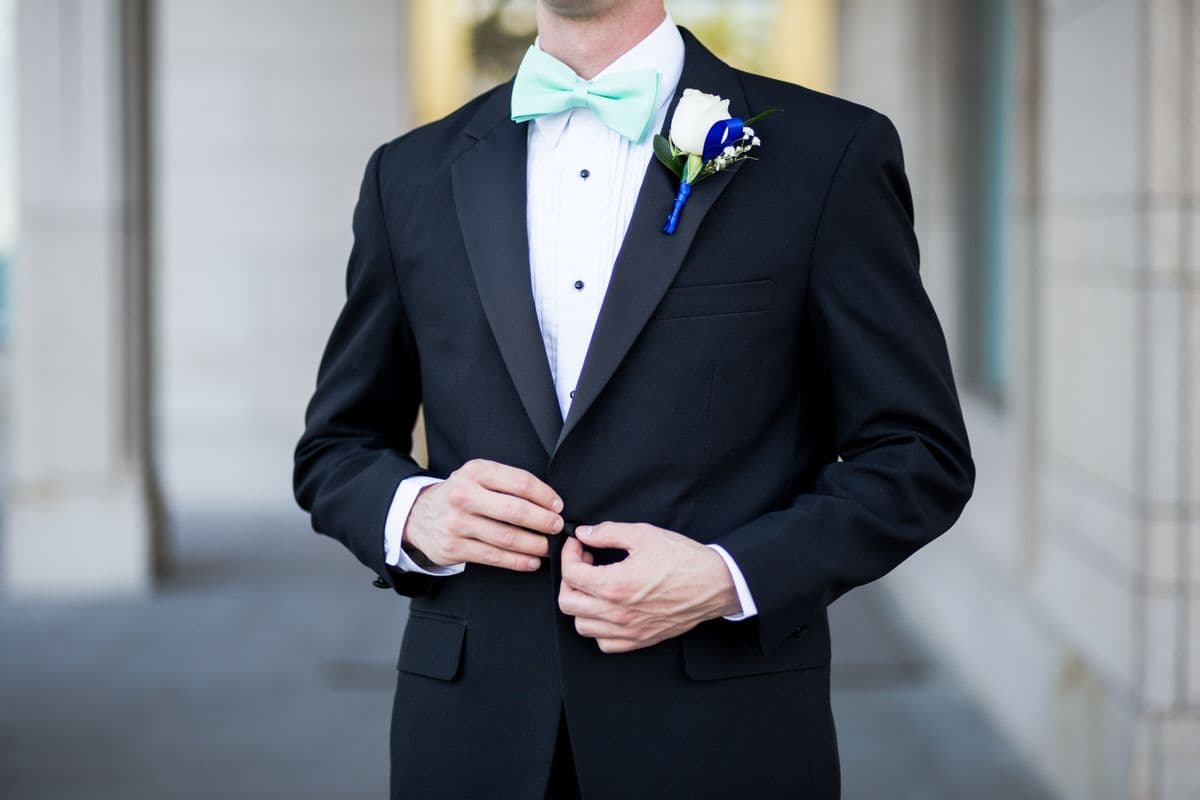
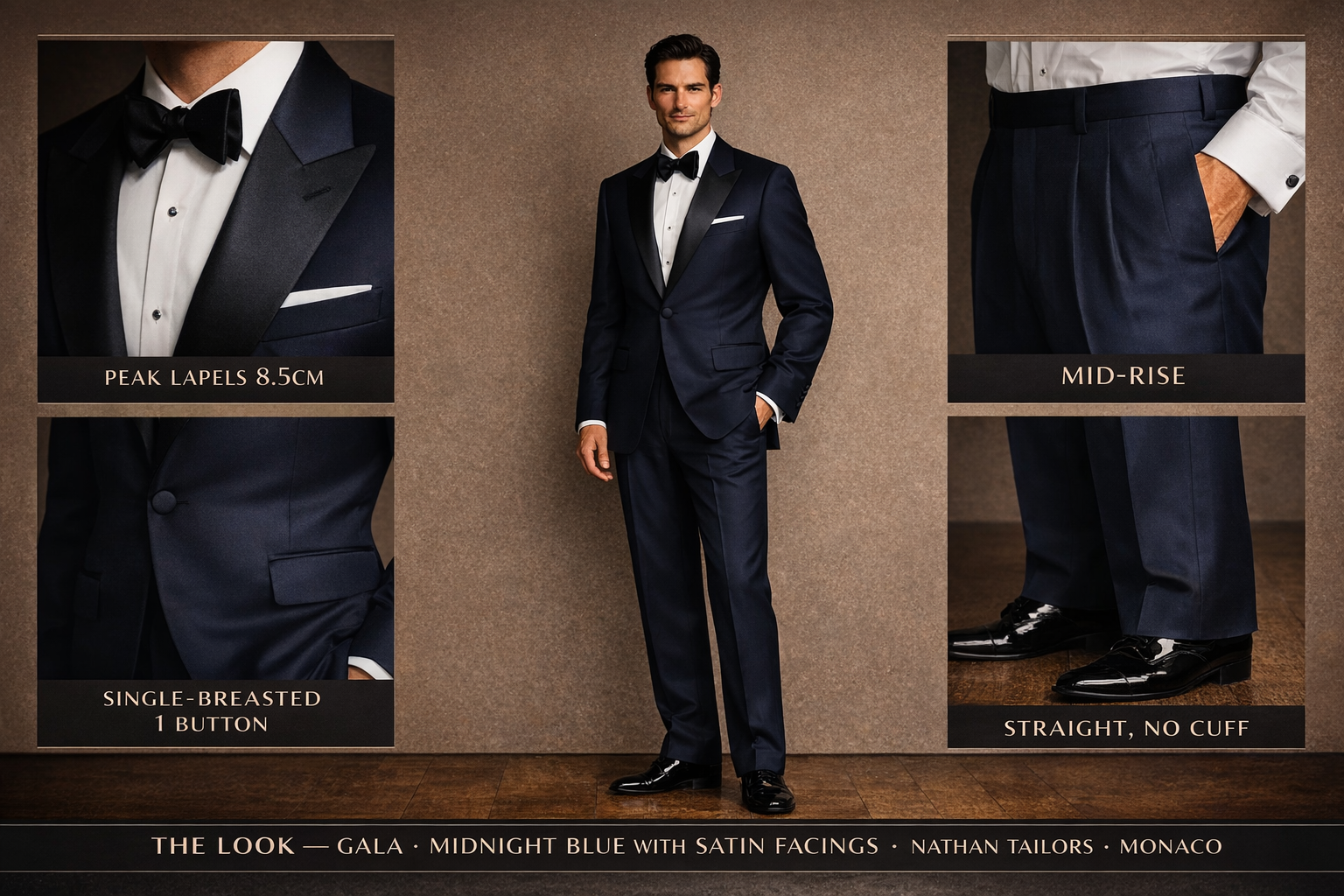
The dinner jacket has been cinematic shorthand since 1962, and the version that endures is not black -- it is midnight blue. Under tungsten or candlelight, midnight blue reads as black-er than black, with none of the green cast real black wool picks up. One-button single-breasted, peak lapel faced in silk satin, jetted hip pockets faced in the same satin, no vents, covered button. The trousers carry a single satin braid down the outseam. White pique shirt, hand-tied bow in matching satin.
The operative-in-the-tuxedo archetype, the man at the high-stakes table, the late dinner that ends in an exit. Also -- worn correctly -- the most flattering suit any man will ever own. The vertical line is uninterrupted. The lapel widens the chest. Worn for a black-tie wedding, an opera, a 50th-birthday gala. Cap-toe black patent oxfords or velvet slippers. Never a long tie.
5. The Riviera -- Cream Linen, Three-Roll-Two
The Riviera is the Positano's cousin who took a job in finance. Single-breasted, two buttons that are actually three with the top one rolled into the lapel -- the trade calls this "three-roll-two" -- a softer shoulder than Savile Row but more structure than Naples. Sand-coloured Irish linen or a pale wool-silk-linen blend. Medium notch lapel. Flat-front trousers, often without belt loops, 4cm cuff.
The South of France in July, the rooftop wedding in Lisbon, the Saturday Negroni in Capri. It works because it is forgiving -- linen wrinkles, and the Riviera treats the wrinkles as patina. Pale blue Oxford shirt, top button open, no tie, brown suede tassel loafers. If you are getting married in summer and you want to look like the wedding chose itself, this is the suit. Many of the men we render in the Wedding Mood Board circle back to this one.
6. Tokyo Quiet -- Minimal Japanese Tailoring
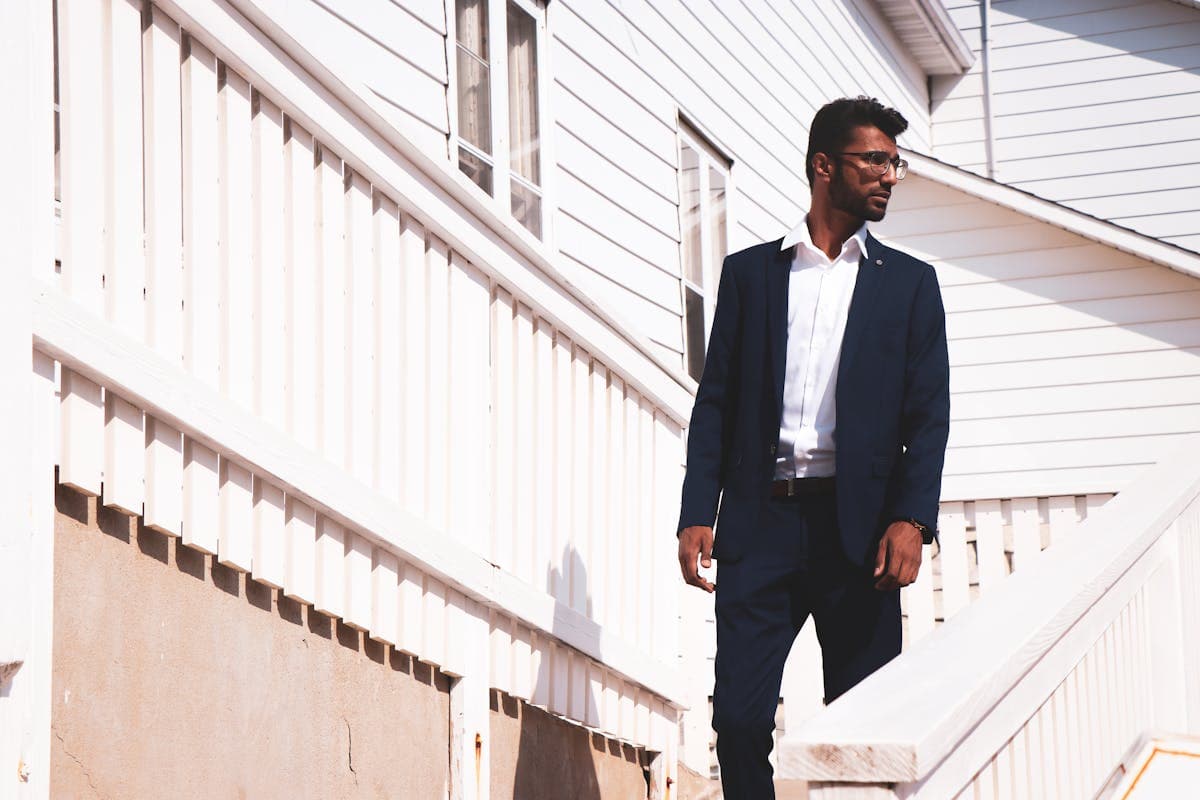
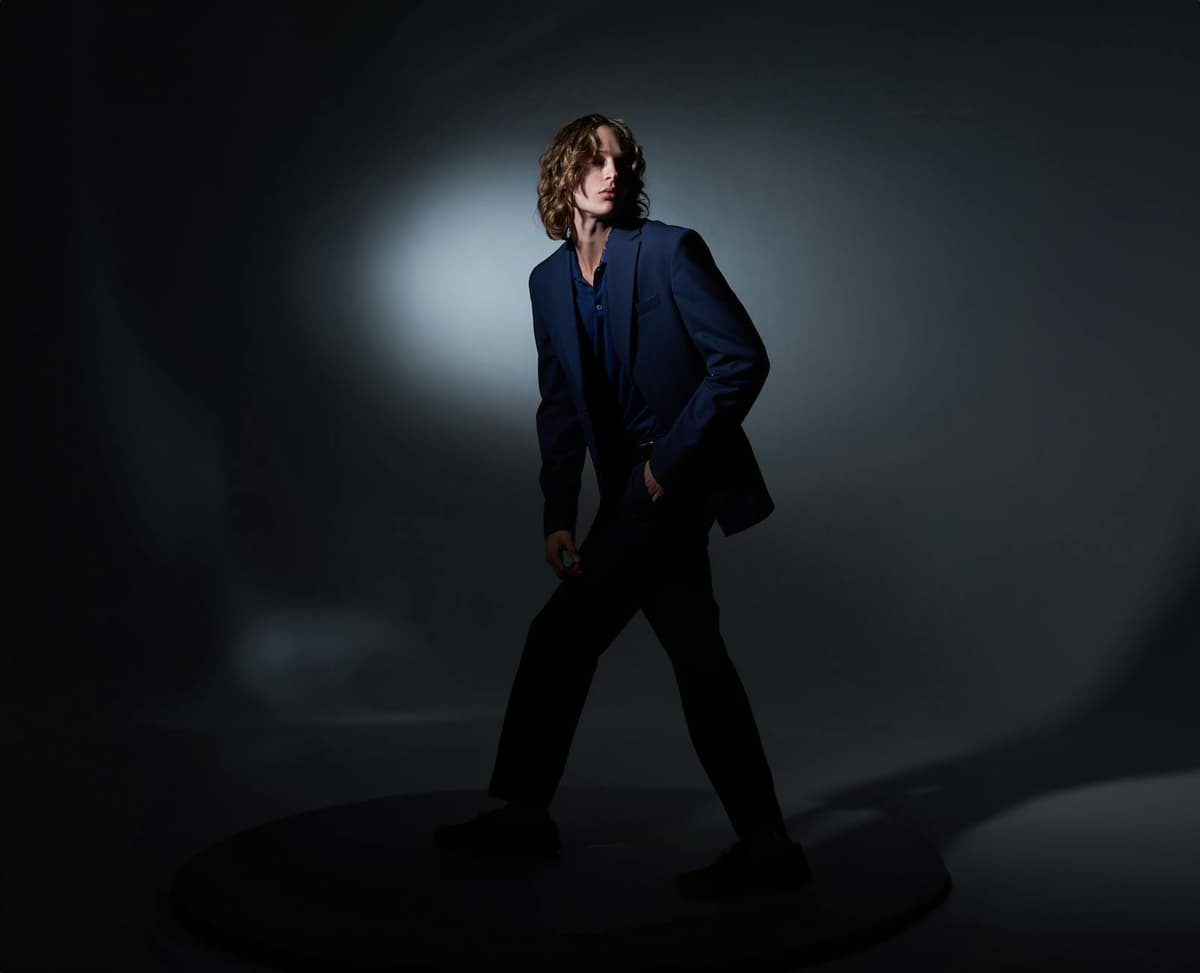
The Japanese have, in the last twenty years, evolved a tailoring language that is its own thing -- not Savile Row, not Naples, but something between. Slim but never skinny. A natural shoulder with a tiny extension. A precise 7cm notch lapel. High-twist fine worsted wool in midnight navy, charcoal, or a graphite that reads as black under most light. Slim trousers with a clean break or no break.
What makes this archetype is what it omits. No pocket square. The tie, if there is one, is a knit grenadine in flat solid. White shirt, point collar. Plain-toe black derbies, mirror-polished. The suit of the architect-curator-creative-director who has decided that style means subtraction. Worn for the museum opening, the gallery dinner, the day you want to be remembered as the most precisely-dressed person in the room without being the most ornate.
7. The Tweedsmuir -- English Country Three-Piece
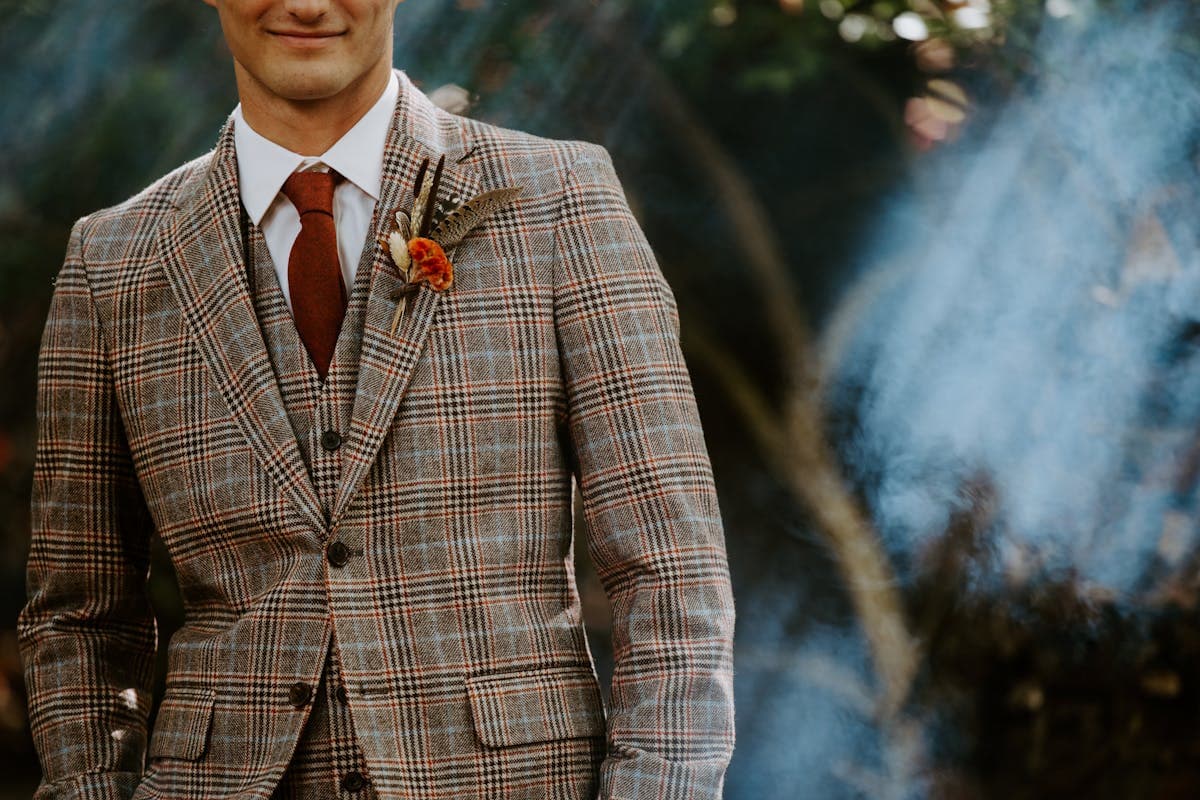
The suit that smells of pipe smoke and wet leaves. A three-piece in 14oz Donegal tweed or a Yorkshire estate cloth, woven in russet glen check, oxblood windowpane, or heathered moss-green herringbone. Ticket pocket above the right hip, slanted bellows pockets, leather buttons, broad bold lapels. Six-button waistcoat with welt pockets. Pleated, cuffed trousers.
The country-house archetype, the man in the shooting party, the literary biographer at his Oxford college. Worn now, the suit for autumn weddings in the Cotswolds, the rehearsal dinner at a barn in upstate New York, the October moment when the air finally turns. Tattersall shirt, regimental wool tie, brogued tan country boots. An investment in a season, not a year.
8. The Shelby -- Three-Piece, Cutaway, Peak
The Birmingham gangster archetype, written in 1920s wool, has had an unexpectedly long second life. A peaked-lapel three-piece in heavy charcoal flannel or Prince of Wales check, cutaway front quarter exposing more of the waistcoat, high button stance, slim trousers breaking sharply over the boot, single-button peaked waistcoat. Collarless or detachable-collar shirt, silk tie in a small geometric, wool flat newsboy cap.
It is theatrical. It knows it is theatrical. Outside its costume context, the Shelby works for groomsmen at a gothic-revival church wedding, for a 1920s-prompt rehearsal dinner, for the after-party where you want to look slightly more dangerous than the room. Commit fully or not at all -- a half-Shelby in a half-modern context just looks confused. Pocket watch chain, oxblood boots.
9. The Ellington -- Drape Cut, Jazz-Age Double-Breasted
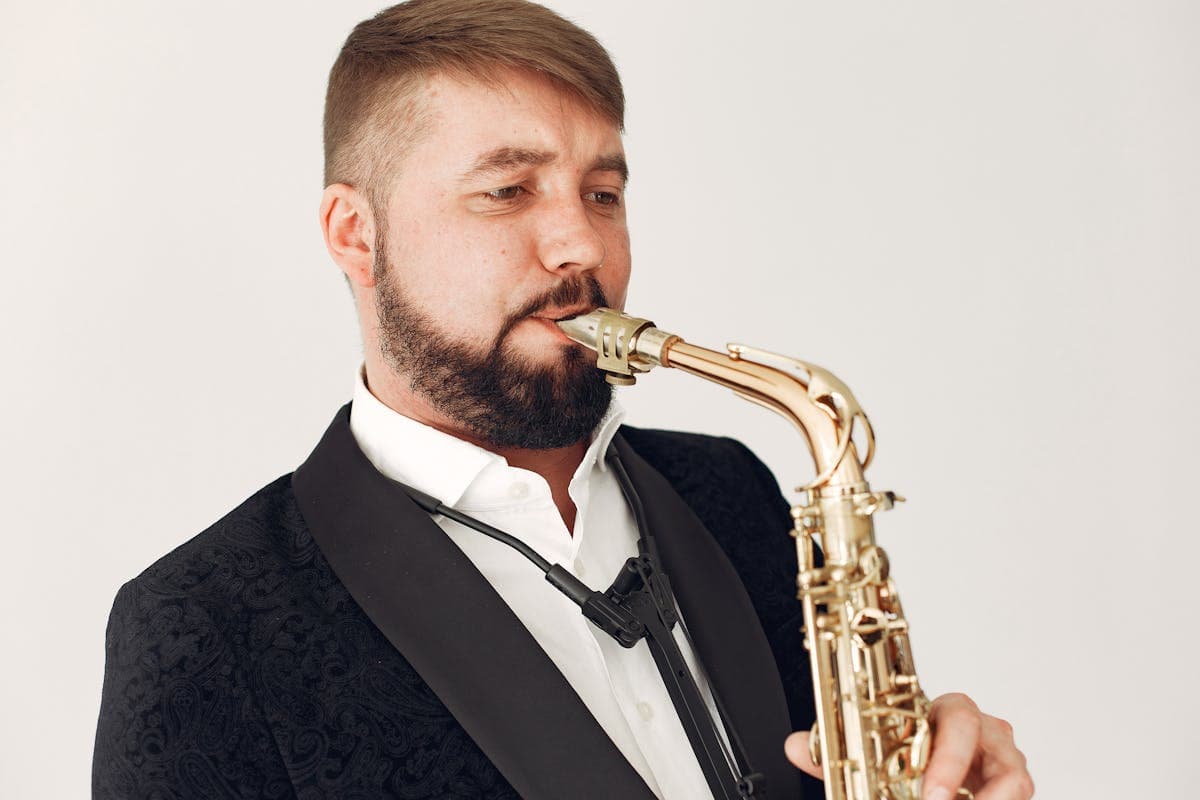
The drape cut was the great American contribution to tailoring -- a soft, pleated fullness across the chest and back that allowed for movement, for the trumpet, for the dance floor. A 6x2 double-breasted in chocolate-brown windowpane, navy with chalk-stripes wider than the Gekko's, or fawn glen check. Extended but soft shoulders. Full thigh, double-pleated, 5cm cuff breaking once on the shoe.
The bandleader archetype, the Harlem Renaissance gentleman, the man who knew how to enter a room. Worn now, the answer for men tired of the skinny silhouette and reaching back, deliberately, for cloth that hangs the way cloth used to hang. Brown silk knit tie, wide-spread collar, two-tone spectators if brave, dark cap-toe brogues if not. The Ellington is having a moment in 2026, and that moment is going to last.
10. The Groom -- Midnight Navy, One-Button Peak
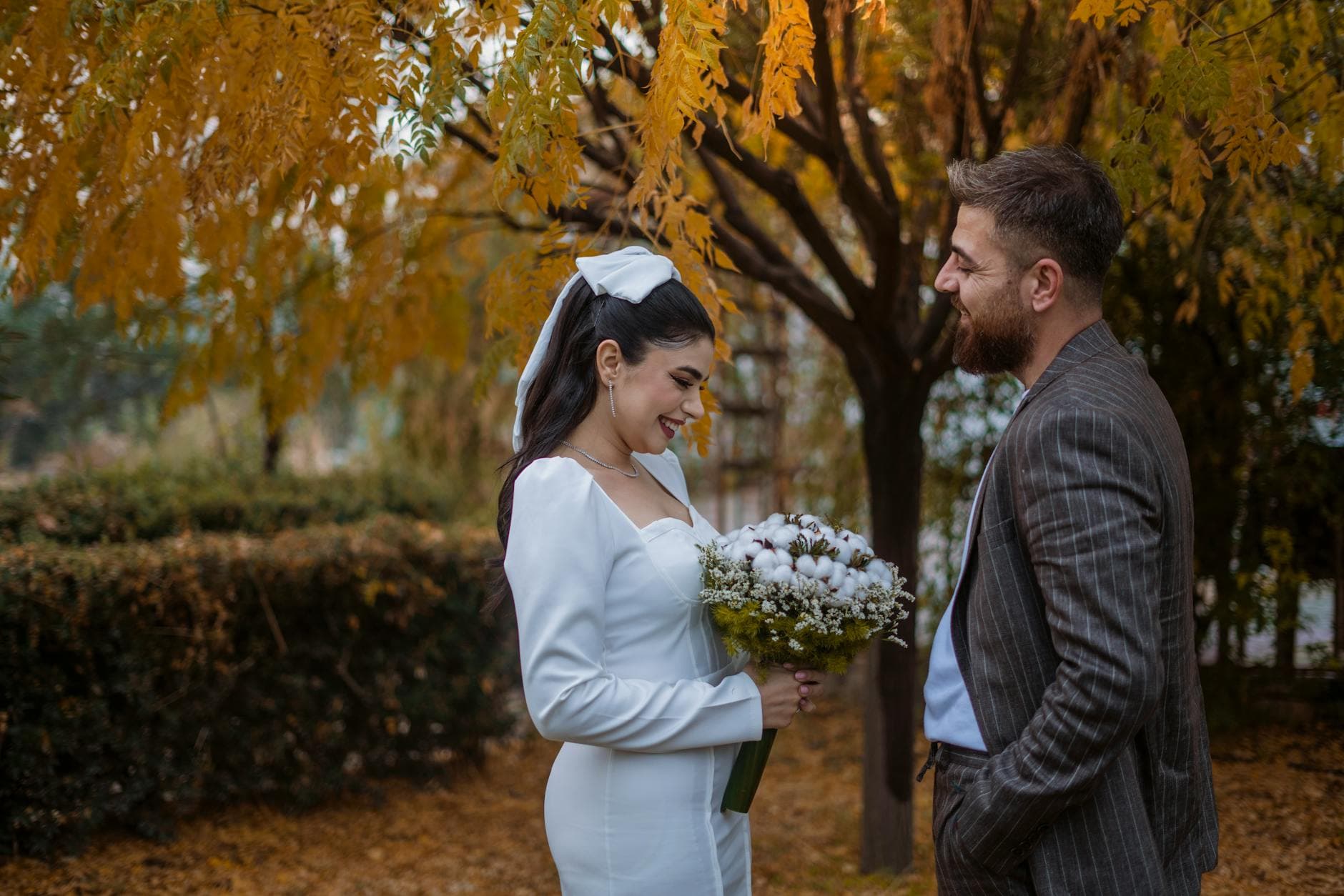
The suit men commission for the single most photographed day of their lives -- and yet most of them wear something they could not articulate why. The Groom is the answer to that. Midnight navy or graphite-charcoal silk-blend wool. Single-breasted, one button. Peak lapels faced in the same fabric, not satin -- this is not a tuxedo. A structured but light shoulder, high button stance, clean fishtail back on the trousers if you wear braces.
It reads as formal without being a tuxedo. It photographs without disappearing into the dark. It works at five in the afternoon, at seven, at midnight. It works against a white dress, a champagne dress, a coloured dress. White twill shirt, pale silver-grey silk tie or no tie at all, black calf cap-toes, single white pocket square. If you are getting married, this is the suit. You can see yourself in it on our wedding attire mood board.
How to Choose
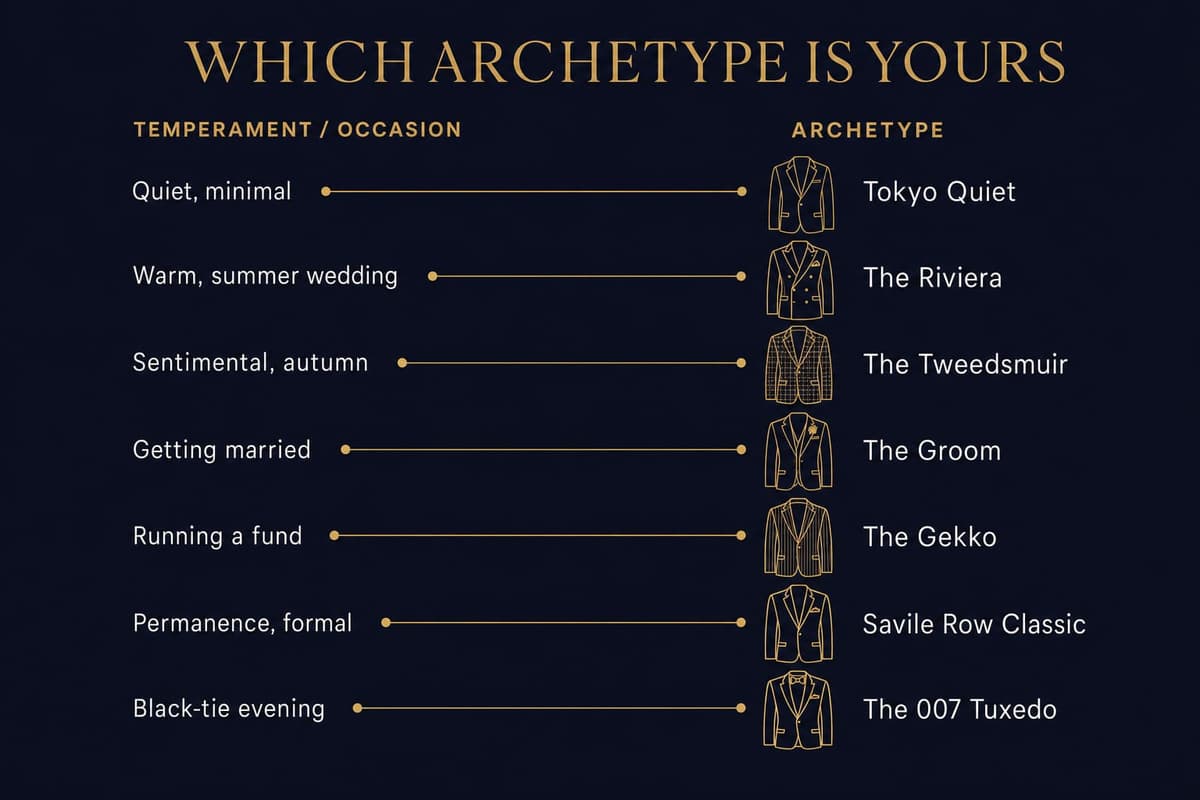
None of these archetypes are wrong, but most men will not wear nine of them. The skill is knowing which one is yours -- which one you can carry, which one fits the life you actually live, which one you will still feel right in five years. A Tweedsmuir on a man who lives in Miami is a costume. A Positano on a Boston lawyer is a costume. The Gekko on a man who has never raised his voice in a meeting is, gently, a costume too.
The suits that endure match a man's existing register. If you are quiet, the Tokyo. If you are warm, the Riviera. If you are sentimental, the Tweedsmuir. If you are getting married, the Groom -- almost always the Groom, unless the wedding is on a beach in July, in which case the Riviera. If you are running a fund and want the room to know it, the Gekko.
See Yourself In Any Of Them
A few months ago we built something to close the gap between feeling and fabric -- The Atelier suit generator lets you pick any of these ten archetypes, choose your fabric and finish, and see yourself rendered in the suit before you commission it. Sixty seconds. Free. The decision to commission a suit is, in my experience, almost always made before a man walks into the shop. The Atelier exists to give you that feeling earlier, with less guesswork.