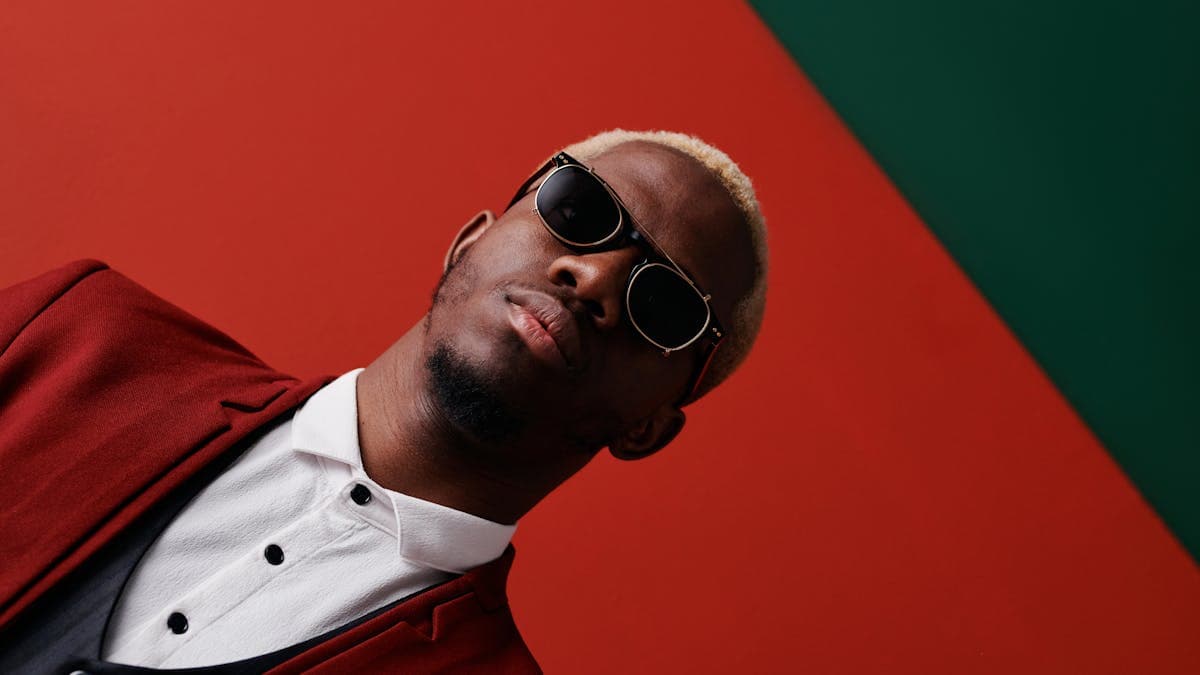
Draft Night Is Fashion's Other Super Bowl
The Met Gala gets the magazine covers. The Oscars get the best-dressed lists. But if you are a young guy between 18 and 25, the event you actually screenshot and send to the group chat is the NBA Draft.
Think about it. These are guys your age -- 19, 20, 21 years old -- walking across a stage in front of 20 million viewers, shaking the commissioner's hand, and officially starting the rest of their lives. And every single one of them knows that the suit they wear in that moment will be in highlight reels, memes, and "greatest draft fits" rankings for the next 30 years.
The 2026 NBA Draft is coming. Round 1 is June 24 -- a Tuesday this year, first time that has happened. The draft lottery is May 10. AJ Dybantsa out of BYU is the projected number one pick. Darryn Peterson from Kansas, Cameron Boozer from Duke, and Caleb Wilson from North Carolina are all expected to hear their names early. And every one of them is working with a stylist right now, planning a fit that will define how the public sees them before they ever play a minute of professional basketball.
Last year, Cooper Flagg went first overall to the Mavericks. The year before that, it was Zaccharie Risacher. But the draft fits people actually remember? Those go back decades. And the best ones are not always the most expensive. They are the ones with the most intention.
I used to trade bonds on Wall Street. I have been in rooms where a $6,000 Brioni suit was the bare minimum and nobody blinked. Now I run a custom tailor shop in Hoi An, Vietnam, where we make suits that compete with those price points for $149 to $309. And I have watched enough draft nights to know this: the suit does not have to cost $100,000 to look like a $100,000 suit. It has to fit like one.
Let me show you every iconic draft day look worth knowing, what made each one work, and exactly how to recreate that energy at a price that does not require a rookie contract.
The Greatest NBA Draft Day Fits of All Time
Before we talk about what to wear, we need to talk about the guys who set the standard. These are the fits that changed what draft night means -- the ones that turned a handshake photo into a cultural moment.
1. LeBron James, 2003 -- The All-White That Started Everything
This is the one. The suit that every draft fit since has been measured against. LeBron walked to the stage in an all-white suit, head to toe -- white jacket, white pants, white shirt, white tie. He was 18 years old, the most hyped prospect in NBA history, going first overall to Cleveland. And instead of playing it safe with a navy suit like every other teenager would have, he chose the single most high-risk, high-reward color in menswear.
Why it worked: LeBron was already 6-foot-8, 240 pounds at 18. An all-white suit on a frame like that is not a fashion statement -- it is a declaration of war. The fit was clean, the shoulders were structured, and the monochrome commitment was total. No contrasting pocket square. No quirky socks. Just white. It said: I am the main character, and I know it.
What most people miss: The all-white suit is unforgiving. Every wrinkle, every pull, every quarter-inch of bad fit is visible. The fact that LeBron's looked sharp means whoever made it knew what they were doing with the cut. That is the lesson -- white only works when the tailoring is impeccable.
2. Jalen Rose, 1994 -- The Red Suit Gamble
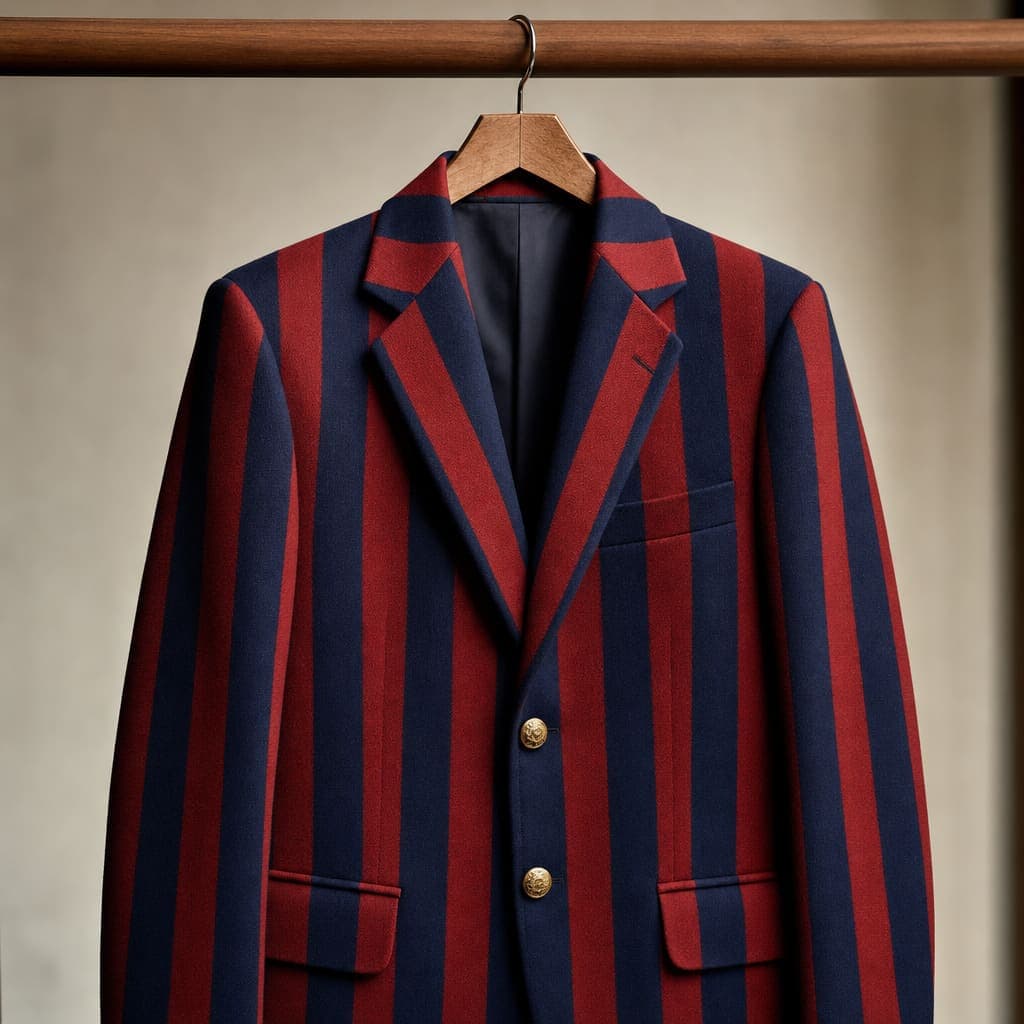
Jalen Rose showed up to the 1994 draft in a bright red pin-striped suit. Here is the story behind it: he thought he was going to the Los Angeles Clippers. Red was a Clippers color. It was strategic. Intentional. A way to show his new team he was already bought in.
He went to Denver instead.
Why it still works: Despite the mismatch, that red suit became one of the most memorable draft looks of the 1990s. It had swagger. It had personality. And it proved something important -- a bold color suit does not need a reason to work. It just needs to be worn with confidence. Jalen owned that red suit whether Denver matched or not. The fit was very 1990s -- boxy, wide shoulders, double-breasted -- but the color choice was ahead of its time.
3. Samaki Walker, 1996 -- The Full Commitment
White suit. White fedora. White snakeskin shirt. Samaki Walker walked into the 1996 draft looking like he was headed to a party on a yacht in the south of France, and he did not care that everyone else was in standard dark suits. This was full-send fashion before "full send" was a phrase.
Why it matters: Walker understood accessories. The fedora and the snakeskin shirt elevated the white suit from "bold choice" to "complete vision." He was not just wearing a white suit -- he was wearing a look. That distinction is the difference between a guy who picked a suit and a guy who designed an outfit.
4. Kelly Oubre Jr., 2015 -- Red Carpet Energy
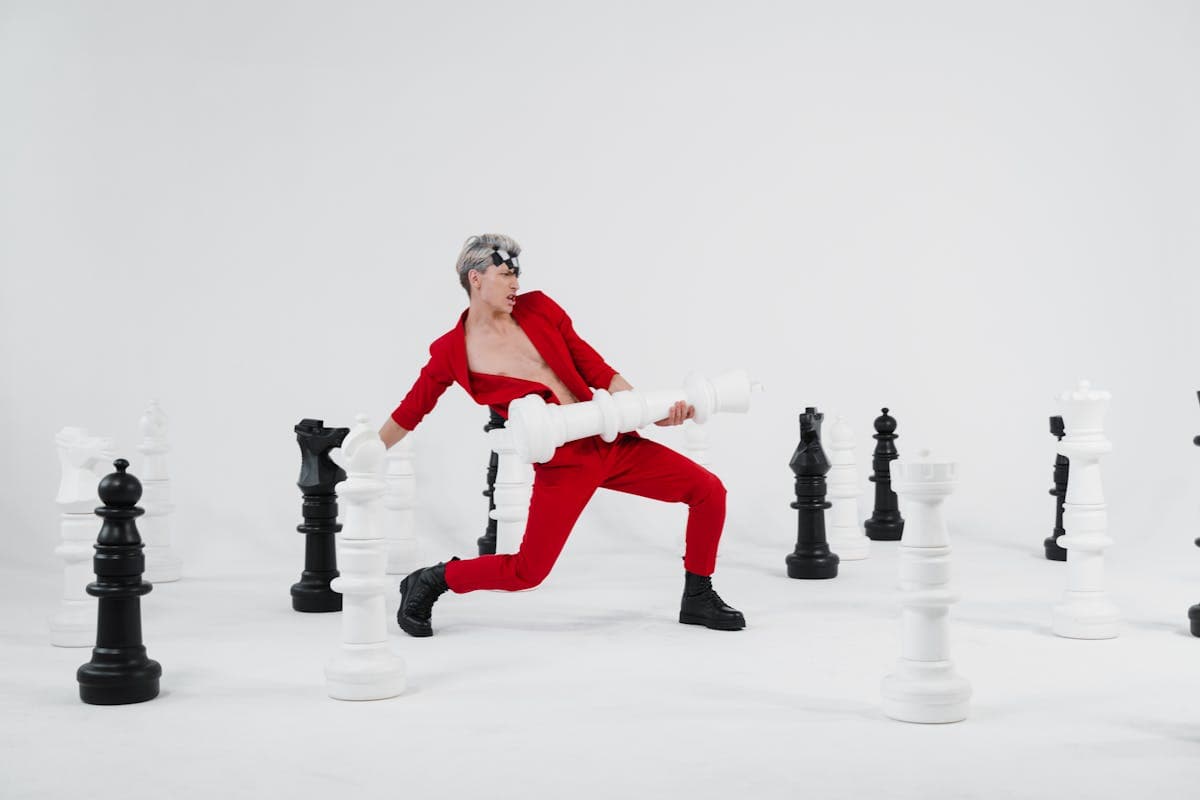
Kelly Oubre walked to the stage in a red satin-finish suit paired with gold Christian Louboutin spiky loafers. The shoes alone probably cost more than most rookies' first car payment. But the total package was undeniable -- the satin caught light on every camera flash, the red was saturated without being garish, and those gold spike louboutins were the kind of detail that only works if the rest of the fit is locked in.
The lesson: Statement shoes demand a clean suit. If Oubre's suit had even one unnecessary detail -- a loud pocket square, a chunky watch, a patterned shirt -- the whole thing would have tipped into costume territory. He kept the suit simple so the shoes could scream. That is styling intelligence.
5. Bol Bol, 2019 -- The $100,000 Spider Suit
Bol Bol wore a spider-themed custom suit to the 2019 draft that was reportedly priced at $100,000. One hundred thousand dollars for a suit worn once on national television. The design was intricate -- web patterns, spider motifs, the kind of detailed embellishment that takes weeks of work from a skilled atelier.
Why I bring this up: Not because you should spend $100,000 on a suit. You absolutely should not. But because Bol Bol understood that draft night is theater. It is not a business meeting. It is not a wedding. It is a performance. And the suit is the costume. The spider theme was personal, it was bold, and it gave every sports media outlet a story to write. Whether you loved it or hated it, you talked about it. That is the point.
6. Tyrese Haliburton, 2020 -- Fashion With a Message
Tyrese Haliburton was drafted 12th overall in 2020 wearing a floral suit with "Black Lives Matter" embroidered into the fabric. In a year defined by social upheaval, Haliburton used his draft night platform to say something bigger than basketball.
What this represents: The evolution of draft night fashion from "what looks good" to "what means something." The floral pattern was bold on its own. The embroidered message turned it into a conversation starter. This is the generation that treats clothing as communication -- and Haliburton's suit is the clearest example of that philosophy in draft history.
7. Paolo Banchero, 2022 -- The Modern Blueprint
Paolo Banchero went first overall to the Orlando Magic in a purple suit paired with a custom "P5" chain. The suit was tailored sharp -- not boxy, not skinny, just right -- and the purple was deep and rich, not cartoonish. The chain added personality without competing with the suit.
Why this is the template for 2026: Banchero's look is the one that most clearly maps to where menswear is headed right now. Bold but not crazy. Personalized but not gimmicky. One strong color, one strong accessory, perfect fit. If you are building a draft-day inspired suit in 2026, this is the playbook.
What the 2026 Draft Class Will Probably Wear
Based on the trend lines from the last three drafts and where menswear is heading in 2026, here is what I expect to see on June 24:
Wider Silhouettes Are Mandatory
The skinny suit era is dead. It has been dead for two years, and draft night in 2026 will be the final nail. Expect wider lapels, relaxed shoulders, and fuller chest cuts across the board. AJ Dybantsa is 6-foot-8 with a massive wingspan -- a slim-fit suit would look like he borrowed his younger brother's clothes. These guys are going to lean into the wider silhouette, and it is going to look fantastic.
Bold Colors, Not Just Navy and Black
Burgundy, forest green, deep navy, emerald, royal blue -- the 2026 class is going to bring color. Every year the palette gets bolder, and this year's prospects have grown up watching Banchero in purple and Oubre in red satin. Playing it safe is the new risk.
The Double-Breasted Comeback
Double-breasted suits have been building momentum on red carpets and award shows for three years now. Draft night 2026 is going to be the tipping point. At least two or three prospects will walk across that stage in a double-breasted jacket, and every style blog will run "the double-breasted suit is back" articles for the next three weeks.
Textured Fabrics Over Plain Wovens
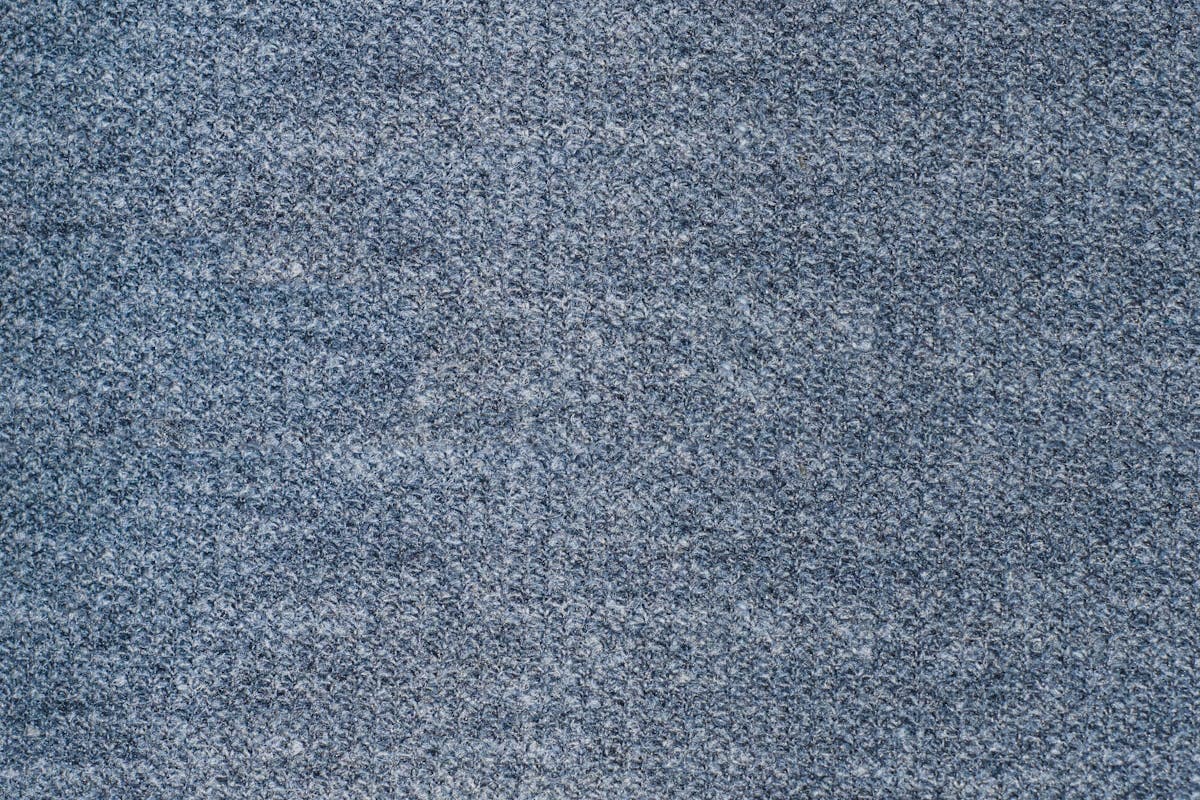
Velvet. Mohair. Satin-finish wool. Textured jacquard. The 2026 class is not going to settle for flat, plain fabric. Texture catches light differently on camera, it photographs with more depth, and it signals that you put thought into your fabric choice -- not just your color choice.
Personal Expression Over Playing It Safe
Custom chains, embroidered messages, thematic design elements, signature accessories. The Haliburton and Banchero influence is real. This generation does not just want to look good -- they want their suit to say something. If you are recreating a draft-day look for yourself, this is the most important trend to absorb: the suit should feel like you, not like a catalog model.
How to Get Draft-Day Energy Without the Draft-Day Budget
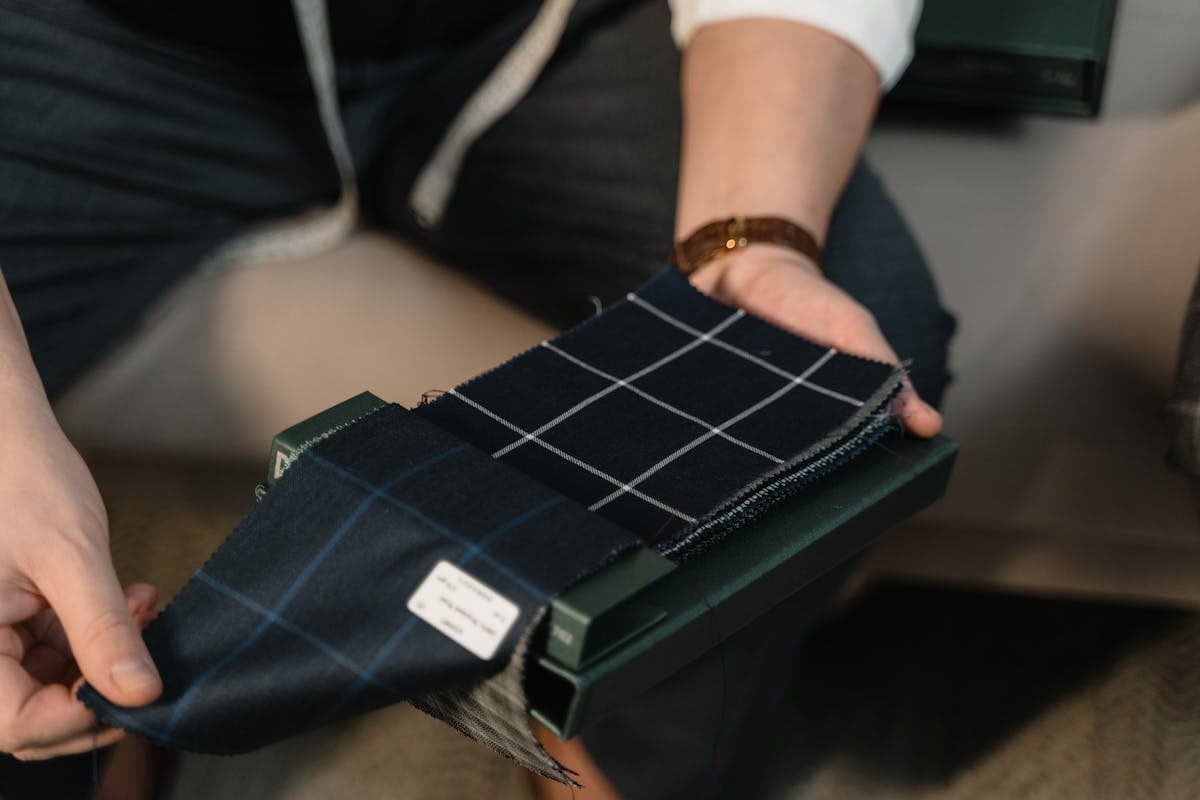
Here is the part where I tell you something the stylists charging $5,000+ do not want you to know: 90% of what makes a draft day suit look incredible is the fit, the fabric, and the color. Not the label. Not the price tag. Not the name of the designer.
Bol Bol's $100,000 spider suit was remarkable because of the craftsmanship and the concept -- but LeBron's all-white suit in 2003? That was a well-cut white suit. Banchero's purple suit? A well-cut purple suit with one good accessory. These looks are not out of reach. They are out of reach at Nordstrom, maybe. They are out of reach at Men's Wearhouse, definitely. But with custom tailoring? Every single one of them is buildable.
Let me break down five draft-inspired looks and exactly what they cost.
Look 1: The LeBron All-White
The king of draft fits. Head-to-toe white, no compromise, no contrasting details. This is the suit that says "I am the first pick in my own life."
- Fabric: Ivory or cream fine worsted wool. Not pure white -- pure white is brutal under anything other than professional lighting. Cream gives you the same punch with ten times the forgiveness.
- Cut: Single-breasted, two-button, peak lapels. Wider lapels for 2026 -- at least 3.5 inches. Relaxed shoulder, full chest. Trousers with a slight break.
- Details: Matching cream shirt, cream or ivory tie if you want the full LeBron monochrome. No pocket square -- the monochrome is the statement. Minimal stitching.
- Shoes: White or off-white leather loafers. Or go cream suede if you want texture contrast.
- Nathan Tailors price: $189-$249 for the full custom suit. Add a matching custom shirt for $39-$59.
Look 2: The Bold Color Statement
This is the Banchero. The Oubre. The Jalen Rose. One strong, saturated color that owns every photograph. Burgundy, emerald, royal blue, deep purple -- pick the one that makes you feel something when you look in the mirror.
- Fabric: Wool or wool-blend in a rich, deep tone. Burgundy is the safest bet for versatility -- you can wear it to weddings, events, and date nights after draft day. Emerald green is the boldest. Royal blue splits the difference.
- Cut: Slim-modern (not skinny). Two-button or double-breasted for extra impact. Peak lapels are non-negotiable on a bold color -- they frame the chest and add structure.
- Details: Black or very dark shirt underneath for maximum contrast. One signature accessory -- a chain, a pin, a bracelet. No more than one.
- Shoes: Black leather with a slight sheen. Patent if you want to go full draft night. Velvet loafers if you want to add texture.
- Nathan Tailors price: $169-$249 depending on fabric weight and construction.
Look 3: The Double-Breasted Power Move
The double-breasted suit has an energy that single-breasted cannot replicate. It is wider, more structured, more deliberate. When a 20-year-old walks across a stage in a double-breasted suit, it reads as "I am not here to fit in. I am here to take over."
- Fabric: Navy or charcoal if you want classic power. Burgundy or forest green if you want modern power. Pinstripes if you want Wall Street power (I can personally vouch for this one).
- Cut: Six-button, two to show. Wide peak lapels -- 4 inches minimum. Structured shoulder. The double-breasted jacket should sit close to the body but not tight. This is the most important fit detail: if it pulls at the buttons, it is wrong.
- Details: Keep the shirt simple -- white or light blue. Let the jacket do the talking. A silk pocket square in a contrasting color adds one note of personality without competing.
- Shoes: Monk straps or oxford cap-toes. The double-breasted suit demands a shoe with structure. No sneakers, no loafers -- this look is all about authority.
- Nathan Tailors price: $209-$309 for the full double-breasted custom suit.
Look 4: The Textured Flex
This is the velvet blazer, the mohair suit, the satin-finish jacket that catches every camera flash. Texture is the move in 2026, and this look takes that to the limit. Think Kelly Oubre's satin red, but adapted into something you can wear more than once.
- Fabric: Velvet blazer in deep burgundy, midnight blue, or emerald. Or a mohair-blend suit with that natural sheen. Or a satin-finish wool that gives you the Oubre camera-flash effect without going full satin.
- Cut: Single-breasted, shawl lapel or peak lapel. The fabric is already doing the work -- the silhouette should be clean and sharp. No extra details. No embroidery. No embellishment. Let the texture speak.
- Details: Black trousers with a velvet blazer for a tuxedo-adjacent look. Or match the trousers to the fabric for full impact. Simple black turtleneck underneath is a strong alternative to a dress shirt -- it gives the look a modern, editorial edge.
- Shoes: This is where you flex. Gold-accented loafers. Patent leather derbies. Velvet slippers with embroidery. The textured suit earns you the right to go bold on the shoes.
- Nathan Tailors price: $169-$269 depending on the fabric. Velvet blazers are quoted individually over WhatsApp.
Look 5: The Modern Classic
Not every draft look needs to break the internet. Sometimes the strongest move is a perfectly fitted navy or charcoal suit with one personal detail that makes it yours. This is the Cooper Flagg approach -- let the fit and the moment do the heavy lifting.
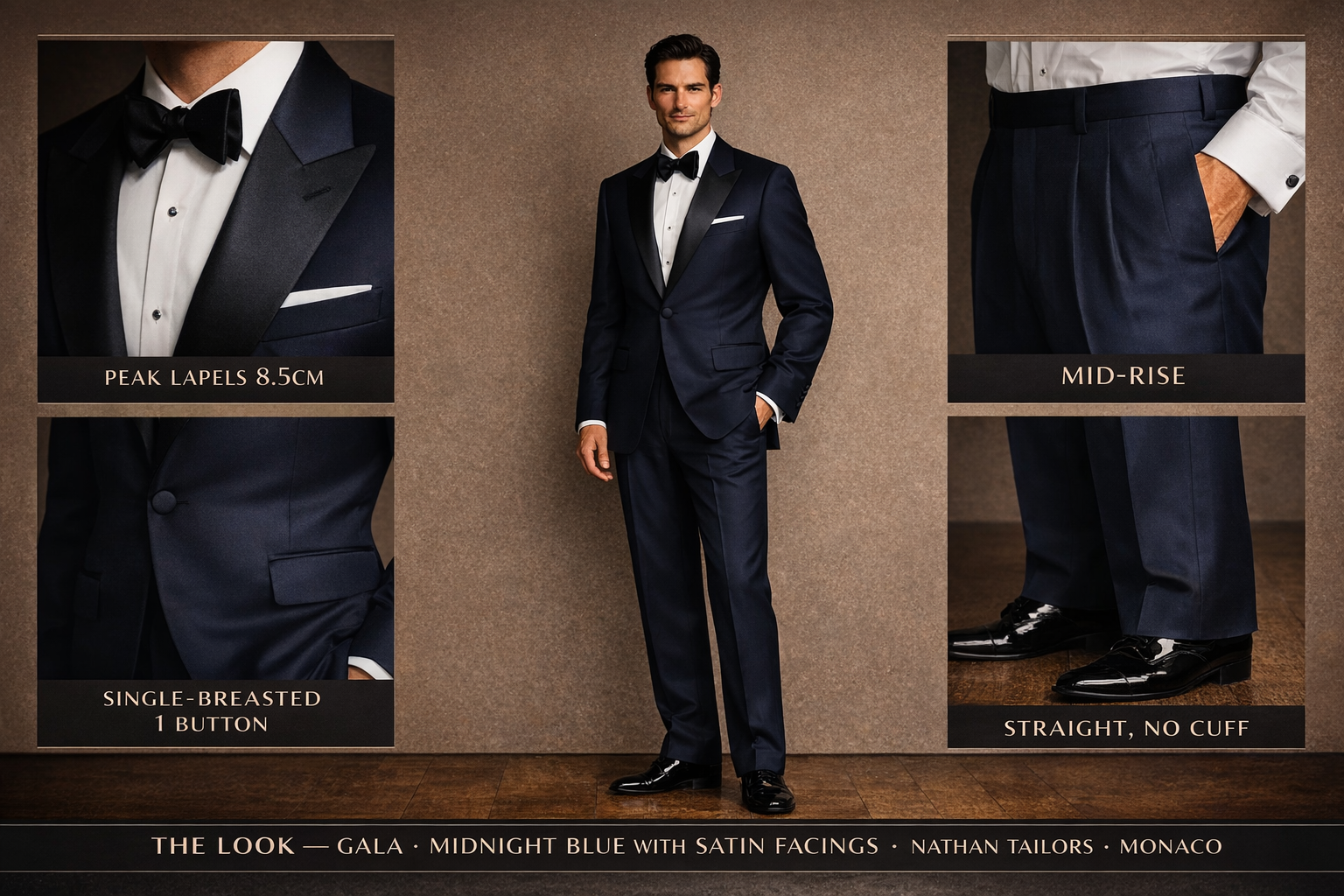
- Fabric: Navy fine worsted wool. Rich, deep color with a slight luster. The kind of navy that looks black in low light and electric blue in camera flash.
- Cut: Two-button, notch or peak lapel, modern fit. Trousers tapered but not skinny. The goal is a silhouette so clean that people cannot quite figure out why you look so good -- they just know you do.
- Details: This is where the personal expression lives. A custom lining with a pattern that means something to you. Monogrammed initials inside the jacket. A specific button choice -- mother of pearl, matte black, gold-finished. One signature accessory -- your chain, your watch, your bracelet.
- Shoes: Clean white sneakers for the modern-casual draft night energy. Or polished brown loafers for the timeless route. Either works because the suit is doing 90% of the work.
- Nathan Tailors price: $169-$249 for a custom navy suit with all the personal details included.
The Real Cost Breakdown: Draft-Day Looks at Every Price Point
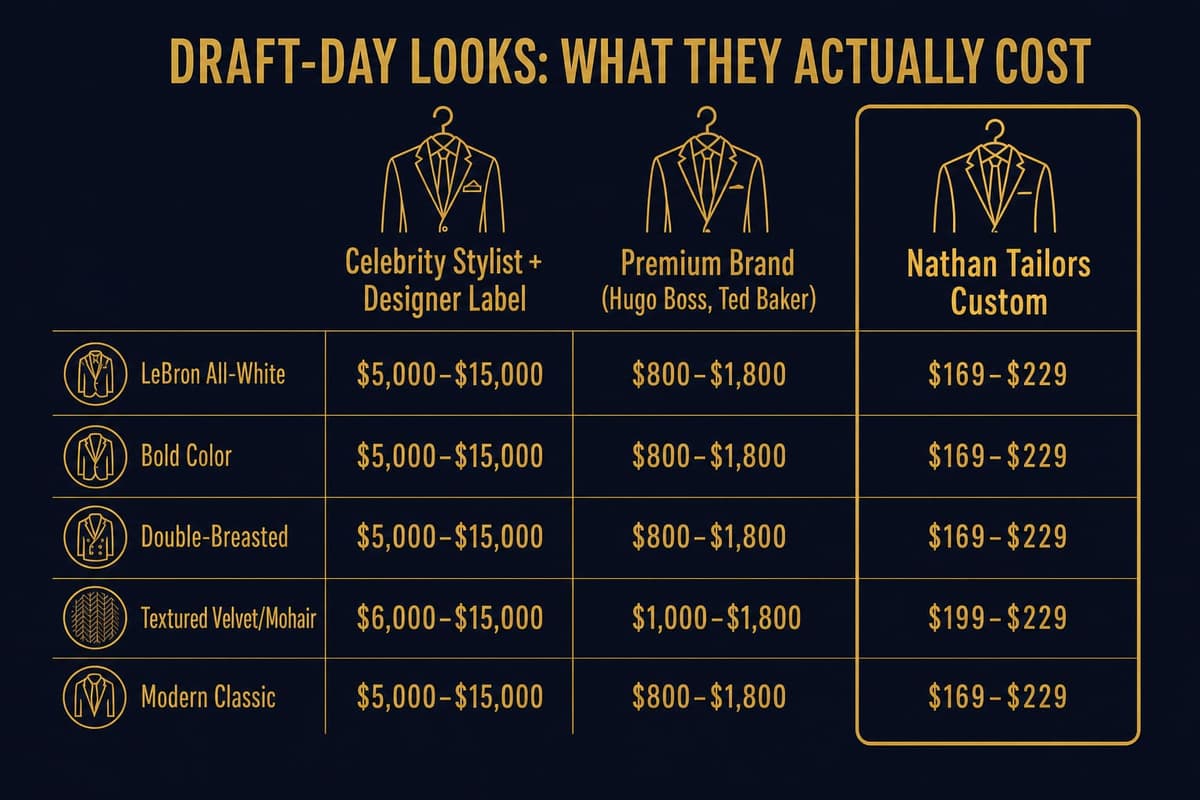
Here is what these looks actually cost depending on where you get them made. This is not opinion -- this is math.
| The Look | Celebrity Stylist + Designer Label | Premium Brand (Hugo Boss, Ted Baker) | Nathan Tailors (Custom) |
|---|---|---|---|
| The LeBron All-White | $5,000 - $15,000+ | $800 - $1,800 | $189 - $249 |
| Bold Color Statement | $4,000 - $12,000 | $700 - $1,500 | $169 - $249 |
| Double-Breasted Power Move | $6,000 - $20,000 | $900 - $2,200 | $209 - $309 |
| Textured Flex (Velvet/Mohair) | $5,000 - $100,000 (ask Bol Bol) | $600 - $1,800 | $149 - $269 |
| Modern Classic + Personal Details | $3,000 - $8,000 | $500 - $1,200 | $169 - $249 |
Look at that rightmost column. Every draft-day look on this list -- every single one -- comes in under $300 with full custom tailoring. Made to your exact measurements. Your choice of fabric, color, lining, lapel style, button, and every other detail. Not off the rack. Not adjusted from a template. Built from scratch, for you.
The difference between a $12,000 designer suit and a $249 custom suit is not quality. It is not fit. It is not fabric. It is the label. And last I checked, nobody at the draft is checking the label inside your jacket. They are checking how you look in it.
The Details That Make or Break a Draft-Day Suit
You can pick the perfect color, the perfect fabric, the perfect silhouette -- and still blow it on the details. Here is what separates a draft-day suit from a suit you just wore on draft day.
Fit Is Everything. Everything.
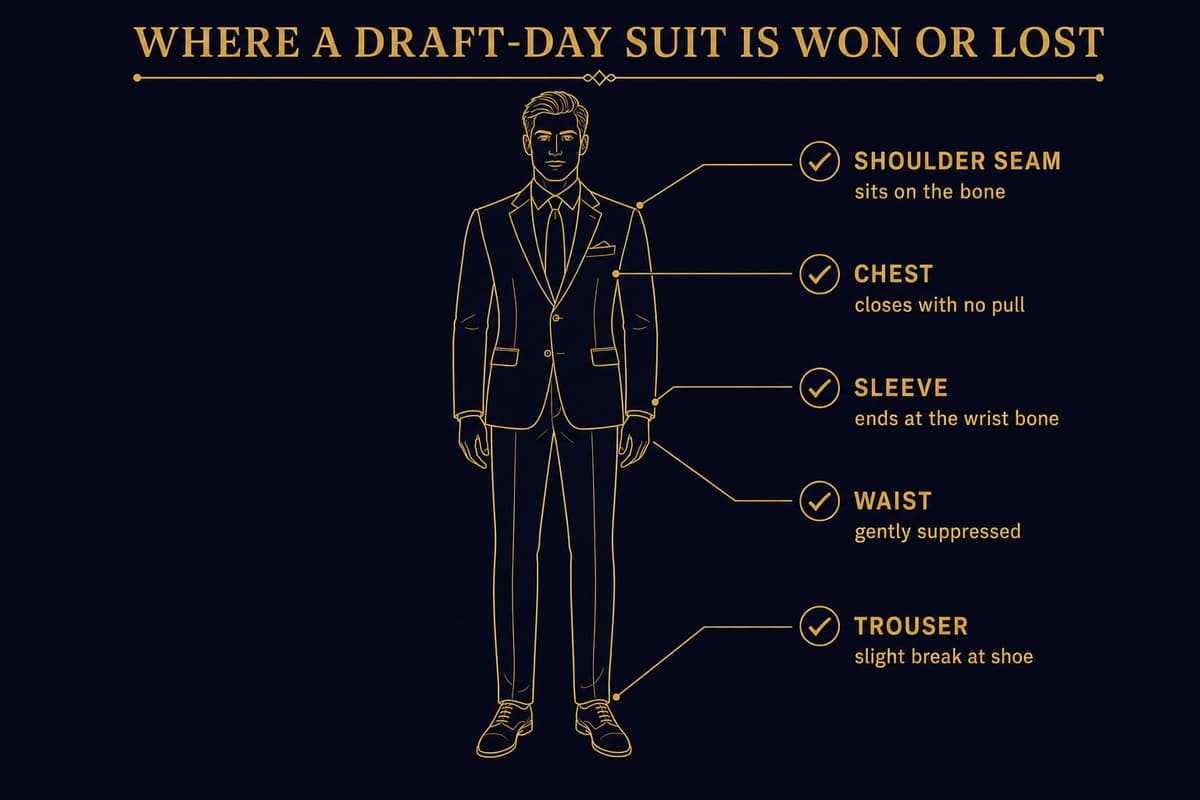
I cannot say this strongly enough. The number one reason suits look bad on young guys is not the suit -- it is the fit. The jacket pulls at the chest. The shoulders extend past the shoulder bone. The sleeves are too long and bunch at the wrist. The trousers are either too tight in the thigh or too loose in the seat.
Every iconic draft suit we discussed above has one thing in common: the fit is dialed. LeBron's white suit did not look good because it was white. It looked good because it was perfectly cut for his body. The white just amplified what was already working.
If you are buying off the rack, you are gambling. You are hoping that a suit designed for a generic body shape happens to match yours. With custom tailoring, there is no gamble. The suit is built to your shoulders, your chest, your waist, your arms, your legs. Every measurement is yours. That is why a $200 custom suit can outperform a $2,000 off-the-rack suit in every photograph.
Accessories: One Statement, Not Five
The biggest mistake young guys make with draft-night energy is stacking too many statements. Bold suit + bold shoes + bold chain + bold watch + bold pocket square + bold sunglasses = visual chaos. You are not getting dressed -- you are decorating a Christmas tree.
The rule is simple: one statement accessory per outfit. If the suit is bold (color, texture, double-breasted), keep the accessories minimal. If the suit is classic (navy, charcoal), let one accessory -- a chain, a watch, statement shoes -- carry the personality. Banchero nailed this with the P5 chain on a clean purple suit. One suit. One chain. Done.
Shoes Can Make or Destroy the Whole Fit
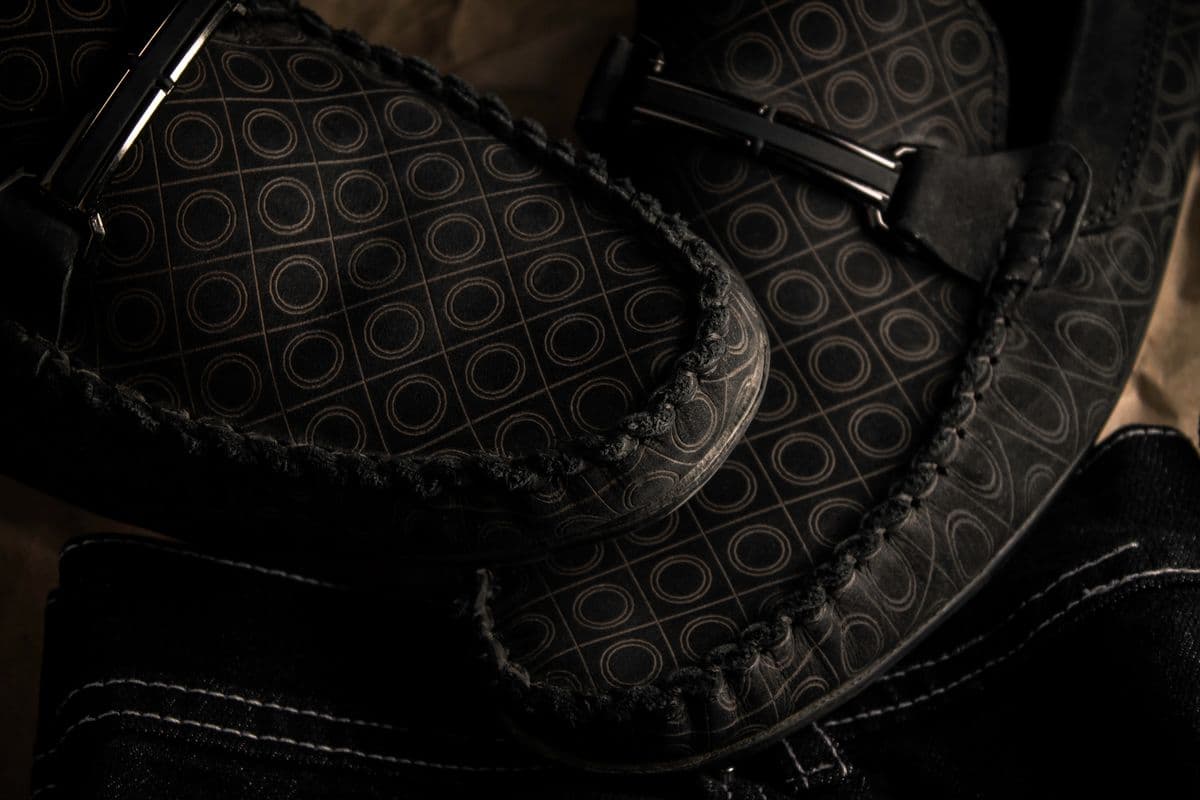
You can spend $250 on a perfect custom suit and then wear square-toed dress shoes from 2014 and undo all of it. Shoes are the first thing stylists notice and the last thing most guys think about.
For a draft-day look in 2026:
- Loafers are the safest and most versatile option. Leather, suede, or velvet. No tassels unless you are intentionally going for a retro look.
- Clean sneakers (white leather, minimal branding) work with modern and classic looks. This is the Gen Z move and it works.
- Monk straps for the double-breasted power look.
- Patent leather for formal, tuxedo-adjacent fits.
- Avoid: Chunky sneakers, square-toed anything, heavily branded shoes, shoes that are louder than the suit.
Confidence Is the Actual Accessory
Here is the thing nobody writes about in style guides because it sounds corny, but it is the single most important factor in whether a bold suit works or not: you have to wear the suit. The suit cannot wear you.
LeBron walked to that stage in all-white at 18 years old and looked like he owned the building. If he had tugged at his jacket, shifted uncomfortably, or hunched his shoulders, the same suit would have looked like a costume. Jalen Rose's red suit worked because he walked in like red was the only logical color for a man of his stature. Kelly Oubre's gold spiky louboutins worked because he moved like a guy who wears gold spiky louboutins every Tuesday.
When you put on a bold suit for the first time, wear it around the house for an hour. Sit in it. Walk in it. Look at yourself in the mirror until the initial shock wears off and you start seeing yourself in the suit rather than a suit on yourself. That shift -- from "I am wearing something bold" to "this is just what I look like" -- is what separates the best draft-day fits from the forgettable ones.
FAQ: NBA Draft Day Suits
What is the most iconic NBA draft suit of all time?
LeBron James in 2003, all-white suit head to toe. He was 18, going first overall to Cleveland, and chose the boldest possible color for the biggest moment of his life. It has defined draft night fashion for over two decades.
How much do NBA draft night suits cost?
Celebrity stylists typically charge $3,000 to $20,000+ for a designer draft night suit. Bol Bol reportedly wore a $100,000 spider-themed suit in 2019. But the actual fit and fabric quality can be replicated with custom tailoring for $149 to $309 -- the premium on designer labels is about the name, not the construction.
When is the 2026 NBA Draft?
Round 1 of the 2026 NBA Draft is June 24, 2026 -- notably on a Tuesday, which is a first. The draft lottery is May 10, 2026. AJ Dybantsa from BYU is the projected number one overall pick.
What suit trends will dominate the 2026 NBA Draft?
Expect wider lapels, relaxed shoulders, bold colors (burgundy, emerald, deep navy), double-breasted jackets, textured fabrics like velvet and mohair, and personal expression through custom details, embroidery, and signature accessories.
Can I recreate an NBA draft day look on a normal budget?
Absolutely. Every iconic draft look -- the LeBron all-white, the Banchero bold color, the Oubre textured satin -- is fundamentally about fit, color, and confidence. Custom tailoring gives you all three for under $300. The label inside the jacket is the only thing that changes between a $200 custom suit and a $10,000 designer suit -- and nobody checks the label.
What color suit should I wear to look like a draft pick?
If you want maximum impact: all-white (cream or ivory specifically), burgundy, emerald green, or deep purple. If you want versatility with draft-night energy: navy with one bold personal accessory. The key is committing fully to one color story rather than mixing too many elements.
Your Draft Night Is Coming
You might not be walking across a stage to shake Adam Silver's hand. But you have your own draft nights. Graduation. Your first big job interview. A wedding where everyone you know is watching. A date where first impressions are everything. A night out where you want to feel like the most confident person in the room.
Every iconic draft fit in NBA history comes down to three things: a strong color choice, impeccable fit, and the confidence to own it. Two of those three are about the suit. And none of them require a six-figure price tag.
At Nathan Tailors, we make custom suits from $149 to $309, built to your exact measurements, in any color, any fabric, any silhouette you want. The LeBron all-white. The Banchero purple. The double-breasted power move. The velvet flex. All of it. Your measurements, your design, your suit.
The 2026 draft class is getting fitted right now. Start yours here.