A note from Jay: I used to trade bonds on Wall Street. Now I live in Hoi An, Vietnam, and I run a tailor shop. People ask me all the time what to do here, and I always tell them the same thing -- three days is the sweet spot. Enough to fall in love with the town, not so much that you run out of things to do (you will not, but three days keeps it tight). This is the itinerary I give my friends when they visit. No filler. No "top 50 things" listicle that nobody actually follows. Just what I would do if I had three days and wanted to leave feeling like I actually experienced the place.
Before We Start: The Practical Stuff Most Blogs Skip
Let me save you some Googling.
Getting here. You fly into Da Nang (airport code: DAD). From there, Hoi An is about 30 kilometers south -- roughly 40-50 minutes by car depending on traffic. A Grab (Southeast Asia's Uber) from Da Nang airport to your hotel in Hoi An costs around 250,000-350,000 VND ($10-$14 USD). Download the Grab app before you land. It works perfectly and saves you from negotiating with taxi drivers at the airport.
When to come. February through April is peak season -- dry, sunny, temperatures in the mid-to-high 20s Celsius (mid-70s to mid-80s Fahrenheit). Perfect. May through August is hotter (it gets properly hot, 35-39C) but still dry and great for the beach. September through January is rainy season -- and I mean rainy. October and November can bring serious flooding. The Old Town has been known to flood one to two meters deep. It is still beautiful in a moody, atmospheric way, but plan accordingly.
Cash vs. card. Bring cash. This is not Bangkok or Singapore where everything takes a tap card. The Central Market, street food vendors, bicycle rentals, most local restaurants, and even some smaller shops -- they run on Vietnamese dong. ATMs are everywhere and work with international cards. Bigger restaurants and hotels take cards, but for the best experiences (the ones I am about to recommend), you want dong in your pocket. Budget roughly 500,000-800,000 VND ($20-$32 USD) per day for food if you eat like a local.
What to wear. Light, breathable clothes. It is hot and humid for most of the year. Comfortable walking shoes are a must -- the Old Town is pedestrian-friendly but the streets are uneven stone and tile, and they get slippery when wet. If you are visiting in rainy season, bring a light rain jacket or just buy a cheap poncho here for 20,000 VND ($0.80). Skip the heels. Seriously. Those charming cobblestones will win.
Getting around. Hoi An is small. You can walk most of the Old Town in 15-20 minutes end to end. For the beach, countryside, and surrounding areas, rent a bicycle (30,000-50,000 VND / $1.20-$2 per day from your hotel) or use Grab. Renting a motorbike is an option if you are comfortable riding one, but honestly, a bicycle is the best way to experience this town. It is flat, the roads are mellow, and you see everything.
Day 1: Old Town, Central Market, and Your First Cao Lau
Morning: Central Market and Breakfast
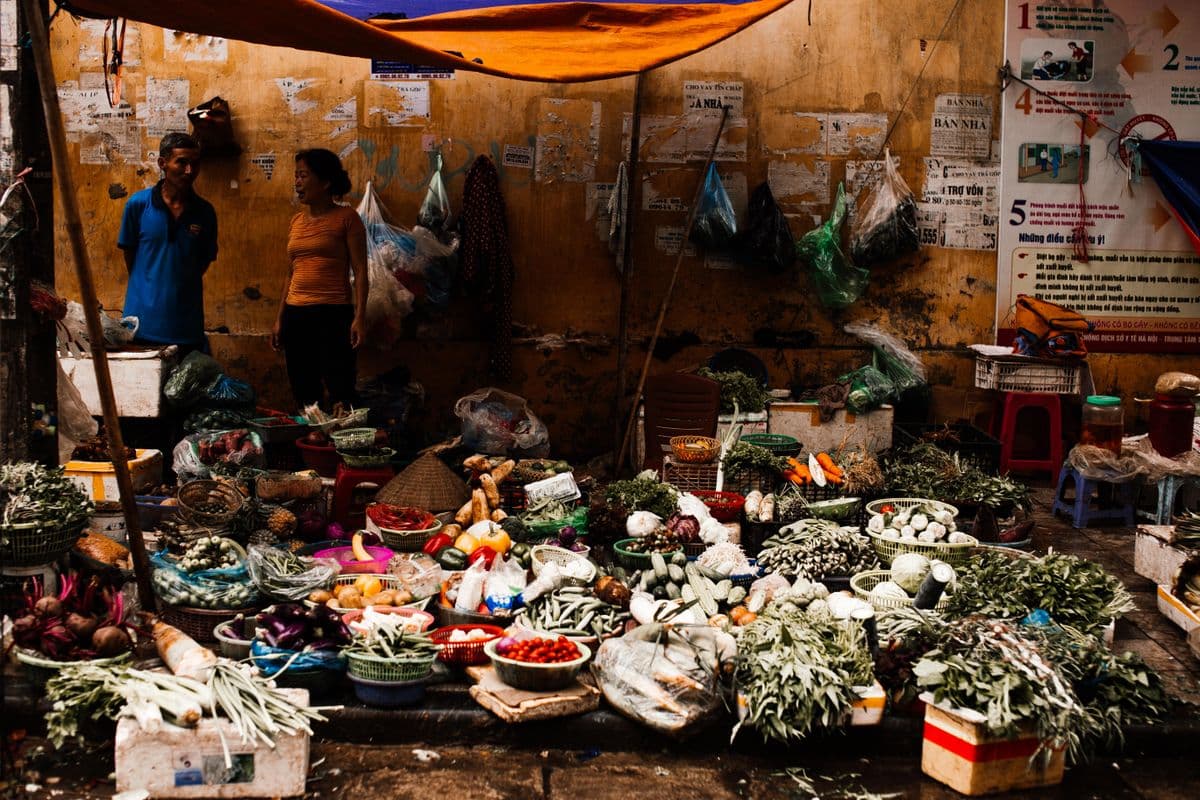
Start early. The Central Market (Cho Hoi An) is best experienced before 8 AM, when the locals are doing their shopping and the energy is pure, unfiltered Hoi An. This is not a tourist market -- this is where the town eats. Fishermen unloading the morning catch, vendors stacking herbs and vegetables into perfect pyramids, the smell of fresh baguettes from street-side ovens.
Walk through the indoor section first. Meat, seafood, produce -- it is intense and wonderful. Then head to the food stalls along the river side of the market. This is where you get your first cao lau.
Cao lau is Hoi An's signature dish, and you cannot get it anywhere else in Vietnam. Thick rice noodles, sliced pork, fresh herbs, crouton-like cracklings, and a small amount of rich broth. The noodles are traditionally made with water from a specific well in town (Ba Le Well) and mixed with ash from Cham Island trees, which gives them their distinctive chewy texture. You will see it on every menu in Hoi An, but the market stalls do it best. Expect to pay about 30,000-40,000 VND ($1.20-$1.60).
While you are at the market, grab a banh mi for the road. Banh Mi Phuong on Phan Chu Trinh Street (about a five-minute walk from the market) is the famous one -- Anthony Bourdain called it the best banh mi in the world, and the line is always long. It is good. It is really good. Crispy baguette, pate, grilled pork, Vietnamese sausage, pickled daikon, fresh herbs, chili sauce. About 30,000-40,000 VND ($1.20-$1.60). But here is the local tip: Madam Khanh (The Banh Mi Queen) on Tran Cao Van Street is just as good with half the line. Get both on different days and decide for yourself.
Mid-Morning: Walk the Old Town
After breakfast, wander. Hoi An's Ancient Town is a UNESCO World Heritage Site, and it earns that title every single day. The best approach is no approach -- just walk.
A few highlights to make sure you hit:
- The Japanese Covered Bridge (Chua Cau). The iconic 18th-century bridge that connects the Japanese and Chinese merchant quarters. It is on the 20,000 dong banknote, and yes, you should take a photo. Go in the morning when the crowds are thinner and the light is softer.
- Tan Ky House. A 200-year-old merchant house that has been lived in continuously by the same family for seven generations. The architecture blends Japanese, Chinese, and Vietnamese influences -- just like the town itself. It is included in the Hoi An Old Town ticket (120,000 VND / ~$5, which gets you entry to five heritage sites).
- Phuc Kien Assembly Hall. The most impressive of Hoi An's Chinese assembly halls. Built by Fujian merchants, it is ornate, colorful, and dedicated to Thien Hau, the goddess of the sea. The ceramic dragon fountains in the courtyard are worth the visit alone.
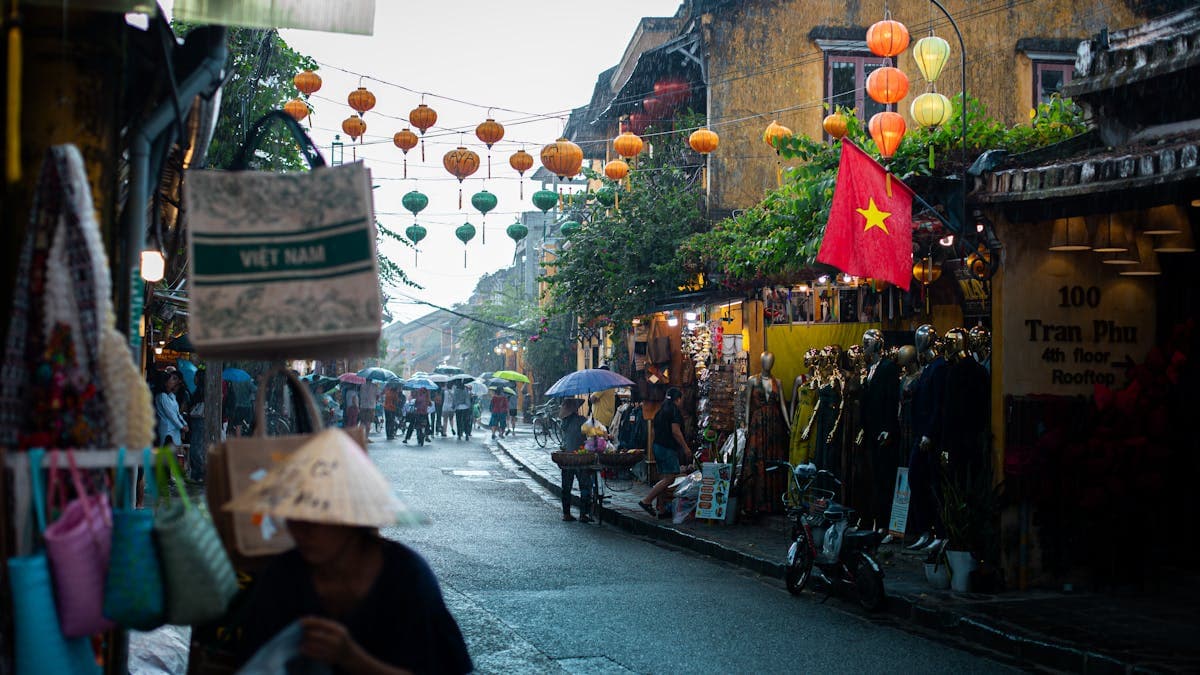
- The yellow streets. Nguyen Thai Hoc and Tran Phu are the main arteries, but duck into the side alleys. The mustard-yellow walls, wooden shopfronts, and hanging lanterns look exactly like they did 200 years ago. This is where the Instagram photos come from, but in person it is even better.
Afternoon: Com Ga and a Tailor Stop
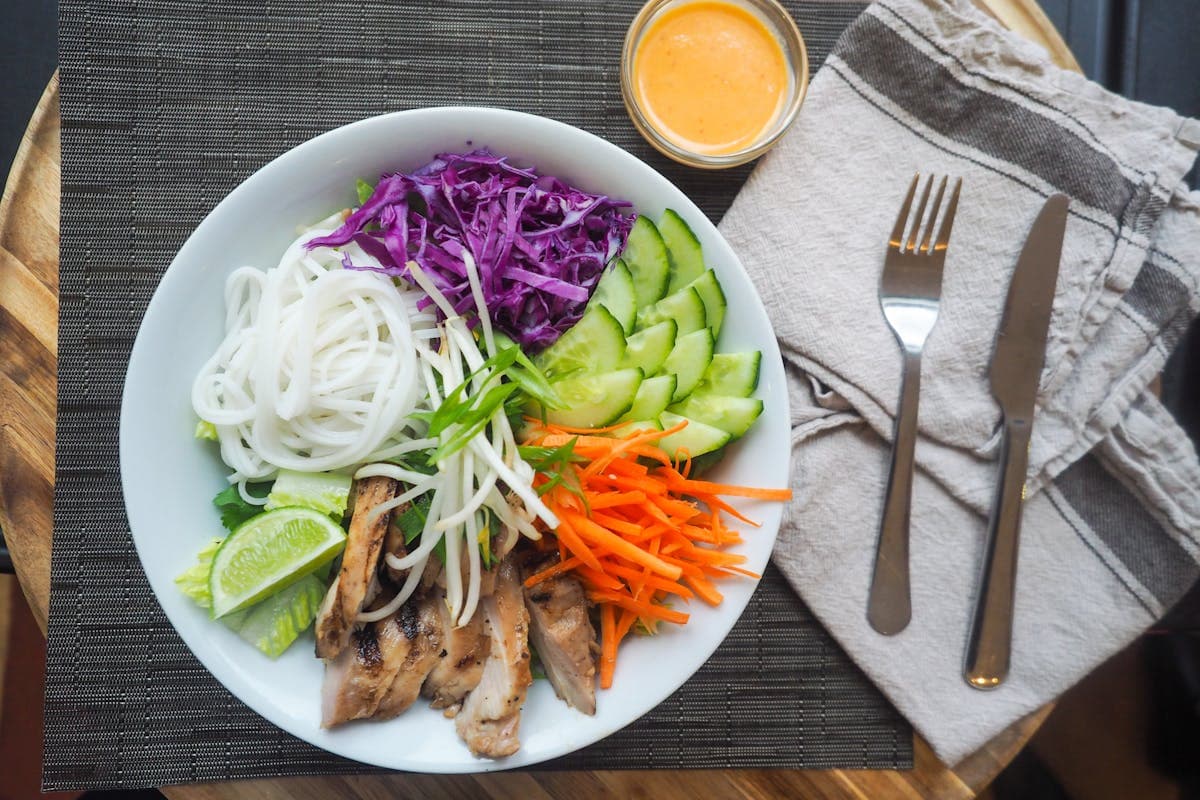
Lunch is com ga -- Hoi An chicken rice. It sounds simple. It is not. The rice is cooked in turmeric and chicken broth, giving it a golden color and a richness you do not get from regular rice. The chicken is poached, shredded, and piled on top with fresh herbs, onion, and a side of papaya salad. Com Ga Ba Buoi on Phan Chu Trinh Street is the one. 40,000-50,000 VND ($1.60-$2). Line out the door at noon, and it is worth every minute.
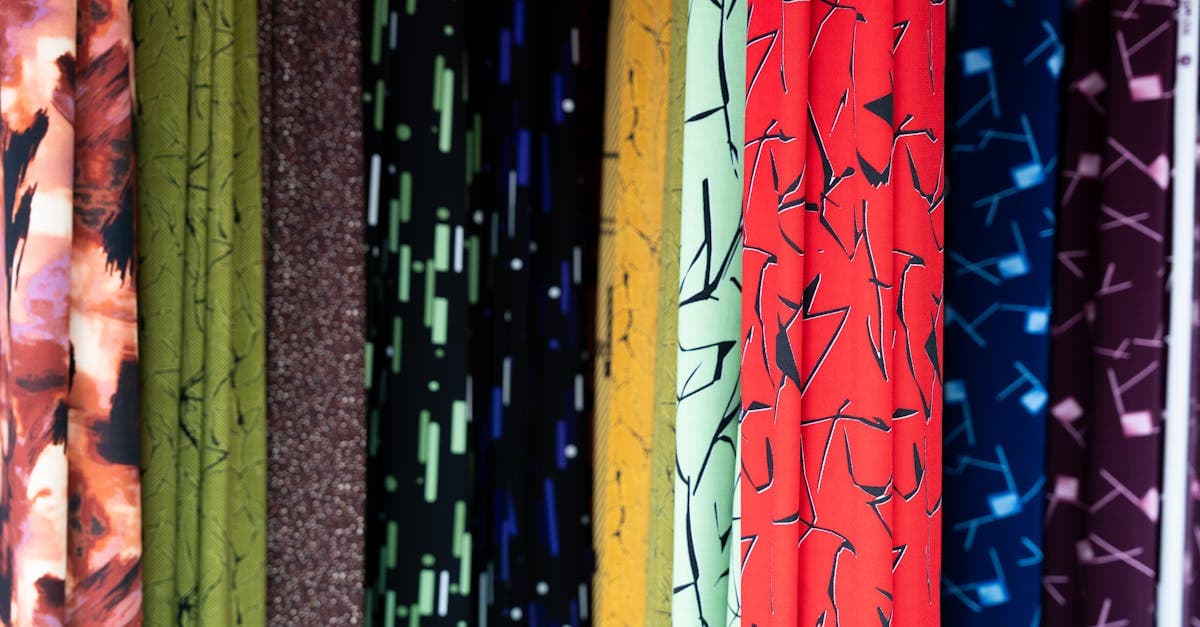
After lunch, this is a natural time to explore the tailor shops. Hoi An has over 500 of them -- tailoring is literally what this town is known for, alongside the lanterns and the food. If you are curious about getting something made (a suit, a shirt, whatever), your first afternoon is the right time to browse, feel fabrics, and get measured. That way the tailors have the full two remaining days to work, fit, and adjust. I happen to know a pretty good shop on Tran Hung Dao Street, but I am biased. The point is: if tailoring is on your radar at all, do not leave it until your last day.
Evening: Lantern-Lit Old Town and An Hoi Island Night Market
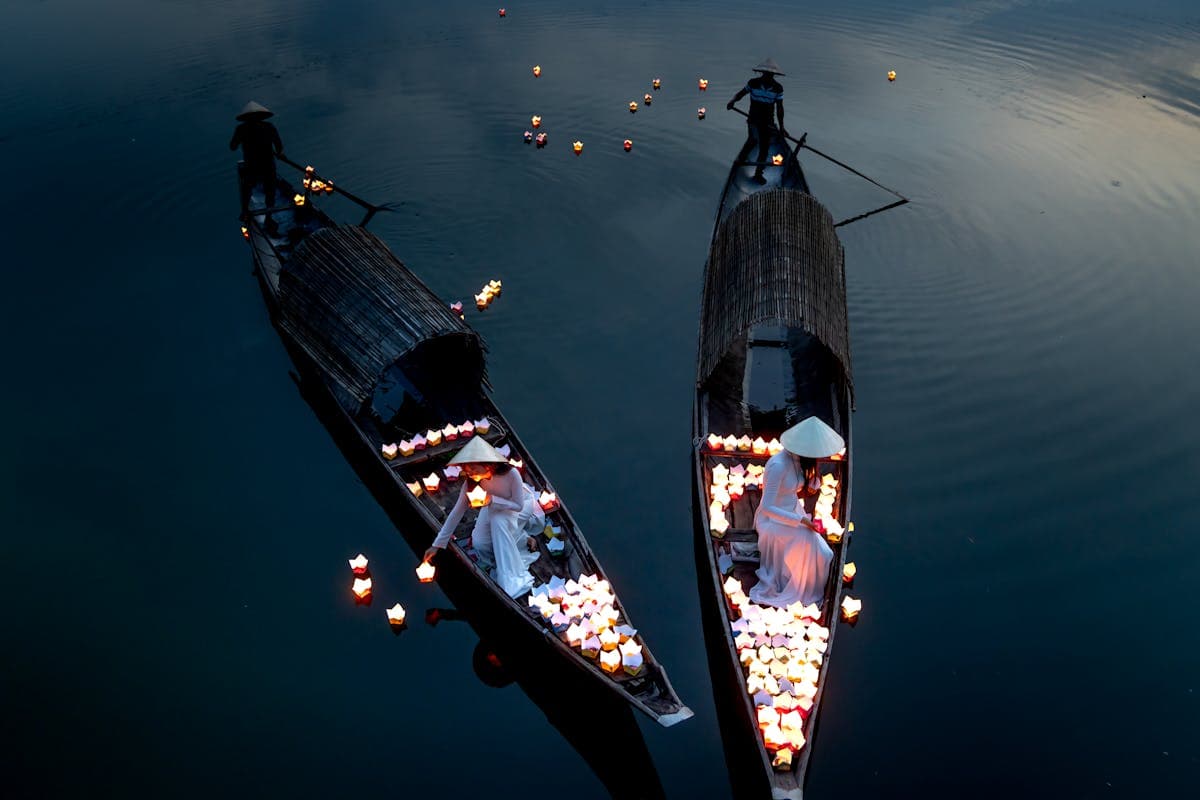
Hoi An at night is a different town. As the sun drops, the lanterns come on -- hundreds of silk lanterns in every color, strung across the streets and reflecting off the Thu Bon River. It is the most photographed scene in Vietnam for a reason.
Walk along Bach Dang Street by the river, then cross the bridge to An Hoi Island Night Market. The night market is touristy, yes, but it is also genuinely fun. Paper lantern-making stalls, silk goods, street food, and the floating candle tradition -- you buy a small paper candle boat, make a wish, and set it on the river. Cheesy? Maybe. But you will do it and you will love it. The candles cost about 10,000 VND ($0.40).
For dinner, find a spot along the river. Morning Glory on Nguyen Phuc Chu Street is run by Trinh Diem Vy, one of Vietnam's most celebrated chefs. Her cao lau and banh xeo (crispy Vietnamese pancakes stuffed with shrimp and pork) are outstanding. Expect to pay 150,000-300,000 VND ($6-$12) per person for a full meal with drinks. If Morning Glory has a long wait (it often does), Hai Cafe on Nguyen Thai Hoc is a great fallback -- open-air courtyard, grilled meats, cold beer, good vibes.
Pro tip: If your visit coincides with the full moon (the 14th day of the lunar month), you are in for something special. The Hoi An Lantern Festival happens every full moon -- the electric lights are switched off around 8 PM, the town glows entirely by candlelight and lantern light, and the river fills with floating candles. It is genuinely magical. Check the 2026 dates before you book: January 2, February 1, March 2, April 1, May 30, June 28, and so on monthly.
Day 2: Cooking Class, Countryside, and the Best Mi Quang in Town
Morning: Cooking Class at Tra Que Village
This is the activity I recommend to literally everyone, and I have never once had someone come back disappointed.
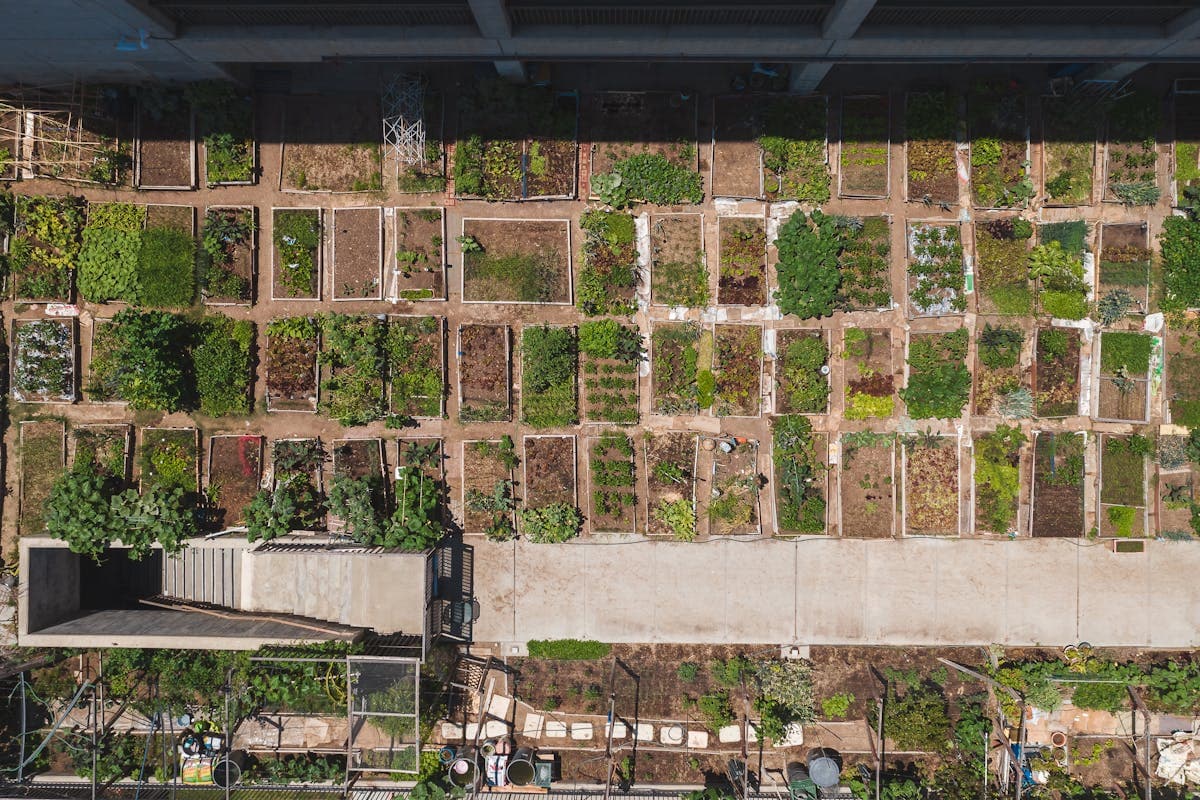
A cooking class at Tra Que Herb Village is about 3 kilometers north of the Old Town. Tra Que is a 300-year-old farming village where the herbs that season Hoi An's food are grown organically in sandy soil fertilized with river algae. The cooking classes here typically start with a bicycle ride to the village, a walk through the herb gardens (you pick your own ingredients), and then 2-3 hours of hands-on cooking.
You will learn to make cao lau, banh xeo, fresh spring rolls, and usually a Hoi An-specific dish like mi quang (turmeric noodles with pork and shrimp). Then you eat what you made, sitting in a garden overlooking the vegetable fields. It is the kind of experience that makes you briefly consider quitting your job and opening a cooking school. Trust me, I know the feeling.
Red Bridge Cooking School is the most established option -- their Tra Que program includes the herb garden tour, a market visit, three hours of hands-on cooking, and lunch. About $59 per person. There are also smaller, family-run classes on GetYourGuide and Viator for $25-$40 per person that are equally good and more intimate. Book a day ahead, especially in peak season (February through April).
Afternoon: Countryside Cycling
After the cooking class, spend the afternoon on a bicycle. This is where Hoi An goes from "really nice town" to "okay I understand why people move here."
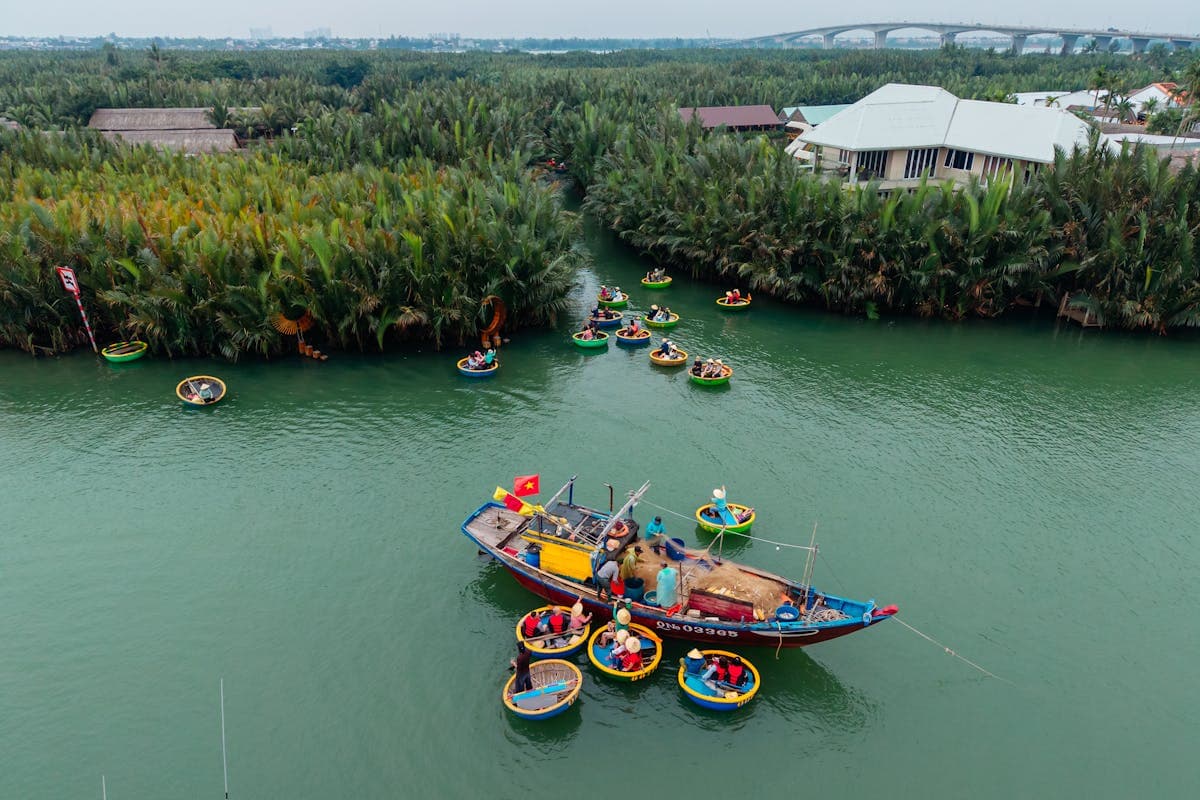
The countryside around Hoi An is flat, green, and impossibly peaceful. Rent a bicycle from your hotel (or many cooking classes include one), and ride south toward Cam Thanh Village -- the coconut palm village about 4 kilometers from the Old Town. The ride takes you through rice paddies, past water buffalo, over small bridges, and along narrow paths lined with coconut trees.
In Cam Thanh, you can do a basket boat ride -- the round bamboo boats that Vietnamese fishermen have used for centuries. A local oarsman paddles you through narrow waterways shaded by coconut palms. Some of them spin the boat, sing Vietnamese songs, and generally put on a show. It is goofy and delightful. About 100,000-150,000 VND ($4-$6) for a 30-minute ride.
If you have the energy, keep riding to the rice paddies between Cam Thanh and An Bang Beach. Late afternoon light on the rice fields is one of the most beautiful things I have seen in this country, and I see it regularly.
Evening: Mi Quang and Night Strolling
Dinner tonight is mi quang -- Hoi An's other signature noodle dish (cao lau gets more press, but mi quang has more fans among locals). Wide, flat turmeric-yellow noodles, usually served with pork and shrimp, crushed peanuts, rice crackers, herbs, and just a small amount of broth. It is drier than pho, more complex than it looks, and addictive. Mi Quang Ong Hai on Ly Thai To Street is a local favorite. 35,000-45,000 VND ($1.40-$1.80).
After dinner, walk down to the river again. The evening scene in Hoi An is different every night -- sometimes there are live music performances on Bach Dang, sometimes a local wedding is parading through the streets with drums and firecrackers, sometimes it is just lanterns and the sound of the river. Grab a cold Bia Hoi (fresh draft beer, about 10,000 VND / $0.40 a glass) from a street-side stall and sit. This is one of those moments where you stop planning and start just being here.
And if you are feeling bold, ask your hotel about karaoke. I am not going to say I have ended up at a local karaoke spot at midnight singing "Hotel California" in Vietnamese, but I am not going to say I have not. Hoi An after dark has a whole layer that the travel blogs do not cover.
Day 3: Beach Day, Sunset, and Your Last Meal
Morning: An Bang Beach
Day three starts slow. You have earned it.
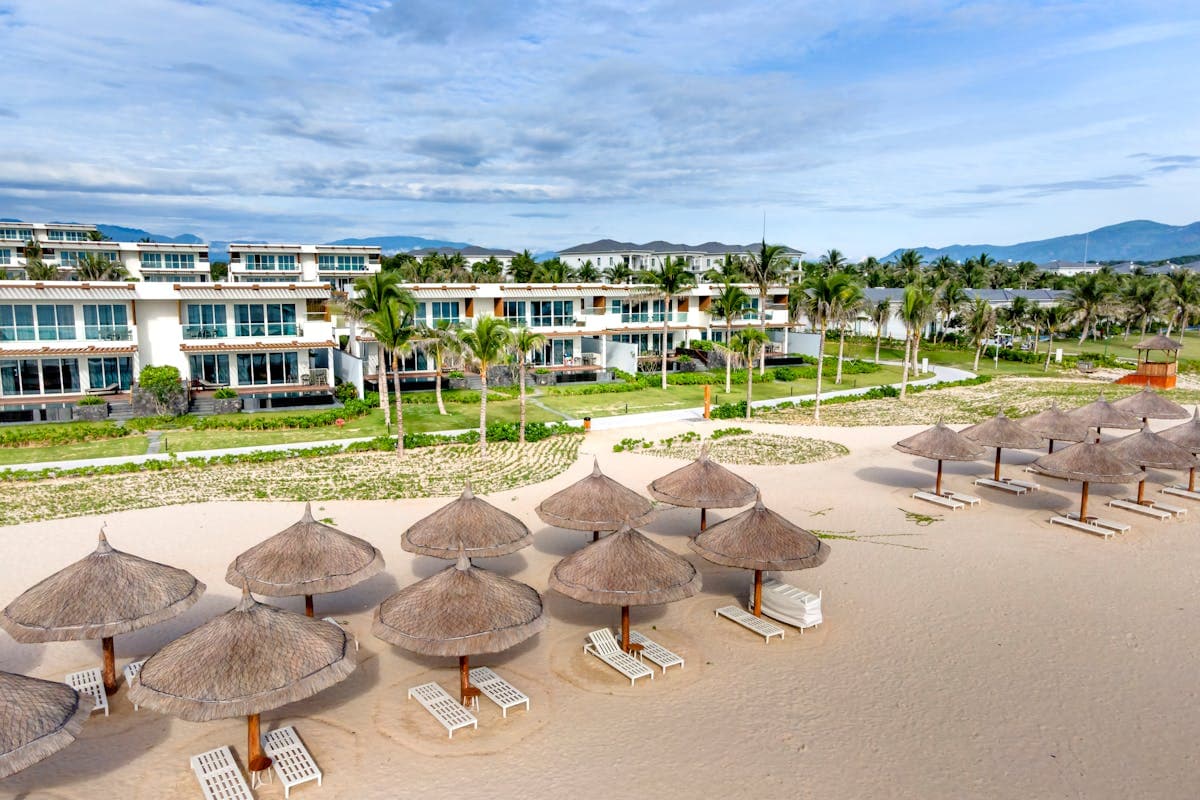
An Bang Beach is about 4 kilometers east of the Old Town -- a 15-minute bicycle ride through rice paddies and village lanes, or a quick Grab ride. It was named one of Asia's top beaches by TripAdvisor, and unlike some overcrowded Southeast Asian beaches, it still feels spacious and relaxed.
The beach has a great setup of beachfront restaurants and bars where you can rent a sun lounger (50,000-100,000 VND / $2-$4), order food and drinks, and just exist for a few hours. The DeckHouse An Bang Beach and Soul Kitchen are both excellent -- fresh seafood, smoothie bowls, cold beers, ocean views. This is not a party beach. It is a "read your book, swim, eat, nap, repeat" beach. Perfect.
The water is warmest from May through September, but swimmable from February through August. Be mindful of currents -- the waves at An Bang are gentle but there is occasionally an undertow, especially in the afternoon when the wind picks up.
If you want something more active, An Bang offers kayaking, paddleboarding, and surfing lessons. The waves are small and consistent -- perfect for beginners. Expect to pay about 200,000-400,000 VND ($8-$16) for an hour of paddleboard or kayak rental.
Optional: Cham Islands Day Trip
If you are willing to swap the beach morning for something more adventurous, the Cham Islands (Cu Lao Cham) are about 15 kilometers off the coast. These are a UNESCO Biosphere Reserve with some of the best snorkeling in central Vietnam -- clear water, coral reefs, tropical fish. Day trips run about $39-$48 per person, including speedboat transfer, snorkeling gear, a seafood lunch on the island, and hotel pickup. The season for Cham Islands is March through September (the sea is too rough in monsoon season). Book through your hotel or on Viator/GetYourGuide.
Afternoon: Final Fitting, Final Wandering
If you had anything made at a tailor shop, this is when you pick it up and do your final fitting. If not, the afternoon is free for exploring whatever you missed. A few ideas:
- Hoi An Museum of History and Culture on Nguyen Hue Street -- small but well-curated, and it gives you real context for everything you have been seeing.
- The Chinese Assembly Halls. If you only hit one on Day 1, visit another. Cantonese Assembly Hall (Quang Trieu) has a gorgeous mosaic dragon fountain.
- Lantern-making workshop. Several shops in the Old Town offer hands-on lantern-making classes (about 100,000-150,000 VND / $4-$6). You make your own silk lantern and take it home. It is surprisingly meditative and the result is a genuinely nice souvenir that did not come from a factory.
- Che dessert stop. Che is Vietnamese sweet soup -- a dessert made with beans, jellies, coconut milk, tapioca, and crushed ice. There are dozens of varieties. Find a che stall in the market or along Tran Phu Street and just point at whatever looks interesting. 15,000-25,000 VND ($0.60-$1). It is the kind of thing that makes you realize you have been eating boring desserts your entire life.
Late Afternoon: Sunset at the Thu Bon River
End your trip the way Hoi An ends every day -- at the river.
Walk along Bach Dang Street on the Old Town side, find a spot, and watch the sunset over the Thu Bon River. The sky turns orange and pink, the fishing boats come in, the lanterns start to flicker on one by one, and the town transitions from daytime charm to nighttime magic. It happens every single day and I am still not tired of it.
For your last dinner, I would go with banh xeo -- the crispy Vietnamese crepe. It is an absolute showstopper: a golden, crispy rice flour pancake filled with shrimp, pork, bean sprouts, and herbs. You tear off a piece, wrap it in rice paper with fresh greens, dip it in nuoc cham sauce, and wonder why this dish is not on every menu in every country. Banh Xeo Ba Le on Tran Hung Dao Street does an incredible version. 40,000-60,000 VND ($1.60-$2.40).
The Food Cheat Sheet
Because you should not have to scroll back through three days to find what to eat. Here is everything in one place.
| Dish | What It Is | Where to Get It | Price (VND / USD) |
|---|---|---|---|
| Cao Lau | Chewy noodles, pork, herbs, croutons -- Hoi An exclusive | Central Market stalls, Morning Glory | 30,000-40,000 / $1.20-$1.60 |
| Banh Mi | Vietnamese baguette sandwich, the world's best | Banh Mi Phuong, Madam Khanh | 30,000-40,000 / $1.20-$1.60 |
| Com Ga | Turmeric chicken rice with herbs and papaya salad | Com Ga Ba Buoi | 40,000-50,000 / $1.60-$2.00 |
| Mi Quang | Turmeric noodles, pork, shrimp, peanuts, rice crackers | Mi Quang Ong Hai | 35,000-45,000 / $1.40-$1.80 |
| Banh Xeo | Crispy Vietnamese crepe with shrimp, pork, sprouts | Banh Xeo Ba Le, Morning Glory | 40,000-60,000 / $1.60-$2.40 |
| Pho | The classic Vietnamese noodle soup (beef or chicken) | Any roadside stall, honestly | 35,000-50,000 / $1.40-$2.00 |
| Che | Sweet soup dessert -- beans, jelly, coconut milk, ice | Central Market, Tran Phu Street stalls | 15,000-25,000 / $0.60-$1.00 |
| Bia Hoi | Fresh draft beer, brewed daily, impossibly cheap | Any street-side stall with tiny chairs | 10,000-15,000 / $0.40-$0.60 |
Total food budget for three days eating well: roughly 600,000-1,200,000 VND ($24-$48). That is not a typo. You can eat like a king here for what a single Sweetgreen salad costs in Manhattan.
Things Most Travel Blogs Miss
After living here for a while, there are a few things I wish someone had told me before my first visit.
- The Old Town ticket is worth it. For 120,000 VND (~$5), you get entry to five heritage sites of your choice -- assembly halls, old houses, museums, and the Japanese Bridge. Some travelers try to sneak in without one. Do not be that person. The ticket money goes toward preserving a 400-year-old town. It is five dollars.
- Hoi An has a 2 AM food scene. After the tourist restaurants close, the late-night pho and banh mi stalls open along Hai Ba Trung Street. If you are out late (karaoke, drinks, whatever), wander toward the market area. There will be a stall with plastic chairs and a bubbling pot of broth. Sit down. You will not regret it.
- The full moon is not the only good night. Yes, the Lantern Festival is special. But every night in the Old Town, after about 7 PM, the lanterns are on and the atmosphere is romantic and surreal. You do not need to time your trip to the lunar calendar to experience lantern-lit Hoi An.
- Tailoring is not just for suits. Most people think of Hoi An tailoring as men's suits. But the tailor shops here make everything -- wedding dresses, ao dai, silk pajamas, casual linen shirts, kids' clothes, leather jackets, women's blazers. Some of the best things I have seen come out of our shop have been a women's blazer someone designed from a Pinterest screenshot and a pair of custom silk pajamas. (We make the suits, shirts and pajamas only; for dresses and ao dai, other Hoi An tailors offer them.) Walk in with an open mind.
- Stay on the Cam Nam side of the river. Most tourists stay in the Old Town itself, which is great. But the hotels and homestays across the river on Cam Nam Island (a 2-minute walk over the bridge) are quieter, cheaper, often nicer, and still a stone's throw from everything. I live on this side. There is a reason.
- The coffee culture is serious. Vietnamese coffee is its own thing -- dark roast, drip-brewed through a metal phin filter, served with sweetened condensed milk. Order a ca phe sua da (iced milk coffee) at literally any cafe. The Espresso Station and Rosie's Cafe are both excellent if you want a sit-down spot, but the 10,000 VND ($0.40) coffee from a plastic chair on the sidewalk is just as good.
- Do not skip the banh xeo lady on Tran Hung Dao. I mentioned Banh Xeo Ba Le already, but I am saying it again because people walk right past it. The restaurant is small and unassuming. The banh xeo is world-class. Go.
The Three-Day Budget
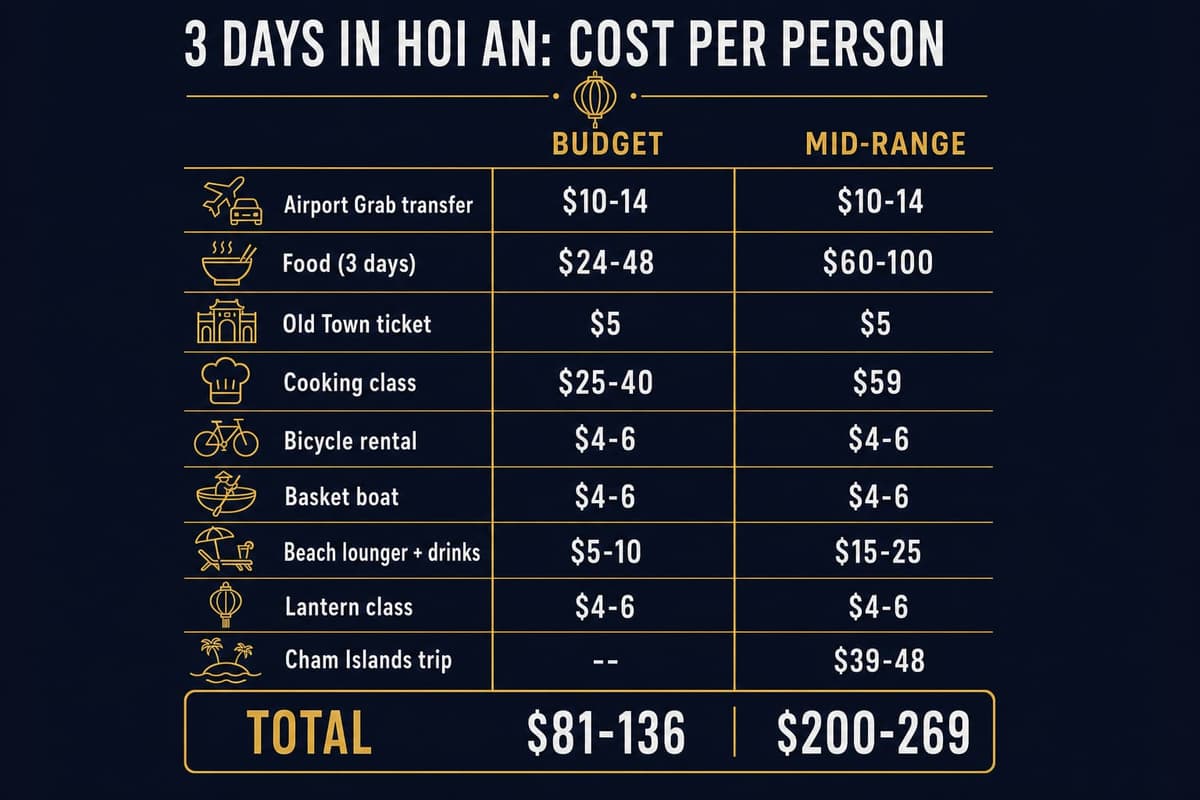
Just to set expectations. Here is what three days in Hoi An realistically costs per person (excluding accommodation and flights):
| Category | Budget | Mid-Range |
|---|---|---|
| Da Nang airport to Hoi An (Grab) | $10-$14 | $10-$14 |
| Food (3 days) | $24-$48 | $60-$100 |
| Old Town heritage ticket | $5 | $5 |
| Cooking class | $25-$40 | $59 |
| Bicycle rental (3 days) | $4-$6 | $4-$6 |
| Basket boat ride | $4-$6 | $4-$6 |
| Beach lounger + drinks | $5-$10 | $15-$25 |
| Lantern-making class (optional) | $4-$6 | $4-$6 |
| Cham Islands day trip (optional) | -- | $39-$48 |
| Total (per person) | $81-$136 | $200-$269 |
This is one of the most affordable travel destinations in the world. And it is not a "you get what you pay for" situation. The food is exceptional. The scenery is UNESCO-caliber. The people are warm and welcoming. It just happens to cost less because Vietnam's cost of living is dramatically lower than the West. That same economics applies to tailoring, by the way -- same Italian and English fabrics, same quality construction, a fraction of the price. But that is a topic for another blog post.
Frequently Asked Questions
Is three days enough for Hoi An?
Three days is the sweet spot for most visitors. You can comfortably cover the Old Town, do a cooking class, hit the beach, and have time to wander without rushing. If you have four or five days, you can add a Cham Islands trip, more countryside cycling, or just slow down and enjoy the cafe culture. But three days will not feel rushed.
Should I stay in Hoi An or Da Nang?
Stay in Hoi An. Da Nang has its own appeal (nice beaches, city amenities), but Hoi An's magic is in the atmosphere -- the lanterns at night, the morning market, the river at sunset. You lose all of that if you are commuting from Da Nang. Stay in town, walk everywhere, and soak it in.
Is Hoi An safe?
Extremely safe. I walk around at midnight and never think twice. Petty theft is rare. Violent crime is essentially non-existent. The biggest "danger" is crossing the street (traffic does not stop for pedestrians -- just walk slowly and predictably and the scooters will flow around you). And watch your phone on crowded streets, same as any tourist town.
Do people speak English?
In the tourist areas (Old Town, restaurants, hotels, tailor shops), yes. Most staff speak conversational to fluent English. Outside the tourist areas, much less. Learn a few Vietnamese phrases -- xin chao (hello), cam on (thank you), bao nhieu (how much) -- and people will appreciate it enormously. Google Translate works well for everything else.
Can I use credit cards?
At hotels, bigger restaurants, and some shops, yes. But the best food in Hoi An comes from market stalls and street vendors, and they only take cash. Hit an ATM when you arrive and carry Vietnamese dong. Most ATMs dispense up to 3,000,000-5,000,000 VND ($120-$200) per transaction.
Is it worth visiting during rainy season?
It depends on your tolerance for weather. September and early October can be fine -- occasional rain, cooler temperatures, fewer tourists, lower prices. Late October through December is serious rain and potential flooding. If your only option is rainy season, come in September or January (January is usually drier and cooler). Pack a rain jacket and lean into the atmosphere -- rainy Hoi An has its own moody beauty.
What about the tailoring? How does that fit into three days?
Perfectly. Day 1: browse shops and get measured. Day 2: first fitting. Day 3: final fitting and pickup. That is how most visitors do it. The tailors in Hoi An are incredibly fast -- they handle this timeline every day. If you are getting something more complex (a three-piece suit, an overcoat), you might want to start on Day 1 morning to give them the maximum window.
Any scam warnings?
Hoi An is not a scammy town, but a few things to watch for: always agree on a price before getting in a cyclo (bicycle rickshaw), be aware that some hotel front desks earn commissions for recommending specific tailor shops (do your own research), and do not buy "silk" from street vendors without verifying it is real silk (burn test: real silk smells like burning hair, synthetic smells like burning plastic). Common sense stuff. Overall, Hoi An is one of the most honest, welcoming places I have traveled.
Come Say Hello
If you are planning a trip to Hoi An, I genuinely hope this helps. And if you happen to walk past 127 Tran Hung Dao Street, pop your head in. Linda will probably ask you why you are so handsome (or so pretty -- she does not discriminate), offer you a cold drink, and before you know it you will be browsing fabric swatches for a suit you did not plan on getting. That is kind of how it works here. And it is kind of wonderful.
We are not the only good tailor shop in Hoi An. But we might be the most fun. And we definitely have the best karaoke recommendations.
Planning your trip and want to combine it with some custom tailoring? Message us on WhatsApp -- we are happy to help with tailoring questions, restaurant recs, or just general Hoi An advice. We live here. We love it here. And we love showing people around.
Nathan Tailors -- 127 Tran Hung Dao Street, Hoi An, Vietnam. Established 1999. 520+ five-star Google reviews. 5,000+ clients worldwide. We also know where to find the best pho at 2 AM.