How to Measure Back Width:
For Jackets, Suits, and Shirts
Back width is the measurement most home tailoring guides skip — and the one that fixes the bunching problem on the upper back of so many off-the-rack jackets.
What Is Back Width?
Back width (also called cross back) is the horizontal distance across your upper back, measured between the rear armhole points. It is taken across the shoulder blades, typically 4-6 inches (10-15 cm) below the base of the neck.
Back width is distinct from shoulder width: shoulder width is measured across the top, point-to-point on the shoulder bone; back width is measured below, across the back. A jacket can have correct shoulder width and wrong back width, which causes bunching, pulling, or excess fabric across the upper back.
This measurement is the second most-skipped on most online tailoring forms. Forms that capture only chest + shoulder produce jackets that fit at the front and bunch at the back when the customer raises their arms.
Why This Measurement Matters
- ✓Upper back fit — wrong back width causes pulling at the rear armhole or bunching between the shoulder blades
- ✓Range of motion — too-narrow back width restricts arm movement; too wide creates dropped armholes
- ✓Posture accommodation — back width is where forward-shoulder, sloped-shoulder, and hunched postures show up most
- ✓Shirt fit — equally important for shirts as jackets, especially for athletic builds with developed lats
Step-by-Step: How to Measure Back Width
What You'll Need:
- Soft fabric measuring tape
- A helper (mandatory — back width is impossible to self-measure accurately)
- Form-fitting shirt
Stand naturally with arms relaxed
Stand straight with your arms hanging naturally at your sides. Do not pull your shoulders back or forward. Keep your posture exactly as it is in normal wear — that is what the jacket needs to fit.
Locate the rear armhole points
The rear armhole point is where the back of the deltoid meets the shoulder blade — roughly 4-6 inches below the base of the neck, at the outer edge of the back. Have your helper run their fingers along your back and feel for where the armhole crease would naturally sit.
Measure straight across the back
Have your helper measure horizontally from one rear armhole point to the other, across the back. Keep the tape parallel to the floor — not following the curve of the back. The tape should rest on the back, not pull tight.
Verify the measurement is below the shoulder line
A common mistake is measuring across the top of the shoulders (which gives you shoulder width) instead of across the back (back width). Verify the tape is sitting below the shoulder bone, on the upper back, not on top of the shoulders.
Record and repeat
Record to the nearest 0.5 cm or 0.25 inch. Re-measure once to verify — back width is sensitive to posture changes, so two consistent readings are required for confidence.
Average Adult Back Width by Build
| Build | Back Width (inches) | Back Width (cm) |
|---|---|---|
| Slim build (US adult male) | 15.5" – 16.5" | 39 – 42 cm |
| Average build (US adult male) | 16.5" – 17.5" | 42 – 44 cm |
| Athletic build (men) | 17.5" – 19" | 44 – 48 cm |
| Lifter / V-taper build | 19" – 21" | 48 – 53 cm |
Source & method
Data: Nathan Tailors drafting reference — the shop's own cutting conventions
Method: Back width by build, from the workshop's standard drafting blocks.
Limitation: A garment convention, not a body statistic. No anthropometric survey measures this, because it describes how cloth is cut rather than how people are shaped. Treat it as one workshop's house standard.
Last reviewed: April 27, 2026
Cite this page
Nathan Tailors, "How to Measure Back Width" (2026). Nathan Tailors drafting reference — the shop's own cutting conventions. https://www.nathantailors.com/guides/how-to-measure-back-width
Free to quote or reproduce with attribution and a link.
Common Mistakes
Confusing back width with shoulder width
Shoulder width is measured across the top, on the shoulder bone. Back width is measured below, across the back. They are different numbers — typically back width is 0.5-1.5 inches narrower than shoulder width.
Measuring with shoulders pulled back
Tensing the back artificially expands the measurement by 1-2 cm. Stand naturally — that is the posture the jacket has to fit during normal wear.
Tape following the curve of the back
The tape should be straight (chord), not following the back contour (arc). The arc measurement is 1-2 cm longer and produces jackets with too much fabric across the upper back.
Don't have a measuring tape?
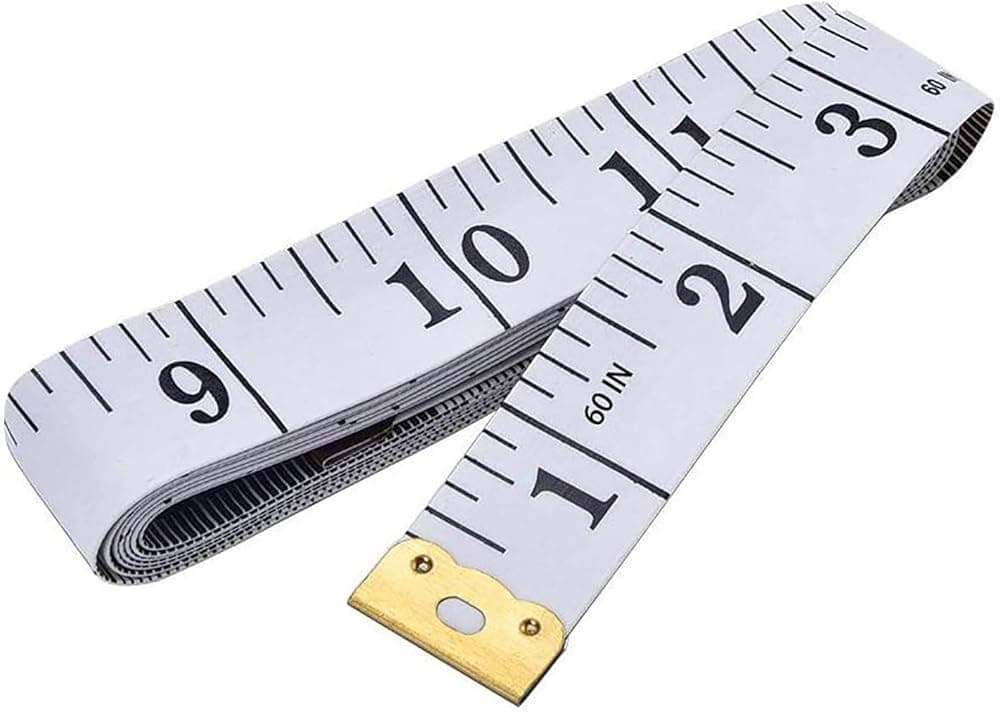
Soft Tailor’s Tape Measure — 60 in / 150 cm, dual scale
A flexible cloth body tape with both inches and centimetres — the exact kind we use in the workshop. Sixty inches covers any chest, waist, or hip. Grab two so you can hold one taut while you read the other.
As an Amazon Associate, Nathan Tailors earns from qualifying purchases — at no extra cost to you. Price is approximate; see Amazon for the current price.
Frequently Asked Questions
What is the difference between back width and shoulder width?+
Shoulder width is measured straight across the top, point-to-point on the shoulder bone. Back width is measured below, across the upper back between the rear armhole points. Back width is typically 0.5-1.5 inches (1.5-4 cm) narrower than shoulder width on the same person.
Why does my off-the-rack jacket bunch in the upper back?+
Almost always because the brand's fit-model back width is larger than yours. Off-the-rack jackets are sized primarily on chest circumference; back width is fixed per cut. If your back is narrower or you have rounded forward shoulders, the jacket will have excess fabric across the upper back. The fix is bespoke or MTM grading that takes back width separately.
Can I measure my back width by myself?+
Not accurately. Back width is one of the few measurements where a helper is mandatory. Self-measurement attempts using a wall or mirror produce 1-3 cm errors that compound through the jacket pattern. If you do not have a helper, skip this measurement and let the tailor estimate from a photograph or have it taken at fitting.
What is the average back width for a man?+
The US male sedentary average back width is approximately 17 inches (43 cm). Trained lifters with developed lats and rear delts run 18-21 inches. Slim builds run 15-16 inches. Variation by training status is larger here than for almost any other measurement.
Does back width change with weight or training?+
Yes — significantly. Lat hypertrophy can add 4-6 cm to back width over 12-18 months of consistent training. Rear-delt and trap development adds another 2-3 cm. This is why measurements taken before a training transformation should not be reused for a new jacket.
Why is back width important for shirts?+
Same reason as for jackets, with one addition: shirt back width determines whether you can perform a bench press, throw a punch, or reach overhead without the back yoke binding. Athletic-cut and stretch-fabric shirts use generous back-width tolerances; slim-fit shirts often don't. Measure your back width and compare to the brand's spec sheet before ordering athletic-fit shirts.
Get Custom Tailored Clothes Built to Your Measurements
Save your measurements with Nathan Tailors and order bespoke and custom tailored suits, dresses, and shirts — hand-cut in Hoi An, shipped worldwide. From $169.
Related Measurement Guides
How to Measure Inseam
Perfect pants length from crotch to ankle
How to Measure Chest
Chest circumference for jackets and shirts
How to Measure Waist
Natural waist for trousers
How to Measure Shoulder Width
The most important jacket fit measurement
How to Measure Sleeve Length
Center back to wrist sleeve sizing
How to Measure Neck Size
Collar measurement for dress shirts