A note from Jay: I lived in the US for ten years -- Pennsylvania, New York City, Houston -- but some of the shop's favorite clients over its 25 years have been Australian families. There is something about Aussies that just works in Hoi An. Maybe it is the sense of adventure. Maybe it is the no-fuss attitude. Or maybe it is just that your kids already love pho from the place down the road in Footscray or Cabramatta, and when they try it here they realize the bar has been raised permanently. I have seen AFL-obsessed dads walk in for a "quick look" and leave three days later with two suits, a linen blazer, and silk pyjamas for the missus. I have seen families of six do matching ao dai photoshoots by the river that ended up as their Christmas cards. This guide is everything I tell my Aussie mates when they ask about bringing the family over during school holidays.
You Have Done Bali. You Have Done the Gold Coast. Now What?
Here is the cycle most Aussie families know by heart. School holidays roll around. You look at flights. Bali is cheap and easy, but last time the kids spent four days at the pool club and you could have been anywhere. Gold Coast is fun, but $120 per person at Dreamworld, $150 at Movie World, $280 a night for a decent hotel -- you are burning through two grand before you have even had dinner. Fiji sounds great until you price the flights and realize you will be resort-trapped for a week.
And then someone at work, or at school pickup, or in a Facebook group mentions Vietnam. Specifically, Hoi An.
Vietnamese-Australian families have been doing this for years. There are over 334,000 Vietnamese-Australians -- the sixth-largest migrant community in the country. Many of them have been bringing their kids to central Vietnam for generations. The food is incredible. The people are warm. The beaches are beautiful. And the cost? About a third of what you would spend on the Gold Coast.
The secret is out, but most Aussie families still default to Bali. This guide is for the ones who are ready to try something different.
When to Go: Matching School Holidays to Hoi An Weather
Australian school holidays do not all line up equally with Hoi An weather. Some are brilliant. Some are doable. One requires a small caveat. Here is the honest breakdown.
| School Break | Dates (2026) | Hoi An Weather | Rating |
|---|---|---|---|
| Term 1 Break (Easter) | 3-20 Apr (varies by state) | 26-31C, dry, sunny. Peak beach season. Perfect. | Best |
| Term 2 Break (Winter) | 20 Jun-20 Jul (varies by state) | 28-35C, hot but dry. Beach mornings, shade afternoons. | Good |
| Term 3 Break (Spring) | 19 Sep-5 Oct (varies by state) | 25-30C, shoulder season. Some rain, fewer crowds, cheaper. | Good (budget pick) |
| Summer Break (Dec-Jan) | 12 Dec 2026 - 3 Feb 2027 | 22-28C, pleasant, lower humidity. Christmas/NYE in the tropics. | Great |
My Top Pick: Easter (Term 1 Break)
April is the sweet spot. The weather is dry and warm without being punishing. The water is clear for Cham Islands snorkeling. The crowds have thinned slightly from the peak of February-March. And because it falls during your autumn, flights from Australia are generally cheaper than the December-January rush.
The One to Be Careful About: Late September-October
The Term 3 break edges into Hoi An's rainy season. September is usually fine -- some afternoon showers, but nothing that ruins a holiday. October, however, is the month to avoid. We are talking serious tropical rain that can last days, and the Old Town has been known to flood one to two meters deep. If your state's Term 3 break runs into early October, just keep an eye on the weather and have a flexible booking.
Summer Break: The Perfect Alignment
December through January in Hoi An is genuinely lovely. The rain has backed off, temperatures cool to the mid-to-high 20s, and you get that festive energy around Christmas and New Year. The catch is that this is peak tourist season in Hoi An too, so book accommodation early. But for Aussie families escaping summer heat back home? It is actually a bit cooler here. Funny how that works.
Getting There: Flights from Australia to Da Nang
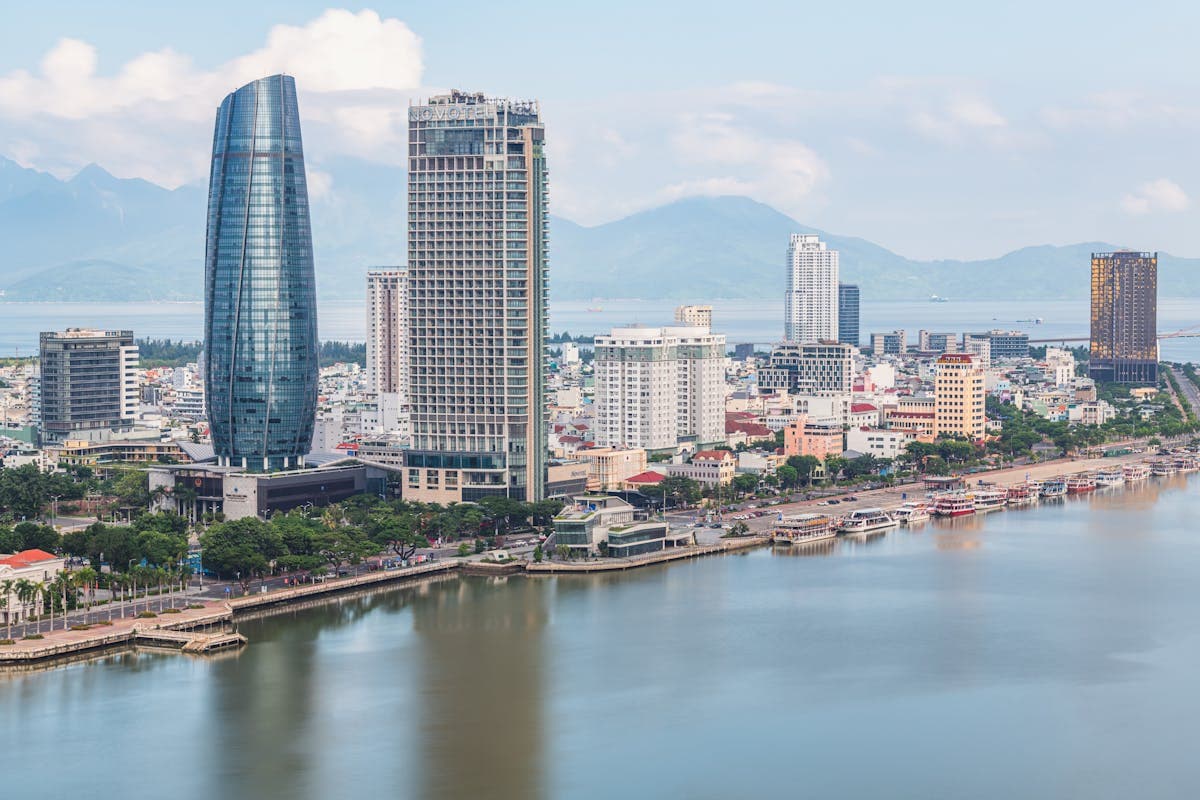
You fly into Da Nang International Airport (airport code: DAD). From there, Hoi An is 30 kilometers south -- about 40-50 minutes by car. There are no direct flights from Australia to Da Nang as of 2026, but the connections are easy and the total travel time is very manageable with kids.
| From | Total Time | Common Connections | Approx. Return (AUD) | Airlines |
|---|---|---|---|---|
| Sydney (SYD) | 8-9 hours | HCMC, Singapore, KL | $400-$800 | Vietnam Airlines, Jetstar, Singapore Airlines, Scoot |
| Melbourne (MEL) | 9-10 hours | HCMC, Singapore, KL | $450-$850 | Vietnam Airlines, Jetstar, VietJet, Scoot |
| Brisbane (BNE) | 8-9 hours | HCMC, Singapore | $450-$850 | Vietnam Airlines, Jetstar, Singapore Airlines |
| Perth (PER) | 7-8 hours | Singapore, KL | $400-$750 | Scoot, Singapore Airlines, AirAsia |
Booking tip for school holidays: Prices spike the moment school holiday dates are confirmed. Book 3-4 months ahead if you can. Set price alerts on Google Flights or Skyscanner. VietJet and Jetstar run flash sales regularly -- you can sometimes snag a return via HCMC for under $400 per person. For a family of four, you are realistically looking at $1,600-$3,200 AUD total for flights depending on how early you book and which airline you pick.
For the full breakdown of getting from Da Nang airport to Hoi An -- Grab, shuttles, private transfers, and stops along the way -- check our Da Nang to Hoi An complete guide. The short version: download the Grab app before you land, and budget about $20-$25 AUD per car for a Grab from the airport to your Hoi An hotel.
How Much Does Hoi An Actually Cost? (In AUD)
This is the part that makes Aussie families' eyes go wide. I will use real 2026 prices, converted at roughly 1 AUD = 18,500 VND (or about 1.6 AUD = 1 USD).
Accommodation
- Family villa (3-bed with pool): $65-$130 AUD/night. This is the move. Private pool, full kitchen, three bedrooms, daily housekeeping often included. On Airbnb or Booking.com, search "Cam Thanh villa" or "An Bang villa" for the best family options.
- Mid-range hotel (family room): $80-$200 AUD/night. Hoi An has excellent 4-star hotels with pools, breakfast included, and family rooms. Most are a 5-10 minute bicycle ride from the Old Town.
- Budget guesthouse: $25-$50 AUD/night. Clean, air-conditioned, friendly staff. No pool usually, but you are a $3 bicycle ride from the beach.
Compare that to the Gold Coast: a 3-bedroom apartment in Surfers Paradise runs $250-$500 AUD/night during school holidays. In Hoi An, you get a private villa with a pool for a quarter of the price.
Food
This is where Vietnam absolutely crushes every other family holiday destination.
- Breakfast for a family of 4: $5-$10 AUD. Banh mi ($1-$1.50 each), pho ($2 each), Vietnamese iced coffee for the parents ($1 each).
- Lunch for a family of 4: $6-$15 AUD. Com ga (chicken rice), cao lau, spring rolls. Local restaurants.
- Dinner for a family of 4: $12-$25 AUD at a nice sit-down restaurant with drinks. Grilled seafood, banh xeo, cold beers.
- Total daily food budget: roughly $25-$50 AUD for a family of four eating well. Not eating ramen-to-survive. Eating well.
At the Gold Coast, you are spending that on one meal at a mediocre surf club.
Activities
- Hoi An Old Town ticket (5 heritage sites): ~$10 AUD/adult, kids free
- Coconut basket boat ride: $7-$15 AUD/person
- Cooking class (family-friendly): $25-$50 AUD/person
- Cham Islands snorkeling day trip: $55-$80 AUD/person (lunch + gear included)
- Lantern-making workshop: $6-$10 AUD/person
- Bicycle rental for the day: $2-$3 AUD
Daily Budget: Family of Four
| Category | Budget (AUD/day) | Mid-Range (AUD/day) | Comfortable (AUD/day) |
|---|---|---|---|
| Accommodation | $40 | $100 | $160 |
| Food (family of 4) | $25 | $40 | $65 |
| Activities | $15 | $40 | $80 |
| Transport (Grab, bikes) | $5 | $10 | $15 |
| Total per day | $85 | $190 | $320 |
A 7-night family holiday in Hoi An at mid-range comfort: roughly $1,330 AUD on the ground -- plus flights. Compare that to 7 nights on the Gold Coast at a similar standard: $3,500-$5,000+ once you factor in accommodation, theme parks, and eating out. Hoi An is not just cheaper -- it is a completely different league.
What to Do: Activities Aussie Kids Actually Love
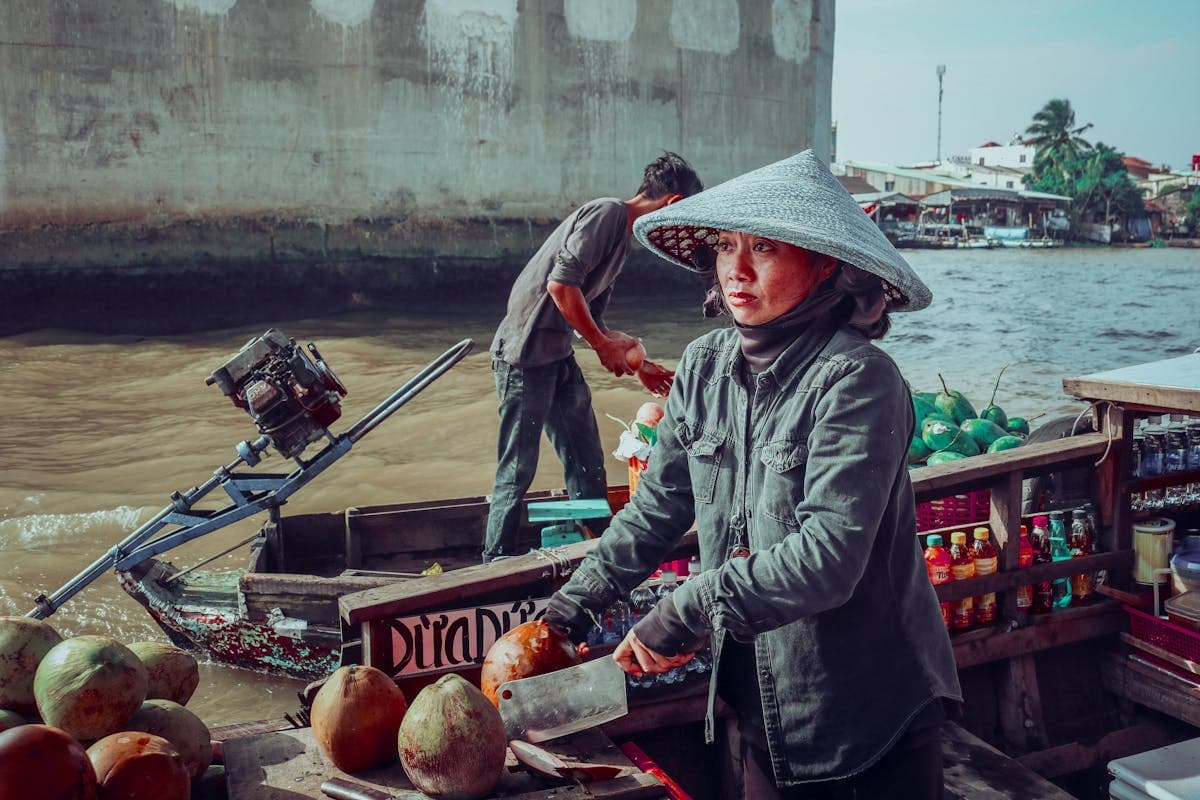
I am not going to pretend every kid gets excited about UNESCO heritage architecture. Here is what actually gets the under-12s fired up.
1. Coconut Basket Boats (Better Than Any Gold Coast Theme Park Ride)
The spinning basket boats in Cam Thanh coconut forest are an absolute hit with kids. You sit in a round bamboo basket boat -- think oversized coracle -- and a local boatman paddles you through the coconut palm waterways. Then they start spinning the boat. The kids scream. You scream. Everyone is laughing. It is about $7-$15 AUD per person for a 30-minute ride, and your children will talk about it for weeks. The boatmen are entertainers -- some of them will put on a crab-catching demonstration, others will have the boat spinning like a top while singing Vietnamese folk songs. Pure gold.
Compare that to a day at Dreamworld: $80+ per person, queues in the sun, and a meltdown by 2 PM. The basket boat wins.
2. An Bang Beach (Your New Bondi, Except Way Better)
An Bang Beach is about 4 kilometers from the Old Town -- a 15-minute bicycle ride or a quick Grab. It is a long stretch of white sand, warm water, sun loungers you can rent for about $3-$5 AUD, and beach shack restaurants serving fresh seafood and cold drinks.
Think Bondi or Surfers Paradise, but warmer water, a fraction of the crowd, and a beer costs $1.50 AUD instead of $12. The kids splash in the shallows while you sit under an umbrella watching them, eating grilled prawns that cost less than a flat white back home. This is the life.
3. Cham Islands Snorkeling (Like the GBR, Minus the $600 Family Ticket)
The Cham Islands are about 20 kilometers off the coast -- a 30-minute speedboat ride from Cua Dai. Full-day snorkeling tours run $55-$80 AUD per person and include the boat, snorkeling gear, lunch on the island, and usually two snorkeling spots. The coral is vibrant, the water is clear (especially March-August), and the kids love the boat ride alone.
For context, a family of four doing a Great Barrier Reef day trip from Cairns runs $600-$780 AUD. The same family doing Cham Islands snorkeling? $220-$320 AUD. The GBR is world-class, no question -- but for a family holiday snorkel trip, the Cham Islands deliver a brilliant experience at less than half the price.
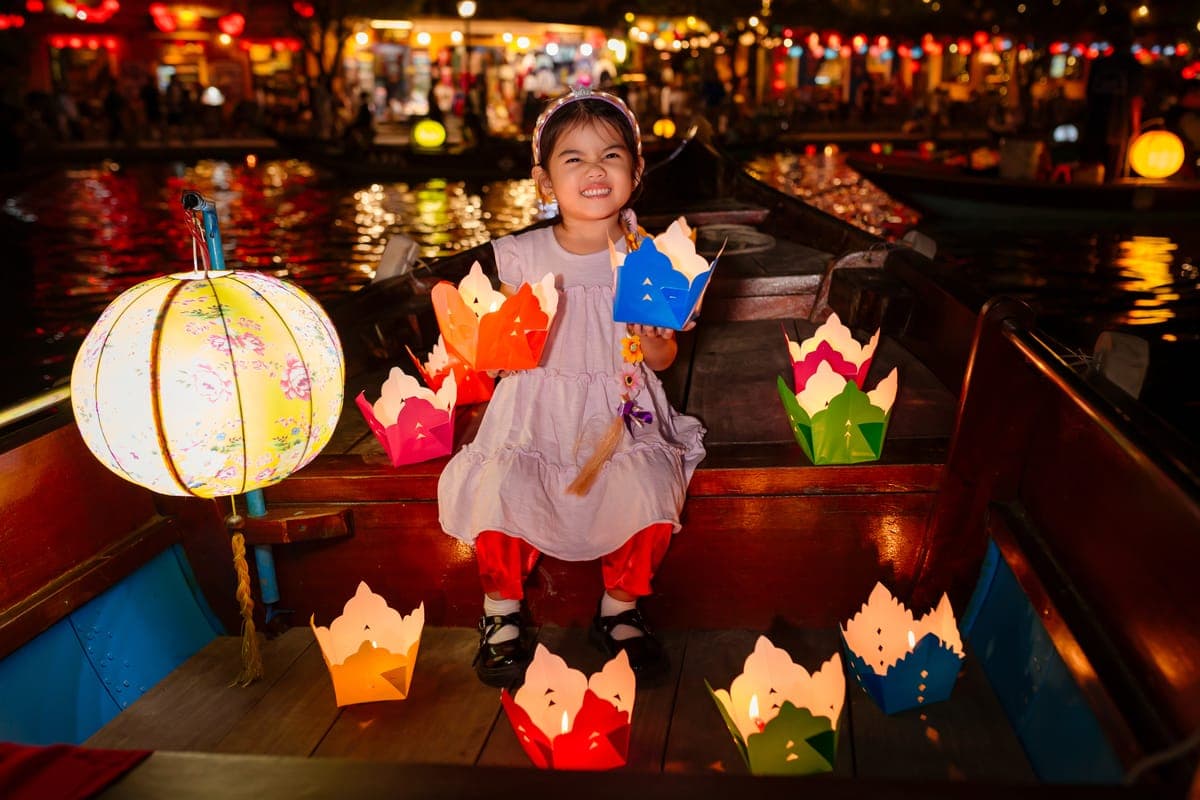
4. Lantern-Making Workshop
Hoi An is the lantern capital of Vietnam, and several workshops let kids (and adults) make their own silk lantern from scratch. You choose the fabric colors, assemble the bamboo frame, and walk away with a handmade lantern to take home. About $6-$10 AUD per person, takes roughly an hour, and it is one of those rare holiday activities where even the teenager puts the phone down and gets into it.
5. Cooking Class
Multiple places in Hoi An run family-friendly cooking classes. You start at the local market choosing ingredients, then head to a kitchen (some are in gorgeous garden settings) where the kids learn to make fresh spring rolls, banh xeo (crispy Vietnamese pancakes), and pho. $25-$50 AUD per person, usually 3-4 hours, and you eat everything you cook.
My tip: even kids who are "picky eaters" at home tend to eat things they made themselves. Something about rolling your own spring roll makes it taste ten times better.
6. Riding Bicycles Through Rice Paddies
Rent bikes and head out to the countryside around Tra Que herb village or Cam Thanh. Flat roads, no cars, green everywhere. The kids ride through actual rice paddies, wave at water buffalo, and have a real-life Bluey adventure that no theme park can replicate. Bicycle rental: $2-$3 AUD for the whole day.
The Bali vs. Gold Coast vs. Fiji vs. Hoi An Breakdown
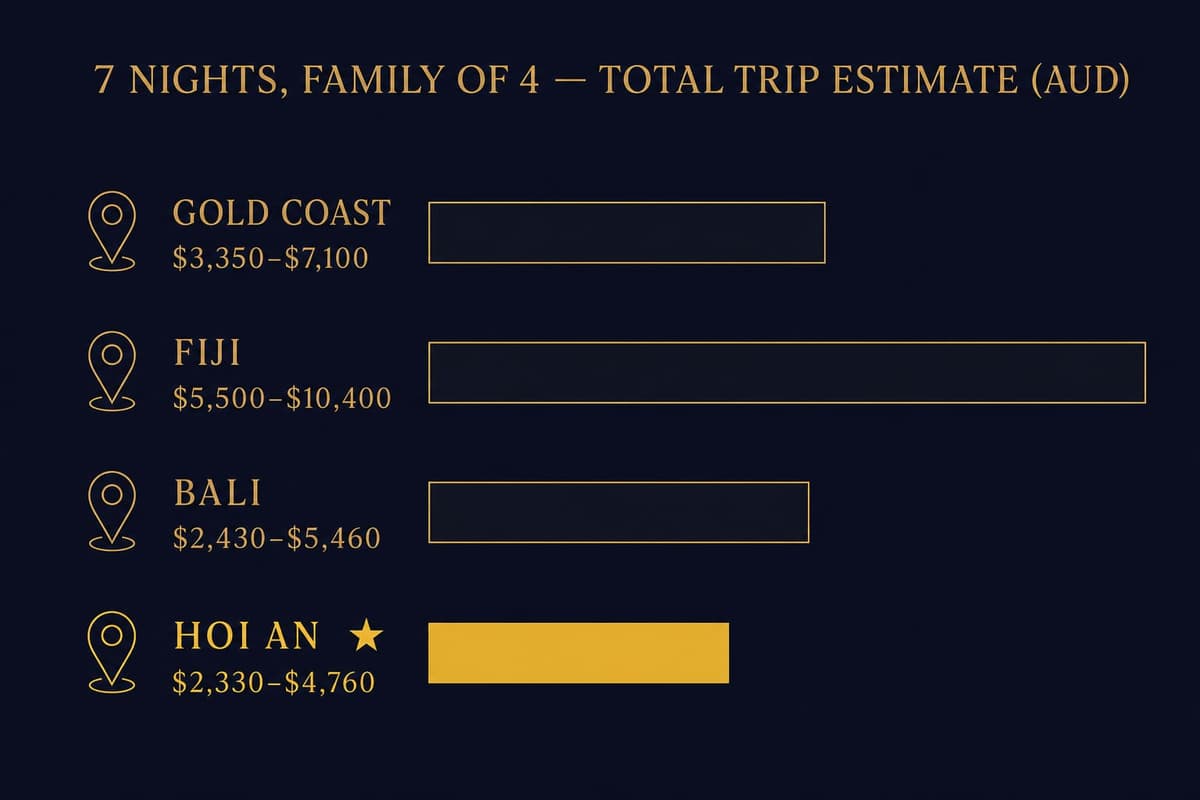
Let me just lay this out honestly. Seven nights, family of four, mid-range comfort.
| Category | Gold Coast | Bali | Fiji | Hoi An |
|---|---|---|---|---|
| Flights (family of 4) | $400-$1,200 | $1,600-$3,000 | $2,400-$4,000 | $1,600-$3,200 |
| Accommodation (7 nights) | $1,750-$3,500 | $350-$1,400 | $2,100-$4,200 | $455-$910 |
| Food (7 days) | $700-$1,400 | $280-$560 | $700-$1,400 | $175-$350 |
| Activities | $500-$1,000+ | $200-$500 | $300-$800 | $100-$300 |
| Cultural depth | Moderate | Good (if you leave Seminyak) | Limited (resort-trapped) | Exceptional |
| Total trip estimate | $3,350-$7,100 | $2,430-$5,460 | $5,500-$10,400 | $2,330-$4,760 |
The numbers tell the story. Hoi An is competitive with Bali on price, but with vastly more cultural depth and far less of the overcrowded party-town energy that makes Bali tricky with young kids. The Gold Coast and Fiji are not even in the same postcode.
And here is the thing the spreadsheet does not capture: your kids will actually remember Hoi An. They will remember the basket boat spinning. They will remember the taste of their first real pho. They will remember making lanterns. They will not remember which pool they sat at in Seminyak.
The Vietnamese-Australian Homecoming
I want to talk about this because it is a real and beautiful thing I see regularly.
Vietnamese-Australian families -- many of them second or third generation -- come to Hoi An as part of a longer trip visiting family in Vietnam. The grandparents might live in Ho Chi Minh City or Hanoi, and the family adds a few days in Hoi An as a holiday within the holiday.
What I love about these visits is watching the kids experience Vietnam on their own terms. They have grown up eating pho in Melbourne's Richmond or Sydney's Marrickville, but tasting it in Vietnam is different. Seeing where their grandparents' food traditions come from. Walking through an Old Town that has not changed in centuries. Having a local woman teach them to fold spring rolls the way their Ba Noi does at home.
If you are a Vietnamese-Australian family and your kids have never been to central Vietnam, Hoi An is the gentlest, most beautiful introduction you could give them. The town is safe, walkable, and genuinely warm in the way that feels like coming home -- even if you have never been here before.
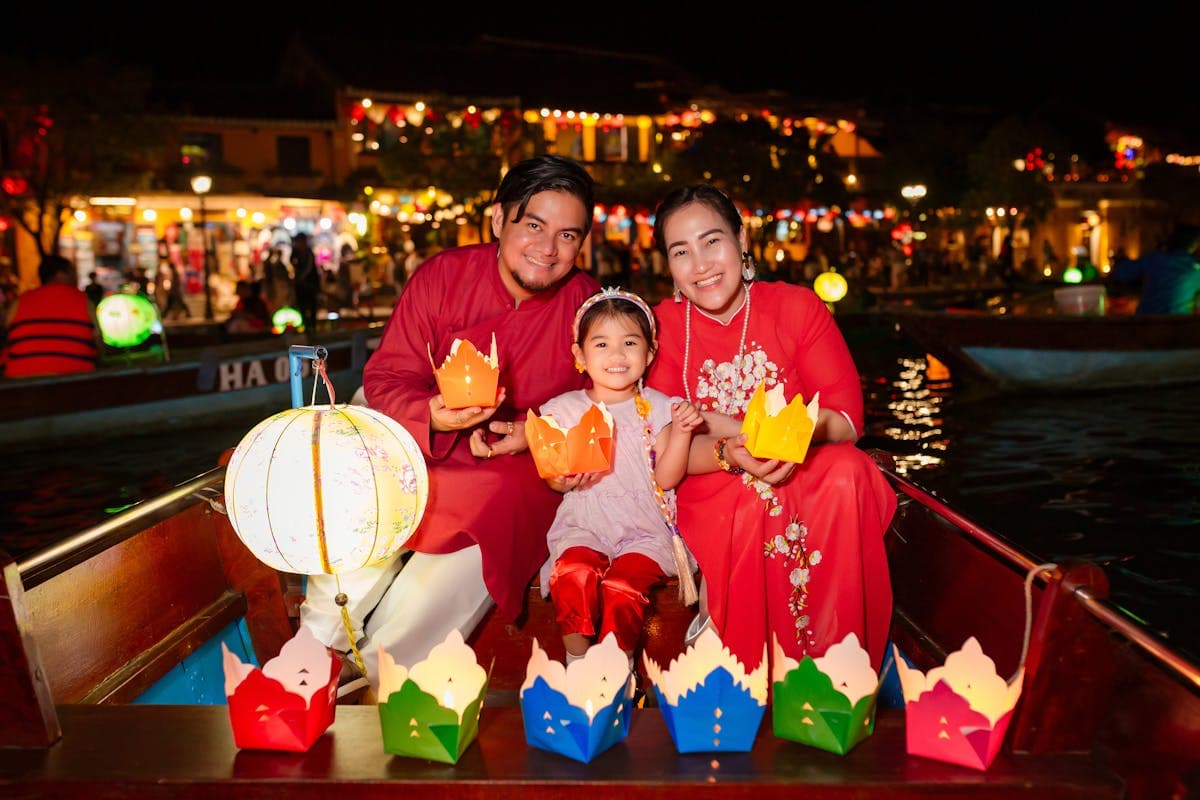
And when the whole family comes in for matching outfits? Our Lady Boss Linda practically tears up every time. "Why are you so pretty?!" she says to the grandmother. Then the granddaughter. Then the mother. Nobody leaves without a compliment.
The AFL Dad Discovers Tailoring (The Unexpected Holiday Highlight)
I have seen this exact scenario play out dozens of times, and it never stops being funny.
The family arrives in Hoi An. Mum has her Pinterest board ready. She wants a blazer, maybe a silk blouse. The kids are excited about everything. And Dad? Dad is there for the temples and the beer. He has zero interest in tailoring. He is wearing a faded Hawthorn jersey and board shorts, and he will be keeping score for the footy on his phone the entire trip, thank you very much.
Then they walk into the shop.
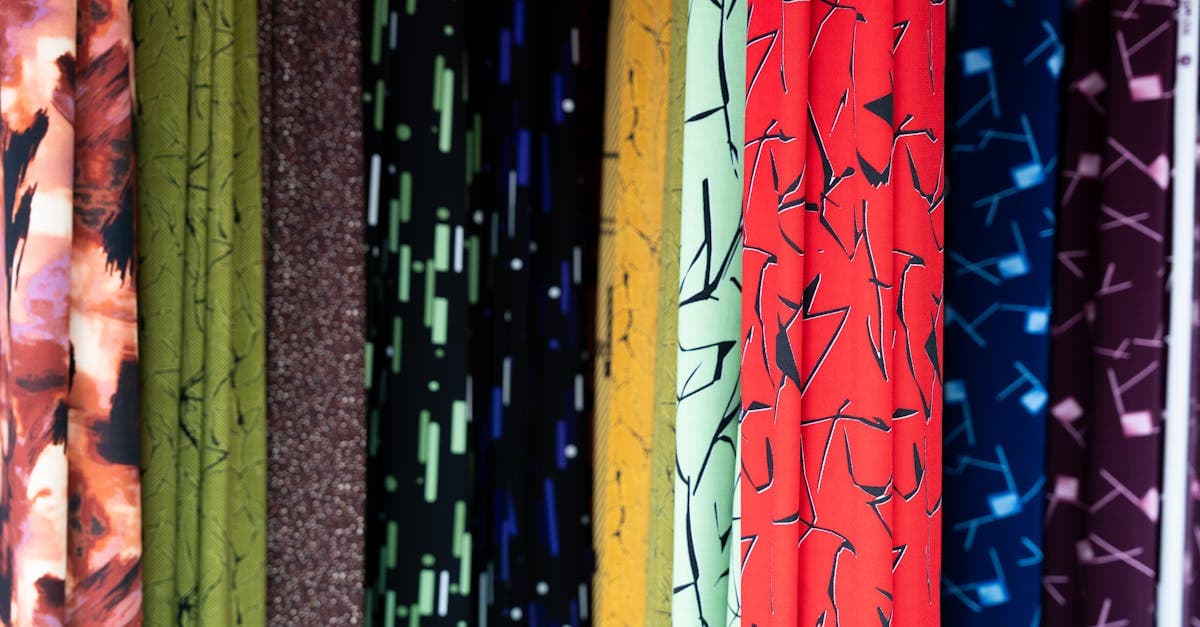
The fabric books come out. Someone shows him a swatch of real wool. He touches it. He asks what a suit costs here. You tell him about $240-$495 AUD ($149-$309 USD). He blinks. He has been looking at suits at Politix and Oxford for $500-$800 and they never fit right. His mate from work got a suit in Thailand and it fell apart. But this is different -- you can see the fabric, feel the weight, look at the construction.
By Day 2, Dad is back for a fitting. By Day 3, he is adding a second pair of trousers and a linen blazer. By Day 3 evening, he is on the phone telling his mates they all need to come to Vietnam.
The AFL jersey stays at the hotel for the rest of the trip.
I am not making this up. It is the single most common arc I see with Australian families. The person who was least interested in tailoring becomes the biggest convert. We see it with Kiwi families too, but Aussie dads are especially fun because they come in with maximum skepticism and leave with maximum enthusiasm.
The Bunnings Sausage Sizzle vs. Banh Mi (Settle This Once and For All)
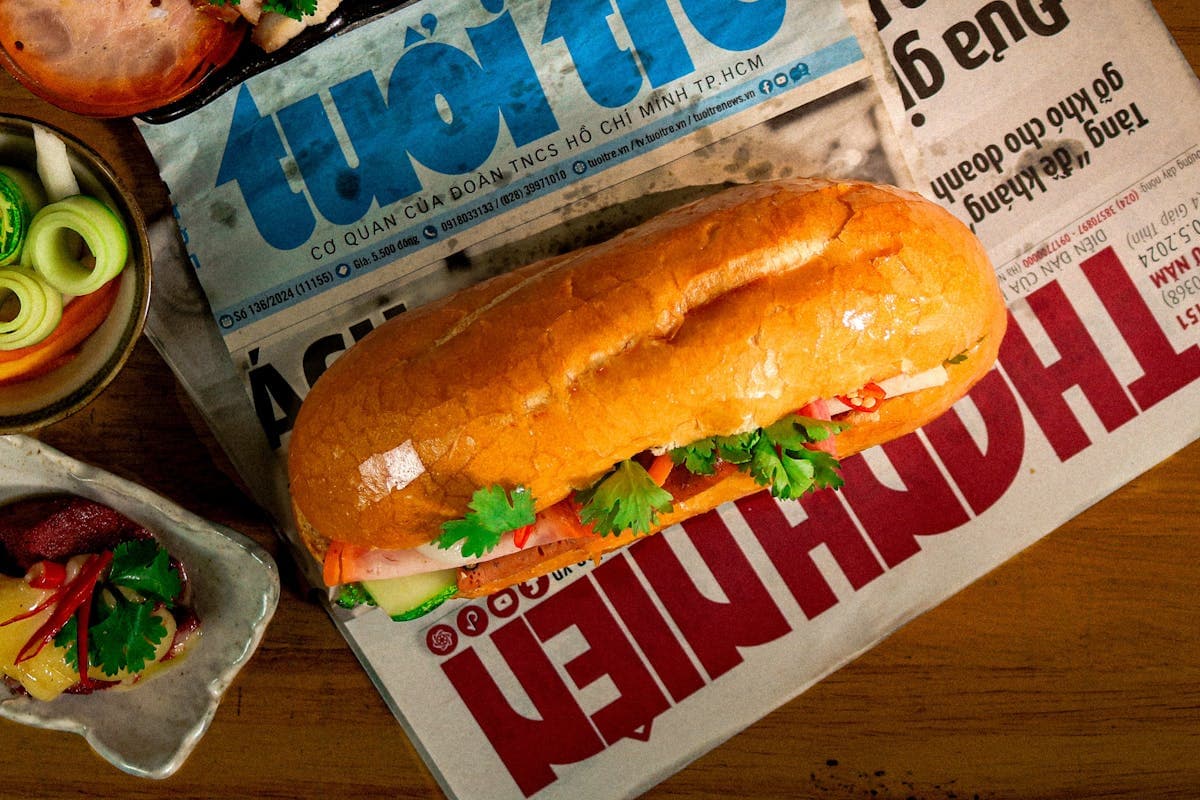
Alright, I need to address this directly because it comes up in conversation with every Australian family.
The Bunnings sausage sizzle is a national institution. I respect it. Cheap sausage in white bread with onions and tomato sauce, eaten standing up in a car park on a Saturday morning. It is beautiful in its simplicity.
But the banh mi in Hoi An? $1.20-$1.60 AUD. Crispy baguette with a crunch that shatters. Pate, grilled pork, Vietnamese sausage, pickled daikon and carrot, fresh herbs, chili sauce. Made in front of you in about 90 seconds.
Your kids will prefer the banh mi. I am sorry. I know this is controversial. But it is true. The good news is that banh mi stalls are everywhere in Hoi An, so when your six-year-old declares they want one for breakfast, lunch, and dinner, you are looking at about $5 AUD to feed them for the entire day.
Banh Mi Phuong on Phan Chu Trinh Street (the Anthony Bourdain one) and Madam Khanh (the Banh Mi Queen) on Tran Cao Van Street are the two famous ones. Get both. Decide which side of the debate you are on. This is the real rivalry of your holiday.
Practical Australia-Specific Info
Let me save you some frantic late-night Googling.
Visa
Australian passport holders need a visa. The easiest option is the e-visa -- apply online through the official Vietnamese government portal (evisa.gov.vn), costs $25 USD (~$40 AUD) for single entry or $50 USD (~$80 AUD) for multiple entry, valid for up to 90 days, and processing takes 3-7 business days. Apply at least two weeks before travel. Your passport must be valid for at least 6 months beyond arrival. Do it yourself -- do not use one of those "visa agency" websites that charge $80+ for the same thing.
Time Difference
Vietnam is UTC+7, which means it is 3 hours behind AEST (Sydney/Melbourne time), 2.5 hours behind ACST (Adelaide), and 1 hour behind AWST (Perth). For WA families, the time zone barely registers. For east coast families, you are basically on the same schedule -- no jet lag to speak of. This is a massive advantage over, say, a European holiday where your kids are up at 3 AM for a week.
Power Adapters
Vietnam uses Type A and Type C power outlets (two-pin, flat or round). Australian plugs (Type I, the angled three-pin) will not fit. Bring a universal adapter or buy one at Da Nang airport for about $5 AUD. The voltage is 220V -- the same as Australia -- so your devices will work fine once you have the right adapter. Do not forget to bring chargers for the kids' tablets. (You know this, but I am reminding you because I have seen families walk into our shop asking if we have a phone charger at least once a week.)
Travel Insurance
Get it. Not optional. Vietnam is safe, Hoi An is very safe, but travel insurance covers cancellations, medical emergencies, and that suitcase that decides to visit Bangkok when you are landing in Da Nang. Australian providers like NRMA, Allianz, Budget Direct, and World2Cover all offer competitive family policies. A family of four, 10-day trip to Vietnam, typically runs $120-$250 AUD depending on the provider and level of cover.
What to Pack from Australia
- Sunscreen. You can buy sunscreen in Vietnam, but the brands are different and sometimes hard to find in high SPF. Bring your Cancer Council SPF 50+ from home.
- Swimmers/togs/cossies (whatever your state calls them). Obviously.
- Reef shoes. Useful for Cham Islands snorkeling and the rocky bits of some beaches. Your kids' feet will thank you.
- A light rain jacket or packable poncho. Even in dry season, the odd afternoon shower happens.
- Insect repellent. Tropical country, tropical bugs. Bring the good stuff.
- Vegemite. I am serious. Bring a small tube. After four days of incredible Vietnamese food, someone in the family -- probably the 8-year-old, possibly Dad -- will have a Vegemite craving so intense it borders on a medical emergency. A 150g tube in the suitcase solves this. You can spread it on banh mi bread for a truly cursed cross-cultural experience.
Currency and Cash
Vietnamese dong (VND). The exchange rate as of early 2026 is roughly 1 AUD = 18,500 VND. Do not exchange money at Da Nang airport -- the rates are terrible. Instead, withdraw from ATMs in Hoi An using your Australian debit card. ANZ, NAB, Westpac, and CBA cards all work. Tell your bank you are travelling or your card will get blocked after the first ATM withdrawal (ask me how I know). Tip: withdraw in larger amounts to minimise the per-transaction ATM fees.
Most local restaurants, markets, and small shops are cash only. Hotels, bigger restaurants, and some tailor shops take card. Bring a backup card in case one gets eaten by an ATM (rare but it happens).
The Matching Ao Dai Family Photo
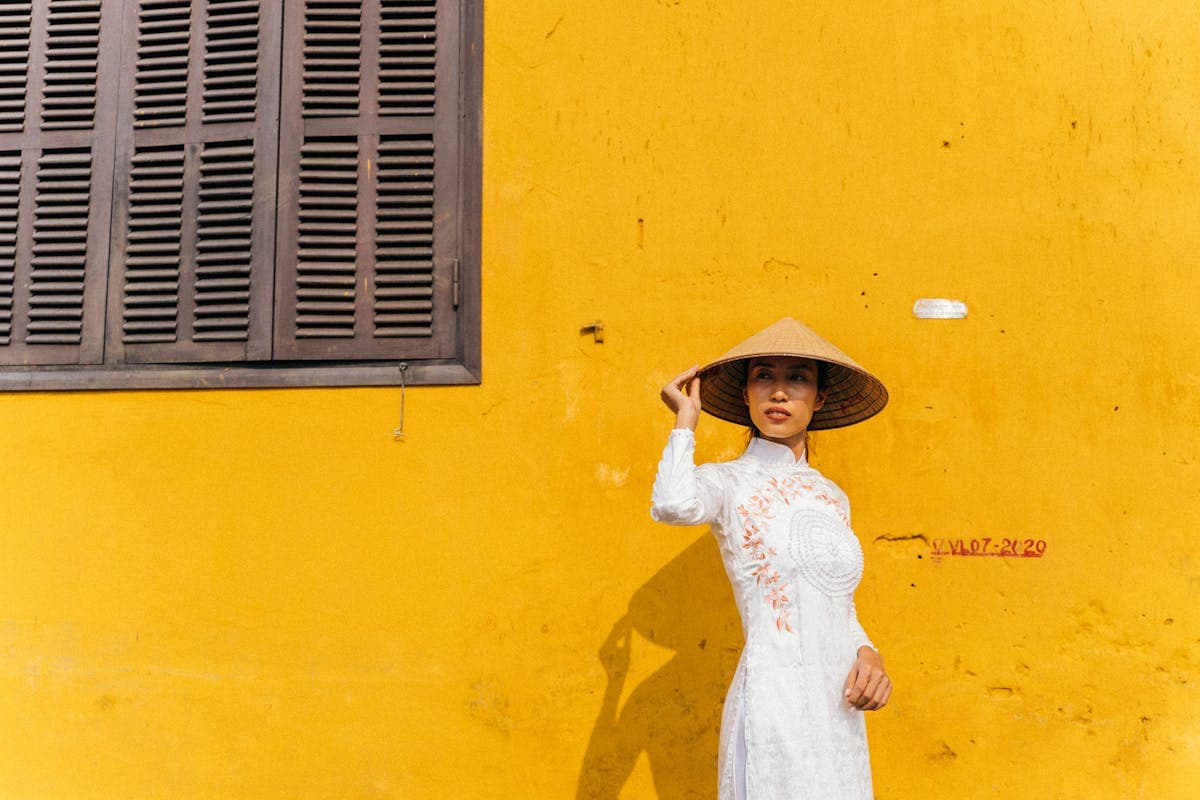
I saved this for near the end because it is the thing that ties the whole trip together.
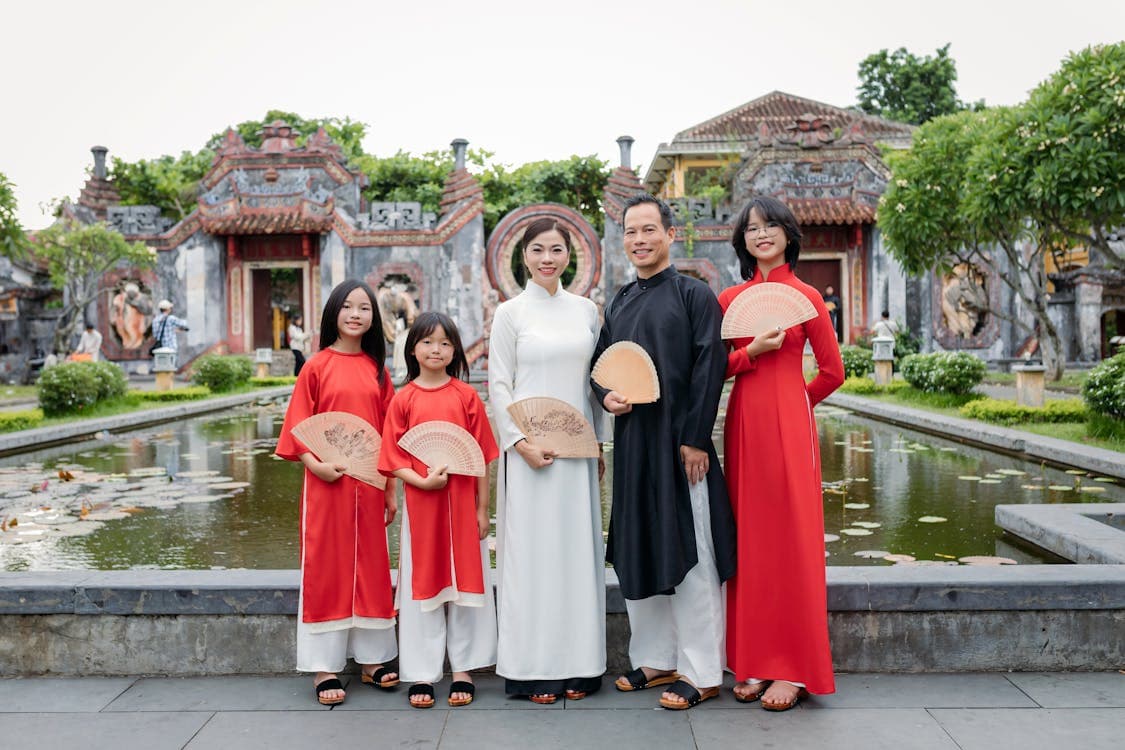
An ao dai is the traditional Vietnamese long tunic -- fitted on top, flowing panels over loose trousers. It is elegant, photogenic, and available for women, men, and kids. We do not make ao dai ourselves -- we make the suits only -- but plenty of Old Town shops do, and the most popular family order there is a matching set for a family portrait.
A family of four in coordinating ao dai -- usually matching colors with slightly different details -- is a quick job for those shops. You wear them for a photoshoot at sunrise along the Thu Bon River or in front of the yellow-walled streets, and those photos become the holiday keepsake that hangs on the wall for years.
Local photographers in Hoi An charge about $80-$240 AUD for a 1-2 hour family session with edited digital files. We can recommend several who are experienced with international families.
Vietnamese-Australian families: this is especially meaningful. Having your kids wear ao dai in the town where the tradition has been alive for centuries? That is not just a photo. That is a connection.
Nathan Tailors: What Aussie Families Order
I will keep this section straightforward because I would rather be honest than salesy. Nathan Tailors, 127 Tran Hung Dao Street, 520+ five-star Google reviews. We have been doing this for 25+ years, and Australian families are a significant part of our client base.
Here is what Aussie families typically get made:
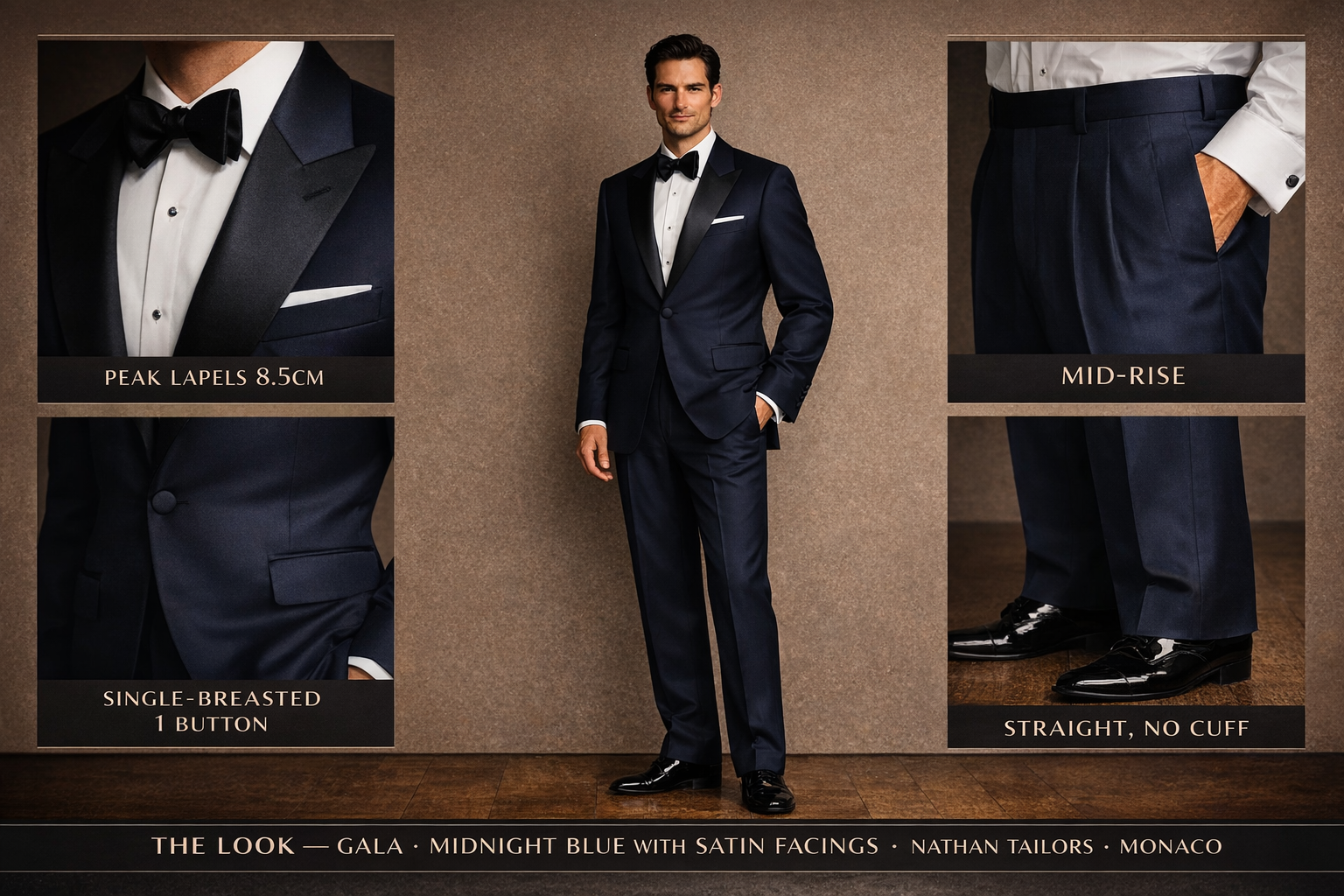
- Dad: A navy or charcoal suit (about $240-$495 AUD), plus 2-3 custom dress shirts ($62-$94 AUD each). Often a linen blazer too. Total: roughly $360-$900 AUD.
- Mum: A blazer or a two-piece suit, sometimes a silk blouse and custom trousers. Total: $150-$550 AUD.
- Kids: A miniature suit or blazer to match Dad's. Teenagers sometimes get a blazer for school formals. Total: $50-$200 AUD per kid.
- The wild card: Custom silk pyjamas ($95-$160 AUD for a set). Once one person in the family discovers these, everyone wants a set. It is a chain reaction.
The typical Australian family of four spends $400-$1,200 AUD total on custom clothes. That same wardrobe at Politix, Oxford, or Country Road back home? You are looking at $2,000-$4,000+ for off-the-rack that does not fit as well.
The kids? They love picking crazy linings. Neon green inside Dad's suit jacket. A Hoi An lantern print inside Mum's blazer. These are the details that make custom clothing fun -- and that you cannot get anywhere on Chapel Street or Pitt Street.
Check out our full pricing menu. And for the bigger picture on what to order and what to skip, read our 3 days in Hoi An guide -- it covers the full daily itinerary including when to fit in your tailor visits.
Frequently Asked Questions
Is Hoi An safe for kids?
Very. The Old Town is car-free during the day, the streets are flat, and the locals are incredibly warm with children. Vietnam in general is one of the safest countries in Southeast Asia for families. Standard precautions apply (watch for motorbikes outside the Old Town, use sunscreen, stay hydrated), but the overall vibe is relaxed and family-friendly. Thousands of Australian families visit Hoi An every year.
How many days should we spend in Hoi An?
Three to five days is the sweet spot for families. Three days gives you the Old Town, the beach, and a day trip (cooking class or Cham Islands). Five days adds a second beach day, countryside cycling, and time for tailoring fittings without feeling rushed. Some families do a week and still do not get bored. See our full itinerary guide and our Da Nang to Hoi An transport guide.
Do people speak English in Hoi An?
In the tourism areas, yes -- most restaurants, hotels, and shops speak enough English for comfortable communication. Hoi An has been a tourism town for decades and the level of English is noticeably better than many other Vietnamese cities. Outside the tourist core, language gets more challenging, but the Grab app, Google Translate, and a smile go a long way.
Can I use my Australian phone in Vietnam?
Your Australian plan will work on roaming, but it will be expensive. Better option: buy a local SIM card at Da Nang airport. Viettel, Mobifone, and Vinaphone all sell tourist SIM cards with 15-30 days of data for about $8-$16 AUD. Unlimited data, local calls, and your Grab app works perfectly. Some providers also sell eSIMs that you can activate before you leave Australia.
What about dietary requirements for kids?
Vietnamese food is naturally gluten-friendly (lots of rice noodles and rice), and most dishes can be made without nuts if you ask. Vegetarian and vegan options are easy to find -- Buddhist vegetarian restaurants (com chay) are everywhere. If your child has severe allergies, print a card in Vietnamese explaining the allergy (Google "allergy card Vietnamese") and show it to restaurant staff. Pho and spring rolls are safe bets for even the pickiest eaters.
Is it worth going to Da Nang too, or just Hoi An?
Da Nang is a great modern city with beautiful beaches (My Khe), the famous Lady Buddha statue, and Marble Mountains. Many families split their trip: 2-3 days in Da Nang, 3-5 days in Hoi An. If you only have a week, I would give 5 days to Hoi An and day-trip to Da Nang. Hoi An has more character and more to do for families. But if your kids want waterparks and a city buzz, Da Nang has that too.
Can we order custom clothes remotely after we get home?
Absolutely. Once we have your measurements from your visit, reordering is easy. We ship to Australia via DHL (5-7 business days) or standard post. Many Aussie families order suits during their visit, then reorder shirts or additional items from home . We have shipped to every state and territory in Australia. Our suitcase logistics guide covers shipping costs and options in detail.
What about the suitcase problem?
This is real. Families arrive with two suitcases and leave needing four. Your options: buy an extra bag at the local market for $15-$30 AUD, pay airline excess baggage (around $40-$160 AUD per bag depending on the airline), or have us ship directly to your address in Australia via DHL for about $80-$160 AUD. Read the full comedy and logistics of it in our suitcase problem guide.
The Real Reason to Bring Your Family to Hoi An
Look, I can throw numbers at you all day. Hoi An is cheaper than the Gold Coast. Bali is overcrowded. Fiji is expensive. The data is clear.
But the real reason is this: Hoi An is one of those rare places where every person in the family has a genuine experience. Not a manufactured resort experience. A real one. The grandmother who tears up watching her grandkids try on a tiny tailored jacket for the first time. The teenager who puts the phone away to learn spring rolls from a Vietnamese grandma in a cooking class. The dad who walked in skeptical and is now standing in front of a mirror in a perfectly fitted suit with a grin he cannot wipe off his face. The six-year-old who insists on wearing her new silk pyjamas to bed every night for the next three months.
These are not things you can buy with a theme park ticket.
Linda will greet you at the door with a smile and probably say something like "Why is this family so beautiful?!" and your kids will giggle and your partner will blush and you will already be glad you came.
That is what Hoi An does. That is what we do.
Got questions about planning your family trip? Message us on WhatsApp anytime. We are happy to help with tailoring questions, timing advice, or just restaurant recommendations. The shop has been welcoming Aussie families for 25 years -- let us help make yours unforgettable.