5:45 AM, Murray Hill, Manhattan
The alarm goes off and your body is already moving before your brain catches up. Not because you are motivated. Because you have done this so many times that consciousness is no longer required for the first twenty minutes of your day. Your feet hit the floor. You are in the bathroom. You are brushing your teeth. You are pulling on a white dress shirt -- Thomas Pink, not because you love it but because it was the brand the senior guys wore when you started and you never thought to question it. Dark suit. Dark tie. The Patagonia vest goes on over everything because it is February and you are about to walk twelve blocks in the wind.
You skip breakfast. You will grab a bodega coffee on 38th Street -- the one with the guy who already knows your order because you have been coming here every weekday morning for four years. Large black, two sugars. $2.50. The only thing in Midtown that has not gotten more expensive since you moved here.
The R train is half-empty at 6:05 AM, which is the only perk of working hours that would be classified as cruel and unusual in most countries. You stand anyway. You are wearing a suit. You do not sit on the R train in a suit. You learned this your first week -- the hard way, with a mysterious stain on the back of your trousers that you pretended not to notice until your analyst buddy pointed it out at lunch.
You surface at 42nd Street and walk north through Midtown. Past Grand Central. Past the Sweetgreen that will not open for another four hours but where you will spend $16 on a sad harvest bowl at noon. Past the rows of black cars idling outside office towers, their drivers scrolling phones, waiting for managing directors who will not come down for another three hours. The streets are quiet in a way that Manhattan never is during the day. Just you and the other early-morning ghosts -- traders, operations people, the occasional jogger who has the kind of life where 6 AM is for exercise instead of bond spreads.
You badge in. You ride the elevator to the trading floor. The lights are low. Half the Bloomberg terminals are already glowing blue, manned by guys who got here even earlier. You drop your bag, peel off the Patagonia vest, hang it on the back of your chair like everyone else on the floor, and sit down. You log in. You check overnight moves. You check the Asian session. You check your Bloomberg messages.
It is 6:37 AM. You will do this until roughly 6 PM. Then you will go home. Then you will come back and do it again. You have been doing this for ten years.
My name is Jay. This is the story of how I stopped.

The Desk
I traded investment-grade corporate bonds at one of the big Japanese banks in Midtown. I am not going to name it. If you know, you know -- there are only a few, and they all occupy that specific niche in the Wall Street ecosystem where the culture is Wall Street formal layered on top of Japanese corporate formal. Double the hierarchy. Double the unspoken rules. Triple the deference to seniority.
At Goldman or Morgan Stanley, there was at least a veneer of meritocratic swagger. You could be loud. You could push back on a VP in a meeting if you had the numbers to back it up. At a Japanese bank, you could not. You learned quickly that the way things were done was the way things were done, and suggesting otherwise was not seen as initiative -- it was seen as a lack of respect. The dress code reflected this. While guys at Goldman were starting to push business casual on Fridays, we were in full suits five days a week. Not because anyone posted a memo. Because the Japanese managing directors wore full suits, and if you did not match their formality, you were silently communicating something you did not want to communicate.
I worked the IG credit desk. Investment-grade corporate bonds. Not the sexy stuff. Not equities, where you could tell stories at bars about wild trades and market crashes. Not rates, where the quants sat with their models and their PhDs. Credit is the middle child of a trading floor -- not glamorous enough to brag about, not obscure enough to seem mysterious. What it actually is, is relationships. You are on the phone with institutional clients -- asset managers, insurance companies, pension funds -- and you are helping them buy and sell corporate bonds issued by companies like Apple, Johnson and Johnson, and AT&T. You are reading the market. You are reading your client. You are doing both simultaneously while a Bloomberg terminal throws numbers at you and a salesperson is pinging you on IB chat asking for a price on $50 million face value of a ten-year Verizon bond and the answer needs to come in under thirty seconds.
It is a specific kind of stress. Not the "I might lose my job" stress of banking. More like the "I am a human calculator who also has to be charming on command" stress. And it never stops. From 7 AM to 4 PM, the markets are open and you are ON. There is no hiding. There is no closing your office door -- you do not have an office door. You are on a trading floor with 200 other people and every conversation is semi-public.
But here is the thing they do not tell you in the recruiting brochure: S&T hours are better than investment banking hours. Meaningfully better. In by 6:30 or 7 AM. Out by 6 or 7 PM most days. Maybe 8 PM if something is happening. Compare that to your friends in banking who are there until midnight, until 2 AM, until they fall asleep under their desks during deal season. So you feel guilty complaining. You have it good, relatively speaking. The mornings are brutal, but you get your evenings. You get your weekends. You get to have something that resembles a life outside the building.
And that -- the evenings, the weekends -- is what made everything that came after possible. Because if I had been in banking, I would never have had the hours to build what I built on the side.
The Golden Handcuffs

Year one, I was grateful. Grateful for the job, grateful for the paycheck, grateful to have survived the analyst program. I was 23 and making more money than my parents ever had, and I sent half of it home and felt like I had made it.
Year two, I was competent. I knew the product. I knew the clients. I stopped feeling like I was faking it every morning and started feeling like I belonged on the desk.
Year three, I was comfortable. And that is when it gets dangerous.
Because comfortable on Wall Street means your salary went up 15% and your lifestyle went up 20%. The Murray Hill apartment you shared with two roommates became a studio in Kips Bay. The studio became a solo one-bedroom in Gramercy. The one-bedroom became a "nice" one-bedroom with a doorman and a gym in the building that you used twice. Each jump felt earned. Each jump cost exactly what your raise gave you, plus a little more.
The dry cleaner on 38th Street -- the one between the bodega and the shoe repair place that has been there since 1987 -- started recognizing me. Not because I was memorable. Because I was there every single week with five dress shirts, two suits, and whatever else needed pressing. $47 a week. $2,444 a year. On dry cleaning. I did not calculate that number until much later. When I did, I felt physically ill.
Here is how the golden handcuffs work, and I mean this literally, not metaphorically. Your bonus comes in February. It is a significant chunk of your annual compensation -- sometimes 30%, sometimes 50%, sometimes more depending on how the desk did. But it is paid in February for the previous year's work. So by the time January rolls around, you have already "earned" it in your head. It is already allocated. You have already mentally spent it on the tax bill, the student loans, the trip to Japan you promised yourself, the new suit you need because the one from Brooks Brothers is starting to pill at the elbows.
If you quit in October, you leave that bonus on the table. Everyone knows this. So every year, the calculation is the same: "I will do one more bonus, and then..."
And then what? You do not know. You never finish that sentence. Because the "and then" requires having a plan, and making a plan requires admitting that you want to leave, and admitting you want to leave feels like ingratitude, like weakness, like you could not cut it. Especially at a Japanese bank, where loyalty is not just expected -- it is the entire culture.
So you do one more bonus. And then one more. And then it has been seven years and you are 30 and you have a nice apartment and a nice watch and a nice life and you are not happy, exactly, but you are not unhappy enough to blow it all up. You are in the zone between contentment and quiet desperation that most of Midtown lives in, and you have learned not to examine it too closely.
The group chat with my analyst class told the whole story. Year one: "We are all going to make it." Year three: "Did you hear [name] quit? He went to business school." Year five: "Is anyone actually happy?" Year seven: the chat went quiet, because the people who left had moved on, and the people who stayed did not want to talk about why.
The Sunday scaries started on Saturday evening. Not dramatically. Just a subtle tightening in your chest around 5 PM on Saturday when you realized the weekend was half over and you had not done anything meaningful with it and tomorrow you would wake up and it would be Sunday and by Sunday evening the dread would be real, the kind that sits in your stomach like a stone, and Monday would come regardless of whether you were ready for it.
I know you know this feeling. If you are reading this from a desk in Midtown right now, at 3 PM on a Tuesday, with Bloomberg open on one screen and this article on another -- I know you know exactly what I am talking about.
The Side Hustle That Became an Escape Hatch
Somewhere around year four, I started building software.
Not to escape. Not at first. I am just wired to build things. Always have been. The desk did not scratch that itch. Trading is reactive -- you respond to markets, to clients, to flow. You do not create anything. At the end of every day, you have made money or lost money, but you have not BUILT anything. Nothing exists that did not exist before. For some people, that is fine. For me, it started to feel hollow around year four.
So I started building SaaS products in the evenings. The S&T schedule -- that mercy of being home by 7 or 8 PM -- made this possible. I would come home, eat something, and code until midnight. Not every night. But most nights. Weekends too. Not because I was disciplined. Because it was the only thing that made me feel like I was moving forward instead of running on a treadmill.
I am not going to go into the specifics of what I built. That is not the point of this story. The point is that it started making money. Not a lot at first. A few hundred dollars a month. Then a thousand. Then a few thousand. Then enough that I noticed. Then enough that I started doing a very dangerous calculation in my head every single month: SaaS revenue versus living expenses.
I say "dangerous" because once you start making that calculation, you cannot stop. Every time the SaaS revenue goes up by $500 a month, you feel the handcuffs loosen a little. You start optimizing your expenses -- not to save money, but to lower the number you need to hit. You start thinking about where you could live if you did not have to live in Manhattan. You start thinking about what your life would look like if you did not need this desk.
You do not tell anyone on the floor. Obviously. You do not tell your manager. You do not tell your work friends. You barely tell your actual friends, because the conversation is exhausting -- "Wait, you are going to quit Wall Street to do... what? Build apps? Are you insane?" You learn to keep it to yourself. You just keep building, keep watching the numbers, keep doing the calculation.
The Moment
It was a Tuesday.
I want to tell you it was dramatic. I want to tell you about a blowup, a breakdown, a screaming match with a managing director, a spectacular trade gone wrong. That would make a better story. But that is not how it happens. Not for most people. Not for me.
It was a Tuesday in October. Markets were quiet. That specific kind of quiet where spreads are tight and nothing is moving and you are sitting at your desk refreshing the same screens and the phone is not ringing and you are just... there. Existing. Being present in a building because you are supposed to be present in a building.
And I had this thought. It was not a new thought -- I had been circling it for months. But on this particular Tuesday, it landed differently. The thought was this:
I can describe every single day of the next ten years.
Same desk. Same screens. Same Bloomberg terminal. Same 5:45 AM alarm. Same R train. Same bodega coffee. Same dry cleaner on 38th Street. Same Sweetgreen harvest bowl. Same suits that do not quite fit right. Same bonus cycle. Same "one more year." More money, sure. The numbers would go up. I might make VP. I might even make director. But the days -- the actual texture of the days -- would be identical.
That thought landed in my chest like a physical weight. Not panic. Something worse. Certainty. The certainty that I had already seen the movie and I was being asked to sit through it again for another decade.
And then I checked the SaaS dashboard. Not because I planned to -- it was just a reflex, like checking your phone. And the number was there. The number I had been calculating toward without even realizing I was calculating toward it. The monthly recurring revenue had crossed the threshold where, if I moved somewhere with a lower cost of living, I could cover my expenses without the desk. Without the bonus. Without any of it.
It was not a big number by Wall Street standards. It would have been a bad month for my P&L on the desk. But it was enough. Enough means you do not HAVE to be here tomorrow. Not that you will leave tomorrow -- you will not. You are still a Wall Street guy. You will do one more bonus. Obviously. But now you know you can leave. And knowing you can leave changes everything, because every morning after that, the alarm goes off at 5:45 and instead of your body moving on autopilot, your brain asks: "Why are you still doing this?"
I did one more bonus. Of course I did. You do not walk away from a six-figure bonus in February when you have been mentally earning it since January. That is not how the math works. That is not how Wall Street works. You take the money. You always take the money. One more time.
And then, in March, I quit.
The Exit

I did not have a grand plan. I want to be honest about that because every "I quit finance" story on the internet sounds like the person had a detailed five-year roadmap and a vision board and a life coach. I had a backpack and a vague idea that I wanted to be warm.
That is it. I wanted to be warm and I wanted to be far away from Bloomberg terminals and I wanted to wake up without an alarm and I wanted to see what happened when I stopped running the same loop every day for the first time in a decade.
I flew to Bangkok. Then Chiang Mai. Then Saigon. Then Da Nang. I was doing the Southeast Asia circuit that every burned-out finance person does, staying in hostels that were nicer than my first Murray Hill apartment and cheaper than my weekly dry cleaning bill. Working on the SaaS products from cafes. Sleeping until I woke up. Walking aimlessly through cities where nobody knew what an investment-grade bond was and nobody cared.
It was the first time in ten years that I did not know what I was doing tomorrow. And it was terrifying. And it was incredible. And I did not realize how exhausted I was until I stopped being exhausted.
Then I went to Hoi An.
Hoi An
Hoi An is a small town in central Vietnam. Population about 120,000. It sits on the Thu Bon River, and the Old Town is a UNESCO World Heritage site -- narrow streets, yellow buildings, Japanese merchant houses from the 16th century, Chinese assembly halls, and at night, hundreds of lanterns that turn the whole place into something that does not look real. You walk through the Old Town at dusk and it feels like you have stepped into a painting that someone lit from the inside.
But here is the thing about Hoi An that most tourists do not know until they get here: it is a tailoring city. It has been a tailoring city for centuries. This was a major trading port on the silk road, and the tradition of garment-making has been passed down through generations. There are over 520 tailor shops in a town of 150,000 people. Tailoring is not a niche industry here -- it is THE industry. It is in the DNA of this place.
I checked into a nice hotel, dropped my bags, and got ready for my first order of business -- the same first order of business I have in every new city: cafe hunting. Finding the best coffee in a new place is my ritual. It is how I orient myself. It is the one thing that has not changed from my Wall Street routine -- I still need good coffee before anything else makes sense.
I booked a Grab. The driver was friendly in the way that Vietnamese people are friendly -- not performative, not trying to sell you something, just genuinely warm. We talked. He asked what I was doing in Hoi An. I said I was just traveling. He nodded. And then, instead of taking me to the cafe I had pinned on Google Maps, he took a detour.
"You have to see this place," he said. "My friend has the best tailor shop."
I am going to be honest: my first instinct was that I was being kidnapped into a tourist trap. Every guidebook warns you about this. The tuk-tuk driver who takes you to his cousin's shop. The commission hustle. I had been in Southeast Asia long enough to recognize the setup. I was mentally preparing my polite exit strategy before we even pulled up.
And then I met Linda.
Linda runs Nathan Tailors. And whatever skepticism I walked in with evaporated in about ninety seconds, because she is one of the most genuinely charming people I have ever met. Not salesy. Not pushy. Just warm, funny, and clearly passionate about what she does. She started showing me fabrics the way a sommelier talks about wine -- not to impress, but because she actually loves it. Before I knew what was happening, I was playing along. Not because I needed a suit. Because I was enjoying myself. For the first time in months, I was not thinking about SaaS metrics or bond spreads or what I was running from. I was just... having a good time in a tailor shop.
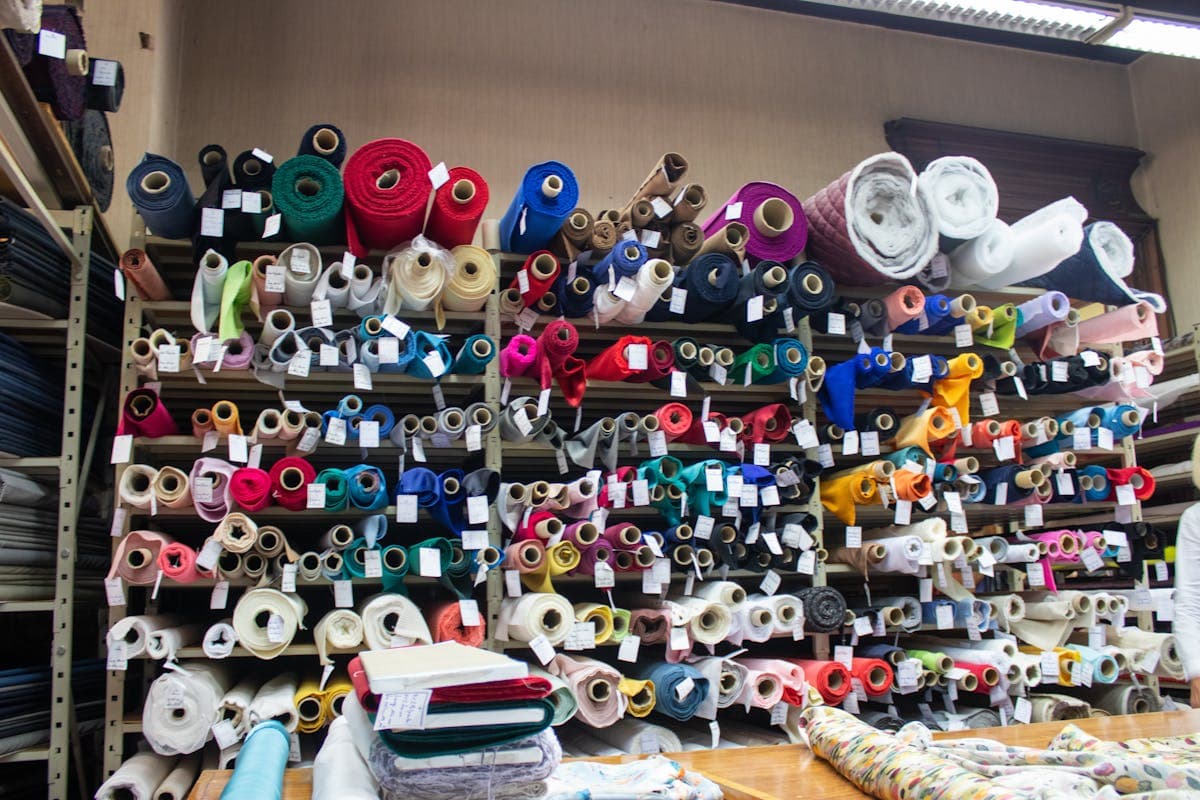
And then I saw the fabrics. Bolts and bolts of real wool, real wool-cashmere blends, real silk. After ten years of wearing the stuff -- SuitSupply, Thomas Pink, Charles Tyrwhitt -- your fingers know what fabric is supposed to feel like. This stuff was real. I will not pretend Linda was showing me Brioni-tier cloth -- nobody at a Vietnam tailor is, and anyone claiming otherwise is selling you a story. But the fundamentals were there: real fiber content, real hand, real drape.
And I watched the tailors work. Not the quick-turnover tourist stuff that some of the shops do. The real work. The measuring, the cutting, the fitting. The way they could look at a body and see the adjustments before the tape measure even came out. These were people who had been doing this for 20, 30 years. They had made thousands of suits. Tens of thousands of garments. The skill level was extraordinary -- not because of any special training, but because of sheer volume. When you make 30 to 50 garments a day, every day, for decades, you develop a precision that a tailor in Brooklyn who handles five orders a week simply cannot match. Repetition is the mother of mastery, and these tailors had more repetitions in a month than most Western tailors get in a year.
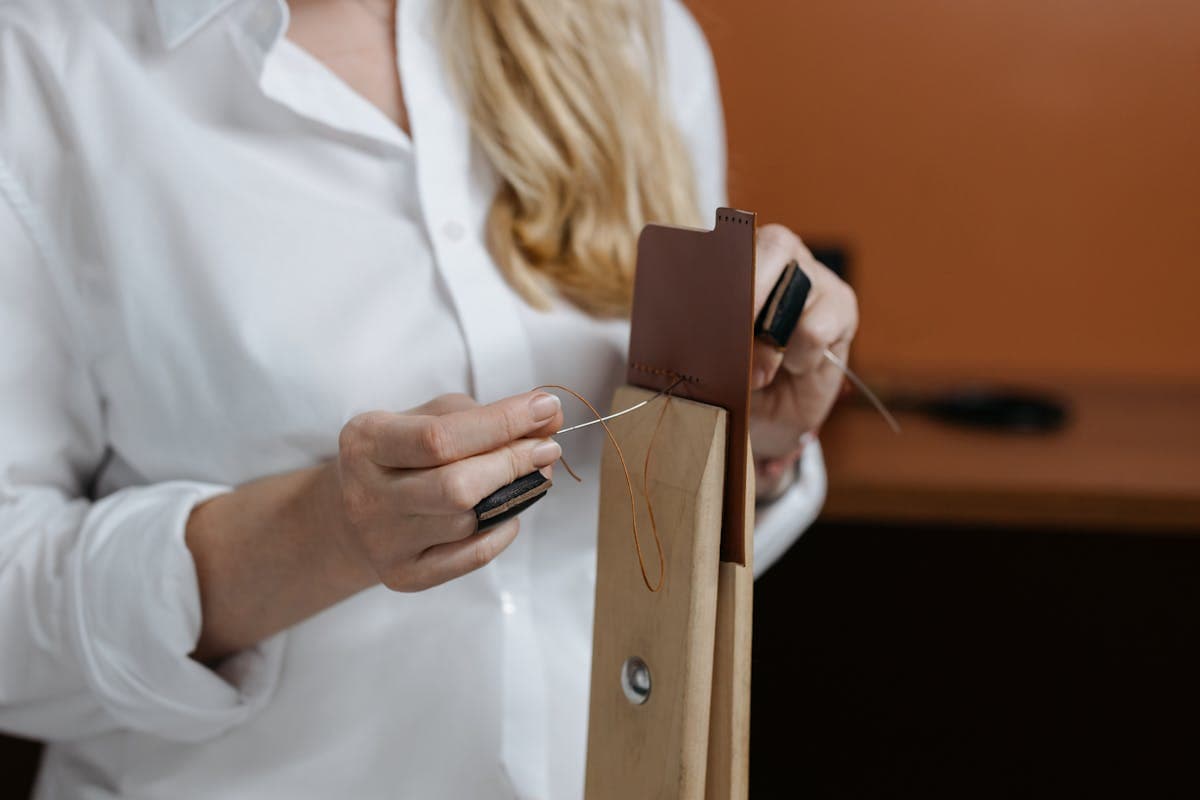
And the prices. I asked how much a custom suit would cost in a real wool comparable to what SuitSupply sells for $800. The answer was under $200. I asked again, thinking I had misunderstood. I had not.
I sat in that shop for three hours. I talked to the owner. I talked to the tailors. I asked every question I could think of. How do you source the fabric? Through their established supplier network -- some from Italy, some from China, blended across the menu. How do you keep the prices so low? Because we are in Vietnam -- our rent, our labor costs, our overhead is a fraction of what it would be in New York. The buttons come from real suppliers. The technique is the same as Western tailoring. The difference is mostly geography, with an honest gap at the luxury end where we cannot match $4,000 cloth and do not pretend to.
And then I asked the question that changed everything: "How do you reach customers who are not physically in Hoi An?"
The answer was: they did not. Not really. They had a basic website. They had a Facebook page. But they had no way to reach the guy I used to be -- the 28-year-old analyst in Murray Hill who needs a suit that actually fits, who is tired of SuitSupply but does not know there is an alternative, who has zero time to shop and would order online if he trusted the process. They had the product. They had the skill. They had the price point. They did not have the bridge.
I was the bridge.
So I did something that felt natural and maybe a little crazy: I offered to build them a website. For free. No pitch deck. No partnership proposal. No "let me show you my portfolio." I just said -- let me build you a website, no charge, and we will see what happens.
I had spent four years building SaaS products. I knew how to build websites, how to set up e-commerce, how to run digital marketing, how to create processes that work at scale. I knew nothing about fashion. But I knew everything about being the customer -- the exact customer they were trying to reach. I had BEEN that customer for a decade.
One thing led to another. The website led to conversations. The conversations led to trust. The trust led to more projects -- the measurement guides, the WhatsApp workflow, the shipping logistics, the process that lets someone in Manhattan send us their measurements and receive a custom suit in their apartment three weeks later. And somewhere in the middle of all that, I became a partner.
Here is the part that makes people from Wall Street uncomfortable: there is no contract. No operating agreement. No "I own 30% of this business" written in black and white. No lawyers. No cap table. No term sheets. None of that American capitalism machinery that we are taught is the only legitimate way to do business.
It is a handshake deal. That is how they do business here in Hoi An. And I love it.
People laugh at me when I tell them this. Especially the finance guys. They say "that is not a real business without a contract." They say I am naive. They say it will blow up. They say all the things that people who have never lived outside the American legal-industrial complex say when they encounter a culture that operates on trust instead of paperwork.
And I always say the same thing back: "Is your marriage really a marriage with your fancy wedding and your marriage certificate?"
That usually shuts them up.
Because the truth is, a contract does not make a partnership real. A piece of paper does not make a relationship work. What makes it work is showing up every day, doing what you said you would do, and building something together where both sides win. That is what we have. No lawyers required. No exit clauses. No "what happens if" scenarios drafted by a paralegal billing $300 an hour. Just two parties who trust each other, doing good work, splitting things fairly, and shaking hands on it.
I have been on trading floors where billion-dollar deals were executed on a phone call and confirmed with an email. Wall Street runs on trust between counterparties every single day. But somehow, when I tell people my own business runs the same way, they think I am insane. The irony is not lost on me.
That was the start of what Nathan Tailors is today.
Why I Am Telling You This
I am not telling you this story because I think you should quit your job and move to Vietnam. Maybe you should. Maybe you should not. That is your life and your calculation.
I am telling you this because I want you to understand who is on the other end of this website. I am not a "fashion entrepreneur." I do not have a background in design. I did not go to fashion school. I cannot sketch a suit or drape fabric on a dress form. I am a former bond trader who spent a decade buying clothes that did not fit right because I did not have time to find anything better.
I wore the Midtown Uniform. I owned the Patagonia vest. I had the Charles Tyrwhitt shirts and the SuitSupply suits and the Allen Edmonds shoes that I re-soled twice because replacing them felt wasteful even though I could afford to. I had the one "good" suit for weddings that was starting to pill at the elbows. I had the drawer full of ties I never wore because my Japanese bank required ties and I hated every single one of them. I had never even considered a cashmere suit -- at $2,000-$3,000 in New York, it felt like a luxury reserved for managing directors. Then I discovered you could get a genuine wool-cashmere blend, custom-tailored, for $200-$400 in Hoi An. Not the same cloth a $4,000 luxury brand uses -- I will not pretend it is -- but real cashmere content, real custom cut. That discovery changed my math on everything.
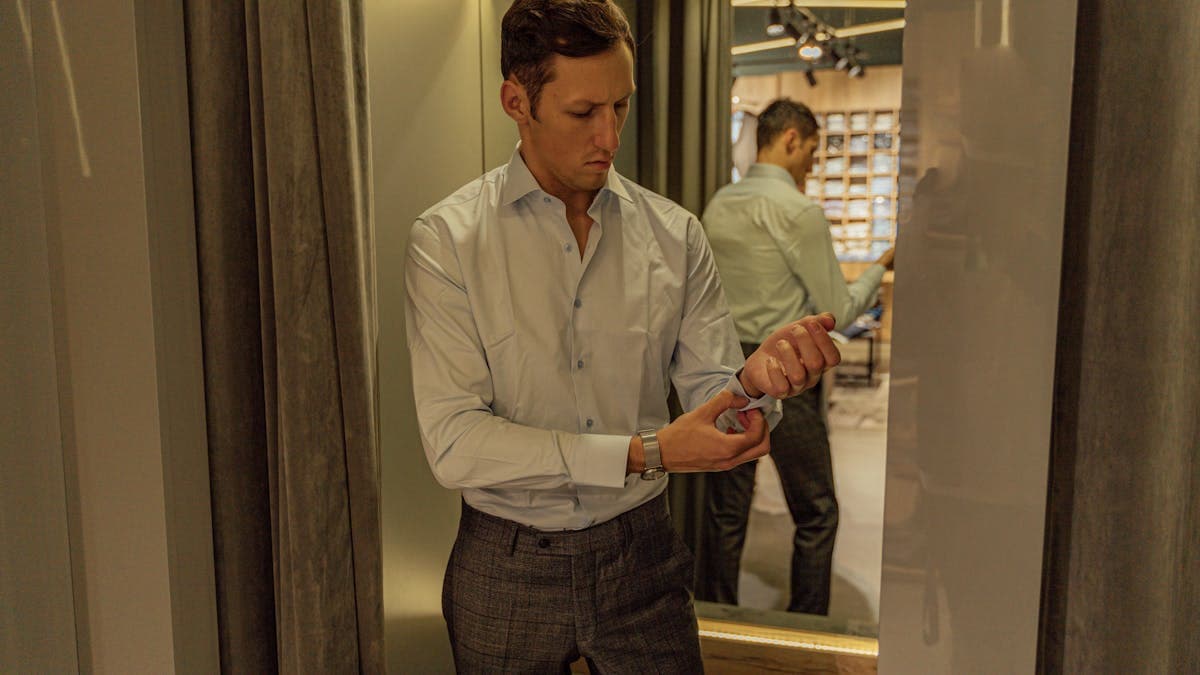
I know what it feels like to earn six figures and still feel like your clothes do not match who you are becoming. I know what it feels like to walk into a SuitSupply and know -- KNOW -- that this $800 suit does not fit you perfectly, that the shoulders are a little wide and the trousers are a little long and the jacket pulls slightly across the back, but you buy it anyway because the salesperson says it looks great and you do not have time to find something better and "this is just how off-the-rack suits fit."
No. That is how off-the-rack suits fit people they were not made for. Which is everyone, because they were not made for anyone specifically. They were made for a mannequin and then sold to whoever walks through the door.
Custom is different. Custom is measured for YOUR body. Your shoulders. Your arms. Your torso. The way you stand, the way your left shoulder sits slightly lower than your right because you carry your bag on the same side every day. A custom suit knows you. An off-the-rack suit guesses.
And the main reason custom costs $2,000+ in New York and $200 in Hoi An is the supply chain. Real wool, real construction techniques, real attention to fit -- but between the mill and your closet in Murray Hill, the New York version stacks on rent, marketing, retail markup, brand premium, and the cost of maintaining a storefront on Madison Avenue with $400-per-square-foot leases. None of those things make the suit better. They just make it more expensive. (For full transparency: at the very top of the luxury market, the cloth itself is also genuinely better than what we offer at our prices. We are not pretending otherwise. But for the vast middle of the market -- the SuitSupply / Indochino / Bonobos tier -- the gap is mostly storefront, not cloth.)
The Economics of Skipping the Middleman
Let me break this down the way I would have broken down a bond trade on the desk. Simple. Transparent. No bullshit.
When you buy a suit at SuitSupply for $800, here is roughly where that money goes:
- Fabric cost: $60-$100 (mill price for 3 meters of mid-range Italian wool)
- Manufacturing labor: $40-$80 (even in their factories in China or Europe)
- Shipping to warehouse: $5-$10
- Rent for retail store: $100-$150 (allocated per unit sold)
- Staff salaries: $50-$80
- Marketing and brand: $80-$120
- Corporate overhead: $60-$100
- Profit margin: $150-$200
Add it up. The actual product -- fabric plus labor -- is maybe $150. Everything else is the cost of the machine that gets the product from the factory to your body. The machine costs more than the suit.
Now here is what happens when you order from Nathan Tailors:
- Fabric cost: $50-$80 (real wool from established mill suppliers, bought direct)
- Manufacturing labor: $30-$50 (our tailors in Hoi An, paid well by Vietnamese standards, working in a shop where the monthly rent is less than a single day's rent at a SuitSupply store in Manhattan)
- Our overhead: $15-$25 (website, WhatsApp, digital tools)
- Our margin: $30-$50
Total: $125-$205 of underlying cost, which is why the garment price on the menu lands at $149-$309. Shipping is not baked in — it is quoted at cost by weight and destination before you pay (as a real example, a two-suit shipment to the US ran $133 standard tracked or $195 DHL Express). For a custom suit that is measured to your body, made with real wool, by tailors with more hands-on experience than anyone you will find in New York. You can see all of our prices on our pricing page -- we do not hide anything.
This is not a "deal." This is not a "discount." This is what a suit actually costs when you remove the middlemen, the retail markup, and the Manhattan rent from the equation. Our price is not artificially low -- everyone else's price is artificially high.
I spent ten years on a trading desk analyzing value. Finding the gap between what something costs and what someone is paying for it. That gap, in Wall Street terms, is called an inefficiency. The retail fashion industry in the West is one of the most inefficient markets I have ever seen. The spread between cost of production and retail price is wider than anything I ever traded on the IG desk. And unlike bond spreads, this one is not going to tighten, because the brands have no incentive to lower prices when people keep paying them.
But you do not have to keep paying them. That is the whole point.
Who We Are Now
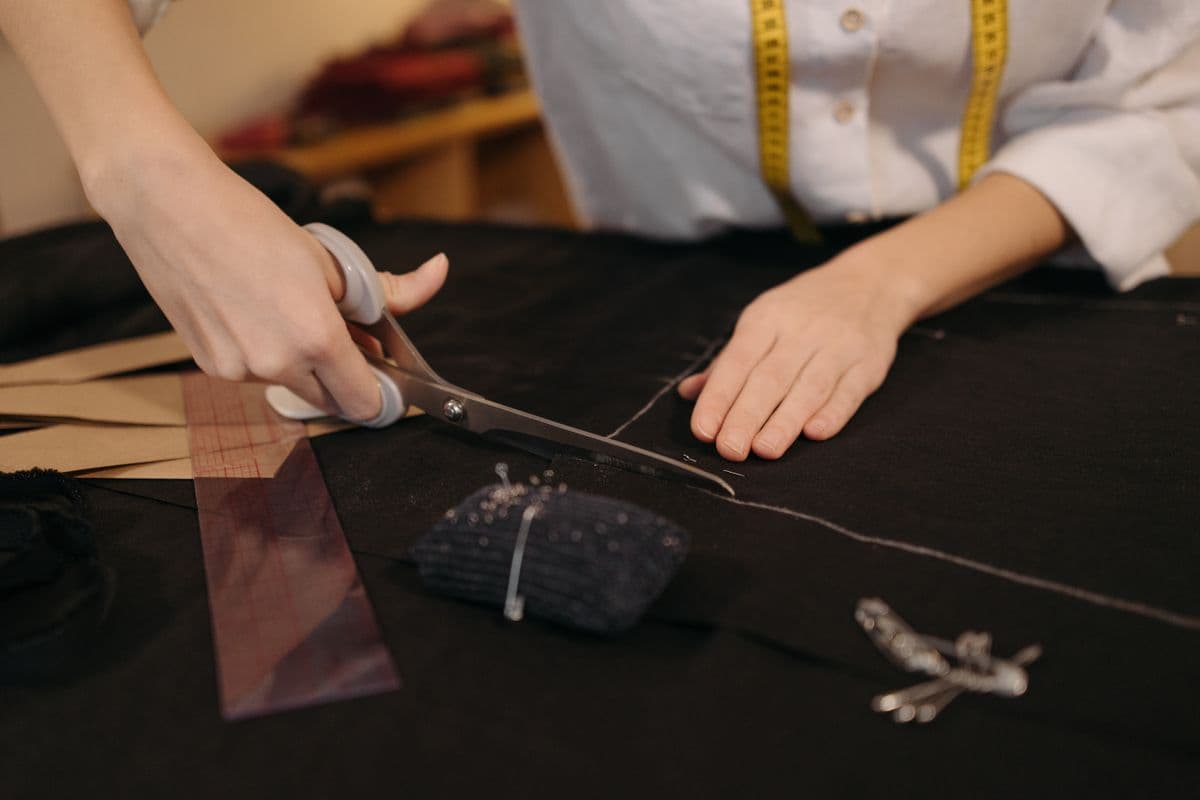
The tailoring expertise here goes back over 25 years -- our team has been making custom garments since 1999, long before I showed up. The craftsmanship was already here. The reputation was already here -- 520+ five-star Google reviews, 5,000+ clients worldwide, 500+ wedding parties dressed. What I brought was the bridge to the Western world. The digital infrastructure. The understanding of what a 28-year-old in Murray Hill needs to feel confident ordering a custom suit from a shop 8,500 miles away.
Because I was that guy. I know the objections, because they were my objections:
- "How do I know it will fit?" -- Because we have a step-by-step measurement guide that walks you through every measurement with visual instructions. Because we offer free WhatsApp video calls to walk you through it live. And because if something is off when it arrives, we work through it with you on WhatsApp -- sometimes a local alteration on your end, sometimes the piece comes back to us. We figure it out together.
- "How do I know the quality is real?" -- Because we work with real fabric from established mill suppliers, not synthetic blends pretending to be wool. Because we have been doing this for 25+ years. Because our 520+ Google reviews are from real customers who received real garments. And because we are not going to oversell the cloth tier the way bigger brands do -- we will tell you exactly what you are getting before you commit.
- "Is this too good to be true?" -- No. It is too good to be true at Manhattan prices. At Hoi An prices, this is just what things cost when your rent is $800 a month instead of $40,000 and your tailors are paid fairly but not inflated by a Western cost of living.
I wrote an entire article about this: how to dress well in NYC when your six-figure salary disappears to rent and taxes. If you are sitting at a desk in Midtown right now feeling the specific frustration of earning good money and still not being able to afford a wardrobe that reflects it -- that article is for you. I wrote it from experience.
The Real Reason I Built This
People ask me why I left Wall Street to run a tailor shop. They expect a romantic answer. They expect me to say I "found my passion" or I "followed my heart" or some other thing that sounds good on a podcast but means nothing in practice.
The truth is simpler. I left because the math worked. I stayed in Hoi An because the life worked. And I built Nathan Tailors' digital presence because I saw a problem I understood better than almost anyone -- because I had lived it for a decade.
I sat at that desk. I wore that vest. I ate that Sweetgreen bowl. I paid that dry cleaner. I bought those suits that did not fit right and told myself they were "good enough" because I did not have time to find better and I did not know better existed. I lived the cycle of earning good money and feeling like I had nothing to show for it except a closet full of clothes that were expensive but not great.
The problem is not that you cannot dress well. The problem is that the only options you know about are overpriced. SuitSupply, Indochino, Brooks Brothers, J.Crew -- they are all taking the same $80 worth of materials and selling it to you for $500 to $1,200 because you do not know there is another way. Because the alternative -- a master tailor in Vietnam who uses the same fabrics and has 25 years of experience -- does not advertise on your Instagram feed. Does not have a store on Fifth Avenue. Does not show up when you Google "best suits NYC."
Until now. That is why I built this. Not from the fashion side. From the "I was the customer" side. I am not selling you suits. I am solving the problem I lived with for ten years. And I am doing it with the same transparency I am giving you right now -- no hidden markups, no inflated brand premium, no pretending that geography is quality.
The fabric is the same. The skill is, honestly, higher -- because our tailors handle more garments in a week than most Western tailors handle in a month. The price is lower because the cost of living is lower, not because the standards are. And the person on the other end of the WhatsApp message has been exactly where you are -- staring at a Bloomberg terminal, wearing a shirt from Charles Tyrwhitt that is a little too tight in the neck, thinking there has to be a better way.
There is. I found it 8,500 miles from Midtown. And now you do not have to fly here to access it.
A Note on Hoi An

One last thing. People ask me if I miss Wall Street. I do not. I miss some of the people. I miss the intensity of a busy market day. I miss the bodega coffee on 38th Street. I miss the feeling of being in the center of something enormous.
But I do not miss the alarm at 5:45. I do not miss the R train. I do not miss the Sunday scaries. I do not miss the golden handcuffs.
I wake up in Hoi An when I wake up. I walk to the shop along the river. The air smells like incense and pho, not anxiety and Keurig coffee. The work is hard -- building a business is always hard -- but it is hard in a way that feels like mine. Not hard in a way that feels like I am renting my consciousness to an institution for twelve hours a day.
Hoi An is not paradise. The summers are brutally hot. The internet goes out during monsoon season. There is no Sweetgreen. But there is something here that Midtown does not have, and I did not understand what it was until I had been here for a year: simplicity. The absence of noise. The ability to focus on one thing -- making great clothes for people who deserve better than what the Western retail industry is offering them -- without the constant background hum of a city that is designed to distract you from the fact that you are not happy.
I am happy. That is a sentence I could not have written five years ago. Not honestly. And I know it sounds like the kind of thing people say in "I quit my job" stories and you are supposed to roll your eyes. But I am a bond trader. I do not deal in sentiment. I deal in facts. And the fact is: I am happier, I am healthier, I am building something that matters, and I wake up every morning looking forward to the day. That is not something money buys. It is something you build when you finally stop doing one more bonus.
If You Are Still at the Desk
If you are reading this from a trading floor, or a bank, or a consulting firm, or a tech company in Midtown -- I am not going to tell you to quit. That is your decision and your math. What I am going to tell you is this: you do not have to keep overpaying for the basics.
You do not have to spend $800 on a SuitSupply suit that does not quite fit. You do not have to spend $2,000 on a custom suit from a tailor on the Upper East Side. You do not have to keep feeding the machine that takes your paycheck and gives you back clothes that are fine but not great.
You can go direct. Same fabric. Better fit. A fraction of the price. And the person helping you has been in your exact chair, wearing your exact Patagonia vest, drinking your exact bodega coffee, feeling your exact frustration.
I have been where you are. Literally. That desk. That alarm. That life. And now I am on the other side, and I built something specifically for you.
This is not a sales pitch. It is an introduction. If you want to know more, reach out. I answer every message personally.
Message me on WhatsApp -- not a bot, not a sales team. Just me, the former bond trader who now makes suits in Vietnam. Tell me what you need. I will tell you honestly if we can help.